Support

Széchenyi square

About

Széchenyi Square (Széchenyi tér) is not just the main square, but the beating heart of the city of Pécs. Located in the colorful country of Hungary, it is rightfully considered one of the most beautiful and atmospheric central squares in Europe, where architecture from different eras merges into a single ensemble.
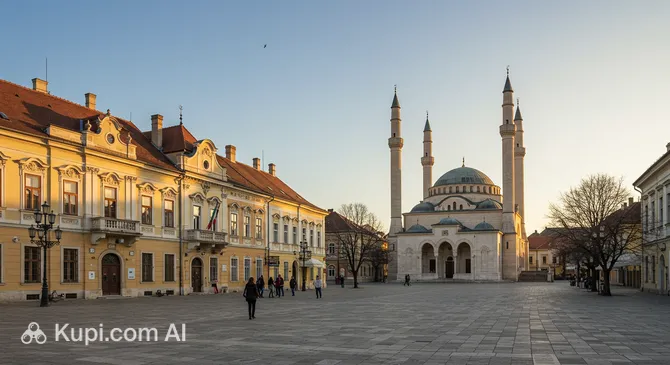
Széchenyi Square
Széchenyi Square. Иллюстрация. Источник: Kupi.com AI

This unique historical site attracts visitors with its incredible diversity. The main landmark and architectural dominant of the square is the former Mosque of Pasha Qasim, which today serves as a Christian church while remaining a striking example of Islamic architecture in the center of a European city.

As a cultural and tourist hub, Széchenyi Square is always full of life. It hosts the city's main festivals, bustling fairs, and festive concerts. Surrounded by majestic buildings, monuments, and cozy streets, it embodies the spirit of continuity of generations and the multicultural heritage of the region.

Contacts

Széchenyi Square is the central public space of the city, so finding it is quite easy. Below are the main coordinates for navigation.

How to contactContact
AddressPécs, Széchenyi tér 8, 7621 Hungary

What to Do

There is no time to be bored at Széchenyi Square: it is the perfect place to start exploring the city. First of all, it’s worth visiting the famous Mosque of Pasha Qasim (now a church). Inside, you can see an amazing blend of Muslim architecture and Christian decor, which creates a truly unique atmosphere.

Be sure to bring your camera, as the square is literally dotted with architectural masterpieces and monuments, including the famous Zsolnay Fountain made of five-colored ceramics. A stroll across the square and its adjacent pedestrian streets will allow you to take magnificent photos and soak up the history of Pécs.

If you are lucky enough to be here during a festival or seasonal fair, be sure to dive into the festive bustle: try local delicacies and listen to street musicians. After an active walk, you can relax in one of the many outdoor cafes, order a cup of aromatic coffee, and simply enjoy the rhythm of life of this sunny Hungarian city.

Getting There

Széchenyi Square is located in the heart of the pedestrian zone, so the easiest way to reach it is on foot from anywhere in the historic center. If you arrive in the city by train or intercity bus, the walk from the station to the square will take no more than 15–20 minutes. Simply follow the signs to the center ("Belváros"), enjoying the ancient architecture along the way.

For those who prefer public transport, numerous city buses connect the center with outlying districts and stop near the square. You can also use a taxi, which will take you as close as possible to the boundary of the pedestrian zone.

If you are traveling by car, keep in mind that direct vehicle access to the square is restricted. Several paid parking lots and underground garages are located around the perimeter of the historic center. It is recommended to leave your car there and continue on foot to fully experience the atmosphere of the old town.

Ближайший город: Pecs

History & Facts

The history of Széchenyi Square is inextricably linked with the fate of the city itself. Back in the days of the Roman Empire, this site was the center of the ancient settlement of Sopianae. Since then, the square has remained the main arena of city life, changing its appearance depending on which culture predominated in the region.

The most notable mark on the square's history was left in the 16th century — the period of Ottoman rule. During this time, by order of Pasha Qasim, a majestic mosque was erected here, using stones from a destroyed Christian church for its construction. This architectural monument has survived to this day, becoming a unique symbol of the intertwining of religions: after the expulsion of the Turks, the building became a Catholic church again but retained its typical Islamic dome.

In the 19th century, the square acquired its modern elegant appearance and was named after the prominent Hungarian statesman István Széchenyi. Today, every building here — from the city hall to old mansions — tells its own chapter of the long and multicultural history of this place, where Roman heritage, Ottoman influence, and European Baroque coexist harmoniously.

Time Needed

A quick tour of the square to see its main architectural monuments and take commemorative photos usually takes about 1.5–2 hours. This is quite enough time to leisurely walk around the area and appreciate its grandeur.

If you plan to go inside the famous mosque-church, visit one of the neighboring museums, or simply want to relax in a local cafe while watching the city bustle, it is better to set aside 3–4 hours for your visit. Széchenyi Square invites contemplative relaxation, so there is no need to rush.

Working Hours

Since Széchenyi Square is an open-air central part of the city, it is open to the public 24 hours a day. You can enjoy its beauty in both bright daylight and the evening when the artistic lighting of the buildings is turned on.

However, keep in mind that specific attractions located on the square, such as museums or the mosque-church, have their own opening hours. Generally, they are open to tourists during the day, but schedules may vary depending on the day of the week or religious services.

Круглосуточно

Nearby

Exploring the surroundings of Széchenyi Square will allow you to see Pécs in all its diversity. Key historical monuments, museums, and cozy squares are all nearby, making a walk through the city center both rich and educational.

NameDistance
Pécs Candlemas Church of the Blessed Virgin Mary0.1 km
Blöff Bistro0.1 km
Zsolnay Fountain0.1 km
Csontváry Museum0.3 km
Victor Vasarely Museum0.3 km
Zsolnay Porcelain Museum0.3 km
Nappali0.4 km

Reached the end of the page?

That means the route is fully explored