Support

Maribor Castle

About

While strolling through the city center of Maribor, it is impossible to miss the magnificent architectural ensemble known as Maribor Castle. This unique structure is the only survivor of three 15th-century fortresses built to protect Slovenia from enemy invasions. Erected by decree of Emperor Frederick III, today the castle serves as the main ornament of the city squares and is the cultural center of the region.
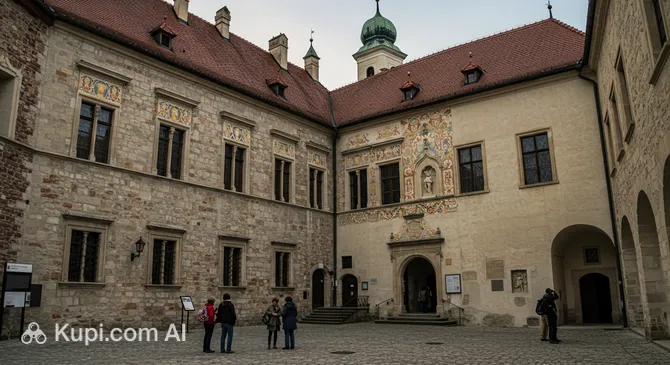
Maribor Castle
Maribor Castle. Иллюстрация. Источник: Kupi.com AI

The appearance of the castle is a true stone chronicle where Gothic, Renaissance, and Baroque styles intertwine. Over five centuries of reconstruction, the building has transformed from a harsh defensive citadel into a graceful palace. Today, it houses the Maribor Regional Museum, which contains rich collections telling the story of the history, art, and daily life of these lands.

The interior decoration is of particular value, specifically the Festival Hall. Its interiors amaze with a wealth of decor, and the 18th-century ceiling painting by Johann Gebler, depicting a battle with the Turks, is considered one of the city's artistic treasures. This place is ideal for those who want to immerse themselves in the atmosphere of the past and see how the aristocracy lived in previous centuries.

Contacts

For the latest information on special exhibitions or ticket prices, you can use the official contact channels.

How to contactContact
AddressGrajska ulica 2, 2000 Maribor, Slovenia
Phone+386 2 228 35 51
Websitewww.museum-mb.si

What to Do

The main reason to step inside Maribor Castle is to visit the Regional Museum. Here you can see unique archaeological finds, antique weapons, items of applied art, and documents that reveal the history of the city's development step by step. Special attention should be paid to the Festival Hall — its luxurious interiors and portrait gallery allow you to feel the grandeur of bygone eras.

Be sure to look into the Baroque Loretan church, which is part of the complex, and examine the Renaissance bastion, a reminder of the former power of the fortress walls. Painting enthusiasts will appreciate the frescoes on the ceilings and the detailed work of the masters who decorated the castle halls in the 18th century.

After exploring the inner chambers, it is pleasant to stroll through the adjacent squares — Castle Square and Freedom Square. Here you can take great photos against the backdrop of ancient walls, enjoy a cup of coffee in one of the street cafes, and soak in the atmosphere of the old city. Cultural festivals and concerts are often held within the castle walls, making a visit even more memorable.

Getting There

Finding Maribor Castle is easy, as it is located in the heart of the city at Grajska ulica 2. It towers over popular city spaces: Castle Square and Freedom Square. If you are already walking through the old center, the stroll to the castle will take only 10–15 minutes.

For those who prefer public transport, the nearest bus stops are located at Freedom Square and General Maister Square. If you are arriving in the city by train, the Maribor railway station is located about 1.5 km from the attraction — about a 20-minute brisk walk or a short bus or taxi ride.

For travelers arriving by car, it is recommended to look for parking in the area of Freedom or General Maister Squares. Given the compactness of the central part of the city, the castle is an ideal point to include in a walking route.

Ближайший город: Maribor

History & Facts

The history of this majestic structure began in the 15th century when Emperor Frederick III ordered the construction of three defensive fortresses to protect the city from Turkish raids. Maribor Castle was built between 1478 and 1483 and became the only one of those fortifications to survive to this day. Its walls remember the successful defense against Ottoman sieges in 1532 and 1683.

Over five centuries of existence, the fortress has undergone many transformations. The initially austere Gothic building was gradually supplemented with Renaissance and Baroque elements. In the mid-16th century, a powerful bastion was added, and later the graceful Baroque Loretan Church was built, transforming the fortification into a luxurious feudal residence.

Frederick III, by whose will the castle was built, combined practicality and romanticism in his approach to architecture, which is why today the building resembles an elegant palace more than a grim military citadel. Now the castle is recognized as one of the most important monuments in Slovenia, carefully preserving the heritage of the Austro-Hungarian Empire era.

Time Needed

To leisurely explore the architecture of Maribor Castle and carefully study the regional museum's exhibits, most travelers need about 1.5–2 hours. This time is enough to appreciate the interiors and learn key facts about the region.

Typically, about an hour is spent inspecting the internal halls, including the famous Festival Hall, while the remaining time should be devoted to a walk through the adjacent grounds and squares that surround the castle, creating a unified architectural ensemble.

Working Hours

When planning your visit to Maribor Castle, please note that the museum and interior halls are open to visitors from Tuesday to Saturday. At the beginning of the week and on Sundays, the attraction is usually closed to the general public.

Opening Hours:

  • Tuesday — Saturday: 10:00 – 18:00
  • Monday and Sunday: Closed

DayWorking hours
ПонедельникЗакрыто
Вторник10:00 – 18:00
Среда10:00 – 18:00
Четверг10:00 – 18:00
Пятница10:00 – 18:00
Суббота10:00 – 18:00
ВоскресеньеЗакрыто

Nearby

The castle is located in the historical center, making it easy to combine a visit with exploring other interesting places. A walk through the adjacent squares will help you feel the atmosphere of the ancient city more deeply.

NameDistance
Josip Jurčič Monument0.1 km
Vetrinjski Mansion0.1 km
Basilica of Our Mother of Mercy0.1 km
Maribor Cathedral (St. John the Baptist)0.3 km
Plague Column0.4 km
Water Tower0.4 km
Maribor Aquarium-Terrarium0.5 km

Reached the end of the page?

That means the route is fully explored