Support

Metropolitan Cathedral of Saint Sebastian of Rio de Janeiro

About

The Metropolitan Cathedral of Saint Sebastian is one of the most unusual and iconic landmarks in Rio de Janeiro. It is the city's main Catholic cathedral, capturing the imagination with its futuristic appearance. Unlike traditional churches, it is built in the Modernist style and shaped like a giant truncated cone, making it resemble ancient Mayan pyramids.

The building, located in the city center, is impressive in its scale. It stands 75 meters tall and can accommodate up to 20,000 people. One of the most striking features of the interior is the four massive rectangular stained-glass windows that stretch from floor to ceiling to a height of 64 meters. On sunny days, they fill the vast cathedral space with mystical, multicolored light, creating an unforgettable atmosphere.
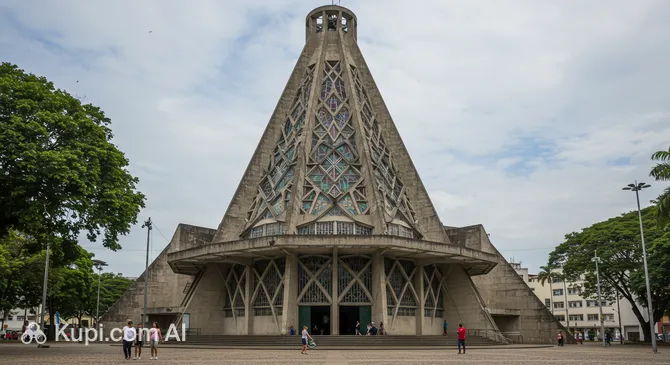
Metropolitan Cathedral of Saint Sebastian of Rio de Janeiro. Illustration.
Source: Kupi.com AI

Traveler photos:

The cathedral is dedicated to Saint Sebastian, the patron saint of the city, highlighting its spiritual significance for all of Brazil. Its unique architecture and central location make it a must-visit for not only the faithful but also anyone interested in modern architecture and culture.

Contacts

To plan your visit or check service and event schedules, we recommend consulting official sources. All up-to-date information is typically available on the cathedral's website. Below are the primary contact details.

How to contactContact
AddressAv. República do Chile, 245 - Centro, Rio de Janeiro - RJ, 20031-170, Brazil
Phone number+55 21 2240-2669
Websitewww.catedral.com.br

What to Do

A visit to the Metropolitan Cathedral of Saint Sebastian leaves an unforgettable impression, starting with its unusual architecture, which can be appreciated from both the outside and inside. The main draw for visitors in the vast conical hall is the four giant stained-glass windows stretching from floor to ceiling. On a sunny day, they create an incredible play of light inside, bathing the space in mystical colored rays. The central element of the interior is a massive suspended cross, hanging from steel cables directly under the skylight, which only enhances the monumentality and spiritual atmosphere of the place.

For those who want to dive deeper into history and culture, the Museum of Sacred Art is open on the basement level. Its collection features hundreds of unique exhibits, including icons, sculptures, clerical vestments, and items used during the baptism of members of the royal family. Touring the museum is an excellent opportunity to get acquainted with the religious heritage of Brazil. It is also worth noting the cathedral entrances, which are decorated with sculptures of Saint Sebastian and other saints.

Don't limit yourself to the interior alone—next to the cathedral is an equally remarkable bell tower. Its design is quite unusual, with several bells of different sizes arranged one above the other in open concrete sections. This architectural solution perfectly complements the modernist look of the temple itself. Additionally, thanks to the building's unique acoustics, attending a service or listening to prayers can be a truly special spiritual experience.

Getting There

The Metropolitan Cathedral of Saint Sebastian is located in the heart of Rio de Janeiro, in the central business district, making it easily accessible for tourists. One of the most convenient ways to get here is by metro. The nearest station, Carioca, is just a 5–10 minute walk away. This short stroll allows you to approach this architectural wonder gradually and appreciate its scale as you get closer.

For those who prefer surface transport, numerous bus routes pass near the cathedral, connecting the center with other parts of the city. If you are traveling by car or plan to take a taxi, reaching the landmark is also straightforward—several major streets lead to the cathedral, and there are parking areas nearby.

Thanks to its impressive size and unique conical shape, the cathedral is a prominent landmark in the cityscape. It is clearly visible from afar, so finding it will be easy even if you decide to walk around the center without a navigator.

Nearest city: Rio de Janeiro

History & Facts

The history of the Metropolitan Cathedral of Saint Sebastian is a story of a bold architectural experiment. Its construction took place from 1964 to 1979 under the direction of architect Edgar Fonseca. The project was inspired by ancient Mayan pyramids, representing a radical departure from the classic canons of church architecture. The main idea was to give the fast-growing metropolis a new, modern symbol of faith that would reflect the spirit of the times.

This cathedral is more than just a place of worship; it is an iconic landmark for Rio de Janeiro. Its futuristic conical shape symbolizes unity and closeness to God, while the massive stained-glass windows filling the space with light create a sense of connection with the heavens. The project was intended to demonstrate that faith can find expression in the most modern and unexpected forms, harmoniously blending into the dynamic urban landscape.

Before this modernist giant appeared, several other more traditional churches had served as the city's main Catholic cathedral since 1676. However, as the city grew, the need arose for a more spacious and significant cathedral. Upon its completion, the Cathedral of Saint Sebastian not only became a new spiritual center for the faithful in Brazil but also instantly turned into one of the key cultural and architectural landmarks, embodying courage and innovation.

Time Needed

For a full tour of the Metropolitan Cathedral of Saint Sebastian in Rio de Janeiro, a typical visitor will need between 1 and 1.5 hours. This time is quite enough to explore the unique cone-shaped interior, admire the play of light from the giant stained-glass windows, visit the Museum of Sacred Art located in the basement, and walk around the cathedral's exterior.

The duration of your visit, of course, depends on your interests. If you just want a quick look at the unusual architecture, 30 minutes might be enough. However, to truly soak in the atmosphere and study the museum exhibits in detail, it is better to set aside a bit more time. Many visitors find special pleasure in simply sitting on a bench in the vast hall, enjoying the silence and the mystical light filtering through the colored glass.

Working Hours

The Metropolitan Cathedral of Saint Sebastian is open to visitors year-round. Generally, the doors are open daily from 7:00 AM to 5:00 PM. Entry to the cathedral is free, and no advance booking is required for a standard visit. However, the schedule may change due to religious services or special events, so it is recommended to check the official website for the most current opening hours before your visit.

If you plan to visit the Museum of Sacred Art located in the basement, please note that it has a separate schedule. The museum is typically available for visits only on certain days and hours, such as Wednesdays, Saturdays, and Sundays. For precise information on the museum's opening times, it is also best to consult official sources.

Nearby

Visiting the futuristic Metropolitan Cathedral is just the beginning of exploring the cultural richness of central Rio de Janeiro. The cathedral is located in a vibrant district where modernity intertwines with history, and a short walk around the neighborhood can turn into a fascinating journey through the city's most iconic spots. Just a few steps away, you will find everything from famous architectural monuments to nightlife hubs buzzing with authentic Brazilian samba.

Exploring the nearby attractions will allow you to dive deeper into the atmosphere of Brazil and see how multifaceted its "Marvelous City" is. The Lapa district, known for its bohemian vibe, is very close by and offers a unique mix of historical buildings, street art, and infectious music. Below is a list of interesting places located within walking distance of the cathedral.

NameDistance
Lapa Arches0.2 km
Masonic Palace of Lavradio0.2 km
Circo Voador0.3 km
Rio Scenarium0.4 km
National Monument to the Dead of World War II1 km
Candelária Church1.1 km
Centro Cultural Banco do Brasil1.2 km

Have you reached the end of the page?

So the route has been studied inside and out