Support

Ancient Stadium of Philippopolis

About

The Ancient Stadium of Philippopolis is one of the most impressive and well-preserved structures of the Roman era, located in the very heart of Plovdiv. This unique monument of history and architecture is one of the main attractions not only of the city but of all Bulgaria, attracting travelers from all over the world.
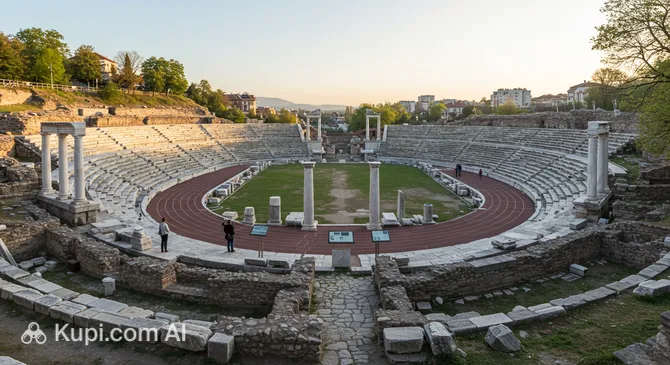
Ancient Stadium of Philippopolis. Illustration.
Source: Kupi.com AI

Traveler photos:

The stadium was built in the 2nd century AD during the reign of Emperor Hadrian and was one of the largest on the Balkan Peninsula. Its dimensions are striking: the structure was about 240 meters long, and its capacity reached 30,000 spectators. Grand sporting events, gladiatorial fights, and Pythian Games, similar to those held in Delphi, took place here.

Today, a significant part of the stadium remains hidden under the city's main pedestrian street, but its northern, arc-shaped part (the sphendone) is beautifully restored and open to the public. Walking through Dzhumaya Square, you can descend to examine the marble seating rows, arches, and the remains of the stands. This allows you to literally touch history and imagine how vibrant life was in ancient Philippopolis.

Contacts

The Ancient Stadium of Philippopolis is an integral part of Plovdiv's historical center and is located directly beneath the main pedestrian street. Access to the visible part of the stadium (the sphendone) is generally open, so no special contact is required for a visit.

For the latest information regarding opening hours, potential guided tours, or cultural events held on the site, it is recommended to check the city's official tourism website or local tourist information centers.

How to contactContact
AddressStaria gradPlovdiv Center, ul. "Hristo G. Danov", 4000 Plovdiv, Bulgaria
Phone number+359 35 892 58
Websiteantichen-stadion-plovdiv.bg

What to Do

Visiting the Ancient Stadium of Philippopolis is a unique opportunity to touch the history of Ancient Rome. The main activity here is a leisurely walk through the preserved parts of the structure. You can sit on the ancient stone steps where spectators sat thousands of years ago and imagine the atmosphere of grand sporting games. Be sure to descend to the lower levels to fully appreciate the scale and engineering genius of the creators of this impressive site.

The stadium area is a wonderful place for photo sessions against the backdrop of ancient ruins. Information plaques and small displays are installed along the excavations, telling the story of the stadium, its architecture, and city life during the Roman Empire in detail. Studying these materials will help you gain a deeper understanding of the significance of this place for ancient Philippopolis.

During the summer season, the stadium arena sometimes hosts cultural events and small concerts, adding a modern touch to this historical site. Thanks to its central location, a visit to the stadium fits easily into any Plovdiv itinerary. It can be combined with a walk to other iconic landmarks, such as the Roman Theatre, the forum, and the colorful streets of the Old Town.

Getting There

Getting to the Ancient Stadium of Philippopolis is easy, as it is located in the very heart of Plovdiv. This unique landmark is situated directly under the city's main pedestrian thoroughfare, Knyaz Alexander I Batenberg Street. If you are already walking through the historical center, you will likely pass right over it. The famous Dzhumaya Mosque, located in the immediate vicinity, serves as an excellent landmark. Given its central location, the easiest and most pleasant way to reach the stadium is on foot.

For those who prefer public transport, there are several bus stops within walking distance of the stadium. Plovdiv's city transport network is well-developed, making it easy to reach the center from any district. Taxis are also a quick and convenient option, saving you the trouble of searching for parking.

If you are traveling through Bulgaria by car, keep in mind that finding a free parking spot in the center of Plovdiv can be challenging. While there are paid parking lots in the area, traffic is quite busy and spaces are limited. Therefore, to avoid extra hassle, it is recommended to leave your car at a hotel parking lot or on the outskirts of the center and continue on foot or by public transport.

Nearest city: Plovdiv

History & Facts

The Ancient Stadium of Philippopolis, located in the heart of modern Plovdiv, is one of the most impressive and well-preserved structures of the Roman Empire in Bulgaria. Built at the beginning of the 2nd century AD during the reign of Emperor Hadrian, it was designed to host spectacular sporting events similar to the Pythian Games. It was not just a venue for athletic competitions, but a vital center for the social and cultural life of the ancient city.

The scale of the stadium is breathtaking even today. It was approximately 240 meters long and 50 meters wide, with a capacity of up to 30,000 spectators. This makes it one of the largest ancient stadiums in the Balkans. The marble spectator tiers, skillfully decorated architectural elements, and the monumental entrance testify to the wealth and significance of Philippopolis during the Roman era. It hosted gladiatorial fights, athletic contests, and important city assemblies.

An interesting fact: for many centuries, the stadium was completely hidden underground and was discovered by chance only in the 20th century during the reconstruction of the main pedestrian street. Due to the dense urban development, it is impossible to fully excavate it, and a large part of it still lies beneath modern buildings. Today, tourists can see the northern, curved part of the stadium (the sphendone), which has been carefully restored. This open space in Dzhumaya Square allows you to touch ancient history and imagine how life bustled in this majestic structure nearly two thousand years ago.

Time Needed

To view the Ancient Stadium of Philippopolis in Plovdiv, most tourists will find 30 to 60 minutes sufficient. This is enough time to see the open northern part of the stadium (the sphendone), appreciate its scale, and take a few memorable photos. Since the ruins are seamlessly integrated into the modern urban environment and located right under the main pedestrian street, they can be viewed quickly while walking through the city center.

If you want to do more than just take a quick glance and prefer to immerse yourself in the history of this unique structure, it is worth setting aside about 1.5 hours. During this time, you can take a leisurely walk along the excavations, examine the preserved rows of seats and structural elements in detail, and visit the small exhibition that may be available. Such a leisurely visit will allow you to fully experience the atmosphere of Roman Bulgaria and imagine the grand spectacles held here nearly two millennia ago.

Working Hours

One of the main features of the Ancient Stadium of Philippopolis is its accessibility. Since a large part of this historical monument is outdoors and integrated into Plovdiv's main pedestrian street, it can be viewed 24 hours a day and completely free of charge. This allows tourists to enjoy the view of the ancient ruins at any convenient time, whether it's a daytime walk or an evening stroll under the city lights.

If you wish to visit the exhibition or museum sections of the complex that may be open to the public, you should take their operating hours into account. They are usually open to visitors during the day, for example, from 9:00 AM to 6:00 PM, especially during the summer season. However, operating hours can change, so it is recommended to check the latest information on the official website or at tourist centers before your visit. No advance booking is required to view the open part of the stadium.

9:30 – 18:00

Nearby

A visit to the Ancient Stadium of Philippopolis is just the beginning of your journey into the heart of ancient Plovdiv. To truly feel the city's atmosphere, it is worth exploring its surroundings. Plovdiv's Old Town is a veritable open-air museum, where every turn reveals new historical treasures, cozy cafes, and picturesque streets.

Thanks to the compact layout of the center, many iconic sites are within a few minutes' walk of the stadium. A stroll through the neighboring quarters will allow you to dive deeper into the rich history and culture of this unique Bulgarian city, perfectly complementing your impressions of the main attraction.

NameDistance
Rock Bar Download0.1 km
Aylyakria Restaurant0.1 km
Church of the Holy Mother of God0.2 km
Ancient Theatre of Philippopolis0.3 km
Hindliyan House0.4 km
Balabanov House0.4 km
Kontrabas0.4 km

Have you reached the end of the page?

So the route has been studied inside and out