Support

Small Basilica Archeological Site (5th-6th century)

About

The Small Basilica Archaeological Complex is a gem of early Christian art located in the heart of the ancient city of Plovdiv. Dating back to the 5th–6th centuries, this historical monument features the beautifully preserved ruins of a three-aisled church that was once an important religious center in Bulgaria.
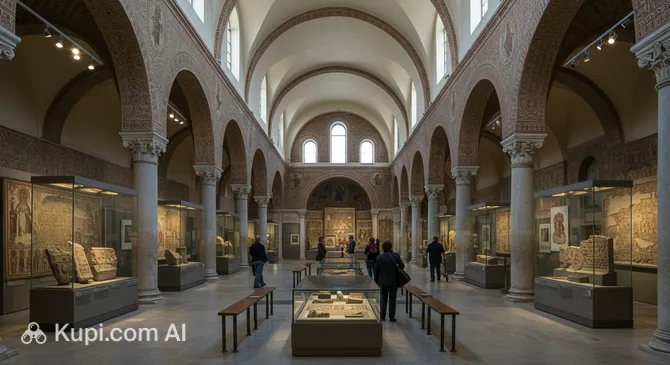
Small Basilica Archaeological Site
Small Basilica Archaeological Site. Иллюстрация. Источник: Kupi.com AI

The complex's crowning glory is its magnificent polychrome mosaics, covering an area of about 200 square meters. Crafted from marble, ceramics, and glass, they decorate the floors of the aisles and the baptistery, showcasing the skill of ancient artisans. In 1995, the site was officially recognized as a cultural monument of national importance.

Although the basilica is smaller than its famous neighbor, the Bishop's Basilica, it possesses a special, intimate atmosphere. Meticulous restoration has integrated the ancient ruins into a modern museum space, where every visitor can literally touch the heritage of late antiquity.

Contacts

To plan your visit to this unique archaeological museum, it is helpful to check its contact details in advance. You can contact the administration directly to inquire about guided tours or temporary exhibitions.

Below is the essential contact information and the exact address of the complex in Plovdiv:

How to contactContact
AddressTsentarPlovdiv Center, boulevard "Knyaginya Maria Luiza" 31, 4000 Plovdiv, Bulgaria
Phone+359 87 666 2882
Websitewww.oldplovdiv.bg

What to Do

The main highlight of visiting the complex is the chance to see the unique baptistery with its cruciform font. It is the only surviving structure of its kind in the country, decorated with exquisite mosaics depicting birds and Christian symbolism. Walking along the designated walkways above the ancient floors, you can appreciate the intricate work of the masters who used the opus tessellatum technique.

Be sure to look for the historical inscription in the mosaic in front of the altar area—it mentions an influential patron of the church. It is also fascinating to examine the building's structure: the apse, the remains of marble columns, and fragments of the fortress wall to which the basilica is adjacent. This provides a clear picture of how religious buildings were integrated into the city's defensive system.

For photography enthusiasts, the site offers excellent angles: the play of light on the geometric mosaic patterns and the contrast between ancient stones and the museum's modern glass pavilion allow for truly impressive shots.

Getting There

The archaeological complex is located at 31 Knyaginya Maria Luiza Boulevard, making it easily accessible for tourists walking through the city center. If you are in the Old Town or near the Roman Stadium, the walk to the basilica will take no more than 10–15 minutes at a leisurely pace.

For those who prefer public transport, buses and trolleys stopping at "Tsentar" or "Maria Luiza" are convenient options. There are also parking spaces nearby if you are traveling by car. From Plovdiv Airport, the most convenient way to reach the site is by taxi, which takes about 20 minutes.

Ближайший город: Plovdiv

History & Facts

The history of the Small Basilica began in the second half of the 5th century AD. It is believed to have been built in honor of Basiliscus, the military commander of Thrace, who saved Philippopolis from Gothic invaders in 471. Grateful residents immortalized his name in a mosaic inscription, calling him a "victor and patrician."

The church had a turbulent history: shortly after its construction, it was seriously damaged by fire, likely during a hostile raid. However, in the 6th century, during the era of the "Justinianic Renaissance," the basilica was completely restored. During the reconstruction, the floor level was raised by 70 cm, a luxurious baptistery was added, and the interior was updated, preserving the old mosaics under a new layer of flooring.

For a long time, this treasure of antiquity remained hidden until archeologist Mina Bospacheva discovered it during roadworks in 1988. A large-scale restoration, completed in 2013 with the support of the "America for Bulgaria" Foundation, allowed the mosaic fragments to be returned to their historical place and opened the complex to the public.

Time Needed

A thoughtful exploration of the Small Basilica typically takes 45 to 90 minutes. This is enough time to examine the preserved mosaic panels in detail, study the architectural layout of the baptistery, and read the information boards explaining the excavation process.

If you are an enthusiast of archaeology and Byzantine art, you might want to spend a little more time studying the symbolism of the figurative images. Nevertheless, the site is quite compact, making it easy to fit into a busy sightseeing itinerary around the city.

Working Hours

The museum is open to visitors daily, which is very convenient for travelers. Please note that there is a short break in the middle of the day.

The complex's operating hours are: Monday – Sunday from 09:30 to 12:30 and from 13:00 to 18:00.

9:30 – 12:30, 1:00 – 18:00

Nearby

Plovdiv is a city with an incredible concentration of historical monuments, so a visit to the Small Basilica is easily combined with other iconic sites. A walk through the surrounding area will allow you to dive deeper into the atmosphere of ancient Philippopolis and see how different eras intertwine in the modern urban environment.

Most of the main attractions are within a radius of one to two kilometers, making this area ideal for walking tours.

NameDistance
Kontrabas0.4 km
The Episcopal Basilica of Philippopolis0.5 km
Hisar Kapia Gate0.5 km
Ancient Theatre of Philippopolis0.6 km
Old Town of Plovdiv0.6 km
Regional Ethnographic Museum Plovdiv0.6 km
Balabanov House0.6 km

Reached the end of the page?

That means the route is fully explored