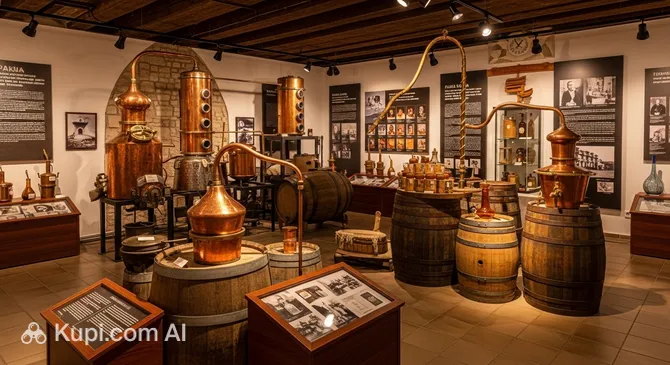
Do you know which drink is considered the true soul of the Balkans? To find the answer, it's worth visiting the unique Rakia Museum. Located in the heart of Sofia, this first-of-its-kind project is entirely dedicated to the main national drink that Bulgaria is so proud of. It is not just an exhibition space, but a real immersion into the centuries-old history and culture of distillation.
Rakia Museum. Illustration.
Source: Kupi.com AI
Traveler photos:
The museum's collection features more than 100 types of rakia gathered from various regions of the country. The interior is designed in a traditional style using ethnographic elements: here you can see old alambics (stills), antique barrels, and tools used for centuries by master distillers. The cozy atmosphere and authentic exhibits create a sense of traveling back in time.
In addition to the educational part, the museum offers guests a tasting hall where anyone can get acquainted with rare varieties of this strong fruit spirit. The high rating of the establishment and positive reviews confirm that this place has become a must-visit for those who want to experience Bulgarian gastronomy from the inside. The museum is open to visitors year-round and is equally interesting for both solo travelers and groups.
Contacts
For details on group visits or to pre-book a tasting, you can use the museum's official contact information.
The main reason to visit the museum is a professional tasting. Under the guidance of an experienced sommelier, you can try a wide variety of rakia: from classic plum and grape to unusual varieties infused with honey, wild herbs, or fragrant pear. This is a great chance to learn to distinguish subtle flavor nuances and find out which appetizer (meze) best highlights the character of each variety.
For those who want a deeper dive, there are interactive tours. You can trace the entire journey of rakia creation: from harvesting ripe fruit to the distillation process. The museum even offers the chance to try your hand as a master distiller on miniature setups. Fans of great photos will love the special photo zones with vintage equipment, where you can take excellent souvenir shots.
Finish your visit at the gift shop, which offers a wide selection of exclusive bottles, home production kits, and original souvenirs. The museum often organizes themed evenings with traditional music and stories about the regional traditions of different parts of Bulgaria, making the visit a complete cultural event.
Getting There
Finding this "temple of traditions" is easy: it is located in the very heart of the Old City. If you prefer public transport, the most convenient way is to take the metro to the Serdika or Graf Ignatiev stations. Trams #20 and #22 also stop in this area, and the "Patriarh Evtimiy" bus stop is just a few minutes' walk away.
For those heading to the museum from the central railway station, the walk will take about 15–20 minutes. If you prefer comfort, a taxi ride from the center takes only about 5 minutes. Keep in mind that parking in this area is limited, so walking from the popular pedestrian zone — Vitosha Boulevard — is an excellent choice.
Travelers arriving from the airport should take bus #84 or #184 to the city center (a 30–40 minute journey) and then transfer to the metro or take a taxi. The entire trip takes about an hour on average, and the area itself is considered one of the safest and most vibrant in the capital.
Nearest city: Sofia
History & Facts
Although the museum opened its doors very recently — in mid-September — it has already managed to occupy a unique niche, becoming the world's first specialized institution dedicated to rakia. The project idea was born out of deep respect for local customs: the creators sought to preserve and popularize the traditions of drink production, whose roots go back to ancient times. In those distant centuries, fruit distillates in the Balkans were valued not only for their taste but also for their medicinal properties.
The history of rakia itself as a national symbol has come a long way — from artisanal distillation in small peasant farms to large-scale industrial production in the 19th and 20th centuries. The museum's collection was gathered piece by piece: many exhibits, such as antique copper alambics and distillers' tools, were donated from private collections and old Bulgarian distilleries.
The exhibition clearly demonstrates how technology and tastes have changed over the centuries. Special attention is paid to the role of rakia in Bulgarian culture: it has always been an essential attribute of holidays, rituals, and a symbol of true Balkan hospitality. Support for the museum by local producers has made it an important cultural center representing the country's gastronomic heritage on an international level.
Time Needed
A standard tour of the exhibition and participation in a classic tasting usually takes 1 to 2 hours. This time is quite enough to leisurely study the collection, listen to the guide's stories, and appreciate the taste of several varieties of the drink.
If you plan to take part in a specialized cocktail-making workshop or want to explore the souvenir shop in detail, we recommend budgeting about 2.5 hours in your schedule. The museum invites a thoughtful immersion into the culture, so there is no need to rush here.
Working Hours
The museum welcomes guests daily, making it very convenient for planning your travel itinerary. The doors are open from 12:30 PM to 7:00 PM seven days a week, from Monday to Sunday.
Despite the stable schedule, it is recommended to check the official website before your visit to ensure there are no changes due to private events or national holidays.
12:30–19:00
Nearby
A visit to the Rakia Museum can be easily combined with exploring other iconic spots in the capital. The area around Patriarch Evtimiy Boulevard is rich in historical monuments and cozy parks that help you feel the atmosphere of the city more deeply.
A stroll through the neighborhood will allow you to see architectural gems from different eras and enjoy Sofia's green zones. Below is a list of interesting sites located within walking distance or a short transit ride away: