Support

Ιερά Μονή Παναγίας Μαυριωτίσσης

About

On the picturesque banks of Lake Orestiada lies one of the most significant spiritual centers of the region — the Monastery of Panagia Mavriotissa. This outstanding Byzantine-era Orthodox monument is located in the city of Kastoria, which is famous for its rich historical heritage. Dedicated to the Dormition of the Mother of God, the monastery is a harmonious architectural ensemble literally woven into the lakeside landscape of Greece.
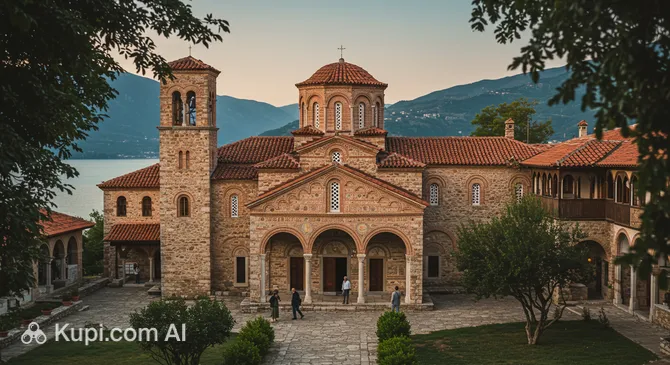
Panagia Mavriotissa Monastery
Panagia Mavriotissa Monastery. Иллюстрация. Источник: Kupi.com AI

The heart of the monastery complex is the katholikon — an ancient single-aisle church with wooden vaults and a semicircular apse. Its internal and external paintings are of exceptional historical and artistic value. Inside the church, frescoes from the late 12th to early 13th centuries have been preserved, and on the southern wall, you can see rare images from 1260 depicting Byzantine emperors. This site serves as a living testimony to the evolution of Byzantine art over the centuries.

In addition to the main church, the complex features the elegant Chapel of St. John the Theologian, added in the 16th century, along with carefully restored cells, the abbot's quarters, and a guest house. Mavriotissa Monastery is not just an open-air museum, but a place with a special energy, where ancient stones and centuries-old paintings coexist with the peaceful nature of the Greek peninsula.

Contacts

For more information about visiting or organizing group tours, you can use the official contact details of the monastery.

How to contactContact
AddressSougaridi, Kastoria 521 00, Greece
Phone+30 2467 022714

What to Do

The main reason to visit the monastery is the opportunity to experience ancient Byzantine painting. Inside the katholikon, be sure to pay attention to the biblical scenes and depictions of saints created by masters hundreds of years ago. The external paintings on the southern facade are particularly awe-inspiring: here you can see unique lifelike portraits of emperors, which are a true rarity for religious architecture of that time.

After exploring the main church, stop by the Chapel of St. John the Theologian. Its frescoes, dating back to 1552, were painted by the artist Eustathios Iakovou and are noted for their delicate style. History buffs will also appreciate the numerous "memories" — inscriptions left on the walls of the narthex in the 13th century, which literally allow you to hear voices from the distant past.

A walk through the monastery grounds offers exceptional peace. You can wander among the restored cells, look into the abbot's house, or simply sit on the shore of Lake Orestiada. This is an ideal place for spiritual solitude, prayer, and thoughtful contemplation of nature. Photography enthusiasts will find an endless number of subjects here: from the stark lines of Byzantine masonry to the glint of the sun on the lake's surface.

Getting There

The holy monastery is located just 4 kilometers from the center of the city of Kastoria, on the eastern tip of the hilly peninsula. The most comfortable way to get here is by car or taxi. The route follows a scenic road along the shore of Lake Orestiada toward the village of Mavrochori; there are clear signs along the path to keep you on track. Parking is available near the monastery complex.

For those who prefer active recreation, a walk from the city is an excellent option. The route along the water's edge takes about 45–60 minutes and offers many opportunities for beautiful photos. During the summer season, it is also worth considering a boat trip on the lake with a drop-off near the monastery. If you are using public transport, you can take a bus to Mavrochori and then walk about a kilometer.

Exact address for navigation: Sougaridi, Kastoria 521 00. Please note that the local terrain is hilly, so it is best to choose comfortable closed shoes for walking around the monastery and its surroundings.

Ближайший город: Kastoria

History & Facts

The history of the monastery dates back to the distant past — it is believed to have been founded in the 11th century during the reign of the Byzantine Emperor Alexios I Komnenos. The site was not chosen by chance: it was here in 1083 that Byzantine troops landed for the decisive siege of the city and the expulsion of the Normans. Originally, the monastery bore the poetic name Panagia Mesonisiotissa, which translates to "Mother of God of the Middle Island."

The monastery's period of particular prosperity was in the second half of the 13th century. It was during this time, around 1260, that unique external frescoes appeared on the southern facade of the main church. Notable among them are portraits of emperors Michael VIII Palaiologos and Alexios Komnenos. These images served not only as decoration but also as a kind of political manifesto, emphasizing the continuity of power and the divine patronage of the ruling dynasty.

The monastery acquired its current name — Mavriotissa — in the mid-17th century. It comes from the name of the neighboring village of Mavrovo (modern Mavrochori). For a long time, the residents of this settlement were the main patrons and protectors of the monastery, helping it maintain its grandeur even in difficult times. The transition of the name is confirmed by an ancient fresco of the Virgin Hodegetria, which bears a corresponding inscription.

Time Needed

To take your time exploring the main church, admire the famous frescoes, and walk through the cozy grounds of the monastery, most travelers need 1 to 2 hours. This is quite enough for a basic introduction to the architecture and atmosphere of the place.

If you are passionate about the history of Byzantine art, plan to study the paintings of the Chapel of St. John the Theologian in detail, or want to have a long photoshoot against the backdrop of Lake Orestiada, it is better to set aside about 3 hours for your visit. The monastery's tranquil setting invites contemplation, so you shouldn't plan a visit in a hurry.

Working Hours

The Monastery of Panagia Mavriotissa welcomes parishioners and tourists daily, following a consistent schedule throughout the week. You can visit the holy monastery during the following hours:

  • Monday — Sunday: 07:00 – 17:00

Please note that during religious holidays or special services, access to certain parts of the complex may be temporarily restricted. It is recommended to come in the morning, when the early light best highlights the details of the ancient frescoes.

7:00 – 17:00

Nearby

The monastery's location on the peninsula makes it an excellent starting point for further exploration of the natural and cultural riches of the region. The combination of Byzantine heritage and the unique lakeside landscape allows for a full day's itinerary.

NameDistance
Dragon's Cave0.7 km
Folklore Museum of Kastoria (Nerantzis Aivazis Mansion)1.6 km
Museum of the Macedonian Struggle of Kastoria1.7 km
Kalnterimi1.8 km
Prophet Elias Lounge Cafe1.9 km
DAY DIN Café Bar Food2.4 km
Anthos2.6 km

Reached the end of the page?

That means the route is fully explored