Support

Plaoshnik Archaeological park

About

Imagine a place where literally every stone breathes history, and panoramic views of the azure lake make your heart beat faster. Plaošnik Archaeological Park is the spiritual and cultural heart that adorns Ohrid. As one of the most significant attractions Macedonia has to offer, this complex combines ancient ruins, Byzantine majesty, and the cradle of Slavic literacy.
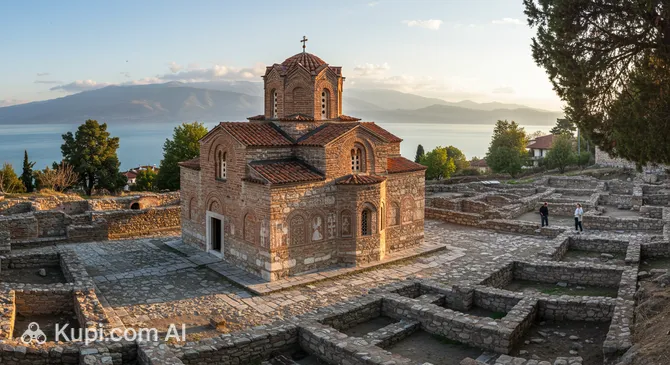
Plaošnik Archaeological Park
Plaošnik Archaeological Park. Иллюстрация. Источник: Kupi.com AI

The central figure of the park is the magnificent Church of Saints Clement and Panteleimon, restored in a traditional Byzantine style with its recognizable domes and red-brick masonry. However, Plaošnik is more than just a temple. It is a large-scale excavation site where the foundations of 5th–6th century basilicas rest under the open sky, decorated with unique mosaics depicting animals and intricate patterns.

One of the most exciting features of the modern reconstruction is the glass floor inside the active church. Through it, visitors can peer back through the centuries and see the authentic ruins of an earlier structure. This "place of power" attracts not only archaeology enthusiasts but also pilgrims from all over the world seeking to venerate the relics of Saint Clement of Ohrid.

Contacts

For more details before your visit or to organize group tours, you can use the official communication channels. Below are the main contact details for the archaeological complex.

How to contactContact
Address4Q7R+483, Kaneo Plaosnik Pateka, Ohrid 6000, North Macedonia
Phone+389 46 262 498
Websitemuzejohrid.mk

What to Do

The first thing to do is to step inside the Church of Saint Panteleimon. Be sure to look beneath your feet: glass panels in the floor offer a view of the foundations of ancient temples, creating the feeling of walking through time. Inside, you can see carefully preserved frescoes from the 11th–14th centuries and the marble sarcophagus of Saint Clement. The atmosphere here is filled with a peace that invites reflection.

Outside the temple, the ruins of the baptistery (baptismal font) and the early Christian basilica await. Study the surviving mosaics — their detail and the vibrancy of the colors after so many centuries are astounding. The site also houses the Slavic University with a rich library and a gallery featuring over 800 icons, recognized as masterpieces of world art.

Don't forget to walk to the edge of the hill. From here, you’ll find arguably the best panoramic view of Lake Ohrid and the tiled roofs of the old town. This is an ideal location for photographs, especially during the pre-sunset hours when the sun's rays beautifully illuminate the ancient walls and the water's surface.

Getting There

The journey to this historical gem is a pleasant walk in itself. Plaošnik Archaeological Park is situated on a hill on the eastern shore of Lake Ohrid. If you are in the city center, it is most convenient to go on foot: a walk from the famous Samuel's Fortress takes only a few minutes, as the distance between the sites is about 250 meters.

From the Old Town, picturesque stepped paths lead up to the hill. The climb takes 15 to 20 minutes. Along the way, you will see traditional Macedonian houses and impressive lake landscapes. For those who prefer comfort or want to save energy, taxis are always available and can drop you off as close to the entrance as possible. The nearest parking for private vehicles is also within walking distance.

If you plan to arrive from more distant areas, you can take a city bus to the waterfront and then make the ascent. Important tip: be sure to wear comfortable shoes, as the terrain involves walking on inclines and stone paths.

Ближайший город: Ohrid

History & Facts

The history of this site spans an incredible period of over 2,500 years. Archaeologists have discovered traces of settlements here dating back to the late Bronze Age. During the early Christian era (5th–6th centuries), a majestic basilica stood on the hill, and fragments of its mosaic floors still captivate visitors' imaginations with their intricate detail.

A special milestone in its history is associated with Saint Clement of Ohrid. In 893, he built a temple here and founded the Ohrid Literary School. This institution effectively became the first Slavic university, where thousands of students mastered the Cyrillic script. Thanks to the school's activities, Ohrid became one of the most important spiritual and intellectual centers in Europe at the time.

The complex had a difficult fate: during the Ottoman rule, churches were converted into mosques, and many relics were lost or hidden underground. A large-scale revival began only in 2000. By 2002, the Church of Saint Panteleimon was reconstructed according to ancient plans, and the relics of Saint Clement were solemnly returned. Today, Plaošnik is a UNESCO World Heritage site and a living testament to Slavic culture.

Time Needed

To leisurely explore all corners of the park, see the ancient mosaics, and visit the temple, it is recommended to set aside 1.5 to 2 hours for your visit. This is enough time to walk through the excavation site and look into the Slavic University.

If you plan to spend time photographing the panoramic views of Lake Ohrid or want to linger longer in the tranquility of the monastery courtyard, it is worth allocating half a day. Plaošnik is a place that does not tolerate haste; you will want to soak up the ancient atmosphere gradually.

Working Hours

The uniqueness of this place lies in its accessibility. According to official data, the territory of the archaeological park is open to visitors 24 hours a day, seven days a week. This allows tourists to see the complex both in the rays of the morning sun and in the striking evening lighting.

However, keep in mind that the interior of the church and the exhibition halls of the Slavic University may have their own specific working hours, usually coinciding with daylight hours. For walks through the open archaeological zone, there are no time restrictions.

Круглосуточно

Nearby

Visiting Plaošnik is just one part of immersing yourself in the region's rich history. The area around the hill is literally dotted with architectural and cultural monuments that help you better understand the heritage of ancient Lychnidos (the city's ancient name).

A stroll through the adjacent streets of the Old Town will reveal unique views of the ancient theater, old city gates, and cozy squares where modern life harmoniously coexists with centuries-old stones.

NameDistance
Church of Saints Clement and Panteleimon0 km
Old City Park0.1 km
Ancient Theatre of Ohrid0.3 km
Church of St. John at Kaneo0.3 km
Church of Saint Sophia0.3 km
Jazz Inn0.4 km
Kajche Restaurant0.4 km

Reached the end of the page?

That means the route is fully explored