Support

Ancient Macedonian Theatre of Lychnidos

About

Nestled on the eastern slope of the hill, in the heart of the historic quarter, lies the Ancient Theatre of Ohrid — a unique monument of Hellenistic architecture. This landmark, carefully preserved by Macedonia, is considered exceptional: it is the only surviving theater from the Greek period in the country, whereas other similar sites were built much later, during Roman rule.
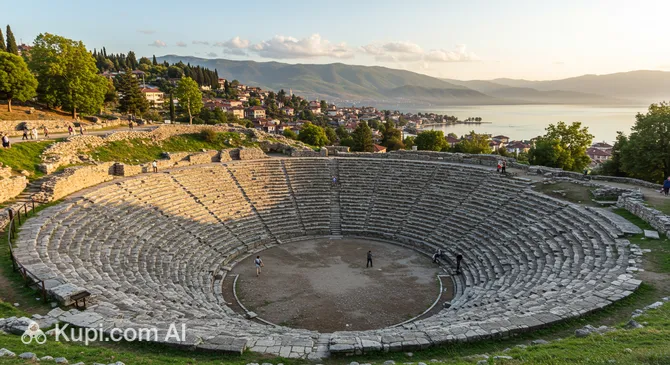
Ancient Theatre of Ohrid
Ancient Theatre of Ohrid. Иллюстрация. Источник: Kupi.com AI

Today, this archaeological site is one of the hallmarks that Ohrid is proud of. The theater is situated in a natural basin between two hills, which provided excellent acoustics in ancient times. Although only the lower part of the structure has survived to this day, its grandeur continues to impress tourists and researchers of antiquity.

Despite its venerable age, the theater remains a "living" space. Thanks to its unique location, which protects the stage from the wind, it is still used as the main stage for major cultural festivals. It is a place where ancient stones meet modern art under the open sky.

Contacts

For those planning a visit and looking for details on upcoming festivals, the following contact information will be helpful. The theater is managed by the local museum, and current announcements are frequently posted on its official resources.

How to contactContact
AddressIlindenska, Ohrid 6000, North Macedonia
Websitemuzejohrid.mk

What to Do

Once here, the first thing to do is climb the ancient stone steps to the upper rows. From this vantage point, a magnificent panoramic view opens up over the old part of the city and the shimmering surface of the lake. It is the perfect spot to feel the scale of the ancient city of Lychnidos and take memorable photos surrounded by thousands of years of history.

Archaeology enthusiasts will find it interesting to closely examine the preserved structural elements. On some of the stones, inscriptions are still visible — the names of noble citizens who once purchased permanent seats in the stands. A walk through the grounds allows you to literally touch the lifestyle of ancient society and imagine the crowds bustling here thousands of years ago.

The most vivid impression can be gained by visiting the theater during the Ohrid Summer Festival. During this time, the ancient stage comes to life with performances by opera singers, theater troupes, and world-class orchestras. The acoustics created by ancient masters still allow audiences to enjoy pure sound without the use of modern amplifiers, creating a magical atmosphere where eras unite.

Getting There

The site is located in the historic city center at Ilindenska, Ohrid 6000. It is quite easy to find: the theater is within walking distance of Samuel's Fortress and other iconic landmarks of the Old Town. Strolling through the narrow cobbled streets among ancient houses is the most pleasant and atmospheric way to reach your destination.

If you have arrived in Ohrid by car, it is best to leave it in one of the parking lots at the entrance to the Old Town. Vehicle access to this part of the city is restricted, and the walk from the parking lot takes only a few minutes. You can also use a local taxi, which will take you as close as possible to the architectural monument.

Public transport runs to the central part of the city. From the nearest stops or the embankment, the path to the theater leads through picturesque quarters, so look for signs marked "Ancient Theatre" or use a navigator to avoid missing the right turn in the labyrinth of streets.

Ближайший город: Ohrid

History & Facts

The history of this structure dates back to the late 3rd or early 2nd century BC. During the Hellenistic period, the Ancient Theatre of Ohrid was the center of cultural life: poems were recited here, musical competitions were held, and classical Greek tragedies were staged. Its location between two hills was no accident — this topography created perfect natural acoustics and protected the audience from the winds.

With the arrival of the Romans, the purpose of the site changed. During the Roman Empire, the theater was rebuilt to serve as an arena for gladiatorial combat and public executions of Christians. Due to these bloody events, local residents developed a strong aversion to the place, and after the fall of the empire, they attempted to literally erase it from memory by burying it under the earth.

This oblivion worked in the monument's favor: under a thick layer of soil, the theater remained perfectly preserved until modern times. It was discovered by chance only in the 1980s during construction work. After extensive archaeological excavations and restoration in 2001, the theater once again opened its stands to the public, reclaiming its status as the region's premier cultural venue.

Time Needed

For a leisurely exploration of the architectural details and to photograph the panoramas, you will need between 30 to 60 minutes. This is plenty of time to climb the stone steps, examine the surviving bas-reliefs, and simply sit in the stands, imagining the scale of ancient performances.

However, if your visit coincides with a concert or a theatrical production during the "Ohrid Summer Festival," you should set aside 2–3 hours. Attending a live performance in an open-air ancient setting is a completely different level of immersion that takes time but leaves unforgettable impressions.

Working Hours

One of the pleasant features of this attraction is its accessibility. The Ancient Theatre of Ohrid is open to visitors daily and 24/7. This allows tourists to come here early in the morning to catch the sunrise without the crowds, or to stop by in the evening when the ancient stones are beautifully illuminated by the city lights.

It is worth remembering that during official concerts or festivals, access to the stands may be restricted to those who do not have tickets for the event. At all other times, entry to the grounds is free, making the theater an excellent spot for a spontaneous stop during a walk through Ohrid.

Круглосуточно

Nearby

The area surrounding the theater is steeped in history, and exploring neighboring locations will help you form a complete picture of the ancient city of Lychnidos. After touring the stands, it is worth walking a bit further up the slope or heading down toward the lake to discover new architectural monuments.

Nearby, you will find both ancient gates and medieval buildings that shape the city's unique character. Below is a list of interesting sites within walking distance:

NameDistance
Church of the Virgin Mary Peribleptos0.2 km
Jazz Inn0.3 km
Church of Saint Sophia0.3 km
Church of Saints Clement and Panteleimon0.3 km
Plaošnik Archaeological Park0.3 km
Old City Park0.3 km
Kajche Restaurant0.4 km

Reached the end of the page?

That means the route is fully explored