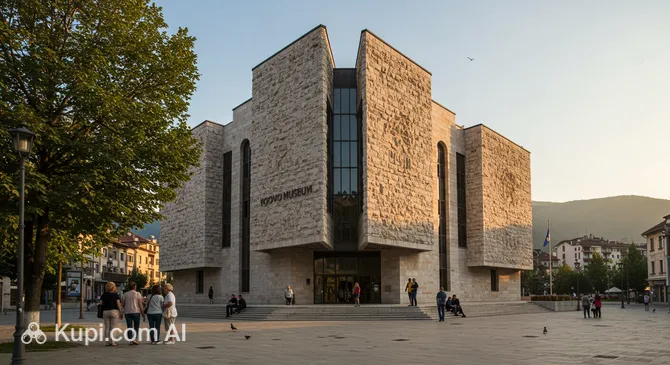
Located in the heart of the old town of Pristina, the Museum of Kosovo is the primary guardian of the country's cultural heritage. Established in 1949, it is recognized as the largest and one of the oldest heritage institutions in Kosovo. The museum building is an architectural masterpiece in the Austro-Hungarian style, built in 1889, drawing attention with its noble facade and symmetrical forms.
Traveler photos:
The museum complex brings together several important sites: the main building, the Emin Gjiku ethnological complex, and an open-air archaeological lapidarium. It houses unique collections across four divisions: archaeology, ethnography, history, and nature. The total collection is impressive, with about 30,000 exhibits, each telling its own chapter of the region's history.
Of particular value is the archaeological hall, featuring the famous "Dardanian Goddess on the Throne"—a Neolithic figurine that has become the city's symbol. Visitors can see rare artifacts from different eras, while a walk through the courtyard among ancient stelae and fragments of antique buildings creates a sense of a true journey through time.