Support

Rector's Palace

About

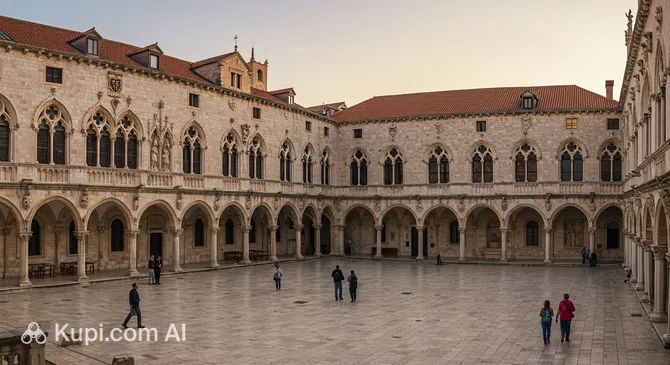
In the heart of the historic center that Dubrovnik is so proud of, lies one of the most significant buildings in the region — the Rector's Palace. This majestic structure, built in the 15th century under the guidance of architect Onofrio della Cava, is a unique architectural ensemble where elements of Gothic, Renaissance, and Baroque are harmoniously intertwined. As a UNESCO World Heritage site, the palace is rightfully considered a signature landmark of the city.
\n
Rector
Rector's Palace. Иллюстрация. Источник: Kupi.com AI
\n

For centuries, this place was the political nerve center of the Republic of Ragusa, which existed in the territory of present-day Croatia. It housed the official residence of the Rector, who was elected for only one month to exclude the possibility of usurpation of power. Under one roof with the official quarters were the assembly hall, the court, the chancery, and even a gunpowder magazine and a prison.

\n

Today, the Rector's Palace is not just a monument of the past, but a living cultural and historical museum. Its interiors and exhibits allow tourists to peek behind the scenes of the state administration of the ancient republic, seeing antique furniture, coats of arms, and weapons that have preserved the spirit of bygone eras.

Contacts

To check the latest information regarding exhibitions or events, you can use the institution's official contact details.

\n
How to contactContact
AddressUl. Pred Dvorom 3, 20000, Dubrovnik, Croatia
Phone+385 20 321 452

What to Do

The main reason to step inside is the opportunity to touch living history. Be sure to stroll through the inner courtyard with its elegant arcades. If you're lucky enough to be here in summer, you can enjoy a classical music concert — thanks to the magnificent acoustics, this space is considered one of the city's best venues. Also, pay attention to the bust of Miho Pracat — this is the only monument that the proud republic erected to a common citizen in its entire history.

\n

In the halls of the city museum, an impressive collection awaits you, including more than 15,000 works of art. Among them are paintings by famous Venetian and Dalmatian painters, antique furniture, and old coins. Exploring the palace, peek into the former offices, meeting halls, and the somber prison cells to imagine in detail how Dubrovnik's state machinery functioned many centuries ago.

\n

Don't forget to take a close look at the column capitals of the main entrance. Each of them is a work of art telling its own stories, from biblical scenes to allegorical figures, which survived destructive earthquakes and explosions, preserving the craftsmanship of ancient stonemasons.

Getting There

Finding the Rector's Palace is easy, as it is located in the heart of the historic center on the famous Luža Square. This is a pedestrian zone, so a walk through the ancient cobbled streets will be a pleasant start to your visit. The building is located in the immediate vicinity of the Town Hall and the Church of St. Blaise.

\n

If you are arriving in the city from the airport, it is most convenient to use a special shuttle, a taxi, or a rental car to reach one of the gates of the Old Town (for example, the Pile Gate). The rest of the journey must be done on foot, following the signs to the central square.

\n

Public transport does not operate inside the city walls, so it is recommended to wear comfortable shoes for walking on stone. From other parts of the city, municipal buses run regularly to the Old Town, stopping at the main entrances to the historic district.

Ближайший город: Dubrovnik

History & Facts

The history of this majestic building is full of dramatic events. Built in the 15th century, the palace has repeatedly faced serious trials. In the first half of that same century, a powerful gunpowder magazine explosion almost completely destroyed the structure, and it took about 30 years to restore it. Later, in 1667, when a catastrophic earthquake wiped most of the city off the map, the Rector's Palace was one of the few buildings that managed to stay standing.

\n

The lifestyle of the ruler—the Rector—deserves special attention. Above the entrance to the palace, one can still read a Latin inscription: \"Forget private affairs, think of the state.\" This was not just a motto, but a strict law. During his one-month term of office, the elected Rector had practically no right to leave the building for personal needs, dedicating himself entirely to serving the republic.

\n

The architectural appearance of the palace changed along with its history. After destructions and earthquakes, the building was restored, adding elements relevant to the time. This is why today we see a harmonious, if somewhat low-slung, ensemble where Gothic arches sit alongside Renaissance details and Baroque finishes on the capitals.

\n

The palace maintained its status as an official residence until 1808. The era of the Republic of Ragusa ended with the arrival of French troops under the leadership of Marshal Auguste Marmont. The last large-scale restoration of the site was carried out in the 1980s to repair the consequences of another earthquake and preserve this UNESCO masterpiece for future generations.

Time Needed

To leisurely explore the interior halls, prison cells, and the main museum exhibition, most travelers need about 1.5–2 hours. This time is quite sufficient to feel the atmosphere of medieval governance and appreciate the architectural elegance of the courtyard.

\n

If you are an art lover and plan to study the collection of 15,000 paintings by Venetian and Dalmatian masters in detail, as well as delve into all the intricacies of the history of the Republic of Ragusa through archival documents, it is worth setting aside at least 3 hours for the visit.

Working Hours

The Rector's Palace welcomes visitors daily, without days off. The museum doors are open from 9:00 to 18:00 Monday through Sunday, making it easy to include a visit in both morning and evening city walk schedules.

9:00 – 18:00

Nearby

Thanks to its central location, a visit to the palace can easily be combined with a tour of other iconic city sites. A stroll through the surroundings will allow you to immerse yourself deeper in the atmosphere of the medieval port and centuries-old architecture.

\n
NameDistance
Maritime Museum0.1 km
MILK0.1 km
Trattoria Carmen0.1 km
Dubrovnik Cathedral0.1 km
Port of Dubrovnik0.1 km
Sponza Palace0.1 km
Church of St. Ignatius0.1 km

Reached the end of the page?

That means the route is fully explored