Support

Chisasibi

About

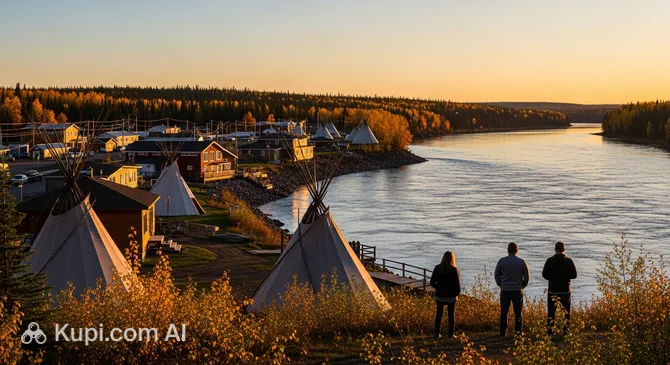
Chisasibi is a captivating destination located on the eastern shore of James Bay in northern Quebec. As the northernmost community accessible by road in the eastern part of Canada, it offers adventurous travelers a unique opportunity to experience the vast beauty of the subarctic wilderness. With a population of approximately 5,000 residents, it serves as a vibrant hub for the Cree Nation, blending modern amenities with traditional ways of life.

Chisasibi. Source: Kupi.Binoculars

The community is situated on the south bank of the majestic La Grande River. The history of Chisasibi is deeply intertwined with the relocation of the former Fort George community in the late 1970s, a pivotal event that shaped the town's modern identity. Despite the cold climate typical of this latitude, the warmth of the local hospitality makes every visit memorable.

Visitors are often drawn here to reach the end of the famous James Bay Road and to immerse themselves in authentic Cree culture. Nature enthusiasts can take a boat tour to the historic island of Fort George or witness the spectacular Northern Lights dancing across the night sky. The area is also renowned for its exceptional fishing and opportunities to explore the rugged taiga landscape.

Whether you are looking to learn about indigenous heritage or simply want to escape into the wild, Chisasibi welcomes you with open arms. Plan your journey to this remote corner of the world for an unforgettable travel experience.

Weather Overview

Chisasibi experiences a subarctic climate defined by long, frigid winters and short, mild summers. Travelers should be prepared for significant temperature variations depending on the season. The coldest months are typically January and February, where average temperatures hover around -19°C to -20°C, often dropping to lows of -24.1°C. Despite the extreme cold, precipitation volume during winter is quite low, though snow is common.

As the region warms up, the summer months provide a much gentler environment for visitors. July is the warmest time of year, featuring average daily highs of 18.8°C and comfortable averages around 14.3°C. This is the ideal season for outdoor activities, although you should still pack layers for cooler evenings. For those planning a trip, checking the detailed weather in Chisasibi is essential to pack appropriately.

Precipitation remains relatively low in terms of volume throughout the year, usually ranging between 1mm and 3mm per month. However, the frequency of wet days increases in the autumn, with November seeing up to 19 days with some form of precipitation. Overall, you can expect cool to mild summers with occasional rain and extremely cold, relatively dry winters.

Interesting Facts

Beyond the main attractions, Chisasibi holds many fascinating secrets that reveal the resilience and rich heritage of its people. Here are some intriguing facts that make this northern community truly unique:

  • A Town on the Move: The modern town of Chisasibi was established through a massive logistical feat in roughly 1980. Over 200 existing homes were physically relocated from the original settlement on Fort George Island to the mainland. Many of these structures were transported across the frozen La Grande River on giant sleighs during the winter months.

  • The Walking Out Ceremony: One of the most cherished local traditions is the "Walking Out Ceremony." In this rite of passage, toddlers dressed in traditional Cree clothing take their very first steps outdoors on spruce boughs at sunrise, officially introducing them to the land and their future roles within the community.

  • Meaning of the Name: The name "Chisasibi" translates to "Great River" in the Cree language. This is a direct reference to the La Grande River, which flows alongside the town and is the site of one of the world's largest hydroelectric developments located just upstream.

  • Mamoweedow Gathering: Despite living on the mainland now, the community maintains a deep connection to their ancestral home. Every summer, residents travel back to Fort George Island for a week-long cultural gathering called "Mamoweedow," temporarily transforming the quiet island back into a bustling village of teepees and tents.

How to Get There

Reaching Chisasibi is a true northern adventure, taking you to the end of the road in the pristine wilderness of Quebec. The primary and most famous route for visitors is the legendary James Bay Road. This paved but remote highway offers a spectacular drive through the taiga, connecting the south to this Cree community. For detailed logistics and safety tips, you can read more about how to get to Chisasibi to plan your expedition effectively.

While looking at regional data, you may notice several airports listed in the broader vicinity. It is critical to understand that these locations are not connected by road to Chisasibi. The distances shown are straight-line (geodesic) measurements across vast stretches of water or wilderness. These airports serve their own distinct communities and do not function as entry points for ground transport to Chisasibi.

For instance, Kuujjuarapik Airport (IATA: YGW) is the closest listed facility in the dataset, located approximately 192.8 km away in a straight line. However, it lies to the north and has no road link to the town. Similarly, the regional hub of Moosonee (IATA: YMO) is situated about 291.9 km away across James Bay. Travelers cannot drive, take a bus, or hail a taxi from these airports to Chisasibi.

Other regional airfields include Attawapiskat (IATA: YAT), roughly 262.1 km away, and Fort Albany (IATA: YFA). Like the others, these serve remote communities on the Ontario side of the bay or further north. Visitors intending to fly usually connect through major southern hubs directly to Chisasibi's local airport (which is distinct from those listed below) or drive up from Matagami.

Here is a summary of the regional airports found in the vicinity data, for geographical context only:

Airport Name City Passenger Traffic Geodesic Distance
MoosoneeMoosoneeMedium291.9 km
Kuujjuarapik AirportKuujjuarapikSmall192.8 km
AttawapiskatAttawapiskatSmall262.1 km
Fort AlbanyFort Albany-258.0 km

Because of the unique geography of the James Bay region, relying on the James Bay Road or scheduled flights specifically to Chisasibi's own airport are the only practical options. Always check road conditions and fuel stops in advance, as travel in this subarctic region requires careful preparation.

Main Attractions

Chisasibi Heritage and Cultural Centre is the heart of the community's history and a must-visit for anyone wishing to understand the local Cree culture. This facility houses a remarkable collection of artifacts, traditional tools, and photographs that document the lives of the Eeyou people. It serves as an educational hub where visitors can learn about the significant relocation from Fort George Island and the deep spiritual connection the residents maintain with the land.

For a journey back in time, a trip to Fort George Island offers a poignant glimpse into the past. Located at the mouth of the La Grande River, this was the original site of the community before its relocation to the mainland. In the summer, local guides offer boat tours to the island, where you can walk among the remnants of the old village, visit the historic cemetery, and hear stories about life at the "Old Post" before the modern town was built.

Just a short drive upstream from the town lies the impressive La Grande-1 Generating Station. As the last dam on the river before it meets James Bay, this massive hydroelectric structure is a testament to engineering ingenuity in the north. Visitors can often access viewpoints to admire the sheer scale of the dam and the powerful flow of the river, which is particularly spectacular when the spillway gates are open.

Nature lovers will appreciate the rugged beauty of the James Bay Coast. Chisasibi provides rare road access to this vast inland sea, allowing travelers to stand on the shores of the Arctic waters. It is an excellent spot for watching stunning sunsets, observing migratory birds, and, during the colder months, witnessing the awe-inspiring Northern Lights free from light pollution.

Local Cuisine

The culinary landscape of Chisasibi is a reflection of the Cree Nation's deep connection to the land and the seasons. Rather than high-end dining, the local food culture is centered around traditional "country food"—sustenance harvested directly from the surrounding wilderness. For visitors, this offers a rare chance to taste authentic dishes that have nourished the Eeyou people for generations, characterized by their freshness and simplicity.

At the heart of any traditional meal is bannock, a dense and comforting bread that is a staple in the North. Whether baked in an oven or fried in a pan, it is the perfect accompaniment to the region's hearty stews. Wild game plays a significant role in the local diet, with goose being a particular delicacy, especially during the spring and autumn migration seasons. You may also encounter dishes featuring moose or caribou, often prepared in slow-cooked broths to preserve their natural flavors.

Given the town's location near James Bay and the La Grande River, fish is another cornerstone of the diet. Speckled trout, whitefish, and pike are commonly enjoyed, either fried fresh, smoked, or dried for preservation. To drink, hot tea is the beverage of choice, often consumed throughout the day and always present at gatherings. It is worth noting that while you can find standard soft drinks and juices, the availability of alcohol is regulated, and there are no bustling bars or nightlife districts; the focus here is on community and conversation.

Tourists should be aware that the restaurant scene in Chisasibi is modest. Dining options are primarily found within the local commercial center or at the main hotel, serving a mix of standard Canadian comfort food (like burgers and pizza) alongside some traditional items. For the most authentic culinary experience, visiting during a cultural festival or a community feast is highly recommended, as this is where the full variety of traditional country food is shared and celebrated.

Travel Tips

Traveling to Chisasibi is an adventure into the heart of the Eeyou Istchee territory, and a little preparation goes a long way in this remote subarctic community. To ensure your visit is respectful, safe, and enjoyable, here are some essential practical tips to keep in mind before you arrive at the end of the James Bay Road.

  1. Clothing and Gear: The weather here dictates your wardrobe. In winter, you need expedition-grade gear, including a heavy parka, insulated windproof pants, and boots rated for -40°C. In summer, the temperatures are mild, but the insects can be intense. A bug jacket or a head net, along with high-quality insect repellent, is absolutely mandatory if you plan to step outside the town center. Always pack layers, as evenings can be cool even in July.

  2. Transportation: Chisasibi is a small, walkable community, but having a car is highly recommended for exploring the surrounding coastline and accessing the LG-1 dam. There is no public transit system like subways or buses. Local taxis are available and reliable for getting around town; simply ask your hotel front desk or a local store for the number. Ride-hailing apps like Uber do not operate here.

  3. Finances: The currency is the Canadian Dollar (CAD). While the main hotel, gas station, and the Northern Store accept credit and debit cards, it is wise to carry cash. You will need cash for purchasing authentic arts and crafts from local artisans or for smaller convenience stores. There is a bank and ATMs available in town, but carrying a backup reserve is always a smart move in remote regions.

  4. Health and Safety: Chisasibi is home to a modern regional hospital that provides emergency services and medical care. The town is generally very safe, but the surrounding wilderness requires caution. Be "bear aware" if hiking near the river or coast, and never venture far onto the land or ice without a local guide, as weather conditions can change rapidly.

  5. Communication: The primary language spoken is Cree, followed closely by English. Unlike many other parts of Quebec where French is dominant, English is widely understood and spoken fluently here. A friendly "Wachiya" (Hello) is a great way to break the ice. Cell phone coverage is available but generally limited to major national carriers; check your roaming plan before arrival. Wi-Fi is available at the hotel and cultural center.

  6. Local Etiquette: The community is tight-knit and values respect. Always ask for permission before taking photographs of local residents, especially Elders and children. It is polite to remove your shoes when entering a home. If you are invited to a feast or gathering, accept food graciously, as sharing is a cornerstone of Cree culture.

  7. What to Avoid: Chisasibi is a "dry" community regarding the sale of alcohol. You cannot buy beer, wine, or spirits anywhere in town—there are no liquor stores or bars. While possession for personal consumption in private might be tolerated, public intoxication is strictly frowned upon and disrespectful. Do not consume alcohol in public spaces.

  8. Fuel and Logistics: Keep a close eye on your fuel gauge and service hours. Stores and gas stations may close earlier than in big cities, particularly on Sundays. If you are driving back south, it is critical to fill up your tank in Chisasibi before leaving. The James Bay Road is isolated, and the only fuel stop between the northern communities and Matagami is Relais 381 (at Kilometer 381). Missing this stop could leave you stranded, as services are hundreds of kilometers apart.

By respecting these local customs and coming prepared for the unique environment, you will find the people of Chisasibi to be incredibly warm and welcoming. Embrace the slower pace of life in the North, and enjoy your journey to the edge of the Arctic waters.

Entertainment & Nightlife

When it comes to entertainment and nightlife, Chisasibi offers an experience that is vastly different from the bustling club scenes of southern cities. It is important for visitors to understand immediately that this is a dry community. The sale of alcohol is prohibited within the town limits, meaning there are no bars, pubs, nightclubs, or liquor stores. Instead of loud music and cocktails, the "nightlife" here is defined by the community's rich culture, social gatherings, and the breathtaking natural phenomena of the subarctic sky.

The most spectacular evening entertainment in Chisasibi is provided by nature itself. Located far from the light pollution of major urban centers, the town is a prime viewing spot for the Northern Lights (Aurora Borealis). On clear winter nights, the sky often comes alive with dancing ribbons of green, pink, and violet. Many visitors venture just outside the town center or drive towards the coast near James Bay to witness this awe-inspiring display, which serves as the region's most famous "light show."

Social life in the evenings revolves around community facilities and events rather than commercial nightlife districts. The Chisasibi Community Centre is often the hub of activity, hosting everything from high-energy hockey games to community bingo nights and traditional feasts. Hockey is a passion here, and attending a local game at the arena is a great way to immerse yourself in the local atmosphere and cheer alongside the residents. The vibe is casual, family-friendly, and welcoming.

For dining in the evening, options are limited but cozy. The restaurant at the Auberge Maanitaaukimikw is one of the primary venues for a sit-down meal. While you won't find a wine list, you can enjoy hearty, warm dishes that provide comfort against the cold. It serves as a quiet place to relax after a day of exploration. Another spot for casual bites is the food court area within the Chisasibi Commercial Center, where locals often gather during the day and early evening.

Safety at night in Chisasibi is generally very high regarding crime, but environmental awareness is crucial. If you are walking at night, especially near the outskirts or the river, be mindful of wildlife; black bears and even polar bears have been known to approach the area. It is advisable to take a taxi rather than walk long distances in the dark or extreme cold. Chisasibi Taxi services are available, and locals can help you with the phone number, as there is no Uber or Lyft.

During the daylight hours, entertainment focuses on cultural immersion and the outdoors. The Chisasibi Heritage and Cultural Centre is the premier attraction, offering deep insights into Cree history and art. Visitors also spend their days exploring the rugged trails, fishing on the La Grande River, or taking guided tours to Fort George Island. The pace of life here is slow and intentional, inviting travelers to disconnect from the chaos of the modern world and reconnect with nature and community.

Parks & Museums

Chisasibi offers a distinct blend of cultural depth and raw natural beauty, where "green spaces" are defined not by manicured city gardens, but by the vast, untamed wilderness of the taiga and the river. Visitors here can explore areas that serve as both recreational grounds and sacred historical sites, seamlessly merging the outdoors with the story of the Cree Nation.

James Bay Coast serves as the community's most spectacular natural area. Located just a short drive west of the town center, this rugged shoreline offers visitors rare access to the salt waters of the Arctic watershed. It is a place of serene beauty, where the boreal forest meets the sea. Tourists often visit to walk along the rocky beaches, watch migratory birds, or simply witness the breathtaking sunsets that paint the sky over the bay. It is an ideal spot for photography and quiet reflection.

Another significant outdoor area is the First Rapids on the La Grande River. This spot is a favorite among locals for picnicking and fishing, offering a chance to see the power of the "Great River" up close. The area is naturally landscaped with spruce and rock, providing a genuine subarctic environment for hiking or relaxing by the water. It is an excellent location to observe local fishermen practicing traditional harvesting methods, connecting the land's resources to the community's daily life.

In terms of cultural institutions, the Chisasibi Heritage and Cultural Centre stands as the premier facility in the region. This museum is dedicated to preserving the rich history of the Eeyou people, with a special focus on the dramatic relocation from Fort George Island. The exhibits feature traditional clothing, hunting tools, and archival photographs that tell a story of resilience and adaptation. It is an essential stop for anyone wishing to understand the soul of the community.

While not a traditional indoor museum, Fort George Island functions as a poignant open-air historic site. Accessible by boat in the summer or snowmobile in the winter, the island preserves the layout of the original settlement. Visitors can explore the remnants of the old Anglican church, the cemetery, and the foundations of former homes. It offers a tangible connection to the past, serving as a living memory for the Elders and an educational landscape for tourists.

For an authentic insider experience, keep an eye out for the traditional Mitchuap (teepees) often set up near the cultural center or during community gatherings. These structures are not just displays but active spaces where traditional cooking and storytelling take place. Stepping inside one offers a warm, aromatic welcome of spruce boughs and woodsmoke, providing a sensory understanding of Cree heritage that no glass-cased exhibit can match.

Getting Around

Visitors arriving in Chisasibi should be aware that the public transport landscape here is quite different from that of a large metropolitan city. There is no subway system, tram network, or scheduled municipal bus service operating within the community. The town is relatively small and compact, meaning that the infrastructure is designed primarily for personal vehicle use and pedestrian traffic rather than mass transit.

For tourists without their own vehicle, the primary mode of motorized transport is the local taxi service. Taxis are reliable and serve as the de facto public transportation for residents and visitors alike. They can take you to key locations such as the commercial center, the hospital, or the airport. Since there are no designated taxi stands with queues, you will need to call the dispatch number to arrange a pickup. It is a good idea to ask your hotel front desk or a local shopkeeper for the current number of Chisasibi Taxi upon arrival.

Regarding payment, the system is straightforward and traditional. There are no travel passes, smart cards, or mobile ticketing apps to worry about. Fares are typically fixed flat rates for trips within the town limits, rather than metered by distance. Cash is the standard method of payment, and it is highly recommended to carry small bills and coins. While some drivers might accept transfers, you should not rely on electronic payments; always have cash on hand to ensure a smooth journey.

Walking is a viable and pleasant alternative for getting around the central area of the community, particularly during the mild summer months. The town is navigable on foot, and many amenities are within a reasonable distance of each other. However, during the winter, when temperatures drop significantly, walking long distances can be challenging without proper gear. In these colder months, booking a taxi or having access to a vehicle becomes much more important for safety and comfort.

Ride-sharing apps such as Uber or Lyft are not available in this region. Similarly, there are no public bike-sharing schemes or electric scooter rentals. For those planning to explore beyond the town limits—such as visiting the James Bay coast or the LG-1 generating station—having a personal vehicle is essential, as taxis may not offer service to these outlying areas. In winter, you will also notice that snowmobiles are a common form of local transport, though these are generally privately owned and not part of a public rental system for general transit.

Accommodation

Accommodation in Chisasibi is limited and functional, reflecting its status as a remote northern community rather than a mainstream tourist resort. Visitors should not expect a wide array of options such as luxury chains, budget hostels, or extensive vacation rentals. Instead, the available lodging is designed to serve practical needs, offering a warm and comfortable base for those exploring the James Bay region or working in the area.

The primary place to stay is located centrally within the community, making it convenient for accessing local services like the general store, the bank, and the cultural center. The most well-known establishment is the Auberge Maanitaaukimikw. This hotel provides standard, modern amenities including Wi-Fi and television, and it houses a restaurant that serves as a key social spot for the town. It is the go-to choice for travelers seeking a reliable and safe environment.

Because options are so scarce, it is absolutely critical to book your accommodation in advance. Do not arrive in Chisasibi without a reservation, especially during the summer tourist season or when community events like hockey tournaments are taking place, as the hotel can fill up quickly. Turning up without a plan could leave you with nowhere to stay after a very long drive.

Regarding costs and booking methods, prices tend to be in the mid-range to higher bracket, reflecting the higher cost of operating in the subarctic. Unlike hotels in major cities that appear on every global booking platform, accommodation here is best secured by contacting the establishment directly via phone. Be prepared for a straightforward, old-fashioned hospitality experience where personal connection is key.

Nearby Cities

Given Chisasibi's remote location on the James Bay coast, it is important for visitors to appreciate the vast scale of the surrounding wilderness. There are no immediate neighboring towns suitable for casual day trips. Instead, the nearest settlements function as major regional hubs located hundreds of kilometers to the south. Travelers exploring the broader region or driving the long route north may pass through Chibougamau, a key gateway for outdoor enthusiasts, or Amos, which sits at the heart of the Abitibi region. Further to the southeast, Dolbeau-Mistassini serves as another significant urban center connecting the northern territories to the rest of the province.

City Population Distance (km)
Dolbeau-Mistassini 14250 487
Amos 12823 566
Kapuskasing 8000 536
La Sarre 7700 539
Chibougamau 7500 510

These distances highlight the isolation of Chisasibi, making it a true destination for those seeking solitude and adventure at the edge of the continent.

Shopping & Souvenirs

Shopping in Chisasibi is a unique experience that reflects the community's remote location and practical needs. Unlike the bustling retail districts of southern cities, the shopping scene here is functional and community-oriented. Visitors will not find high-fashion boutiques or sprawling outlet malls; instead, the focus is on essential goods, outdoor gear suitable for the subarctic climate, and, most notably, exquisite authentic indigenous crafts. For tourists, the primary appeal lies in discovering locally made art that carries the distinct cultural signature of the Cree Nation.

The hub of all commercial activity is the Chisasibi Commercial Center. This central complex serves as the town's gathering place and houses the majority of the community's businesses under one roof. It is the most convenient place to find groceries, banking services, and dining options. For a visitor, walking through the center offers a glimpse into daily life in the North, where shopping runs are often combined with social interactions and community news.

Within the commercial landscape, the Northern Store stands out as the most significant retailer. Common in remote Canadian communities, this department store acts as a "one-stop shop" for almost everything a resident or traveler might need. From fresh produce and dry goods to heavy-duty winter clothing, ATVs, and snowmobiles, the Northern Store is the lifeline for modern supplies. It is also a good place to pick up any toiletries or camping gear you may have forgotten to pack.

While there are no traditional flea markets, the trade of local goods is vibrant and often informal. The most interesting "market" for a tourist is the direct connection with local artisans. Cree arts and crafts are world-renowned for their quality and intricate designs. Visitors should look for opportunities to purchase items directly from the creators, often found at community events, set up near the Cultural Centre, or advertised on local community boards within the Commercial Center.

When searching for souvenirs, the best items to bring back are those that represent the Eeyou culture. Tamarack geese—decoys handcrafted from the twigs of the tamarack tree—are a signature craft of the James Bay Cree and make for beautiful, aromatic sculptures. Hand-sewn moccasins and mittens made from moose hide, often decorated with delicate beadwork or embroidery, are also highly prized. These items are not mass-produced; each piece tells a story of traditional skills passed down through generations.

Store hours in Chisasibi are generally standard, with most businesses opening around 9:00 AM or 10:00 AM and closing by 6:00 PM. The Northern Store and grocery outlets may have extended evening hours and are usually open on weekends, though Sunday hours can be reduced. Regarding payment, major credit and debit cards are widely accepted at established businesses like the Northern Store and the hotel. However, if you plan to buy crafts directly from an artisan, cash is essential, as private sellers rarely have card terminals.

It is also important to remember that Chisasibi is a "dry" community. There are no liquor stores, and alcohol is not sold in any shop or grocery store within the town. Tourists looking for duty-free goods or tax refunds will not find specific facilities here; standard sales taxes apply to purchases, and the tax-free refund systems found in major international airports are not available in this remote region.
Reached the end of the page?

That means the route is fully explored