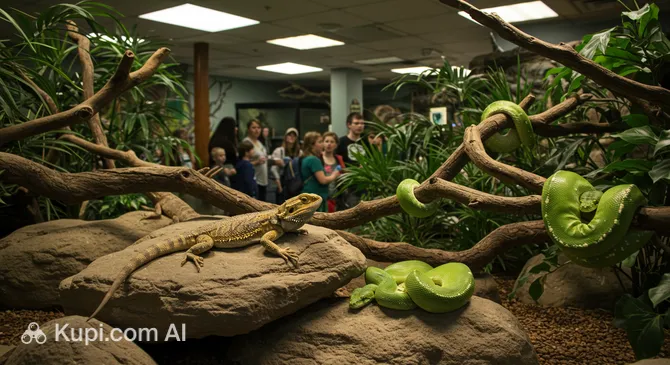
On the outskirts of the vibrant city of Hamilton lies a wonderful corner of wildlife — Little Ray's Reptile Zoo and Nature Centre. This specialized facility in the province of Ontario is rightfully considered one of the most interesting educational centers in a country like Canada.
Little Rays Reptile Zoo and Nature Centre. Illustration.
Source: Kupi.com AI
Traveler photos:
The center's exhibition is dedicated to showcasing exotic animals and includes an impressive variety of species: from graceful snakes and bizarre lizards to unshakeable turtles. Each animal lives in enclosures that mimic their natural environment, allowing guests to observe their behavior in conditions close to nature.
Little Ray's primary mission lies in education and environmental awareness. The center functions not only as a zoo but also as a serious educational platform, offering programs for children and adults aimed at studying zoology and the importance of preserving our planet's biodiversity.
Contacts
When planning your visit to meet the center's amazing residents, it is helpful to check the current contact information in advance. The table below provides details to help you easily find the facility and clarify visiting details.
The center's staff are always ready to answer questions about current exhibitions and educational programs by phone or through the official website.
A walk through the center turns into a real exploration, where each terrarium opens a new page in the lives of mysterious reptiles. Visitors can see rare species of scaled inhabitants in detail, observing their feeding, resting, and habits in specially equipped areas.
The interactive educational programs are especially popular with guests. The center's staff conduct engaging shows, sharing fascinating facts about animal biology and behavior. This is a great opportunity to learn how reptiles survive in the wild and what role they play in the ecosystem.
For the boldest visitors, there are moments of close contact: under strict supervision, visitors are sometimes allowed to hold certain safe reptiles. The center also regularly hosts themed events and quests for children, making the learning process active and memorable.
Getting There
The easiest way to reach this natural oasis, located at 869 Barton St E, is by private or rental car. The city's road network is well-developed, and following the signs toward the eastern part of Barton Street will lead you straight to your destination.
For those who prefer public transport, buses run regularly from the city center. Stops are located in the immediate vicinity of the zoo entrance, making the trip comfortable even for tourists without a car. It is recommended to check the schedule in advance on Hamilton's official public transport website.
Another popular option is a taxi. A ride from central districts or major transport hubs will take very little time, providing a quick and direct transfer to the doors of the nature center.
Nearest city: Hamilton
History & Facts
The history of Little Ray's began with a noble goal — to foster public interest and respect for the world of reptiles through direct interaction. Initially conceived as a modest private collection, the creators' passion for their work transformed it into one of the region's most significant educational resources.
Over the years, the center has become a vital link in the conservation of rare and endangered species. Many of the zoo's residents arrived here as part of animal rescue programs or are involved in international breeding initiatives for species at risk of extinction.
Collaboration with leading zoological institutions and conservation organizations has allowed the center to reach a high professional level. Today, this place is recognized not just as an exhibition of exotic animals, but as a reputable rehabilitation center that actively participates in the scientific community and environmental education.
Time Needed
To explore all the enclosures without rushing and catch one of the fascinating demonstration shows, a typical visitor is recommended to set aside 2 to 3 hours. This is usually enough time for a relaxed introduction to the main exhibition and participation in interactive modules.
If you are planning a visit with children, the duration may increase, as young naturalists often linger at the terrariums and enjoy taking part in all the activities offered. It is recommended to plan your visit so as not to miss the educational programs, the schedule for which can be confirmed at the entrance.
Working Hours
The nature center's schedule may vary depending on the season, special educational programs, or private events. To ensure your trip goes perfectly, we strongly recommend checking the current opening hours on the official website immediately before your visit.
Generally, the center is open to the public throughout the week, though hours may be reduced on holidays. Confirming this information in advance will help you better plan your day and ensure you don't miss the animal demonstration shows.
Nearby
Exploring the surroundings after visiting the zoo can significantly enrich your trip experience. The area offers several great spots for outdoor recreation that will particularly appeal to families with children.
In the immediate vicinity of the center, there are many playgrounds and parks where you can relax and enjoy nature. Below is a list of nearby attractions worth including in your itinerary.