Support

Museum London

About

On the scenic banks where the Thames River forks in London, you will find one of the most compelling cultural spaces Canada has to offer. Museum London is more than just an exhibition hall; it is Southwestern Ontario's leading institution, combining an art gallery with a rich historical archive.
\n\n
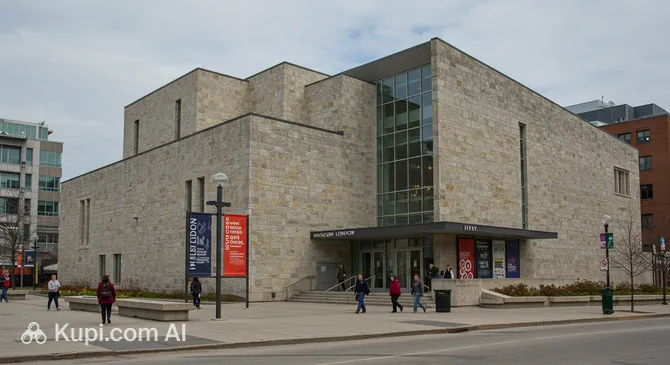
Museum London. Source: Kupi.com AI
\n\n

The museum building, designed by the famous architect Raymond Moriyama, is a landmark in its own right. Its modern lines perfectly complement the landscape, creating an atmosphere of openness and inspiration. Inside, visitors are greeted by a massive collection: over 5,000 works of art and approximately 45,000 historical artifacts reflecting the material culture of the region.

\n\n

The museum's mission is to preserve and present the unique identity of the city. Here, art intertwines with history, allowing guests to gain a deeper understanding of how the region has evolved over the centuries and the role it plays in the country's contemporary cultural life.

Contacts

For more information about special events or to plan a group visit, you can use the institution's official contact details:

\n\n\n \n \n \n \n \n \n \n \n \n \n \n \n \n \n \n \n
Address421 Ridout St N, London, ON N6A 5H4, Canada
Phone+1 519-661-0333
Websitemuseumlondon.ca
Google MapsView on map

What to Do

Within the walls of the museum, there is something for everyone. On the second floor, you will find galleries dedicated to Canadian art. Be sure to look for the works of the famous "Group of Seven"—their paintings are considered national treasures and brilliantly capture the rugged beauty of the northern wilderness. This floor also hosts regularly rotating exhibitions of contemporary artists who bring fresh ideas to the museum space.

\n\n

If you are more interested in the secrets of the past, head down to the lower level. This area houses historical items telling the story of the first settlers and the city's transformation into a major regional center. Vintage photographs and everyday objects allow you to literally touch history and see how the appearance of these lands has changed over the centuries.

\n\n

After exploring the halls, it is worth stopping by the museum shop on the first floor, where you can find unique souvenirs and crafts by local artisans. If you'd like to discuss your experience over a cup of coffee, there is a cozy cafe in the building with a pleasant view. For those who prefer a digital format, the museum provides access to online catalogs where you can examine rare objects from the collections in detail.

Getting There

Finding this cultural hub is easy—it is located in the heart of the city at 421 Ridout Street North. The museum's modern building sits at a picturesque spot where the Thames River forks, making it a prominent landmark for those strolling through the downtown area.

\n\n

For those traveling by car, there is a small paid parking lot located right in front of the entrance. The rate is approximately $2 per hour, and it is important to remember that you may need coins for the machine. If you are arriving by taxi or public transit, the trip from the main downtown transport hubs takes only a few minutes.

\n\n

Thanks to its central location, the museum is easily accessible on foot from many hotels and major transit stops, allowing you to enjoy views of the river and the city's architecture along the way.

History & Facts

The history of the institution dates back to 1940. At that time, the future cultural center occupied just a few modest rooms within the city's Public Library. However, the collection grew rapidly, and eventually, the need arose for a dedicated, specialized space.

\n\n

In 1980, the current building was constructed based on a design by the renowned architect Raymond Moriyama. It became more than just a repository for art; it was a striking example of modern regional architecture. A major milestone occurred in 1989 with the merger of the London Regional Art Gallery and the London Historical Museum.

\n\n

This merger created the unique "Museum London" as it stands today. It now houses a legacy spanning over 70 years of active collecting, including artifacts and artworks dating back to the early 19th century. It is a place where the city's past and its artistic vision are inextricably linked.

Time Needed

To enjoy a leisurely stroll through the main galleries and see the key exhibits, most visitors need between 1.5 and 2 hours. This is usually enough time to explore the art collection and the historical displays on the lower level.

\n\n

If you are an art lover who enjoys studying temporary exhibitions in detail, or if you plan to attend an educational event and relax at the local cafe, we recommend setting aside 2.5–3 hours for your visit. The architecture of the building itself and the views of the river are also worth taking your time for.

Working Hours

When planning your visit, please note that the museum is closed on Mondays. On other days, the institution is open to guests according to the following schedule:

\n\n
    \n
  • Tuesday, Wednesday: 11:00 AM – 5:00 PM
  • \n
  • Thursday: 11:00 AM – 8:00 PM (a great option for an evening visit)
  • \n
  • Friday – Sunday: 11:00 AM – 5:00 PM
  • \n
\n\n

This schedule makes it easy to fit a gallery visit into either a daytime stroll or your plans for a Thursday evening.

Nearby

A visit to the museum can easily be paired with other interesting sites located nearby. This allows you to create a full itinerary in the downtown area and gain a better understanding of the city's history and culture.

\n\n\n \n \n \n \n \n \n \n \n \n \n \n \n \n \n \n \n \n \n \n \n \n \n \n \n \n \n \n \n \n \n \n \n \n \n \n \n \n \n \n \n \n \n \n \n
NameDistance (km)
Splash Pad (Forks of the Thames)0.1
Middlesex County Courthouse0.1
St. Peter's Cathedral Basilica0.7
Victoria Park Gates0.9
CPKC Train Station1.3
The Royal Canadian Regiment Museum2.6
Elsie Perrin Williams Estate4.2
Storybook Gardens5.8
East Park London7.2

Reached the end of the page?

That means the route is fully explored