Support

Stones 'N Bones Museum

About

An exciting journey through the ages begins in the heart of Sarnia at the Stones 'N Bones Museum. This unique venue is a non-profit gallery that serves as a fascinating portal into the region's geological and paleontological past. Here, in a cozy and intimate atmosphere, visitors can explore an impressive international collection of over 6,000 exhibits.
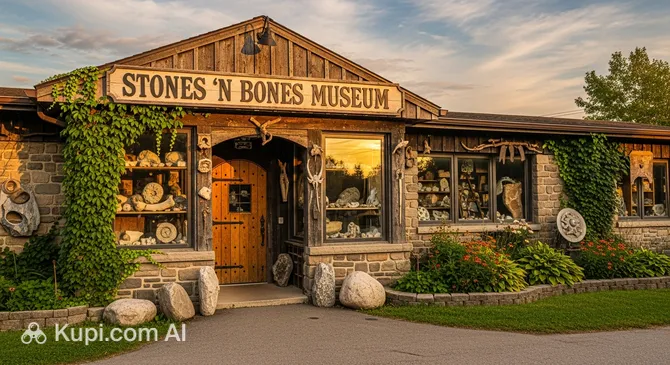
Stones 'N Bones Museum. Source: Kupi.com AI

The museum's exhibits are masterfully divided into thematic zones. The "Stones" section showcases shimmering minerals, rare gemstones, and incredible trilobites discovered in local quarries. The "Bones" section impresses with dinosaur remains, bones from Ice Age giants, and indigenous artifacts that offer a glimpse into the lives of the land's ancient inhabitants.

Special attention is given to the geology of the Great Lakes. Visitors can learn how ancient seas and glacial movements shaped the landscape of modern-day Canada. Thanks to its high ratings and recognition from travelers, this museum is considered one of Ontario's hidden gems, offering an educational experience that will captivate both experts and casual tourists alike.

Contacts

To find out more about special exhibitions or to arrange group tours, you can contact the museum administration directly. Their team of volunteers and experts is always ready to answer questions from curious travelers.

Below are the main contact details for reaching out and planning your visit:

Address 223 Christina St N, Sarnia, ON N7T 5V1, Canada
Phone +1 519-336-2100
Official Website http://www.stonesnbones.ca/

What to Do

An incredible variety awaits you within the museum's walls: from tiny fossils found in local backyards to massive skeletons of prehistoric creatures. Be sure to check out the collection of local trilobites and minerals gathered on the shores of Lake Huron after heavy storms—these finds highlight the museum's unique connection to the region's soil.

For families with children, the Stones 'N Bones Museum is a true discovery. Curiosity is highly encouraged here: kids love exploring the upper-floor collection and participating in educational tours. Many exhibits are displayed so artistically that it feels like walking through the pages of a history book that has suddenly come to life.

Beyond just viewing the exhibits, you can learn a wealth of information about the geological processes that formed the Great Lakes system. The friendly staff and volunteers often share fascinating facts that aren't always found in guidebooks. It is the perfect place for those looking to escape the city bustle for a couple of hours and dive into the mysteries of our planet.

Getting There

Finding the Stones 'N Bones Museum is easy, as it is conveniently located in the heart of the city in a historic building on Christina St N. If you are already strolling through downtown Sarnia, the museum gallery is within easy walking distance of the waterfront and local parks.

For those who prefer to drive, there are parking spaces available around Christina Street. Travelers arriving from Toronto or nearby Detroit usually follow the main highways toward Lake Huron, heading for the city's central districts.

Public transport is also a convenient option, with Lambton Transit buses stopping in the immediate vicinity of the museum. International tourists often note that navigating the area is intuitive, and its proximity to Germain Park makes the route even more pleasant.

History & Facts

The history of the Stones 'N Bones Museum is an inspiring example of how a private passion can become a public treasure. It all began with the efforts of local enthusiasts, dedicated geologists, and fossil hunters who spent decades collecting trilobites from local quarries and rare minerals from lake shores. For a long time, these treasures were kept in private collections until the idea arose to bring them together to educate both residents and visitors of the region.

The museum was officially founded by Jim and Allison Richards in 1994. Initially, the exhibition was housed in the Bayside Mall, operating as a non-profit project. Over its thirty-year history, the museum has not only survived without permanent government funding but has also significantly expanded, becoming one of the most respected private collections in its field.

About 14 years ago, the museum moved to its current spacious building on Christina Street. Today, it is recognized as one of the best small museums in all of Canada. Within its walls, the pages of Ontario’s ancient history come to life, preserved through the hard work of volunteers and the community's love for science and ancestral heritage.

Time Needed

To explore the extensive collection of more than 6,000 objects without rushing, the average visitor is recommended to set aside 1.5 to 2.5 hours. This is enough time to carefully examine the detailed display cases and read the information placards that tell the amazing stories of each exhibit.

If you are planning a visit with children, your stay may be longer, as young explorers often linger by the dinosaur skeletons and interactive zones. The museum is truly mesmerizing in its variety, so many guests find that one short visit isn't enough to fully immerse themselves in this paleontological wonderland.

Working Hours

Currently, the museum typically welcomes guests at the end of the week. According to current data, the doors are open from Friday to Sunday, 11:00 AM to 5:00 PM. The museum is usually closed on Monday, Tuesday, Wednesday, and Thursday.

Since the schedule may change depending on the season or special events, it is highly recommended to check the exact visiting hours on the official website before your trip to ensure your visit is as smooth as possible.

Nearby

After immersing yourself in the world of ancient fossils and rare stones, it's worth taking some time to explore the museum's surroundings. Sarnia offers many interesting locations within walking distance or a short drive, allowing you to better experience the atmosphere of this border city and its maritime heritage.

A walk along the St. Clair River waterfront or a visit to historic lighthouses would be an excellent addition to your cultural program. Many of these sites are linked to the rich history of shipping on the Great Lakes and offer picturesque views, perfect for wrapping up a busy day.

Name Distance (km)
Sarnia Cenotaph 0.5
Eastern Most Point of Michigan 0.9
Great Lakes Monument Of Lands Point 1
Port Huron Grand Trunk Car Ferry Dock 1.7
St. Clair River Tunnel - Sarnia 1.8
Point Edward Rear Range Light 2.6
Thomas Edison Parkway Light Beacon 2.7
Point Edward Front Range Lighthouse 3.2
STORM OF 1913 Monument 3.3
Fort Gratiot Lighthouse 3.8

Reached the end of the page?

That means the route is fully explored