Support

Puerto Varas

About

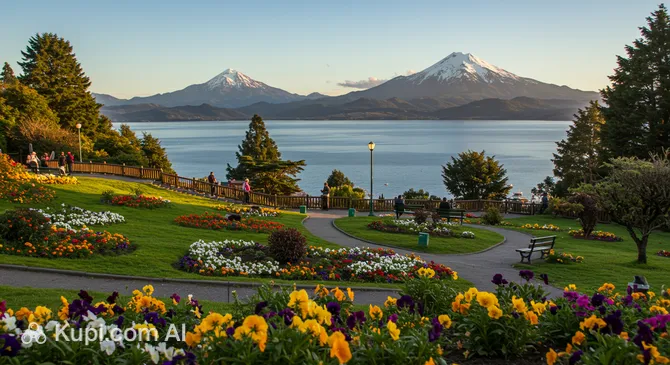
Puerto Varas is a true gem of the Lake District, nestled on the shores of the majestic Lake Llanquihue. Often called the "City of Roses," this picturesque corner charms travelers at first sight with its unique architecture and breathtaking scenery. Located in the southern part of Chile, it serves as the perfect gateway to Northern Patagonia, offering guests a harmonious blend of relaxation and adventure.

With a population of about 26,000 people, the city maintains an atmosphere of intimacy and comfort despite its popularity among tourists. Its geographical position plays a key role: Puerto Varas literally overlooks the snow-capped peaks of the Osorno and Calbuco volcanoes, creating one of the most recognizable and photographed panoramas in the country. The climate here is temperate and humid, which encourages the lush blooming of thousands of rose bushes that fill the streets with fragrance and color during the summer season.

The city's strong European influence gives it a special charm. Strolling through the center, you will see magnificently preserved historic mansions built by descendants of German immigrants in the 19th century, many of which are now recognized as national monuments. The fascinating history of Puerto Varas is reflected not only in this characteristic architecture but also in its gastronomy, creating a surprising cultural mix amidst South American nature.

Puerto Varas. Illustration.
Source: Kupi.com AI

Travelers are drawn here not only by the postcard views but also by the wide range of outdoor activities. Lake Llanquihue — the second largest in the country — is ideal for kayaking, sailing, and fishing, while the turbulent rivers in the surrounding areas attract rafting enthusiasts. Those who prefer a slower pace can enjoy leisurely strolls along the waterfront, admiring how the volcanoes reflect in the mirror-like water on clear days.

Puerto Varas is a place where you can truly relax and feel in harmony with the world around you. Whether you are looking for new gastronomic experiences, a connection with nature, or a convenient starting point to explore the wild beauty of the Los Lagos region, this welcoming city is sure to capture your heart and provide unforgettable memories.
Weather Overview

The climate in Puerto Varas is temperate and humid, typical of the Lake District of southern Chile. The weather here is changeable, and the ocean's influence smoothes out temperature fluctuations, preventing extreme heat or severe frosts, though rain is a frequent companion to local landscapes.

The summer season, lasting from December to February, is considered the best time to visit. During these months (especially in January and February), the average temperature stays around 15-16°C, and during the day the air warms up to a comfortable 19-20°C. This is the driest period of the year: the number of rainy days drops to 7–9 per month, which is ideal for walks and excursions.

Winter (June-August) brings coolness and abundant rainfall. The average temperature drops to 7-8°C, and nights become cold, with minimums around 5°C. June is the rainiest month, when bad weather can last for up to 22 days. The shoulder seasons (April-May and September-October) are characterized by gradual temperature changes from 9 to 12°C and variable cloudiness.

Expect moderately warm summers favorable for tourism and cool, very humid winters with frequent rain. To properly prepare for your trip and choose the right clothing, we recommend checking what the weather in Puerto Varas is like in different seasons.

Average monthly temperature

Average monthly precipitation

Interesting Facts

Помимо основных достопримечательностей, Пуэрто-Варас хранит множество увлекательных секретов и уникальных традиций, которые делают его особенным. Этот город удивит вас не только пейзажами, но и своей живой историей и колоритными легендами.
  • The city takes pride in its romantic nickname, the "City of Roses," which it earned for a reason. Thousands of rose bushes are planted here every year, decorating the streets, and the flower itself is even featured on the city's coat of arms. In honor of this symbol, a colorful festival is held in July, gathering guests from all over Chile.

  • Founded by German colonists in the mid-19th century, Puerto Varas still maintains a European spirit in the heart of South America. In the city center, you can see many wooden buildings with characteristic steep roofs — a living architectural heritage of the emigration era, carefully preserved by local residents.

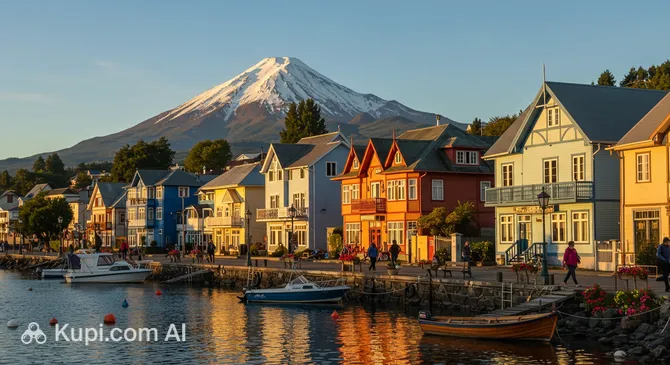
  • The majestic Osorno Volcano, towering over the city, is often compared to Japan's Mount Fuji because of its perfect conical shape. Local legends say that the Osorno and Calbuco volcanoes "talk" to each other, and the best place to see their perfect reflection in the waters of Lake Llanquihue is from the promenade where the Puerto Varas Waterfront is located.

  • Puerto Varas has been the birthplace and home to many talented people, including famous artists and chefs who have made Chilean gastronomy famous far beyond the country's borders. The city regularly transforms into a cultural stage for music evenings and exhibitions, merging traditions of the past with modern art.

Puerto Varas Waterfront. Illustration.
Source: Kupi.com AI

Traveler photos:

How to Get There

Reaching this picturesque corner in southern Chile is quite simple thanks to the region's well-developed transport network. You can find out more about how to get to Puerto Varas in our dedicated section, but for most travelers, the fastest and most convenient way remains a flight to the nearest major air hub followed by a short overland trip.

Puerto Varas does not have its own airport. The main gateway for tourists is El Tepual Airport (IATA: PMC), located in the neighboring city of Puerto Montt. It is only 16.4 km from Puerto Varas. The journey by taxi or transfer from this airport takes about 30–45 minutes. This is a major hub receiving regular flights from Santiago and other cities across the country.

A good alternative is Canal Bajo Airport (IATA: ZOS), located in the city of Osorno, 78.6 km from Puerto Varas. This option is convenient if tickets to Puerto Montt are sold out or more expensive. The trip from here by car via the highway takes only about 1 hour, not two as it might seem at first glance.

It is also worth mentioning the San Carlos de Bariloche International Airport (IATA: BRC) in Argentina. Although the distance as the crow flies is about 154 km, the trip requires crossing the border through the Andes, which significantly increases travel time, turning the transfer into a scenic journey of its own.

Below is a summary of the nearest airports:

AirportPassenger trafficDistance
El Tepual Airport2 mln16 km
Canal Bajo Airport303 20979 km
Mocopulli Airport204 000129 km
San Carlos de Bariloche International Airport2.4 mln154 km
Pichoy Airport418 000185 km

In addition to air travel, intercity buses are a popular way to reach Puerto Varas. Chile is famous for its network of comfortable buses connecting the capital, Santiago, and other regions with the Lake District. Traveling by car will also provide plenty of impressions: the country's main artery, the Pan-American Highway (Ruta 5 Sur), passes close to the city, offering magnificent views of volcanoes and forests.

Main Attractions

Puerto Varas is a city where nature and history have created a unique ensemble of attractions. Exploring the "City of Roses" is impossible without visiting its iconic sites, which reflect the spirit of German colonists and the grandeur of Chilean landscapes.

One of the city's most recognizable symbols is the Church of the Sacred Heart of Jesus (Iglesia del Sagrado Corazón de Jesús). This majestic temple with bright red spires, towering over the center, was built in the early 20th century, modeled after a church in the German Black Forest. Its Neo-Romanesque and Baroque architecture serves as a reminder of the city's European roots and is visible from almost anywhere in Puerto Varas.

The heart of tourist life is undoubtedly the Puerto Varas Waterfront. It is not just a walking area but a true open-air amphitheater where Lake Llanquihue and the snow-capped Osorno volcano are the main stars. Here you can see the famous "Licarayén" sculpture, relax on the pier, and enjoy some of the most beautiful sunsets in Chile. The promenade is perfect for morning jogs or relaxed evening walks.

To immerse yourself in the local culture, be sure to visit the Pablo Fierro Museum. It’s hard to call it an ordinary museum — rather, it’s a house of fantasy filled with antique items, mechanisms, and drawings that the artist has collected over the years. The eclectic building with a clock tower is an art object in itself, and inside reigns an atmosphere of nostalgia and creativity, telling the story of the region's colonization through everyday details.

Philippi Hill Park. Illustration.
Source: Kupi.com AI

Traveler photos:

Fans of panoramic views and silence will enjoy Mount Philippi Park. Named after the naturalist Bernardo Philippi, this forested hill is a green oasis right within the city. Following its paths to the summit, you will find a monumental cross offering a breathtaking view of the city roofs and the lake's expanse. It is a great place to take a break from the urban bustle in the shade of ancient trees.

Another important viewpoint is Mount Calvario. This place has special religious significance: small chapels representing the Stations of the Cross are located here. Tourists come here not only for the spiritual atmosphere but also for the magnificent view of Puerto Varas and the surrounding volcanoes from above.

Local Cuisine

The gastronomic scene of Puerto Varas is a wonderful union of German culinary traditions and the generous gifts of Chilean nature. Local cuisine is famous for being cozy and hearty, offering tourists a unique experience where Bavarian recipes meet Patagonian ingredients. The city's hallmark is its sweet pastries: you can find signs saying "Kuchen" at every turn. Be sure to try this traditional cake with wild berries, nuts, or cottage cheese, as well as the famous apple strudel, which is prepared here with special care.

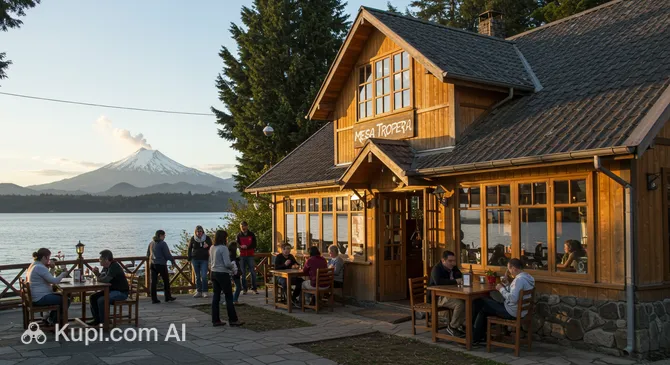
Proximity to Lake Llanquihue and the Pacific Ocean guarantees fresh seafood on the menu. Salmon and trout are served in many forms here: from delicate ceviche to smoked grilled steaks. Mussel and crab dishes are also popular. If you want to enjoy not only the food but also the views, visit the restaurant Mesa Tropera, located right over the water. Here you can try excellent pizza and pasta with local accents while admiring the lake panorama.

Mesa Tropera. Illustration.
Source: Kupi.com AI

Traveler photos:

For those who prefer meat dishes, southern Chile offers magnificent steaks and grills. Local chefs are masters at handling beef and lamb, often using wood from local tree species for grilling, which gives the meat a unique aroma. An excellent place to get acquainted with this side of the cuisine is the restaurant Carne y Papa, which specializes in hearty meat dishes and potato sides.

As for drinks, Puerto Varas is a paradise for beer lovers. The German heritage strongly influenced the brewing culture, and many craft breweries operate in the city and its surroundings. Try the local lagers or ales, as well as the refreshing apple cider. Among non-alcoholic drinks, "mote con huesillo" — a sweet drink made from peaches and wheat — is popular and perfectly quenches thirst on a summer day.

The food culture here is democratic and diverse. Locals love spending time in cozy cafes over a cup of tea with cakes ("once" — a traditional afternoon snack), and they visit farmers' markets on weekends. There you can buy homemade cheeses, smoked meats, murta (a local berry) jam, and handmade chocolate. Street food also deserves attention: hot empanadas with meat or cheese are a great snack during a walk along the waterfront.

Travel Tips

A trip to the "City of Roses" promises to be unforgettable, but southern Chile has its own climatic and cultural features that are best prepared for in advance. We have gathered the most important practical recommendations to help make your holiday in Puerto Varas as comfortable, safe, and rich as possible.

  1. Clothing and weather whims. The main rule for a tourist here is to dress in layers. The weather in the region changes rapidly: a sunny morning can turn into a downpour and then clear up again. Even in summer, be sure to bring a waterproof windbreaker, a fleece jacket, and comfortable, preferably trekking, shoes. Also, don't forget sunscreen and sunglasses: the ozone layer in the south is thin, and the sun here is very active, even if it's cool outside.
  2. Transport nuances. The city center is compact and pleasant to explore on foot. For trips to neighboring towns, use local minibuses ("micros") or the unique shared taxis ("colectivos") — black sedans with route numbers on the roof. This is a cheap and colorful way to get around. However, if you want to freely explore national parks and the feet of volcanoes, renting a car will be the best solution, as public transport there is rare.
  3. Finances and cash. The official currency is the Chilean peso. Bank cards are accepted in most restaurants, hotels, and supermarkets, but you will definitely need cash. It's needed for paying fares in buses and colectivos (drivers don't accept cards), shopping at handicraft markets, and tipping. In restaurants, it's customary to leave a propina of 10% of the bill if you liked the service.
  4. Communication and language. The main language of communication is Spanish. In tourist areas, staff often speak English, but in small shops or with drivers, it will be harder to explain yourself. We recommend learning a few basic phrases or downloading an offline translator. For constant access to the internet and maps, it's better to buy a local SIM card (operators Entel or Movistar have good coverage in the south), which are sold in pharmacies and kiosks.
  5. Health and water. In Chile, tap water is considered safe to drink; however, for tourists with sensitive stomachs, we recommend consuming bottled water. Pharmacies (Farmacias) are frequent in the city, and most familiar medicines can be found there, but it's better to bring specific medications with you. The safety level in the city is high, but standard precautions (not leaving things unattended) should be followed.
  6. Local etiquette. Chileans are warm and polite people. It is customary to say hello ("Buenos días" or "Hola") when entering a shop or boarding a bus. Don't be surprised if locals (even men and women) kiss each other on the cheek when meeting — this is a standard form of greeting. The pace of life here is more relaxed than in the capital, so don't rush the waiters — relax and enjoy the moment.
  7. What to avoid. Don't plan dinner too early. In Chile, people dine late, and many good restaurants only start filling up after 20:00 or 21:00. Arriving at 18:00, you risk finding closed doors or a completely empty room. Also, avoid littering in nature — locals are very protective of their region's environment.
  8. Tasty lifehack. Be sure to join the "once" tradition. This is an evening tea that replaces dinner, which has become a cult tradition here thanks to the city's German roots. Between 17:00 and 19:00, go into any cafe and order "once": you will be served tea or coffee with kuchen (sweet cake), homemade bread, butter, jam, and avocado. it's very filling, tasty, and truly atmospheric.

Following these simple tips, you can avoid minor troubles and focus on the main thing — contemplating the majestic volcanoes, walking along Lake Llanquihue, and getting to know the amazing culture of this welcoming land.

Entertainment & Nightlife

Nightlife in Puerto Varas has a special charm: you won't find noisy metropolis raves here, but you will discover many cozy spots with a warm atmosphere, great music, and stunning views of Lake Llanquihue. Evenings here are usually spent leisurely, enjoying conversation, local craft beer, or Chilean wine with friends.

The epicenter of evening entertainment is the waterfront and the adjacent central streets. This is where the city comes alive after sunset. One of the main points of attraction is the local casino, which often hosts live music concerts and entertainment shows. The crowd in the city is diverse: from tired but happy hikers in fleece jackets to elegantly dressed couples out for a romantic dinner. The dress code in most places is casual and relaxed.

If you are looking for a unique location, be sure to visit the restaurant and bar Mesa Tropera. This establishment literally stands over the water, and its panoramic windows allow you to admire the sunset over the lake with a drink in hand. It is one of the most popular places in the city, so it is better to arrive early or book a table.

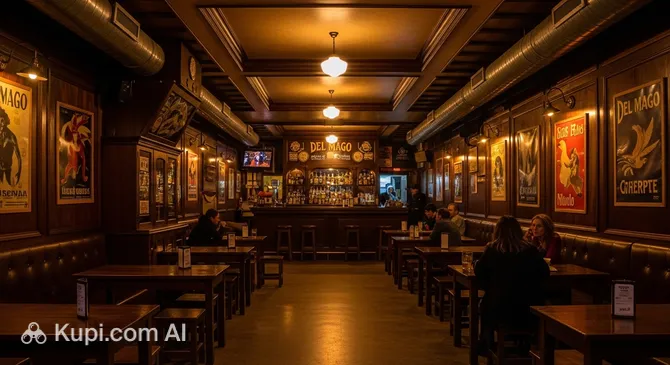
Del Mago. Illustration.
Source: Kupi.com AI

Traveler photos:

Lovers of signature cocktails and a more intimate setting should visit the bar Del Mago. A creative atmosphere reigns here, and the bartenders are ready to surprise guests with unusual ingredient mixes. For those who prefer a relaxed evening in an Eastern style or want to try something original, Daruma Tea House is an interesting find where you can enjoy a pleasant time in a peaceful environment.

In terms of safety, Puerto Varas is one of the quietest cities in the region. Walking along the center and the waterfront in the evening is quite comfortable, but as always, it is worth exercising reasonable caution and not leaving belongings unattended. If you stay out late or your hotel is on the outskirts, it is better to use a taxi or radio-taxi, which can be easily called by phone or found at special ranks. The average check in bars is moderate, though slightly higher than in neighboring Puerto Montt.

The daytime cultural program in the city is just as rich as the night. Travelers can visit small art galleries, check out unique museums telling the story of the German colonists' heritage, or go to the theater for touring performances. However, the main "theater" here remains nature, with its performances of sunrises and sunsets over the volcanoes available to everyone for free.

Parks & Museums

Puerto Varas offers its guests a harmonious combination of well-kept green areas and cultural venues that tell the unique story of the region's German colonization. Walks in the parks here are inseparable from contemplating volcanoes, and visiting museums turns into a fascinating journey through time.

Among the natural oases within the city limits, Mount Philippi Park deserves special attention. It is not just a hill with a popular viewpoint, but a real miniature Valdivian forest reserve. Climbing the winding paths to the summit, crowned by a monumental cross, you can see local tree species such as ulmo and coigüe, and enjoy the silence away from the city noise.

Another significant green area is Mount Calvario. This place is filled with an atmosphere of peace and spirituality. The park is an open-air religious complex with small chapels surrounded by lush vegetation. Tourists come here not only for walks but also for the magnificent panoramic views of the city and Lake Llanquihue from above.

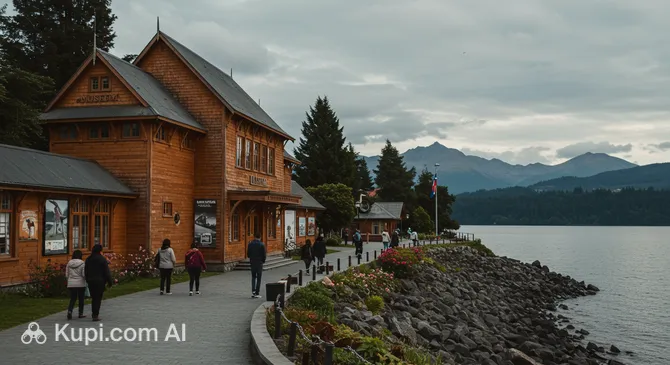
To immerse yourself in the local flavor, be sure to visit the Pablo Fierro Museum. Located near the lake, this whimsical house with a unique facade is an art object in itself. Inside, artist and collector Pablo Fierro has gathered an eclectic exhibition of antique household items, toys, and mechanisms that vividly illustrate the history of the region's settlement.

Pablo Fierro Museum. Illustration.
Source: Kupi.com AI

Traveler photos:

Art and history enthusiasts will also find the Molino Machmar Art Center (Centro de Arte Molino Machmar) interesting. It is located in a carefully restored old flour mill building and serves as the main venue for contemporary art exhibitions, film screenings, and cultural events. Here you can see how industrial heritage is transformed into a modern creative space.

The architectural face of Puerto Varas is inconceivable without its historic buildings. The city's symbol is the famous Church of the Sacred Heart of Jesus, built in Neo-Romanesque and Baroque style, whose red towers are visible from everywhere. Walking through the historical quarter, look for traditional 19th-century wooden mansions recognized as national monuments, which preserve the spirit of the first German settlers.

If you want to learn more about the lives of the colonists, we recommend driving 15 minutes to the neighboring town of Nueva Braunau to visit the Antonio Felmer Museum. This place is often overlooked in standard guidebooks, but it is here that one of the most complete collections of 19th-century clothing, furniture, and tools is gathered, allowing you to literally touch the everyday life of that era.

Getting Around

The transport system in Puerto Varas is quite simple and clear, making moving around the city and its surroundings convenient even for those visiting the region for the first time. Since the city itself is compact, many attractions in the center are within walking distance, but for trips to neighboring areas or natural parks, you will need transportation.

The main form of public transport is small buses, which locals call "micros." They run not only through city streets but also connect Puerto Varas with neighboring Puerto Montt, Frutillar, and other settlements along the lake. These buses run frequently, usually every 10–15 minutes during the day. Stops are marked with signs, but drivers often stop at the wave of a hand if it's safe.

A unique feature of Chilean transport, also widespread here, is the "colectivos." These are black sedans that look like regular taxis but have a sign on the roof indicating the route number and main stops. They work like shared taxis: they follow a fixed path, picking up and dropping off passengers. It is faster and more comfortable than a bus, and the fare is only slightly higher. To stop a colectivo, just raise your hand when you see a car with the right number.

The payment system in Puerto Varas is conservative: transport cards like Santiago's "Bip!" are not used here. Fares for buses and colectivos are paid exclusively in cash to the driver upon entering or exiting. It is highly recommended to have small bills (1,000 or 2,000 pesos) and coins, as drivers often don't have change for large banknotes. You should keep the ticket issued by the bus driver until the end of the trip.

For individual trips, classic taxis and ride-hailing apps (like Uber) are available, though the latter's availability can vary by time of day and season. Regular taxis (Radio Taxi) can be found at special ranks or called by phone. Unlike colectivos, they take you to a specific address, and the cost of the trip is calculated by taximeter or a fixed rate, which is best agreed upon in advance.

Given the picturesque views along Lake Llanquihue, bicycle rentals are a popular alternative to transport. There are several rental points in the city, and a ride along the waterfront or to nearby beaches on a bike will provide many impressions. Many tourists also prefer to rent a car (car sharing is not developed here, but there are many classic rental agencies) to freely explore volcanoes and national parks at their own pace.

Public transport usually operates from early morning (around 7:00) until 21:00–22:00. After this time, the intervals between buses and colectivos increase significantly, and it is more reliable to use a taxi. On weekends and holidays, the frequency of trips may also decrease.

Accommodation

Accommodation in Puerto Varas is more than just a place to sleep; it’s part of the cultural experience. The city has a well-developed tourist infrastructure, offering guests a wide range of options: from budget backpacker hostels to luxurious five-star hotels with panoramic volcano views. Especially popular in this region are "cabañas" — cozy wooden cabins, often equipped with a kitchen and fireplace, which are ideal for families or groups wanting to experience a country-life atmosphere.

The choice of area depends on your goals and mode of transport. If you are traveling without a car, it is best to stay in the city center or within walking distance of the lake. This will allow you to quickly reach restaurants, shops, and the bus station. The most prestigious and scenic hotels are located along the waterfront (Costanera) and on the road leading toward Ensenada. Staying here guarantees peace and those postcard views of the Osorno volcano right from your room window, but a taxi or rental car may be needed for convenient movement.

The price range in Puerto Varas varies from moderate to high, especially compared to other cities in the region. Budget travelers can find a place in a hostel or an inexpensive guesthouse ("hospedaje"), which often offer a homemade breakfast. The mid-range segment is represented by boutique hotels, many of which are located in restored mansions of German colonists, adding historical charm to your stay. The luxury segment offers spa complexes and high service standards meeting international levels.

The main booking tip is to plan your trip in advance. The peak tourist season is during the Chilean summer (December to February). In January and February, the city fills with tourists, and finding good accommodation upon arrival is nearly impossible, while prices reach their peak. We recommend booking hotels or apartments at least 2–3 months before your trip through popular online platforms. During the off-season (March-April or October-November), the rush subsides, and you can find excellent options at a discount.

Nearby Cities

For those looking to explore the surroundings, Puerto Varas serves as an excellent starting point for day trips to several interesting nearby locations:

Just a few minutes' drive away is Puerto Montt — the capital of the Los Lagos region and an important port city. It is famous for its colorful Angelmó market, where you can taste the freshest seafood and buy wool and wood crafts from local artisans. A walk along the waterfront and the view of Reloncaví Sound make this city a must-visit for experiencing the maritime culture of southern Chile.

Slightly further north is Osorno, a city with a rich historical heritage and a tangible German influence in its architecture. Here it is worth visiting the central square with the modern St. Matthew's Cathedral and Fourth Century Park. Osorno is also known for its museums and proximity to natural attractions, making it interesting for history buffs and fans of peaceful city walks.

For those ready for a slightly longer journey, Ancud serves as the gateway to the mystical island of Chiloé. This city attracts tourists with the ancient Fort San Antonio, preserved from colonial times, and the opportunity to see penguin colonies in the nearby Puñihuil Sanctuary. Ancud is the perfect place to experience the unique mythology and traditions of the archipelago.

CityPopulationDistance
Llanquihue16 2497 km
Alerce42 26710 km
Puerto Montt169 73617 km
Frutillar Alto19 40022 km
Frutillar12 87623 km

These nearby destinations provide a great overview of the region's diverse culture and landscapes.

Shopping & Souvenirs

Shopping in Puerto Varas is more of a pleasant addition to your holiday than a primary goal. The city doesn't claim to be a fashion capital, but it has a special atmosphere of comfort that invites leisurely strolls through local shops. The main feature of local shopping is the focus on authenticity: here you will find high-quality handicrafts, goods for active tourism, and gastronomic souvenirs reflecting the fusion of Chilean and German traditions.

The commercial life of the city is concentrated in its compact center. The main shops and boutiques are located along Santa Rosa, Del Salvador, and San Francisco streets. Strolling here, you will find many small shops offering natural wool clothing, jewelry, and trekking gear, which is especially relevant for travelers planning to conquer the surrounding volcanoes.

For those used to the modern shopping mall format, the Paseo Puerto Varas Shopping Center operates in the city. This is the city's main mall, where you can find a supermarket for restocking, clothing stores of well-known brands, pharmacies, and a food court. It’s a convenient place if you need to buy daily necessities, electronics, or just wait out rainy weather with a cup of coffee or a trip to the cinema.

Paseo Puerto Varas Mall. Illustration.
Source: Kupi.com AI

Traveler photos:

The local handicraft markets are of particular interest to tourists. Be sure to check out the fair located near the main square or along the waterfront. Here, artisans sell unique handmade items: knitted goods, wood carvings, and jewelry. Unlike the noisy bazaars of large cities, trade here is calm and friendly, and talking with the sellers allows you to learn more about local traditions.

When choosing souvenirs from Puerto Varas, look for items made of lapis lazuli — a blue semi-precious stone mined on an industrial scale only in Chile and Afghanistan. Warm sweaters and ponchos made of alpaca or sheep's wool also make excellent gifts. Don't forget gastronomy: thanks to its German heritage, the city is famous for its chocolate, marzipan, and fruit jams. A jar of homemade murta (local berry) jam or a box of handmade chocolates will be a wonderful reminder of your trip.

Shops in Puerto Varas are usually open from 10:00 to 20:00. The large shopping center and supermarkets stay open longer, often until 21:00 or 22:00, including weekends. Small private shops may close for a lunch break (siesta) in the middle of the day and may not open on Sundays.

Regarding payment, bank cards (Visa, Mastercard) are accepted almost everywhere: in the shopping center, restaurants, and most stores. However, for purchases at handicraft markets or small kiosks, it is highly recommended to have Chilean pesos in cash, as terminals are not always available. The Tax Free system (VAT refund) in Chile for regular retail purchases is practically non-existent, so expect to pay the price shown on the tag (which already includes the 19% IVA tax).

Reached the end of the page?

That means the route is fully explored