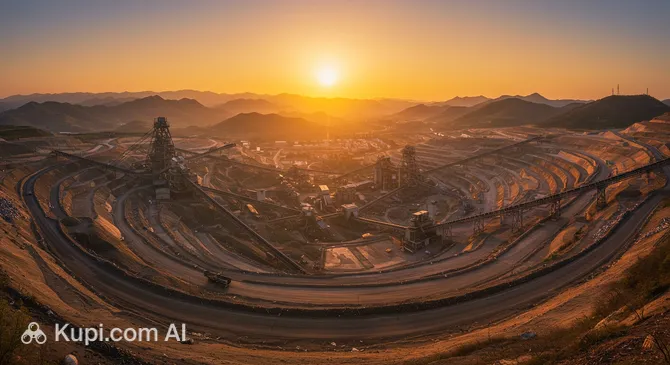
Dexing is a dynamically developing industrial hub located in the northeastern part of the picturesque Jiangxi Province. Unlike the bustling metropolises of China, this city county maintains the atmosphere of a working-class settlement, where modern industry is closely intertwined with the daily lives of more than 290,000 residents. The city is under the jurisdiction of Shangrao Prefecture and borders Zhejiang Province to the east, making it an important regional transit point.
Dexing. Illustration.
Source: Kupi.com AI
A close look at the development history of this region helps to understand why it is often called the "copper heart" of the region. The economy and local identity are built on rich copper deposits and developed mining infrastructure. Although Dexing is not a classic tourist center, it attracts explorers of industrial aesthetics and those who want to see the real, non-tourist China, focused on labor and large-scale engineering projects.
The city is divided into several street committees, towns, and townships, each contributing to the overall palette of county life. Despite the industrial specialization, the city's surroundings please the eye with hilly terrain and the greenery characteristic of this part of the country. A visit to Dexing is an excellent experience for travelers who value authenticity and wish to see the workings of a powerful railway network and industrial giants from the inside.
Weather Overview
The climate of Dexing is classified as a subtropical monsoon, typical for the northeastern part of Jiangxi Province. Travelers should expect hot and humid summers, with the thermometer often rising to +30–35°C, and fairly mild winters with temperatures ranging from 0°C to +10°C. The terrain features, with an abundance of hills, contribute to moisture retention, so high humidity is felt here almost year-round.
The highest amount of rainfall occurs in early summer, especially in June, when heavy monsoon rains cover the region. The most comfortable time for a visit is considered to be the autumn months—September and October—when dry and moderately warm weather sets in. Before your trip, it is recommended to check the current city's climate to choose the right wardrobe and avoid the season of prolonged downpours.
One should also take into account the industrial nature of the county: proximity to large copper mines may affect the local environmental situation. On windless days, light dustiness is possible in industrial zones; however, overall weather conditions in Dexing meet regional standards and do not create serious obstacles for short-term visits or transit trips.
Average monthly temperature
Average monthly precipitation
Interesting Facts
The Province's Copper Heart: Dexing is one of the most important copper mining centers in China, and its mines are considered key industrial sites for the entire Jiangxi Province.
Transport Hub: The Hefei–Fuzhou high-speed railway passes through the city, allowing residents to reach the country's largest metropolises in just a few hours.
Home of Experts: The city is proud to be the birthplace of Nan Jiang, a well-known expert in the field of corporate finance.
Demographic Scale: By Jiangxi Province standards, Dexing holds an honorable seventh place in population among counties, highlighting its significance in the region.
Geographical Junction: The city county is located in a unique spot where the interests of Jiangxi Province meet the borders of the prosperous Zhejiang Province.
How to Get There
The transport accessibility of Dexing has significantly improved in recent years thanks to the development of the high-speed rail network. If you are planning a trip to this industrial county, detailed information about routes can be found on the page how to get to Dexing. The main flow of travelers arrives here by rail, using modern trains connecting northern and southern provinces.
There are two important railway stations operating within the county. Dexing Station is located on the Hefei–Fuzhou line and receives most high-speed trains. There is also the Dexing Copper Mine Station, located in the Wuyuan area, which is oriented towards the needs of the industrial sector but is also used for passenger transport.
Station
Passenger traffic
Distance
Shangrao railway station
6
66 km
Huangshan Railway Station
3
76 km
Jingdezhen Railway Station
4
81 km
Quzhou railway station
7
85 km
Sidu Railway Station
2
145 km
There is no direct air connection to the city, as there is no airport in the county itself. Travelers from other countries or remote regions of China find it most convenient to fly into the international airports of Nanchang or Shanghai. From there, Dexing can be quickly reached by high-speed train, which is the most comfortable and reliable way to travel.
For those who prefer road trips, the modern G60 highway leads from the regional center of Shangrao. The distance is about 100–150 km, and the journey by car or bus will take from 2 to 3 hours. It is worth considering that during peak hours, there may be many trucks on the roads serving the mines, which sometimes increases travel time.
Main Attractions
Dexing is a city that cannot boast an abundance of typical historical monuments or world-class museums; however, it possesses its own specific industrial charm. The main "attractions" here are infrastructure objects reflecting the power of Chinese industry. First and foremost, pay attention to the copper mines, which are true symbols of the county and shape its unique landscape.
Daily life is concentrated in the city center: local markets and spacious central squares become gathering places for citizens in the evenings. Here, you can feel the real rhythm of life in provincial China, free from crowds of foreign tourists. Although the city is rarely mentioned in popular guides like TripAdvisor, a walk through its lively shopping areas will give you an idea of the actual daily lives of workers and their families.
For those interested in modern engineering, the railway hubs themselves are of certain interest. The city's stations, connecting the region with the country's largest hubs, look impressive against the backdrop of rural townships and hilly horizons. This is a place for those seeking the aesthetics of "industrial realism" and wanting to see how natural resources are transformed into the energy for an entire province's development.
Local Cuisine
The gastronomic identity of Dexing is inextricably linked with the culinary traditions of Jiangxi Province. Local cuisine is famous for its spiciness, abundant use of seasonings, and love for rich flavors. The diet is based on dishes made from rice, fresh vegetables, pork, and river fish caught in local waters. The general character of the cuisine can be described as hearty and home-style, aimed at replenishing energy after a workday.
Among the local specialties, you should definitely try the duck with sweet potato and stewed chicken, prepared according to traditional regional recipes with the addition of hot peppers and sour notes. Jiangxi cuisine often rivals Hunan cuisine in spiciness, so be prepared for some "fire" on your plate. Plain rice or noodles usually serve as a side dish, helping to balance the pungent sauces.
Dining culture in the city is concentrated in small local eateries and canteens located near markets and industrial zones. Street food is a separate kind of pleasure: here you can find aromatic skewers and steamed baozi buns. As for drinks, locals prefer the famous green tea from Jiangxi Province or traditional rice wine, which is often served at festive tables.
Travel Tips
A trip to the industrial heart of Jiangxi requires some preparation. These tips will help make your stay in Dexing as comfortable and productive as possible.
Clothing and Gear: Choose practical and comfortable clothing. If you plan to walk near industrial zones, be sure to bring a protective face mask due to high dust levels. Comfortable shoes with thick soles are your best friend.
Transport: The fastest way to get to the city is by high-speed train. Use taxis or local buses to move within the county, but be prepared for traffic jams caused by trucks.
Finance: International bank cards are rarely accepted in the city. Be sure to install Alipay or WeChat Pay and link a card to them, or have a sufficient supply of cash yuan.
Communication: English is practically not spoken here. Download an offline translator in advance and save the hotel and station addresses in Chinese characters.
Health: Pharmacies can be found in the city center, but it is better to bring specific medications with you. Drink only bottled water.
Local Etiquette: Be polite to local residents, who may show curiosity toward you. In working-class areas, restraint and respect for other people's labor are valued.
What to Avoid: Do not attempt to enter restricted mine areas without special permission—this is not only prohibited but can also be dangerous to your health.
Extra Tip: Visit local markets early in the morning—this is the best time to see the city's real life and buy the freshest products.
May your acquaintance with industrial China leave only positive impressions and vivid memories!
Entertainment & Nightlife
Nightlife in Dexing reflects its status as an industrial and working-class center, so you won't find noisy techno clubs or elite cocktail bars here. The main entertainment for residents is centered around traditional Chinese formats—primarily numerous karaoke bars (KTV) and cozy tea houses located in the central part of the county. This is where locals prefer to relax after a workday, enjoying singing and socializing with friends.
For those looking for a more diverse cultural program or late-night dance floors, experienced travelers recommend heading to the neighboring administrative center—the city of Shangrao. A trip on a high-speed train takes very little time, and the choice of restaurants, cinemas, and modern shopping malls there is significantly wider. In Dexing itself, an evening is better spent with a leisurely stroll or sampling street food at local markets, which remain active until late at night.
Daytime entertainment in the city is predominantly quiet and practical. You can visit small park areas or engage in sports on outdoor courts near administrative buildings. Despite the lack of large entertainment complexes, the city remains a safe place for evening walks, and calling a taxi through a mobile app is easy at any time of day.
Parks & Museums
Due to its industrial specifics, Dexing does not have large museum complexes or art galleries typically found in tourist centers. Most of the county's cultural heritage is related to its industrial history, and the role of "open-air museums" is played here by active industrial sites and quarries. Visitors interested in mining can see large-scale engineering solutions directly in the city's landscape.
Recreational zones in Dexing itself are mainly represented by small squares and green areas near administrative buildings, which serve as resting places for local residents. There are not many specially equipped parks with developed infrastructure for long walks, as the city was built as a utilitarian working county. Nevertheless, the hilly terrain around the city offers natural landscapes that may be of interest to hikers looking to get away from civilization.
If your goal is to visit classic parks or museums, it is recommended to take a short trip to neighboring cities in Jiangxi Province. There you will find a richer cultural program and well-maintained gardens. In Dexing itself, focus on exploring its unique working atmosphere and visiting local markets, which in their own way reflect the culture and lifestyle of this part of China.
Getting Around
The public transport system in Dexing is organized quite simply but effectively for the needs of the local population. The main means of travel between different parts of the county, villages, and industrial zones are buses. The network of routes covers all key points, including railway stations; however, tourists should note that the schedule is often tailored to the shift schedules of the factories.
Within the county center itself, taxis and private carrier services are popular ways to get around. This is an inexpensive and fast option for short-distance trips. Bicycle and electric scooter rentals are also developed in the city, which are ideal for exploring the streets independently. It is worth remembering that there is no metro system in Dexing, so surface transport remains the only choice.
Bus fares are most often paid in cash upon entry or via mobile payment systems. For convenience, it is recommended to download a map in advance (e.g., Baidu Maps) and have the name of your destination written in Chinese characters. During peak hours, especially near mines and stations, transport can be crowded, and traffic jams are possible due to the large number of trucks.
Accommodation
The housing stock in Dexing is primarily oriented toward business travelers, industrial workers, and transit passengers. Mid-range and budget hotels predominate here, offering basic comfort and a convenient location relative to transport hubs. There are practically no luxury five-star resorts in the county itself, as the tourist flow is small.
The most convenient area to stay is the county center or zones near the Dexing railway station. This allows for significant time savings on travel. Among the notable accommodation options, the Dexing Grand Hotel is often mentioned, though it's worth noting that some large hotels may be somewhat distant from the geographical center of the city. Small "roadside-style" hotels offering clean rooms at very affordable prices are also popular.
When planning your trip, it is better to book accommodation in advance through popular Chinese services, especially if your visit coincides with major national holidays. At other times, vacant rooms are almost always available. The price range in the city is very democratic, making Dexing an excellent option for the budget traveler who only needs a clean room and stable Wi-Fi.
Nearby Cities
The city of Dexing is a convenient base for exploring the eastern part of Jiangxi Province, where some of the country's most beautiful landscapes are concentrated. Just 23 kilometers away is Wuyuan—a place often called the "most beautiful village in China." Here you can see ancient architecture from the Ming and Qing dynasties, famous fields of blooming rapeseed, and picturesque tea plantations.
For those who miss the urban rhythm and large shopping centers, an excellent destination is the administrative center of the region—the city of Shangrao. A trip by train or bus will take one to two hours. It offers more opportunities for shopping, cultural leisure, and dining. Also of interest is the city of Kaihua, located nearby in Zhejiang Province, which is famous for its nature parks.
The city's surroundings offer amazing diversity: from the industrial power of copper mines to the peaceful silence of ancient settlements. Exploring nearby counties will allow you to see a contrasting China, where modern technologies coexist with century-old traditions of rural life.
Shopping & Souvenirs
Shopping in Dexing is primarily practical and oriented toward the daily needs of the citizens. There are no giant shopping malls with global brands in the county, but there is an abundance of traditional markets and small retail zones in the city center and near railway stations. This is where you can find quality everyday goods, fresh farm products, and various street foods.
If you are looking for unusual gifts, pay attention to products made of copper, which are the pride of the region. In local shops, you can find souvenirs or interior items related to the city's industrial heritage. Also, local tea from Jiangxi Province makes an excellent purchase, famous for its quality and delicate aroma far beyond the county.
Shops usually operate from early morning until 8–9 PM. To pay for purchases, it is most convenient to use mobile applications popular in China, such as Alipay or WeChat Pay, although cash yuan is also accepted in most places. If your goal is serious brand shopping, it is best to plan a trip to neighboring Shangrao, where the shopping infrastructure is significantly more developed.