Support

Yi County

About

Yixian is a picturesque county often called a true gem for lovers of nature and traditional culture. Here, among green hills and ancient settlements, reigns an atmosphere of comfort and leisure, allowing you to take a break from the hustle and bustle of megacities and immerse yourself in the authentic life of the region.

Located in the eastern part of such an amazing country as China, this city attracts travelers with its unique geographical location. The proximity to the famous Huangshan Mountains, which create a unique landscape, gives the area a special charm. The population of the county is about 94,110 people, which allows it to maintain a calm and steady pace of life characteristic of small towns.

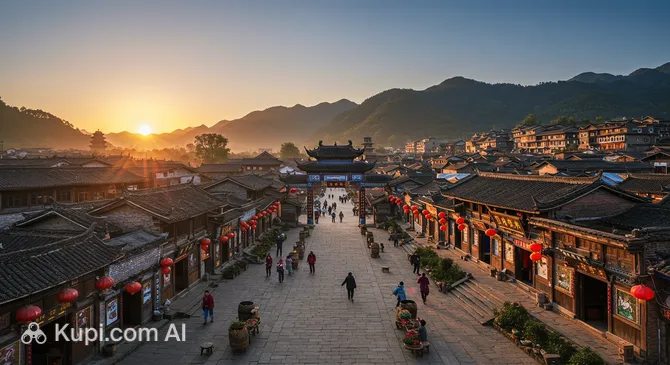
Yi County. Illustration.
Source: Kupi.com AI

The city literally breathes antiquity, and the rich history of Yixian can be traced in every stone of the preserved buildings and the layout of old streets. Travelers can see ancient temples and traditional villages where time seems to have stood still. This place is ideal for those who want to touch the heritage of the past and feel the spirit of old China.

Among the main reasons to visit Yixian is the opportunity to stroll through the picturesque streets, get acquainted with unique folk crafts, and enjoy local cuisine. The combination of architectural monuments and magnificent nature makes the city an excellent starting point for exploring the surroundings. If you are looking for inspiration and harmony, a trip here will be an unforgettable event.

Weather Overview

The climate in this region is characterized by a clear change of seasons, which makes a trip interesting at any time of year. To pack your suitcase correctly and plan excursions, it is useful to find out in advance what the weather in Yixian will be like during your travel dates.

Summer here can be hot and quite humid. In July and August, the average temperature stays at 27.4°C, and during the daytime, the air often warms up above 31°C. June is considered the rainiest month: the level of precipitation peaks, and it can rain for up to 20 days a month, so an umbrella will be an essential accessory.

Winter brings a noticeable chill. The coldest month is January with an average temperature of about 3.4°C, while frost down to -0.6°C is possible at night. Although the amount of precipitation in winter is minimal (only 1–2 mm), high humidity can increase the feeling of cold, so warm clothing will be necessary.

Spring and autumn are the ideal time for those who avoid extreme temperatures. In May, the air warms up to a comfortable 20.4°C, and October pleases with pleasant freshness with an average of 16.6°C. Overall, expect a warm, sometimes rainy summer and a cool but calm winter.

Average monthly temperature

Average monthly precipitation

Interesting Facts

Besides the main attractions, Yixian holds many fascinating secrets that make it a truly special place. This county is a real treasure trove of stories, where every corner is connected with ancient legends and traditions.
  • A living heritage of the Song Dynasty: The famous Xidi Village, located in the county, was founded by the ancestors of the Hu clan back in the Northern Song Dynasty. This place is officially included in the UNESCO World Heritage list and is considered one of the best examples of what old China looked like many centuries ago.

  • Unique wood carving: Local architecture is striking in its detail: ancient houses are decorated with the most complex carvings on wood, stone, and brick. These patterns are not just decoration, but symbolic messages telling of hopes for prosperity, happiness, and longevity that the masters of the past put into them.

  • Landscapes of mist and water: Yixian is famous for its morning mists, which give the hills and the Yishui River a mystical look. Local landscapes with ancient bridges and pagodas are so picturesque that they seem to have stepped out of classic scrolls of traditional painting.

  • Keepers of lineages: Unlike many open-air museums, the villages of Yixian are inhabited, and here you can meet direct descendants of noble dynasties. Residents carefully keep genealogical books and oral traditions about wise elders, passing the history of their families from generation to generation.

How to Get There

Route planning is an important part of any journey. Yixian County, located in the picturesque Anhui Province, has its own specifics of transport accessibility. To plan the perfect trip, we recommend studying all the ways to get to the city; below we will look at the most popular options for arriving via the nearest transport hubs.

The most convenient way to get to the region is by air. There is no airport in the town of Yixian itself, but you can fly to Huangshan Tunxi International Airport (IATA: TXN), located in the city of Huangshan. This is the nearest air gateway, located only 35.2 km from Yixian. The journey by taxi or bus will take approximately 1 hour 15 minutes. This airport serves many flights and is the optimal choice for tourists.

Alternatively, you can consider Chizhou Jiuhuashan Airport (IATA: JUH) in the city of Chizhou. It is located much further — approximately 95 km from the destination. Travel time by ground transport will be about 2 hours 45 minutes. Jingdezhen Airport (IATA: JDZ), located in the city of Jingdezhen at a distance of 98.2 km (about 2 hours 50 minutes drive), is also available.

For clarity, here is summary information on the main airports:

AirportPassenger trafficDistance
Huangshan Tunxi International Airport869 60035 km
Chizhou Jiuhuashan Airport524 00095 km
Jingdezhen Airport488 00098 km
Anqing Tianzhushan Airport596 482115 km
Quzhou Airport1.0 mln139 km

If you prefer rail transport, you should keep in mind that major stations are located at a considerable distance. There is no major railway station from the list provided in the town of Yixian itself, but you can arrive at Jiujiang Railway Station in the city of Jiujiang. It is located about 189.9 km from Yixian, which will require a long transfer (about 5 hours by car).

Another option for those traveling through major metropolises is Hangzhou Railway Station. It is one of the region's largest transport hubs with a huge passenger flow. However, the distance to Yixian is 221.6 km, so this option is more suitable for combined routes with transfers to local buses or regional line trains.

Below is information about the nearest major railway stations:

StationPassenger trafficDistance
Jiujiang Railway Station190 km
Hangzhou Railway Station100 mln222 km
Huzhou Railway Station21 mln225 km
Hefei Railway Station8 mln228 km
Lu'an Railway Station6 mln244 km

Main Attractions

Yixian and its surroundings are a real open-air museum where every corner preserves the breath of antiquity. The main magnet for travelers here are the ancient settlements that have preserved the unique architecture of the Hui style. It is impossible to imagine getting to know the region without visiting Hongcun Village. This UNESCO World Heritage site is famous for its amazing layout, resembling the silhouette of an ox. Tourists come here to admire the famous Moon Pond, in whose waters the white walls of old houses are reflected as if in a mirror, and to stroll through narrow cobbled streets where scenes from famous historical films were shot.

No less impressive is Xidi Village, often called the "museum of residential houses of the Ming and Qing dynasties." Unlike Hongcun, this settlement was historically designed in the shape of a ship. Here, it is worth paying attention to the majestic stone arch built in honor of a governor and looking inside wealthy mansions decorated with intricate wood carvings. This is an ideal place for those who want to see in detail the lifestyle and arrangement of a traditional Chinese home preserved through the centuries.

For lovers of nature and silence, the Mukeng Bamboo Forest will be a real discovery. Located just a few kilometers from historical villages, this park offers a change of scenery to enjoy the freshness of the greenery. Vast bamboo thickets cover the hillsides, creating an almost mystical atmosphere. A walk along the forest trails will bring peace and allow you to take magnificent panoramic photos of the surroundings from above.

Another gem of the county is Nanping Village, known for its numerous ancestral halls. A huge number of them have been preserved here, and each tells the story of a separate clan. Nanping is often called a "labyrinth" because of its complex system of winding alleys in which it is easy and pleasant to get lost. This place is usually less crowded than its popular neighbors, allowing for a deeper immersion into the atmosphere of old China without unnecessary fuss.

Local Cuisine

Yixian's gastronomic scene is a reflection of the region's rich culinary traditions, where every meal turns into a small journey. The local cuisine is famous for its emphasis on fresh farm products and fragrant herbs. Simple but rich flavors are loved here, and the menu is often based on dishes steamed or simmered in clay pots. Tourists should definitely try the tender pork or home-style chicken prepared this way — the meat literally melts in your mouth, infused with the aromas of seasonal vegetables.

Flour products, reminding of the influence of northern Chinese traditions, occupy a special place on the table. Handmade noodles are considered a true art here, and various dumplings with juicy fillings are served both in restaurants and in small family cafes. For a quick snack, crispy pies and fried flatbreads, which can be bought directly from street stalls, are ideal. This is hearty and tasty food that perfectly restores strength after long walks through ancient villages.

Speaking of drinks, it's impossible not to mention the famous local teas. Proximity to the mountains creates ideal conditions for growing elite varieties, so tea drinking is an important part of the culture here. Travelers will be offered fragrant green tea, which is perfectly refreshing in the heat. Among alcoholic beverages, traditional rice wine is popular, which has a mild taste and is often served at festive dinners or during friendly gatherings.

The food culture in Yixian is closely linked to seasonality and local markets. The city's farmers' markets are a true paradise for gourmets, where you can find fresh honey, homemade pickles, spices, and sweet rice desserts. Local residents are known for their hospitality and often treat guests to dishes prepared according to old family recipes. If you are lucky enough to catch one of the gastronomic festivals, don't miss the chance to attend a master class and learn the secrets of preparing the authentic food of this amazing corner of the country.

Travel Tips

Preparing for a trip to Yixian County requires special attention, as it is not a bustling metropolis but a region with a unique way of life and ancient architecture. To ensure your trip to China is as comfortable as possible and leaves only pleasant memories, we have collected the most important recommendations to help avoid common difficulties.

  1. Clothing and footwear for long walks. The main rule of Yixian is the most comfortable shoes with flat, non-slip soles. The streets in the villages of Hongcun and Xidi are paved with ancient cobblestones, which can be uneven and slippery, especially after rain. Since the climate here is humid, it is recommended to have a light raincoat even in summer (it is more convenient than an umbrella in narrow alleys). Avoid overly revealing clothing when visiting temples and ancestral halls.
  2. Transport logistics. There is no metro in Yixian itself. The main way to move between villages is by special tourist buses or taxis. We recommend installing Chinese ride-hailing apps in advance (often built into Alipay), as catching a car on the street in remote areas can be difficult. A foreigner cannot rent a car without a Chinese license, but you can hire a car with a driver for the entire day.
  3. Digital finances. Visa and Mastercard bank cards are practically not accepted in small shops and cafes in the county. It is vital to set up Alipay or WeChat Pay and link your card to them before departure. However, in the hinterlands of Yixian, it's still worth having a small supply of cash yuan (small denomination bills) for buying souvenirs from elderly artisans or paying fares on local buses.
  4. Safety and health. Yixian is a very safe place, but the main threat here is not people, but uneven roads and doorsteps in houses. Watch your step! In summer, there are many insects in the rural area, so be sure to bring quality repellent with you. Pharmacies are marked with a green cross, but pharmacists rarely speak English, so have a photo of the needed medicine or a translation of the name into Chinese.
  5. Connectivity and apps. English is poorly understood here even in tourist centers. Download an offline translator with a photo translation function (for menus and signs) in advance. To access familiar social networks and messengers, you will need a pre-purchased eSIM with roaming or a reliable VPN, as many Western services are blocked.
  6. Local etiquette. When entering ancient houses and temples, pay attention to the high wooden threshold: under no circumstances should you step on it. You must step over it — this is a sign of respect for the owners and the spirits of the house. Also, be polite when taking photos: many houses are private property where people live, so always ask permission before filming interiors or locals.
  7. What to avoid. Do not buy antiques without export certificates — this can create serious problems at customs. Also avoid loud conversations and noise in the evening inside historical villages: the acoustics in narrow stone corridors are very strong, and locals go to bed early.
  8. Tip for full immersion. Try to stay overnight in one of the historical villages (for example, in Hongcun) by booking a room in a traditional guesthouse. The majority of tourists arrive during the day and leave by evening. It is at dawn and after sunset, when the streets empty and mist rises over the ponds, that you can feel that very magical atmosphere of ancient Yixian.

Following these simple rules will help you feel confident and focus on the main thing — contemplating the incredible beauty of this corner of Asia. Yixian generously rewards those who respect its traditions and are ready to slow down to enjoy the moment.

Entertainment & Nightlife

Nightlife in Yixian County is radically different from that of noisy megacities. Here you won't find the neon signs of huge nightclubs or discos thumping until morning. Instead, evening Yixian offers an atmosphere of refined romance, "slow tourism," and coziness. With the onset of twilight, the ancient villages are transformed: thousands of red lanterns are lit, their light reflected in ancient ponds, and the air is filled with the aroma of tea and the evening cool.

The center of tourist attraction in the evening is Hongcun Village. This is where the main "party" life of the county is concentrated, adapted to the historical setting. Atmospheric small bars and tea houses, located directly in buildings from the Ming and Qing eras, are hidden in the labyrinth of narrow alleys. Most establishments operate in the "Qing Ba" (quiet bar) format — these are places where quiet acoustic music plays, craft beer, cocktails, or local rice wine are served, and visitors enjoy conversation in the dim light of wooden interiors.

Special attention should be paid to the area around the famous Moon Pond in Hongcun. In the evening, this place becomes the main photo zone and a place for walking. Along the shore and in the adjacent shopping streets, souvenir shops and cafes operate, closing later than usual. Here you can try street food, buy a lantern, and just observe the life of the nighttime settlement. The crowd here is sophisticated: artists, photographers, and travelers seeking inspiration.

If you want to feel the local flavor, go in search of street barbecues — Shao Kao. In the administrative center of Yixian itself and on the outskirts of tourist zones, stalls with skewers open in the evening. This is a favorite pastime for locals: sitting on low stools, they eat grilled meat, vegetables, and mushrooms, washing them down with light beer. This is not only tasty but also very budget-friendly — a great way to have dinner after long excursions.

Practical tips for evening leisure:

  • Opening hours: Remember that Yixian is a rural area. Most establishments close quite early, around 22:00–23:00. Only some bars in tourist zones may stay open until midnight.
  • Transport: Getting out of the villages (Hongcun or Xidi) to the regional center or back at night can be problematic. Buses stop running early, and taxis are difficult to catch on the street. It is better to arrange with a driver in advance or use ride-hailing apps.
  • Safety: China is one of the safest countries, and Yixian is no exception. Walking here at night is absolutely safe; the only main dangers are uneven cobblestones and poor lighting in some alleys.

During the day, entertainment in Yixian is of a cultural and educational nature. In addition to architectural sightseeing, tourists can attend traditional tea ceremonies, workshops on paper cutting, or bamboo carving. In some old estates, intimate performances of the local Anhui Opera, which is considered the ancestor of the famous Beijing Opera, are held. This is a unique opportunity to touch the living art of the region.

Parks & Museums

Although Yixian is better known for its ancient settlements, the city and its surroundings offer tourists a surprising variety of green zones and cultural spaces. Here, nature is harmoniously intertwined with history, creating unique landscape parks and open-air museums. Exploring them, one can understand how carefully China preserves its natural and cultural heritage.

One of the most impressive natural sites is the Xidi Stone Forest. This geological park is a unique cluster of bizarrely shaped karst rocks, which locals call "miniature stone mountains." Here you can stroll along winding paths among stone peaks, see small waterfalls and caves. This place is particularly interesting because it combines the rugged beauty of the rocks with well-tended flower gardens, creating a bright contrast for photos.

Another important natural zone is the picturesque Tachuan Valley. Although it is not a city park in the usual sense, Tachuan functions as a national landscape reserve, especially popular among photographers and artists. In autumn, the local forests are colored in fiery red and gold tones, creating one of the country's most recognizable landscapes. A walk here allows you to enjoy pastoral views of ancient camphor trees and misty hills surrounding old farmhouses.

Speaking of museums, the Xiuli Movie Town cannot be left unmentioned. This is a large-scale cultural and tourist complex created for filming historical movies, which has become a full-fledged museum of architecture and daily life. Old streets, shops, and craft workshops have been recreated here, allowing visitors to literally step into the past. Unlike the inhabited villages, theatrical performances and exhibitions telling about the traditions of the Anhui region are often held here.

History buffs will be interested in the Sai Jinhua Former Residence (Guiyuan Park). This memorial complex is dedicated to a legendary figure of the late Qing era. On its territory is not only the house itself with restored interiors of that era, but also an elegant classical-style garden with pavilions and ponds. The museum's exhibition reveals the dramatic life story of the owner and gives an idea of the culture and aesthetics of the Chinese nobility of past centuries.

Insider Tip: If you find yourself in the Xidi Stone Forest, take the trouble to climb to the highest observation deck — it offers a breathtaking panorama of the surrounding rice fields and the white walls of distant villages. And for visiting Tachuan, it is better to choose early morning, when the lowlands are covered with a light haze, giving the landscape a mystical atmosphere.

Getting Around

The transport system of Yixian County differs significantly from that of megacities: there is no metro or trams here, and the pace of life is much more relaxed. The main mode of transport for locals and tourists alike is the bus. The route network connects the administrative center of the county with the main tourist locations, such as the villages of Hongcun, Xidi, and Nanping. There are two types of buses here: regular city routes and specialized tourist shuttles, which are more comfortable and follow direct routes between attractions.

The fare payment system in public transport is oriented toward digital technologies. The most convenient way is to use a QR code in the Alipay or WeChat apps. In the "Transport" mini-apps within these ecosystems, you can activate a virtual transport card for the Anhui region. If you do not have access to electronic wallets, you can pay the fare in cash. It is important to remember that drivers do not give change, so tourists need to prepare small bills and coins in advance (usually the fare costs from 2 to 5 yuan depending on the distance).

For more comfortable movement, especially if you are traveling with luggage, it is recommended to use a taxi. Both official taxi fleets and the ride-hailing services popular in Asia (for example, DiDi, built into Alipay) operate in Yixian. This eliminates problems with the language barrier: you just indicate the point on the map. It's worth considering that in the late evening hours, catching a car on the street in remote villages can be problematic, so it's better to plan the trip in advance.

In the center of the county and near major tourist zones, bike rental services (shared bikes) can be found. This is a great alternative for exploring the picturesque surroundings and traveling between nearby fields and hills. To rent, you will also need the Alipay or WeChat app. However, it is worth remembering that inside the historical villages themselves, such as Hongcun, cycling is often prohibited or extremely inconvenient due to narrow cobbled streets and a large number of pedestrians.

A specific feature of local transport is three-wheeled motorized rickshaws, which are often found near bus stations and village entrances. Drivers may offer to give you a lift for a short distance for a negotiated price. Although this may seem like a colorful adventure, the price should be agreed upon strictly before the start of the trip, and, as a rule, it may be inflated for foreigners. For reliability and safety, it is still recommended to prefer official transport.

Accommodation

Choosing accommodation in Yixian County is not just about finding a place to sleep, but an opportunity to touch living history. Unlike major metropolises where standard chain hotels predominate, the tourist infrastructure here is built around the unique architecture of the region. A wide range of options is available to travelers: from modest family guesthouses and youth hostels to luxury boutique hotels located in carefully restored old mansions.

When planning a trip, it is important to decide on the location, as the living experience in different parts of the county will differ significantly:

  • Inside historical villages (Hongcun, Xidi): This is the most popular choice for those seeking atmosphere. By staying here, you can stroll through empty streets at dawn and after sunset when tour groups depart. Most hotels here are traditional houses with courtyards, wood carvings, and antique furniture. However, it's worth noting that prices here are higher, and old buildings may have poor sound insulation.
  • Administrative center of Yixian: More modern, standard-type hotels are located here. This option is suitable for those who value familiar urban comfort, spacious rooms, and lower prices. From here, it is convenient to make radial trips to different villages, as the transport interchange is better here.
  • Surroundings (rural area): In recent years, secluded eco-hotels and resorts among rice fields and bamboo forests have been gaining popularity. This is an ideal choice for lovers of peace and nature.

We advise approaching accommodation booking in advance, especially if your trip to China falls on "Golden Weeks" (national holidays in early October and May) or the rapeseed flowering season in spring. The best rooms in boutique hotels with views in Hongcun can be sold out months in advance. Also, pay attention to the description of amenities: in old houses, there are sometimes no elevators, and you will have to carry suitcases up narrow wooden stairs by hand.

The price range in Yixian varies from budget (simple rooms in guesthouses for 150–300 yuan) to premium (designer hotels from 1000 yuan and up per night). For booking, it is most convenient to use major international platforms or popular Chinese aggregators such as Trip.com, where the maximum selection of local guesthouses with real reviews and photos is presented.

Nearby Cities

For those who want to explore the surroundings, Yixian serves as an excellent starting point for day trips to several interesting nearby places. The region around the county is rich in natural beauty and historical towns that allow you to expand your travel experience in Anhui Province and neighboring areas.

One attractive option is the city of Anqing, located on the banks of the Yangtze River. This place is famous for its cultural heritage and serves as a gateway to the majestic Tianzhushan Mountain. Nature lovers will find picturesque mountain trails and ancient temples shrouded in mist here. Anqing is also known as the birthplace of Huangmei Opera, one of the most popular genres of traditional Chinese opera.

Another interesting destination is Shangrao, often called the "capital of picturesque mountains." From here it is convenient to get to the famous Sanqingshan Mountain — a UNESCO World Heritage site. This place strikes the imagination with its bizarre granite peaks, resembling the silhouettes of animals and people, as well as ancient Taoist shrines harmoniously integrated into the landscape.

CityPopulationDistance
Hedongcun15 66710 km
Huangshan1 358 98043 km
Wuyuan30 05774 km
Bangshang10 56179 km
Dexing293 20191 km

These nearby destinations provide insight into the diverse culture and landscapes of the region, making your trip even more rewarding and memorable.

Shopping & Souvenirs

Shopping in Yixian County is not your usual trip to boutiques or huge shopping centers, but rather a fascinating immersion into the world of traditional crafts and local culture. Here, the process of buying souvenirs is inextricably linked with sightseeing: most shops are located right in the ancient buildings of historical villages. The city and its surroundings are not famous for high fashion or electronics, but here you can find unique handmade items, authentic antiques, and magnificent farm products that are impossible to buy in large megacities.

The main shopping areas for tourists are the narrow cobbled streets inside the famous villages of Hongcun and Xidi. In Hongcun, trade bustles along the alleys leading to the Moon Pond. Here, the first floors of residential houses are often converted into cozy little shops selling everything from postcards to expensive tea. In the administrative center of the county, Biyang town, trade is concentrated on the central streets. There are shops with everyday goods, pharmacies, and supermarkets serving mainly the local population.

There are no large Western-style shopping malls in Yixian. This is a rural county that maintains a patriarchal way of life. If you need large-scale shopping with branded clothing, you should head to the neighboring city of Huangshan or the provincial capital. In Yixian itself, small department stores and local shopping complexes operate where you can buy local brands of clothing, shoes, and household goods, but they are rarely of interest to a foreign tourist.

However, the market culture here is perfectly developed. Morning markets in the center of the county offer a rich selection of fresh fruits, vegetables, and local delicacies. In tourist zones, spontaneous mini-markets are common, where locals sell dried mushrooms, medicinal herbs collected in the mountains, and homemade preserves. These are great places to see the real life of the region and try exotic snacks.

As for souvenirs, from a trip to this corner of a country like China, it is worth bringing back items reflecting the Hui culture. First of all, pay attention to:

  • Bamboo and wood carving: Yixian is famous for its craftsmen who create elegant figurines, brush holders, and decorative panels.
  • Tea: Anhui Province is the birthplace of famous varieties. You should definitely buy "Huangshan Maofeng" green tea or "Qimen" black tea here, which are sold both in gift boxes and by weight.
  • "Four Treasures of the Study": Since the region was historically a center of education, high-quality ink, rice paper, and inkstones are sold here, valued by calligraphers worldwide.
  • Local sweets: Sesame flatbreads and cookies filled with wild vegetables or sweet bean paste are popular treats.

Shops in tourist zones usually operate from 09:00 to 21:00 or 22:00, adjusting to the flow of visitors. In the winter period, many shops may close earlier. The main method of payment is via the mobile apps Alipay and WeChat Pay, which even street sellers of roasted chestnuts accept. International system bank cards (Visa, Mastercard) are practically useless in Yixian shops. It is highly recommended to have cash yuan in small bills, especially if you plan to buy souvenirs from elderly artisans.

The tax refund system (Tax Free) does not operate in Yixian County. It is a small administrative unit, and local shops are not connected to the VAT refund documentation system for foreigners. If you are planning large purchases with a view to Tax Free, it is better to postpone them until visiting large megacities such as Shanghai or Beijing before flying out of the country.
Reached the end of the page?

That means the route is fully explored