Support

Huangshan

About

Huangshan is a captivating city located in the southern part of Anhui Province, China. Best known as the gateway to the spectacular mountain range of the same name, this destination offers a blend of breathtaking natural scenery and profound cultural heritage. With a population of approximately 1.3 million people, it serves as a bustling hub for travelers seeking to explore the legendary peaks and ancient villages of the region.

Beyond its scenic beauty, the city is steeped in tradition, showcasing the unique architecture and customs of the Hui culture. Visitors can wander through well-preserved streets and admire the intricate carvings that adorn local structures. For those interested in the past, the area has a rich history that dates back centuries, influencing art and literature throughout the ages. Whether you are a nature lover or a history buff, Huangshan promises an unforgettable experience.

Weather Overview

The climate in this region is characterized by distinct seasons, offering a different experience depending on when you visit. To help plan your trip effectively, it is useful to review the detailed weather in Huangshan, as conditions can vary significantly throughout the year. Generally, you can expect warm, humid summers and chilly, drier winters.

Summer brings the highest temperatures, with averages reaching around 28°C in July and August, and daily highs frequently exceeding 30°C. However, this is also the wettest period, particularly in June, which sees the most precipitation and about 21 wet days. Conversely, winters are much colder, with average temperatures hovering between 5°C and 6°C in December and January, and lows occasionally dropping to around 2°C.

Spring and autumn serve as mild transition periods. Spring warms up steadily from an average of 12°C in March to 21°C by May, though rainfall remains frequent. Autumn is often considered a favorable time for travel, especially October, which offers comfortable temperatures averaging 18°C and relatively dry conditions with fewer rainy days.

Interesting Facts

Beyond the misty peaks and scenic trails, Huangshan holds many fascinating secrets that reveal its deep cultural significance and historical evolution. Here are a few intriguing facts about this remarkable city:

  • A Strategic Name Change: For centuries, the city center was known as Tunxi. It was only renamed Huangshan in 1987 to directly associate the municipality with the world-famous Yellow Mountains nearby. This often surprises travelers who arrive in the city expecting to be immediately at the foot of the mountains, only to find they are still a short journey away from the scenic area.

  • A Cinematic Backdrop: The ancient villages surrounding the city, particularly Hongcun, provided the stunning scenery for the Academy Award-winning movie Crouching Tiger, Hidden Dragon. The distinct white-walled and black-tiled architecture captured in the film is characteristic of the local Hui style, which has been preserved here for hundreds of years.

  • World-Class Tea Heritage: Huangshan is not just about mountains; it is a legendary location for tea production. It is the home of Huangshan Maofeng, considered one of the top green teas in China, and arguably the birthplace of Keemun Black Tea, which became a staple of British high society breakfast blends in the 19th century.

  • The "Living" Ancient Street: The city boasts Tunxi Ancient Street, which is often cited as the best-preserved old street in the country. Unlike many modern reconstructions, this street features authentic architecture dating back to the Song, Ming, and Qing dynasties and has functioned continuously as a commercial hub for centuries.

How to Get There

Planning a trip to the Yellow Mountains involves choosing the right entry point, whether you prefer flying directly to the doorstep of the scenic areas or taking a train to a regional hub. You can find all ways to reach the city detailed on our dedicated page.

The most convenient option for air travelers is Huangshan Tunxi International Airport (IATA: TXN). Located directly in Huangshan, it is situated just 8.4 km from the city center. This proximity makes the final leg of your journey very short, with a taxi or bus ride taking approximately 35 minutes.

Alternatively, you can fly into Quzhou Airport (IATA: JUZ), which is located in the city of Quzhou. This airport is about 99.3 km from Huangshan. If you choose this route, be prepared for a longer transfer by road, which typically takes around 2 hours and 50 minutes.

For clarity, here is a summary of the main airports:

Airport Name City Passenger Traffic Km from City
Quzhou AirportQuzhouMedium99.3
Huangshan Tunxi International AirportHuangshanMedium8.4
Shangrao Sanqingshan AirportShangraoMedium152.4
Chizhou Jiuhuashan AirportChizhouMedium129.0
Jingdezhen AirportJingdezhenSmall120.2

For those traveling by rail through the broader region, Hangzhou Railway Station (IATA: HZD) is a significant transit point. The city of Huangshan does not have this specific station; it is located in Hangzhou, approximately 191.5 km away. Due to the distance, a transfer by road from there to Huangshan would take roughly 5 hours.

Another major hub in the wider area is Huzhou Railway Station (IATA: HZC), situated in the city of Huzhou, about 205.8 km from Huangshan. While it serves a large number of passengers, using this station would require a substantial transfer time of over 5 hours by car or taxi.

Below is a list of railway stations in the wider region:

Station City Passenger Traffic Km to Center
Hangzhou Railway StationHangzhouVery Large191.5
Huzhou Railway StationHuzhouLarge205.8
Tongxiang Railway StationNanqiaotouMedium233.1
Shaoxing Railway StationShaoxingMedium218.7
Jiujiang Railway StationJiujiang226.1

Main Attractions

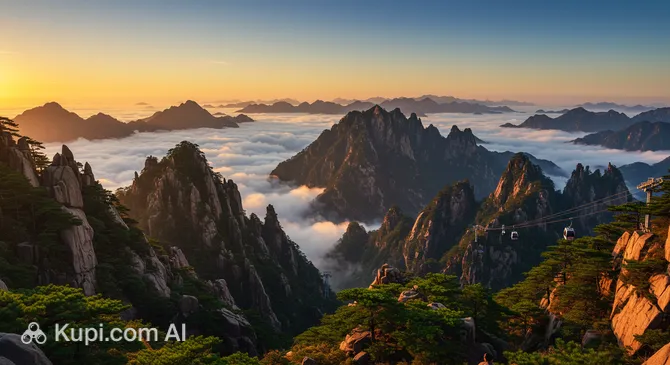
Mount Huangshan, often referred to as the Yellow Mountain, is the crown jewel of the region and a UNESCO World Heritage Site. Renowned for its "four wonders"—windswept pines, spectacular rocky peaks, the sea of clouds, and hot springs—this mountain range offers some of the most iconic landscapes in China. Visitors can explore the area by hiking up the scenic stone steps or taking a cable car to the summit, where breathtaking views await at spots like the Refreshing Terrace and the Beginning-to-Believe Peak.

Just a short distance from the city, the ancient villages of Hongcun and Xidi provide a fascinating glimpse into the past. These UNESCO-listed sites are celebrated for their well-preserved Hui-style architecture, characterized by white walls, black tiles, and exquisite wood carvings. Hongcun is particularly famous for its intricate water system designed in the shape of an ox, creating serene reflections that attract photographers and artists from around the world. Wandering through the narrow cobblestone lanes here feels like stepping into a traditional ink painting.

Back within the city limits, Tunxi Ancient Street is a vibrant destination for culture and commerce. This pedestrian-only thoroughfare is lined with centuries-old buildings that have been converted into shops selling local specialties, such as the renowned Anhui ink stones, tea, and calligraphy brushes. It is an excellent place to sample local snacks, buy souvenirs, and soak in the atmosphere of old trade routes, especially in the evening when the red lanterns cast a warm glow over the historic facades.

Local Cuisine

The culinary landscape of Huangshan is deeply rooted in Hui cuisine, one of the Eight Culinary Traditions of China. This local style is renowned for its emphasis on braising and stewing, as well as its liberal use of wild herbs, fungi, and game sourced directly from the surrounding mountains. The food here is characterized by its rich colors, heavy oil, and savory flavors, often requiring distinct skill to control the cooking fire to achieve the perfect texture.

Adventurous foodies should not miss the city’s most famous signature dish, Stinky Mandarin Fish (Chou Gui Yu). Similar to strong cheese, this fermented fish has a pungent aroma that belies its tender, savory meat. It is typically braised in soy sauce and chili, creating a unique contrast between the smell and the delicious taste. Another iconic delicacy is Hairy Tofu (Mao Dou Fu), named for the white mycelium that grows on the bean curd during fermentation. Whether fried to a golden crisp or braised, it offers a creamy texture that is a favorite among locals.

Given the region's status as a premier tea-growing area, tea is the quintessential drink of Huangshan. The city is the home of Huangshan Maofeng, a delicate green tea known for its orchid-like fragrance, and Keemun Black Tea, which is celebrated globally for its fruity and floral notes. While local rice wines are available, sitting down at a teahouse to sip these locally grown brews is an integral part of the gastronomic experience and a perfect way to cleanse the palate after a rich Hui meal.

For a truly immersive food experience, visitors should explore the bustling lanes of Tunxi Ancient Street. This historic area is not just for shopping; it is a gastronomic hub where you can sample a variety of street snacks, such as sesame cakes and dumplings, from traditional vendors. In the evenings, the restaurants along the street come alive, offering travelers the chance to enjoy authentic Hui dishes in centuries-old wooden buildings, blending culinary delight with a journey back in time.

Travel Tips

Visiting Huangshan is a bucket-list experience for many, but the unique combination of steep mountain terrain and local cultural nuances requires some specific preparation. To help you navigate everything from the misty peaks to the bustling ancient streets, here is a guide to making your trip hassle-free.

  1. Pack for All Weathers: The climate on the mountain differs vastly from the city below. Even in summer, the peaks can be chilly and windy, so bringing breathable layers and a warm jacket is essential. Avoid umbrellas, which can be dangerous on narrow, windy paths; opt for a rain poncho instead. Most importantly, wear sturdy, non-slip hiking boots to handle the thousands of stone steps comfortably.

  2. Mastering Local Transport: The city center (Tunxi) is approximately an hour's drive from the mountain entrance (Tangkou). The most reliable transport is the official shuttle bus from the Huangshan Bus Station. Within the city, taxis are affordable, but using a ride-hailing app like DiDi (often available in English) is highly recommended to bridge the language gap and avoid price negotiation.

  3. Digital Payments are King: While carrying some cash (Renminbi) is wise for remote areas, China operates almost entirely on digital wallets. Before you arrive, download Alipay or WeChat Pay and link your international credit card. From buying cable car tickets to purchasing water from a street vendor, scanning a QR code is the standard method of payment.

  4. Health and Safety on the Peaks: The hike involves steep ascents and can be physically demanding. If you have knee concerns, consider buying a bamboo walking stick at the base of the mountain. Be cautious around the wild monkeys often seen on the trails; keep food hidden inside your bag and avoid direct eye contact, as they can become aggressive if they spot snacks.

  5. Stay Connected and Orientated: Many Western apps and websites are not accessible due to local internet regulations. To stay connected, purchase an eSIM with data roaming or a local SIM card upon arrival. It is crucial to download offline translation apps and navigation tools (like Baidu Maps or Apple Maps) beforehand, as English proficiency is limited outside of major hotels.

  6. Respecting Local Etiquette: Tipping is not part of the culture and is generally not expected in restaurants or taxis. When interacting with locals, it is polite to present and receive items—such as business cards or money—with both hands. In crowded areas, personal space may be smaller than what you are used to; try to remain patient in queues.

  7. What to Avoid: Do not underestimate the descent time if you are not staying on the mountain. Missing the last cable car (usually between 4:30 PM and 5:30 PM depending on the season) results in a grueling hike down in the dark. Also, avoid "tea tasting" invitations from overly eager strangers on the street, as these can sometimes be tourist traps with inflated prices.

  8. Golden Sunrise Tip: If witnessing the famous sea of clouds at sunrise is a priority, you must book accommodation on the mountain summit well in advance. Staying in the city makes it nearly impossible to reach the viewing platforms in time for dawn, so plan your itinerary around this overnight stay.

By keeping these practicalities in mind, you can focus entirely on the stunning landscapes and rich heritage that make this region so special. A well-prepared trip to Huangshan ensures that your only surprise will be the breathtaking beauty of the Yellow Mountains.

Entertainment & Nightlife

While Huangshan is world-renowned for its misty peaks and sunrises, the city itself transforms into a vibrant, yet relaxed, destination once the sun sets. The nightlife here differs from the high-energy clubbing scenes of Shanghai or Beijing; instead, it offers a charming blend of cultural immersion, riverside relaxation, and lively street markets. The atmosphere is generally laid-back, catering to hikers returning from the mountains and locals enjoying the cool evening air along the riverbanks.

The epicenter of evening activity is undoubtedly the area surrounding the Xin'an River. As darkness falls, the city bridges and riverside buildings are illuminated with colorful LED lights, creating a dazzling reflection on the water. A stroll along the promenade is a favorite pastime for visitors, offering a chance to see locals practicing Tai Chi, dancing in public squares, or simply enjoying the view. For a more immersive experience, you can take a night cruise on the river to see the cityscape from a different perspective.

For those seeking a mix of history and modern entertainment, Liyang In Lane (Liyang Old Street) is the place to be. Located across the river from the more traditional Tunxi Ancient Street, this district successfully blends preserved Hui-style architecture with trendy establishments. Here, you will find a higher concentration of bars, coffee shops, and live music venues. The crowd is a mix of young locals and international tourists, and the dress code is casual. It is the perfect spot to grab a craft beer or a cocktail and listen to an acoustic set in a stylish, historic setting.

If you are looking for a spectacular cultural experience, the Huangshan Xiang Ming Grand Theatre is a must-visit venue. It hosts the famous "Hui Yun" (Moving Clouds) performance, a multimedia extravaganza that narrates the history and folklore of the Anhui region through acrobatics, dance, and music. Another popular option is the "Hongcun Aju" show, performed outdoors near the Hongcun village, which utilizes the natural water and ancient scenery as a stage. These shows usually start around 7:30 PM or 8:00 PM and are a fantastic way to spend the evening.

Practical advice for enjoying Huangshan at night is straightforward. The city is extremely safe for walking, even late at night, though standard precautions should always be taken. Taxis are plentiful and affordable, and ride-hailing apps are the most convenient way to get between Liyang In Lane and your hotel. Most bars and night markets operate until around midnight or 1:00 AM, with prices generally being lower than in China's Tier-1 cities. A beer in a bar might cost between 30-50 RMB.

While the nights are for relaxing, the city offers plenty of daytime entertainment beyond the mountains. Visitors can explore the Huizhou Culture Museum to deepen their understanding of the region's heritage or visit the Drunken Spa (Zuiquan) for a relaxing soak in hot springs. For families, nearby agricultural parks offer fruit picking and tea plantation tours, providing a wholesome counterpart to the evening's urban explorations.

Parks & Museums

While the towering peaks of the Yellow Mountains capture the world's attention, the city of Huangshan and its surroundings offer a wealth of serene parks, lush gardens, and insightful museums that allow visitors to connect with the region's soul. Exploring these green spaces and cultural institutions provides a deeper understanding of the Hui lifestyle, which balances harmony with nature and a profound respect for history.

For nature lovers seeking tranquility away from the mountain summits, Emerald Valley (Feicui Valley) is a stunning natural retreat located at the foot of the Yellow Mountains. Often referred to as the "Valley of Love," it is famous for its colorful pools formed by waterfalls cascading over colorful rocks. The water changes hues from turquoise to jade green depending on the sunlight and depth, creating a mesmerizing spectacle. It gained international fame as a filming location for Crouching Tiger, Hidden Dragon, making it a perfect spot for both hiking and photography.

Another breathtaking green space is the Mukeng Bamboo Forest, situated near Hongcun village. This vast, verdant sea of bamboo covers the hillsides and offers a peaceful escape where the only sounds are the wind rustling through the leaves and the chirping of birds. Visitors can hike through the dense groves, enjoying the fresh air and the cooling shade. The forest is not only a natural wonder but also a testament to the region's agricultural beauty, offering panoramic views of the surrounding Hui-style villages nestled in the valleys below.

To truly grasp the depth of the local heritage, a visit to the Anhui China Huizhou Culture Museum in the Tunxi District is essential. As the only comprehensive museum dedicated to Huizhou culture in China, it houses a vast collection of artifacts, including ceramics, ancient books, and traditional paintings. The exhibits meticulously detail the region's unique architecture, the rise of the Hui merchants, and the intricate clan structures that defined local society for centuries. It is an excellent starting point for anyone wishing to understand the context behind the ancient villages they visit.

For a more specialized look at local history, the Cheng Dawei Abacus Museum offers a fascinating glimpse into the world of ancient calculation. Dedicated to Cheng Dawei, a renowned mathematician from the Ming Dynasty known as the "Sage of the Abacus," this museum showcases the evolution of this essential tool. The collection includes over 1,000 abacuses made from various materials like gold, silver, jade, and ivory, highlighting the intersection of utility and art in Chinese history.

Beyond museums, the region is dotted with open-air historical landmarks, most notably the Tangyue Memorial Archways. This majestic group of seven stone arches, arranged in a line leading into the village, dates back to the Ming and Qing dynasties. Each arch was built to honor the virtues of the Bao clan, such as loyalty, filial piety, and righteousness. Walking beneath these imposing structures offers a tangible connection to the strict moral codes and architectural prowess of imperial China.

For an authentic experience off the beaten path, consider visiting the Xinan River Landscape Gallery early in the morning. While popular for boat tours, walking along the quieter sections of the riverbank reveals local fishermen at work and villagers washing clothes in the water, scenes that have remained largely unchanged for decades. It is a slice of living history that contrasts beautifully with the hustle of the main tourist sites.

Getting Around

The public transport system in Huangshan is straightforward and primarily relies on an extensive network of buses and taxis. Unlike China's mega-cities, there is currently no metro system here, but the ground transport is efficient and covers the needs of most travelers well. The network effectively connects the urban center (Tunxi District), the transport hubs like the railway station and airport, and the gateway town of Tangkou, which sits at the foot of the mountains.

Public buses are the most economical way to navigate the city streets. These vehicles are generally modern and air-conditioned, with routes covering key locations such as Tunxi Ancient Street and the major bus stations. The fare is incredibly affordable, typically a flat rate of 1 or 2 RMB regardless of distance. For those heading to the scenic area, dedicated tourist shuttle buses operate frequently from the Huangshan North Railway Station and the city center, providing a direct and comfortable link to the mountain entrance.

When it comes to payment, the system is digital-first. While you can still use cash, you must have the exact change (usually 1 RMB coins or notes) to drop into the fare box, as drivers do not handle money. The most convenient method for tourists is to use mobile payment apps like Alipay or WeChat Pay. You simply open the "Transport" or "Ride" code within the app and scan it on the reader when boarding. These apps now support international credit cards, making it easy for visitors to pay without needing local transit cards.

Taxis and ride-hailing services are excellent alternatives for more direct travel. Regular taxis are green or blue and can be easily hailed on the street; they always use a meter. However, for ease of communication, using a ride-hailing app like DiDi (often available in English within Alipay) is highly recommended. This allows you to input your destination on a map, see the estimated price, and pay automatically, bypassing the language barrier that can occur with local drivers.

For short trips within the city center, shared bicycles are a popular and pleasant option. You will find bikes from major operators parked on sidewalks throughout Tunxi. These can be unlocked by scanning the QR code on the frame using your mobile payment app. Cycling along the Xin'an River promenade is a relaxing way to move between your hotel and the evening markets.

Although not part of the urban transit, the cable cars in the Huangshan Scenic Area are a vital form of transport for visitors. These impressive aerial tramways, such as the Yungu and Yuping cableways, save hours of strenuous climbing and offer breathtaking views of the peaks. Be aware that they have specific operating hours, usually closing around 4:30 PM or 5:00 PM, so it is crucial to plan your descent accordingly to avoid being stranded on the summit.

Practical advice for tourists includes keeping a digital or printed card with your destination's name in Chinese characters. Most bus drivers and taxi operators speak limited English, so showing the address is the surest way to get where you need to go. City buses generally run from 6:00 AM to roughly 9:00 PM, while taxis are available 24/7, making late-night returns from the ancient streets hassle-free.

Accommodation

Finding the right place to stay in Huangshan depends largely on your itinerary and whether your primary goal is to explore the city's cultural heritage or to conquer the Yellow Mountains. The region offers a wide spectrum of accommodation options, ranging from budget-friendly youth hostels and cozy family-run guesthouses to mid-range business hotels and luxurious 5-star resorts.

There are three main areas where tourists typically base themselves, each offering a distinct experience:

  • Tunxi District (City Center): This is the best option for travelers arriving late or departing early, as it is close to the airport and transportation hubs. Staying here allows easy access to Tunxi Ancient Street and the riverside night markets. You will find the highest concentration of modern amenities, international hotel chains, and boutique inns housed in restored Hui-style buildings.

  • Tangkou Town: Located at the southern foot of the mountain range, Tangkou is the primary gateway to the scenic area. It is approximately an hour's drive from the city center. This area is ideal for hikers who want to start their ascent early in the morning. The town is packed with affordable hotels, restaurants, and shops selling hiking gear.

  • The Mountain Summit: For those determined to witness the legendary sunrise or the sea of clouds, staying overnight on the peak is essential. Accommodation here is limited and significantly more expensive than at the base. Options range from dormitory-style bunks to standard hotel rooms. While amenities may be more basic due to the logistical challenges of transporting supplies up the mountain, the location is unbeatable.

Booking Tip: If you plan to stay on the mountain summit, it is critical to book your room weeks or even months in advance, especially during peak seasons (spring and autumn) and Chinese national holidays. Rooms on the peak sell out very quickly, and prices can surge. Conversely, hotels in Tunxi and Tangkou generally have better availability.

Regarding costs, budget travelers can find hostels and simple guesthouses in Tangkou or Tunxi for reasonable rates. Mid-range options are plentiful and offer good value with standard comforts. Luxury seekers will find high-end resorts primarily in the Tunxi area or near the scenic spots like Hongcun. Most accommodations can be easily booked via major international travel platforms or Chinese apps like Trip.com, which is often recommended for the most accurate inventory and English support.

Nearby Cities

For those looking to explore the surroundings, Huangshan serves as an excellent base for day trips to several interesting nearby locations:

One of the most culturally significant neighbors is Jingdezhen, globally renowned as the "Porcelain Capital." With a history of pottery production spanning over 1,700 years, this city invites travelers to explore ancient kiln sites, visit ceramic museums, and observe master artisans at work. It offers a fascinating contrast to the natural wonders of the mountains, focusing instead on fine art and industrial heritage.

Another worthwhile destination is Shangrao, which acts as a gateway to Mount Sanqing (Sanqingshan), another UNESCO World Heritage site. Known for its unique granite peaks and Taoist culture, it provides a different but equally stunning mountain experience. Additionally, the nearby county of Yushan offers convenient access to these scenic areas and provides a glimpse into the local rural charm of the region.

City Population Distance (km)
Shangrao6,810,700145
Anqing4,723,000153
Yushan2,092,496100
Jingdezhen1,673,200123
Jinhua1,463,990145

These nearby destinations offer a glimpse into the diverse culture and landscapes of the region.

Shopping & Souvenirs

Shopping in Huangshan offers a distinct experience that contrasts with the glitzy luxury malls of China's coastal metropolises. Here, retail therapy is deeply intertwined with the region's rich cultural heritage. The city is less about international fashion brands and more about exquisite local craftsmanship, world-famous teas, and traditional art supplies. Visitors will find that browsing through the local shops is akin to exploring a living museum, where every item tells a story of the Hui culture that has thrived in these mountains for centuries.

The crown jewel of the city's shopping scene is undoubtedly Tunxi Ancient Street. Walking down this pedestrian-only lane feels like stepping back into the Ming and Qing dynasties. It is lined with hundreds of centuries-old shops, many of which have been operating for generations. This is the primary destination for tourists, offering a vast array of antiques, calligraphy works, and local curiosities. Just across the river, Liyang In Lane (Liyang Old Street) offers a more contemporary alternative. This revitalized district blends preserved historic architecture with modern boutiques, coffee shops, and creative art stores, providing a stylish atmosphere for leisurely browsing.

For those in need of modern conveniences, international brands, or daily necessities, the city center in the Tunxi District hosts several modern commercial complexes. The Huangshan Department Store and the area surrounding it serve as the modern commercial heart of the city, featuring supermarkets, clothing retailers, and electronics shops. While these malls may not rival the scale of those in Shanghai, they provide a comfortable and air-conditioned environment to purchase standard travel supplies or recognizable fashion labels.

Markets in Huangshan are vibrant and aromatic, often dominated by the region's most famous export: tea. The Huangshan Tea City is a specialized market dedicated entirely to local brews. Here, you can sit down with vendors to taste different grades of tea before you buy, learning about the nuances of flavor and harvest times. Additionally, the night markets that spring up around the ancient streets offer a lively mix of street food and small trinkets, perfect for picking up inexpensive gifts while soaking in the evening atmosphere.

When it comes to souvenirs, Huangshan is famous for the "Four Treasures of the Study"—the brush, ink, paper, and inkstone—which are essential tools for traditional Chinese calligraphy and painting. The She Inkstone (Sheyan) and Hui Ink produced here are legendary among artists for their quality. Of course, tea is the other must-buy item; bringing home a tin of fresh Huangshan Maofeng (green tea) or the robust Keemun Black Tea is highly recommended. For a tasty treat, look for Yellow Mountain Sesame Cakes, a savory, flaky snack that travels well.

Most shops in the main tourist areas and commercial districts open around 9:00 AM or 10:00 AM and stay open until late, often closing around 9:30 PM or 10:00 PM, especially in bustling areas like Tunxi Ancient Street. Payment methods have gone almost entirely digital. While larger hotels and some major department stores may accept international credit cards, the vast majority of vendors, from antique dealers to snack stalls, rely on Alipay or WeChat Pay. It is advisable to set up these apps on your phone before shopping; cash is accepted but carrying small change is helpful.

Tax-free shopping is not a widespread feature in Huangshan compared to major international hubs like Beijing or Hainan. While some large designated department stores may technically offer tax refund services for eligible international visitors, the process can be complex and staff may not be familiar with it. It is generally best to assume that the price you see is the final price, and focus on the unique value of the local handicrafts rather than tax savings.
Reached the end of the page?

That means the route is fully explored