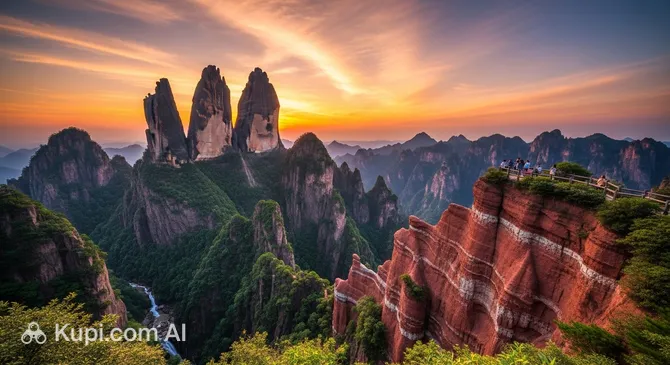
Jiangshan is a charming county-level city within the Quzhou prefecture of Zhejiang Province in China. Unlike bustling metropolises, this city offers travelers an atmosphere of profound tranquility and seclusion surrounded by majestic natural landscapes. With a population of over 460,000, Jiangshan retains the cozy feel of provincial China, where the modern pace of life blends harmoniously with ancient traditions.
Jiangshan. Illustration.
Source: Kupi.com AI
The city's geographic location makes it an ideal starting point for exploring mountain ranges and ancient settlements. Jiangshan is famous for its unique cultural heritage and its status as a top-tier 5A tourist zone. There is no blinding glare of neon signs here; instead, you will find epic landscapes that have inspired the poets and artists of the Middle Kingdom for centuries.
Among the region's chief treasures are the famous Jianglang Mountain with its three giant peaks and the ancient town of Erbadu, frozen in time. A visit to this area is a true gift for those seeking authenticity and wishing to escape the hustle and bustle of major tourist centers. We invite you to discover this underrated but incredibly picturesque corner of Zhejiang Province.
Weather Overview
The climate in Jiangshan is a typical subtropical monsoon, characteristic of Zhejiang Province. The seasons are clearly defined here: summers are usually hot and humid, while winters are mild and relatively dry. Thanks to the mountainous terrain, the air in the city and its surroundings is often cleaner and fresher than in the major industrial centers of lowland China.
The weather in the city is characterized by significant fluctuations in precipitation throughout the year. The wettest month is traditionally June (average rainfall around 357 mm) when monsoon rains hit the region. In summer, specifically July and August, temperatures can rise to 34°C, while in winter, during January, average temperatures are around 7-8°C, though nighttime lows of 3°C are possible.
If you plan to hike Jianglang Mountain or walk in the Xianxia Forest Park, the best time to visit is autumn (October-November), when comfortable temperatures around 15-20°C settle in and precipitation is minimal. Spring is also beautiful for tourism; however, be prepared for frequent but short spring rains, which give the local landscapes a special misty charm.
Average monthly temperature
Average monthly precipitation
Interesting Facts
Jiangshan is one of the few places where you can see unique "Danxia" rock formations, which are included in the UNESCO World Heritage list as part of the "China Danxia" site.
Jianglang Mountain is famous for its "Three Peaks," which, according to legend, are three brothers who turned to stone.
The ancient town of Erbadu is known as the "Kingdom of Ming and Qing Architecture" due to the exceptional preservation of its historic buildings and unique wood carvings.
The ancient Xianxia Trail passes through Jiangshan; for centuries, it served as an important trade and military route connecting Zhejiang and Fujian provinces.
Located near the city is Wenchang Palace, an architectural masterpiece recognized as a national heritage site due to its exquisite craftsmanship.
How to Get There
The transport accessibility of Jiangshan has improved significantly in recent years, making the city a convenient destination for travelers. Thanks to its location in Zhejiang Province, the county is integrated into a network of modern communications, allowing for quick travel from the country's major business hubs. Optimal trip planning will help you save time and fully enjoy the route to the city.
The primary and fastest way to get here is via high-speed rail. The Jiangshan Railway Station is located on the important Hangzhou-Changsha line. A trip from Shanghai takes between 3 to 4 hours, while Hangzhou is reachable in just 2 to 3 hours. Modern trains run regularly, ensuring high comfort and no traffic jams, which is particularly important for tourists on a tight schedule.
Station
Passenger traffic
Distance
Quzhou railway station
7
32 km
Shangrao railway station
6
67 km
Huangshan Railway Station
3
113 km
Sidu Railway Station
2
123 km
Jingdezhen Railway Station
4
150 km
If you plan to arrive by plane, the nearest major aviation hubs are in Hangzhou or Ningbo. After landing at the airport, it is most convenient to transfer to a high-speed train; this transport combination will take a total of 4 to 6 hours. Driving from neighboring Quzhou is also an option (about an hour's journey), but you should account for potential traffic delays during peak hours on the province's highways.
The main attractions of Jiangshan are centered around its incredible nature and carefully preserved history. The region's calling card is Jianglang Mountain. This unique geological formation is famous for its three massive rock peaks that tower over dense forests, creating a truly epic landscape. The 5A-category infrastructure makes the ascent convenient and safe, offering tourists breathtaking views of the surroundings.
For those who want to immerse themselves in the atmosphere of old China, the Erbadu Ancient Town is a must-visit. This settlement has preserved traditional architecture from the Ming and Qing dynasties. Walking through its narrow streets, you can see carved wooden facades and ancient temples that allow you to feel the spirit of bygone centuries without the usual crowds of tourists found in more popular spots.
Fans of active recreation and ecotourism will enjoy Xianxia Forest Park. The park offers numerous hiking trails through untouched nature and the purest mountain air. It is also worth visiting Fugai Mountain and the colorful Qingyang Village, where life flows at a measured pace, and the hospitality of the locals provides a better insight into real rural China.
Local Cuisine
The local cuisine of Jiangshan is a vivid representative of Zhejiang's culinary traditions, where the freshness of ingredients and the preservation of their natural flavor are paramount. The diet is based on rice, fresh vegetables, and, of course, fish from local rivers. Dishes here are light and use spices moderately, making them pleasant for most travelers.
Special attention should be paid to the gastronomy in the ancient settlement of Erbadu, where tourists are offered traditional snacks with recipes that haven't changed for decades. Be sure to try the river fish dishes and local steamed dumplings. The dining culture here is simple and soulful: most establishments are small family restaurants serving "home-style" food prepared from whatever was harvested or caught that morning.
As for beverages, Jiangshan and its surroundings are famous for their green tea. Plantations located on the mountain slopes produce high-quality leaves with a delicate aroma. A tea session in one of the local parks or at the foot of the mountains is a perfect way to end a busy day. If you are looking for authentic flavors, visit the local markets where you can find not only prepared food but also unique local specialties rarely found in other regions of the country.
Travel Tips
To ensure your trip to Jiangshan is as comfortable as possible and leaves only positive emotions, we have prepared a few practical recommendations.
Clothing and Gear: Choose comfortable shoes with good grip, as you will be doing a lot of walking on mountain trails. In summer, be sure to bring sunscreen and a hat, and for visiting temples, wear clothing that covers your shoulders and knees.
Transport: It is most convenient to move around the county by bus or taxi. If you plan to use taxis, download the Didi app in advance, as catching a car on the street in remote areas can be difficult.
Finances: QR payments are used everywhere in China, so install Alipay and link an international card to it. Cash yuan will be useful for small purchases in remote villages.
Health and Safety: The crime rate is extremely low, but caution should be exercised in the mountains. Always check the weather forecast before an ascent, as trails can be slippery during the monsoon season.
Communication: English is rare here. Be sure to download an offline translator and carry a card with the hotel name in Chinese.
Local Etiquette: Greet people with a slight nod of the head. In tea houses, it is not customary to be loud—these are places for quiet conversation and contemplation.
What to Avoid: Avoid visiting popular mountains during Chinese public holidays if you want to skip the massive queues. Also, do not go on solo hikes on unmarked trails.
Extra Tip: Try to start sightseeing early in the morning—this will allow you to enjoy the views without the heat and in complete peace.
By following these simple tips, you will be able to fully immerse yourself in the amazing atmosphere of this region and make your vacation unforgettable!
Entertainment & Nightlife
Entertainment in Jiangshan is primarily contemplative and oriented toward nature lovers and outdoor enthusiasts. During the day, the city and its surroundings offer excellent opportunities for hiking in parks like Xianxia and educational walks through the historic streets of ancient settlements. There are no loud amusement parks or massive entertainment centers here, which underscores the city's status as a place for quiet "slow tourism."
Nightlife in the traditional sense—with loud clubs and bars open until dawn—is practically non-existent in the county. Jiangshan quiets down at dusk, immersing guests in an atmosphere of serenity. Evenings here are typically spent in cozy tea houses, where you can sample the best local tea varieties, or in small restaurants at the foot of the mountains, enjoying the silence and fresh air.
If you crave brighter city lights and a more active evening scene, locals recommend heading to neighboring Quzhou or the larger Hangzhou, which can be reached by high-speed train in one to two hours. To get around the city itself in the evening, it is best to use taxis or ride-hailing apps, which operate reliably and safely.
Parks & Museums
The park areas of Jiangshan are its greatest treasure. Thanks to the mountainous terrain, the city is literally immersed in greenery. Xianxia Forest Park is the region's largest green space. This place is ideal for long walks: it features high-quality trails that offer panoramic views of misty peaks. The scale of the greenery is mind-boggling, creating a natural "oxygen bar" for all visitors.
In terms of cultural and educational recreation, Wenchang Palace deserves special attention. This is not just a museum, but an outstanding architectural monument from the Ming and Qing dynasties with national heritage status. The palace is famous for its incredibly fine and complex wood carvings that adorn its interiors. It is a must-visit for anyone interested in traditional Chinese art and the aesthetics of ancient buildings.
While there are no massive museum complexes in the county typical of provincial capitals, every historical site here functions as an open-air museum. Natural parks around Jianglang Mountain harmoniously combine ecological routes with information boards explaining the geology and legends of the area, making a walk not only pleasant but also informative.
Getting Around
The public transport system in Jiangshan is simple and geared toward the needs of both locals and tourists. The primary means of getting around the county is by bus. The network of routes connects the city center with main attractions, such as Jianglang Mountain and ancient settlements. A one-way trip usually takes 20 to 40 minutes, making travel quite comfortable.
Bus fares are paid in cash (it's better to have small bills) or via mobile apps. Ticket prices are very affordable. During peak hours, especially on weekends, buses near the railway station can be crowded, so tourists are advised to plan their trips for early morning to secure a seat and avoid the rush.
An alternative to public transport is taxis and ride-hailing services (such as Didi). This is a convenient option for those who prefer comfort or are traveling in a group. In the flatter parts of the city, bicycles are also popular and can be rented for leisurely rides. The most important transport hub is the Jiangshan Railway Station, which serves as the main gateway to the city for most visitors.
Accommodation
The choice of accommodation in Jiangshan reflects the region's overall tourism focus—proximity to nature and historical roots. Most lodging options are concentrated near major natural attractions or in the center of the county itself. Travelers can choose between modern mid-range hotels and authentic guesthouses that allow for a deeper feel of the local flavor.
Guesthouses (minsu) in the Jianglangshan and Erbadu areas are particularly popular. Staying in such places provides the opportunity to wake up with mountain views or find yourself in the heart of the ancient city before the main groups of visitors arrive. The level of service in these establishments varies from basic to quite comfortable, with an emphasis on home comfort and traditional hospitality.
In Jiangshan city itself, hotels geared toward short-term business trips and sightseeing tours predominate. We recommend booking accommodation in advance, especially if your trip coincides with Chinese public holidays when the flow of domestic tourists increases significantly. The price range here remains very affordable compared to the large coastal cities of Zhejiang Province.
Nearby Cities
Jiangshan serves as an excellent starting point for exploring the surroundings of Zhejiang Province and the neighboring Jiangxi Province. Thanks to developed rail links and high-quality roads, tourists can easily diversify their vacation with trips to neighboring cities, each possessing its own unique character and set of attractions.
Just 33 kilometers away is the city of Quzhou. This is an important cultural and economic center, convenient for a day trip for shopping in modern malls or walking through historical quarters. Another interesting destination is Yushan, located 28 kilometers away, offering a great opportunity to see life in the neighboring Jiangxi region. It is also worth noting the city of Shangrao, known for its picturesque landscapes and proximity to the famous Sanqingshan Mountains.
Exploring the nearby areas will allow you to form a more complete picture of East China, its diversity, and rapid development. Whether it's a short train ride to Kaihua or a trip to Dexing, each of these directions will provide new experiences and reveal new facets of the Middle Kingdom.
Shopping & Souvenirs
Shopping in Jiangshan is primarily about finding unique local goods and handmade souvenirs. You won't find massive shopping malls with global brands here, but the city offers something more valuable: authentic products that reflect the spirit of the region. Most commercial activity for tourists is concentrated in the old settlement areas and the central part of the county.
Colorful markets operate in Erbadu Ancient Town, where you can purchase locally produced goods. Look for high-mountain green tea and folk handicrafts. Decorative stones mined from the local mountains are popular souvenirs; their unique shapes and textures make for a wonderful reminder of the trip. You can also find traditional Chinese paper and calligraphy supplies in the markets.
For everyday purchases and supermarkets, head to the area around the railway station or the county center. Most shops are open from morning until late evening. Payment is most often made through the popular Chinese payment systems WeChat Pay and Alipay, but it is useful to have some cash (yuan) for small shops near attractions. Tax-free shopping is generally not practiced in such small counties, as retail outlets rarely belong to the relevant system.