Support

Palace of the Popes

About

The Palace of the Popes (Palais des Papes) is a majestic monument of history and architecture located in the city of Avignon in southern France. This monumental complex is one of the largest and most significant medieval Gothic palaces in Europe and is listed as a UNESCO World Heritage site. Its scale and austere beauty leave a lasting impression, as it towers on a rocky hill above the Rhône River.
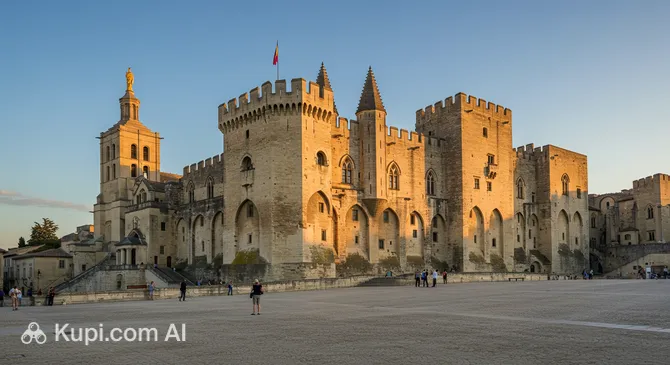
Palace of the Popes. Illustration.
Source: Kupi.com AI

Traveler photos:

The construction of the palace took place in the 14th century, when the city became the temporary residence of the Roman Popes. This period, known as the "Avignon Papacy", turned Avignon into the capital of the Catholic world and the palace into its main symbol. The structure served as both a fortress and a residence, which is reflected in its architecture: massive walls and towers are combined with exquisite interior decorations, of which, unfortunately, only fragments remain.

The architectural ensemble consists of two main parts—the Old and New Palaces, built by different popes and architects. The total area of the complex is about 15,000 square meters, which is comparable to several Gothic cathedrals. Today, numerous halls, chapels, courtyards, and papal apartments are open to visitors, where you can see preserved frescoes and feel the spirit of medieval history. The palace is not only a museum but also a venue for the famous Avignon Theater Festival.

Contacts

To plan your visit, confirm current opening hours, or ask any questions, you can contact the Palace of the Popes administration. All necessary visitor information, including details on temporary exhibitions and cultural events, is available on the official website.

How to contactContact
AddressPl. du Palais, 84000 Avignon, France
Phone number+33 4 32 74 32 74
Websitepalais-des-papes.com

What to Do

A visit to the Palace of the Popes is an immersion into a world of medieval luxury and grandeur. Inside, numerous halls await where you can learn about the rich history and unique architecture of this structure. Pay attention to the luxurious interiors decorated with ancient frescoes, tapestries, sculptures, and carved wooden ceilings, which testify to the former wealth of the papal residence. Notable highlights include the chapel for papal services and the majestic Cour d'Honneur (Honor Court), completed under Pope Urban V.

A journey through the palace will lead you through its key sections, including the New Palace and the chapels, which are architectural gems combining Gothic and Renaissance elements. More than 25 rooms are open to visitors, including the Pope's private apartments and audience halls. Don’t miss the opportunity to climb to the upper levels of the complex. From there, magnificent panoramic views open up over the historic center of Avignon and the picturesque Rhône River, providing a perfect conclusion to your tour.

The Palace of the Popes is not just a historical monument frozen in stone, but a vibrant cultural center. Throughout the year, it hosts various events, temporary exhibitions, and the famous Avignon Theater Festival, making a visit even more enriching and interesting. This allows visitors not only to touch history but also to become part of the modern cultural life of France.

Getting There

Getting to the Palace of the Popes in Avignon is quite simple, as it is located right in the heart of the city's historic center. Thanks to its central location, it can be reached on foot from almost anywhere in the old town, allowing you to enjoy the atmosphere of the medieval streets. A walk from most hotels within the city walls will take no more than 20 minutes.

If you arrive in Avignon by train, you have two main options. From the Avignon Centre station, which is within the city walls, the palace is about a 15-minute walk. If your train arrives at the Avignon TGV high-speed station, located a few kilometers from the center, you can use the convenient shuttle train that reaches Avignon Centre in just 6 minutes. From there, it is only a short walk to the palace.

The city has a well-developed public transport system. Several bus routes stop in the immediate vicinity of the Palace of the Popes, making it accessible from different parts of the city. If you are traveling by car, please note that traffic in the historic center is restricted. It is most convenient to leave your car in one of the nearby parking lots, such as the palace’s own underground parking (Parking du Palais des Papes), to avoid any trouble finding a spot.

Nearest city: Avignon

History & Facts

The history of the Palace of the Popes is inextricably linked to one of the most dramatic periods in the history of the Catholic Church—the so-called "Avignon Papacy". It began in 1309 due to a sharp conflict between the French King Philip IV the Fair and the papacy. As a result of political intrigue, the newly elected Pope Clement V, a Frenchman by birth, moved his residence from turbulent Rome to Avignon. Initially, he and his successor John XXII lived modestly in a Dominican monastery, as the grand palace did not yet exist.

Full-scale construction began only under Pope Benedict XII in 1335. On his orders, the old episcopal palace was demolished, and architect Pierre Poisson of Mirepoix began building the monumental and austere structure known today as the Old Palace (Palais Vieux). It was more of a powerful fortification than a luxury residence, with thick walls, towers, and a cloister, reflecting the popes' need for security.

Subsequent popes continued to expand and decorate the complex. Under Clement VI, Innocent VI, and Urban V, the New Palace (Palais Neuf) was built, adding elegance to the ensemble. A new chapel for papal services was added, additional towers were erected, and under Urban V, the construction of the main Cour d'Honneur (Honor Court) was completed. A key event was the purchase of the city of Avignon by Pope Clement VI in 1348. This move finalized the city's status as the capital of the Catholic world for the period from 1309 to 1377.

Time Needed

When planning a visit to the Palace of the Popes, you should expect to spend an average of 1.5 to 2 hours exploring it. This is usually enough time to follow the main route, which includes over 25 halls, chapels, and papal apartments, and to get a general impression of the scale and history of this grand structure. The ticket price includes a Histopad interactive tablet, which allows you to see reconstructed 14th-century interiors. The duration of your visit may vary depending on how much time you spend studying the information on the tablet.

If you wish to visit not only the palace itself but also the adjacent Papal Gardens, add at least another 30 minutes to your plan. Thus, for a complete and leisurely discovery of the entire complex, including the gardens and the opportunity to take photos from the panoramic terraces, it is better to set aside about 2.5–3 hours. For those passionate about history and architecture, exploring every corner of the palace could take until midday.

Working Hours

The Palace of the Popes is open to visitors year-round, but its opening hours depend on the season. Generally, during the peak tourist season, from approximately March to early November, the palace welcomes guests from 9:00 AM to 7:00 PM. In the quieter winter months, hours are reduced, usually from 10:00 AM to 5:00 PM. It is important to note that ticket offices close and the last entry is allowed one hour before closing, so plan your visit with plenty of time to spare.

To avoid long queues, especially during the height of the season, it is highly recommended to purchase tickets in advance online. This not only saves you time but also guarantees entry on your chosen day. Since the schedule may change—for example, during school holidays or special events—it is always useful to check the most up-to-date information on opening hours and possible changes on the official website of the Palace of the Popes before your trip.

9:00 – 19:00

Nearby

Visiting the majestic Palace of the Popes is undoubtedly the highlight for any visitor to Avignon. However, to truly experience the spirit of this historic city, it is worth taking the time to explore its surroundings. The historic center, where the palace is located, is so compact that the most interesting spots are literally just a few steps away. A stroll through the ancient streets will allow you to discover other architectural and cultural gems that perfectly complement the impressions left by the papal residence.

Exploring nearby attractions will enrich your journey, adding new colors to the picture of this medieval French city. Whether it is an ancient bridge, a picturesque garden with panoramic views, or an old basilica, each of these places holds its own unique story. Below is a list of interesting sites located in the immediate vicinity of the Palace of the Popes that you can easily include in your walking route.

NameDistance
Le Carré du Palais0.1 km
Léo Léa0.1 km
Rocher des Doms Garden0.2 km
Basilica of Saint Peter0.2 km
Pont d'Avignon0.4 km
Chez Marie0.4 km
Les Halles Market of Avignon0.4 km

Have you reached the end of the page?

So the route has been studied inside and out