Support

Basilique Saint-Pierre

About

While strolling through the cobbled squares of Avignon, it is impossible to miss one of the city's most exquisite churches. Saint Peter's Basilica is an outstanding monument of Gothic architecture, located in the shadow of the majestic Palais des Papes. The building, constructed from light-colored local stone, catches the eye with its sophisticated facade and centuries-old history, deeply woven into the fabric of life in France.
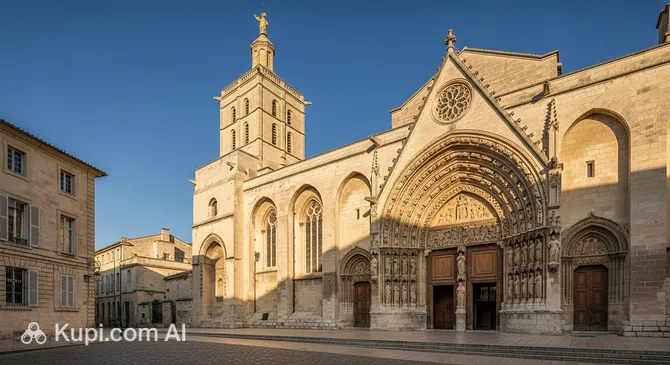
Basilica of Saint Peter
Basilica of Saint Peter. Иллюстрация. Источник: Kupi.com AI

It is not just a religious building, but a true work of art in the open air. The basilica stands out among the city's other churches for its ornate early 16th-century Gothic facade and slender bell tower, built a century earlier. A recent restoration has returned the stone to its original radiance, making the church one of the most photogenic spots in the historic quarter.

Inside, visitors will find an atmosphere of tranquility and authentic medieval grandeur. Its rich décor and status as a significant spiritual center make the basilica a must-visit for anyone wishing to experience the cultural heritage of Provence and see a classic example of French architecture from that era.

Contacts

For updated information before your visit or when planning group tours, you can use the official contact details.

How to contactContact
AddressPl. Saint-Pierre, 84000 Avignon, Франция
Phone+33 4 90 82 10 56
Websiteavignon-tourisme.com

What to Do

Standing before the facade, the first thing to notice are the unique walnut doors. Crafted in the 16th century by famous masters, they are adorned with such intricate and complex carvings that they can be viewed as a museum exhibit in their own right. Above them rises the Flamboyant Gothic facade, whose delicate, lace-like details are truly striking.

Inside the church, the six side chapels, created in the 15th and 16th centuries, are a major draw. Each has its own character and unique decor. Be sure to find the altarpiece of Saint Peter—this 16th-century painting is considered one of the basilica's primary artistic treasures. Also preserved inside are ancient burials and carved wooden choir stalls, demonstrating the skill of furniture makers of past eras.

Art lovers will be interested in exploring the collection of 16th–17th century paintings decorating the church walls. The quiet and cool interior of the basilica provides the perfect setting to slowly study the architectural forms and works of art accumulated here over the centuries.

Getting There

Finding the basilica is easy, as it is located on the namesake square, Place Saint-Pierre, in the heart of the historic center. It is in close proximity to the city's main tourist landmark, the Palais des Papes. If you are already walking through the old town, the spire of the bell tower and the ornate facade will serve as excellent landmarks.

For those coming from further away, it is most convenient to take a taxi or public transport to the central stops. Given that the city's historic core is primarily a pedestrian zone, the last few hundred meters of the journey will be a pleasant walk through medieval cobbled streets.

Ближайший город: Avignon

History & Facts

The history of this sacred site in France began as far back as the 7th century when the first church was founded on this very plot. Unfortunately, that early structure was completely destroyed during Saracen raids. The majestic appearance we see today began to take shape in the middle of the 14th century, when a new cathedral was built on the ruins of the old foundation.

In the 15th and 16th centuries, the building underwent significant changes: it was expanded, graceful side chapels were added, and some elements were rebuilt according to the fashions of the time. Despite numerous reconstructions, the church has carefully preserved its Gothic forms, which stand as a living testament to the skill of medieval builders.

The basilica played a special role during the period of the "Avignon Papacy," when the city became the most important religious and political center in Europe. Its proximity to the Palais des Papes emphasized the church's high status. The final touch to the exterior was the magnificent Flamboyant Gothic facade, completed in the early 16th century, which continues to inspire admiration in passersby today.

Time Needed

To fully appreciate the beauty of the facade, examine the carved details on the doors, and explore the interior with its numerous chapels, it is recommended to set aside 1 to 2 hours. This is plenty of time for a leisurely tour without rushing.

If you plan to attend a service or study the artworks in the side chapels in detail, you should allow for a bit more time. In any case, a visit to the basilica fits easily into a walking tour of the city center, leaving time for a break at nearby cafes.

Working Hours

The basilica is open to visitors daily, though the schedule may vary depending on the day of the week. Usually, the church doors are open from 09:30 to 13:00 and from 14:30 to 17:00, except for Thursdays (afternoon only) and Sundays, when access is limited to the morning hours (08:30 to 10:30).

As regular services are held in the basilica, tourists are advised to show respect to worshippers and check the current schedule on the official website or information boards at the entrance to ensure their visit does not coincide with Mass.

DayWorking hours
понедельник09:30–13:00, 14:30–17:00
вторник09:30–13:00, 14:30–17:00
среда09:30–13:00, 14:30–17:00
четверг14:30–17:00
пятница09:30–13:00, 14:30–17:00
суббота09:30–13:00, 14:30–17:00
воскресенье08:30–10:30

Nearby

The basilica's location in the historic core allows tourists to create a rich itinerary without spending much time on travel. Exploring the surrounding streets will help you feel the atmosphere of medieval Provence more deeply and see iconic architectural monuments.

NameDistance
Palace of the Popes0.2 km
Le Carré du Palais0.2 km
Léo Léa0.2 km
Les Halles Market of Avignon0.2 km
Calvet Museum0.4 km
Angladon Museum0.4 km
Lapidary Museum0.4 km

Reached the end of the page?

That means the route is fully explored