The Hôtel-Dieu Museum, also known as the Hospices de Beaune, is one of the most iconic landmarks not only of the city but of all France. This outstanding historical and architectural monument was founded in 1443 by Nicolas Rolin, Chancellor of Burgundy, as a hospital for the poorest residents after the Hundred Years' War. Today, it is a unique museum that allows visitors to immerse themselves in the history of medieval medicine, charity, and Burgundian architecture.
The building is a magnificent example of 15th-century Flamboyant Burgundian Gothic architecture. Its most striking feature is the famous roofs covered in colorful glazed tiles that form intricate geometric patterns. The vibrant facades, carved wooden galleries, and high spires make the Hôtel-Dieu a true architectural treasure, often referred to as a "Palace for the Poor."
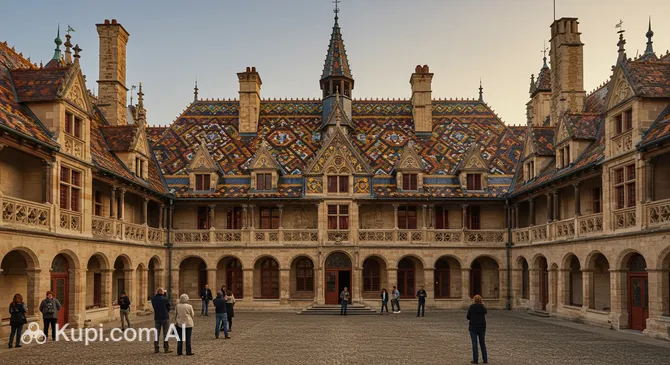
Traveller photos:
Inside the museum, the interiors of the medieval hospital have been recreated with striking precision. Visitors can see the main "Great Hall of the Poor" with its rows of beds under crimson curtains, an ancient pharmacy with a collection of pharmaceutical vessels, and a chapel integrated into the ward. In addition to medical exhibits, the museum houses a rich collection of art, tapestries, and everyday objects donated to the hospital over the centuries. The jewel of the collection is the "Last Judgment" polyptych by the Flemish master Rogier van der Weyden.