Support

Bordeaux Wine and Trade Museum

About

The Bordeaux Wine and Trade Museum is a specialized space dedicated to the rich history of winemaking and commerce in the region. It is located in Bordeaux, France, and occupies an 18th-century former merchant's house in the historic Chartrons district. This venue allows guests to look back into the past when the city was the world's most important port for exporting famous French wines.
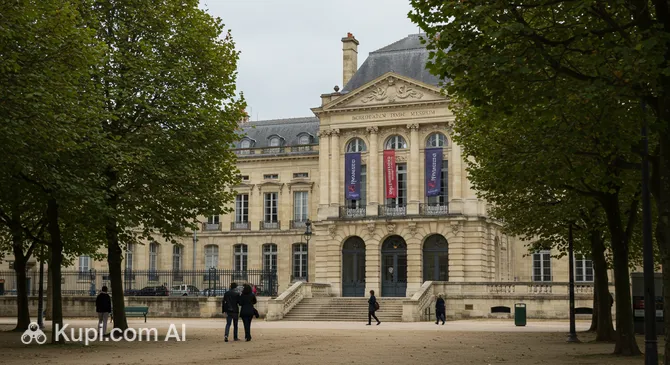
Bordeaux Wine and Trade Museum. Illustration.
Source: Kupi.com AI

Traveler photos:

The exhibition is spread across three ancient semi-underground cellars with vaulted stone ceilings. Here, the authentic atmosphere of a merchant house from past centuries has been recreated: from oak barrels to rare archival documents and vintage coopers' tools. The museum is considered small but very rich in content, offering visitors a comprehensive look at how the international fame of Bordeaux wines was built.

The site's uniqueness lies in the opportunity to see the "backstage" of the wine world in the very rooms where the selection and preparation of wine for sea voyages once took place. The combination of historical artifacts and modern multimedia materials makes a visit interesting for both connoisseurs and those just beginning their acquaintance with the culture of winemaking.

Contacts

When planning a visit to the Wine and Trade Museum in Bordeaux, we recommend checking for the latest information in advance to ensure your discovery of France's wine culture is as smooth as possible.

The museum's official resources allow you to verify current opening hours, learn about special exhibitions, or book a spot for an extended tasting, which is particularly important during the peak tourist season.

How to contactContact
Address41 Rue Borie, 33300 Bordeaux, France
Phone number+33 5 56 90 19 13
Websitewww.museeduvinbordeaux.com

What to Do

The primary activity at the Wine and Trade Museum is a self-guided exploration of the atmospheric cellars. You can examine genuine antiques: barrels, winemakers' tools, merchant ledgers, and vintage export labels. Exhibition materials are available in several languages, including English, allowing you to gain a detailed understanding of the Bordeaux wine classification and appellation systems.

Special attention should be paid to the tasting, which is included in the price of the admission ticket. Under the guidance of a specialist, you will try two types of wine, learn to distinguish their nuances, and find out more about the characteristics of the local terroirs. This is an excellent opportunity to put the knowledge gained during the tour into practice.

On Saturdays, the museum often hosts special guided tours by prior arrangement, focusing on the history of the Chartrons district. To conclude your visit, stop by the local shop, where you can find not only interesting wines but also books dedicated to the art of winemaking and the history of trade in France.

Getting There

The museum is located at 41 Rue Borie in the atmospheric Chartrons district. Reaching it from the center of Bordeaux is very simple: the most convenient way is to take the tram, which runs along the Garonne quayside. After getting off at the stop, you will have a short walk into the heart of the historic neighborhood, past old buildings and warehouses.

From Place de la Bourse or Rue Sainte-Catherine, the museum can be reached on foot in 15–20 minutes while enjoying the riverfront views. Taxis and ride-sharing services are also always available. Drivers should keep in mind that parking in the narrow streets of Chartrons can be difficult, so it is better to look for paid parking garages near the quayside.

Nearest city: Bordeaux

History & Facts

The building that houses the Bordeaux Wine and Trade Museum today is a historic monument in its own right. In the 18th century, it served as the residence and warehouse of a wealthy merchant in the Chartrons district. This was the beating heart of Bordeaux's commercial life: in the vaulted stone cellars, barrels of the region's finest wines were aged before being shipped down the Garonne River to Northern Europe and across the ocean.

The site has connections to the residence of the royal broker from the time of Louis XV, highlighting the high status of the quarter during that era. Negotiants (merchants) played a key role as intermediaries between winemakers and the international market, shaping the very reputation of Bordeaux wines that we know today. The museum's exhibition vividly demonstrates the evolution of wine storage and logistics technologies over the centuries.

Today, the museum successfully combines the functions of an educational center and a heritage guardian. The collection of artifacts and documents illustrates not only technical progress in winemaking but also the social history of a port that lived for centuries on the export of France's famous produce. By being situated in authentic cellars, the museum preserves a unique, intimate "behind-the-scenes" atmosphere of the wine business.

Time Needed

A thoughtful visit to the Wine and Trade Museum typically takes between 1 and 2 hours. Approximately 45–60 minutes are spent exploring the historic cellars and archival materials, while another 45 minutes or so should be set aside for a professional tasting and conversation with a specialist.

If you plan to study every information board in detail or use the multi-language guide, it makes sense to allow for a full 2 hours. For those with limited time who prefer a quick overview as part of a busy day in Bordeaux, a one-hour visit will be enough to get a general idea of the history of the wine trade.

Working Hours

The Bordeaux Wine and Trade Museum welcomes visitors daily, making it a convenient stop on any travel itinerary. The museum is open from 10:00 AM to 6:00 PM every day, allowing city guests to plan their visit on both weekdays and weekends.

The institution operates year-round, closing only for two major holidays—December 25th and January 1st. To have enough time to explore the cellar exhibits and enjoy the tasting at a relaxed pace, it is recommended to arrive at the museum at least an hour and a half before closing.

10:00 – 18:00

Nearby

The Chartrons district, where the museum is located, is a historic area whose exploration can significantly enrich your experience. Very close by are the old Halle des Chartrons and the majestic Church of Saint-Louis-des-Chartrons, whose architecture transports you back to the heyday of the Bordeaux trading port.

If you feel like a quiet walk in the fresh air after your tasting, you can head to the picturesque Public Garden, which is within walking distance. The area surrounding the museum is also famous for its antique shops and cozy restaurants, where you can continue your journey through the gastronomic traditions of France.

NameDistance
Karaoke Box Chartrons0.5 km
Vortex Virtual Reality Experience1 km
Public Garden1 km
Quinconces Square1.1 km
Bordeaux Museum of Science and Nature1.1 km
Cap Sciences1.3 km
Place de la Bourse1.5 km

Have you reached the end of the page?

So the route has been studied inside and out