Support

Cherbourg

About

Cherbourg is a city where the elements of the sea meet a rich past, and every corner is steeped in a spirit of adventure. Located at the very north of the Cotentin Peninsula, on the shores of the English Channel, it reveals the rugged yet alluring beauty of the Normandy region to travelers. France appears here not in its polished capital style, but in its authentic maritime grandeur. With a population of about 61,000, Cherbourg retains the coziness and tranquility of a small town while remaining an important transport hub.
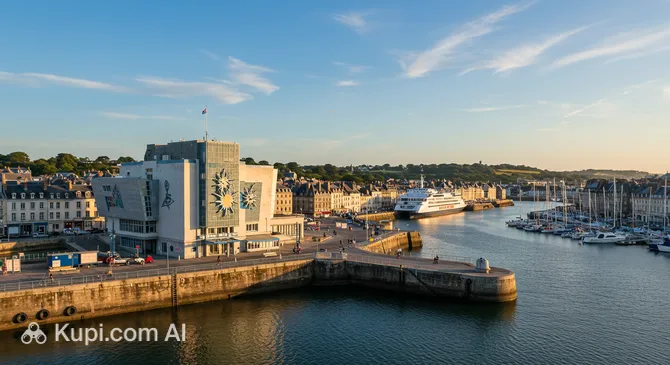
Cherbourg. Illustration.
Source: Kupi.com AI

The heart of the city is its grandiose harbor, one of the largest artificial harbors in the world. It is protected by massive breakwaters and forts, which give the coastline a unique and recognizable appearance. It is in the port, the second most important in the country, that the history of Cherbourg is best traced: here, modest fishing boats, luxury yachts, and huge merchant vessels coexist peacefully. Life in the harbor never stops for a minute, filling the city with a special rhythm and the romance of long-distance travel.

The atmosphere of Cherbourg is woven from contrasts of industrial charm and provincial comfort. Travelers should stroll along the quays, enjoying the fresh sea air, and peer into the narrow streets of the center. There, you will find numerous cafes with the aroma of fresh pastries and shops offering the finest seafood delicacies. The city is also famous for its museums dedicated to the ocean and underwater exploration, making it interesting for tourists of all ages.

If you are looking for a place with true Norman character, far from the hustle and bustle of overcrowded metropolises, Cherbourg is an ideal choice. It is a city that inspires with its landscapes and invites you to immerse yourself in the world of maritime romance.
Weather Overview

Cherbourg's climate is determined by its proximity to the ocean: it is mild, humid, and moderate, without sharp temperature fluctuations. Thanks to the influence of the Gulf Stream, severe frosts are practically non-existent here. Summer in this corner of Normandy is very comfortable: in July and August, average daily maximums are around 19–20°C, so sweltering heat is rare. This is a great time for excursions, as the fresh sea breeze makes walks particularly pleasant.

Winter months are characterized by above-freezing temperatures, averaging around 7–9°C. However, this is the wettest period of the year: in December and January, the number of rainy days can reach 16–19 per month. Expect moderately warm summers and mild but damp winters with frequent precipitation throughout the year. Even in the "driest" months, such as April and July, it rains about 10 days, so a waterproof jacket will not be out of place in your luggage.

Spring and early autumn are times of changeable but atmospheric weather. In May, the air warms up to 12–14°C, and in September, summer warmth of around 16°C still lingers. To make no mistake in choosing clothes and to find out the current forecast for your travel dates, see what the expected weather in Cherbourg is. Being prepared for nature's whims will allow you to enjoy the rugged beauty of the coast in any conditions.

Average monthly temperature

Average monthly precipitation

Interesting Facts

Cherbourg is not just a port, but a true treasure trove of stories where cinema, engineering marvels, and maritime tragedies intertwine. Besides its main attractions, this Norman city holds many fascinating facts that will surprise even seasoned travelers.
  • Cherbourg is forever etched in history as one of the ports of call for the legendary liner Titanic in 1912. It was here, before the fateful crossing of the Atlantic, that some passengers boarded, whose fates became part of world chronicles, and today this episode is the pride of the city.

  • The local harbor is considered one of the largest artificial harbors in the world. Its massive construction began back in the 18th century, and the grandiose breakwaters and forts built then still amaze the imagination, reliably protecting the coast from storms.

  • World fame was brought to the city by the iconic film "The Umbrellas of Cherbourg" starring Catherine Deneuve. Melodies from this movie have become the unofficial anthem of the city and are often heard at celebrations, while the production of real Cherbourg umbrellas has turned into an exquisite local brand.

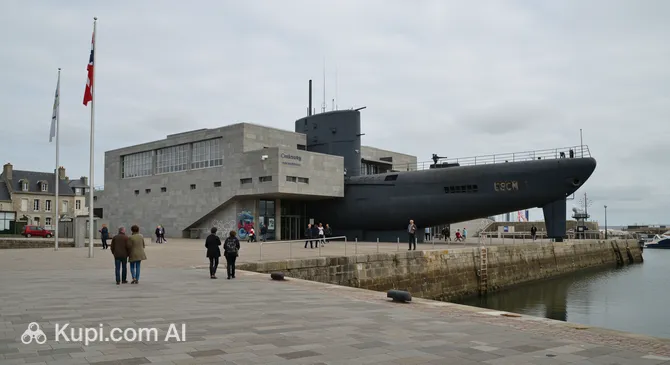
  • The city is home to a unique scientific and tourist complex, City of the Sea, entirely dedicated to the study of the ocean. Visitors can not only see a huge aquarium but also step inside the decommissioned nuclear submarine Le Redoutable, which has become a museum.

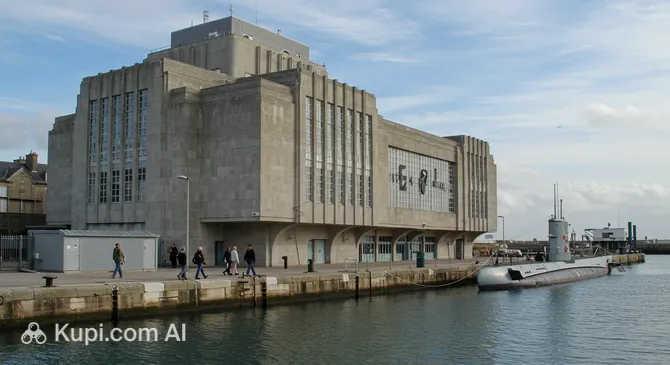
The City of the Sea. Illustration.
Source: Kupi.com AI

Traveler photos:

How to Get There

Planning a trip to this Norman port city requires attention to detail, as direct flights here are rare. Cherbourg is the "gateway" to Normandy from the sea, so many routes combine various modes of transport. You can find out all ways to get to the city on a separate page, while below we consider the main options via the nearest transport hubs.

Cherbourg itself does not have an active civilian airport for regular flights, so travelers often choose to fly into neighboring regions or the Channel Islands. One convenient option on the mainland is Carpiquet Airport (CFR). It is located in the city of Caen, which is about 99 km from Cherbourg. This is a regional airport that accepts flights from some cities in France and Europe. A car trip from there takes about 1 hour and 20 minutes, making it a strategically important entry point into the region.

Also geographically close is Jersey Airport (JER), located in Saint Helier on the island of Jersey (about 63 km in a straight line). This is a fairly busy transport hub with high passenger traffic. However, keep in mind that Jersey is an island, and to get from there to Cherbourg, you will need a ferry crossing. Another island option is Guernsey Airport (GCI) in Saint Peter Port (about 74 km). The journey from these airports to Cherbourg involves a sea voyage, which can become an adventure in itself.

For clarity, here is a summary of the main airports within accessible range:

AirportPassenger trafficDistance
Alderney Airport49 82344 km
Jersey Airport1.5 mln63 km
Guernsey Airport655 58874 km
Carpiquet Airport329 63299 km
Pleurtuit Airport95 000121 km

As for rail connections, Cherbourg has its own station, but if you consider major transport hubs in the region, Rennes Station (ZFJ) is worth mentioning. It is located in the city of Rennes, the capital of neighboring Brittany, about 170 km from Cherbourg. This is a major transport hub with a passenger flow of more than 15 million people per year. From Rennes to Cherbourg, you can get there by rental car or regional train; the travel time by car is about 2–2.5 hours.

Below is a table of the nearest major railway stations (please note that some of them are in the UK, which is relevant for travelers using ferry services across the English Channel):

StationPassenger trafficDistance
Brighton Station14.5 mln170 km
Rennes Station15.2 mln170 km
Bridgwater Railway Station442 188193 km
Bath Spa Railway Station6.1 mln201 km
Reading railway station13.5 mln208 km

Main Attractions

Cherbourg is a city that takes pride in its maritime heritage, and most of its main attractions are linked to the ocean in one way or another. However, there are also places here for quiet, contemplative relaxation. Travelers wishing to get to know this Norman port better should include the following locations in their itinerary.

The absolute centerpiece of the city's tourist map is the City of the Sea. This massive theme park is located in the historic building of the former transatlantic maritime station—a masterpiece of Art Deco architecture. The complex attracts guests with Europe's deepest aquarium, where you can observe the life of marine inhabitants in their natural environment. Special attention is given to the exhibition dedicated to the Titanic, as Cherbourg was one of the legendary liner's stops. This place is a must-visit for anyone who wants to touch the greatness of the ocean and the history of navigation.

Le Redoutable. Illustration.
Source: Kupi.com AI

Traveler photos:

Within the same complex is a unique museum object—Le Redoutable. This is the first French nuclear submarine, which is now open for tours. Visitors can walk through the sub's narrow corridors, look into the crew's cabins, see the torpedo compartment and the control center. A visit here provides a rare opportunity to see the living conditions of submariners with your own eyes and appreciate the incredible technical complexity of such a vessel. It is the only nuclear submarine of this class in the world accessible to tourists.

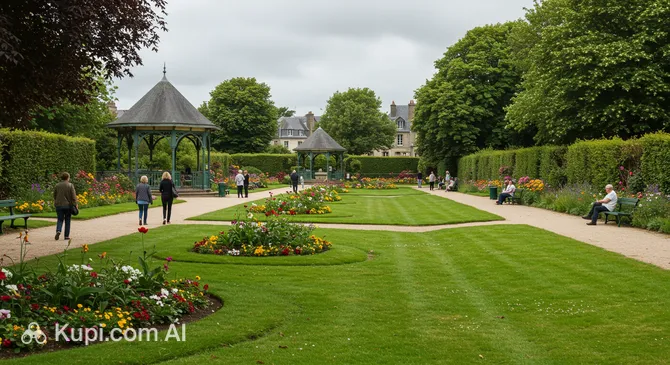
If you feel like changing the scenery and enjoying nature, head to the Cherbourg Public Garden. This oldest park in the city, founded back in the 19th century, is located at the foot of Mount Roule. It is a magnificent example of landscape design with winding alleys, centuries-old trees, and exotic plants. An atmosphere of peace and comfort reigns here, perfect for leisurely walks, picnics, or relaxing with children away from the city bustle.

Local Cuisine

Cherbourg's culinary heart beats to the rhythm of the tides, so the foundation of the local menu is exceptionally fresh seafood. The catch reaches restaurant kitchens literally hours after being caught, ensuring an unsurpassed taste. The main gastronomic symbol that every guest must try is "moules marinières"—mussels simmered in white wine with shallots and herbs. This port is also famous for its oysters and tender sea scallops, which are prepared here with particular skill.

Since the city is part of Normandy, its cuisine is unthinkable without the famous dairy products of the "green region." Excellent local cheeses and butter are always on the table, and the pastries, especially croissants and baguettes, have a special creamy taste. The main drink of the coast is not wine, but apple cider, which is drunk here chilled, often from traditional ceramic cups. To round off a heavy dinner or warm up in windy weather, locals choose calvados—a strong and aromatic apple brandy.

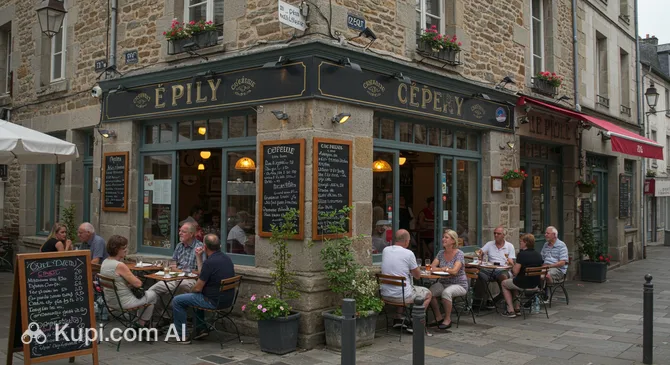
Le Pily. Illustration.
Source: Kupi.com AI

Traveler photos:

The food culture in Cherbourg is democratic: they enjoy both long sittings in cozy establishments and quick snacks in the fresh air. If you are looking for a place for a fine dinner, pay attention to the restaurant Le Pily, where you can appreciate a modern take on local traditions. For those who prefer street food, there are kiosks with hot snacks in the city. Be sure to try Norman buckwheat galettes filled with ham and cheese or an original seafood croque-monsieur—a hearty and tasty option for a lunch on the go.

Markets play a special role in the life of the city, where locals buy products directly from farmers and fishermen. Visiting such a market is not just shopping, but an immersion into the atmosphere of the region. Additionally, throughout the year, Cherbourg hosts gastronomic festivals dedicated to seafood delicacies, where you can learn about culinary secrets and the warm hospitality of the Normans.

Travel Tips

Welcome to Cherbourg! To ensure your trip to this atmospheric Norman port is as comfortable and hassle-free as possible, we have prepared a list of useful recommendations to help you easily navigate local characteristics.

  1. Clothing and Essentials. Weather in Normandy is known for its variability and humidity. Even in summer, it can be windy, so the main principle of your wardrobe should be layering. Be sure to bring a waterproof windbreaker and comfortable flat shoes for walking on cobblestones and piers. An umbrella is a necessity here, but due to strong winds, a high-quality raincoat is often more practical.
  2. Transport. Cherbourg's historic center is compact and is best explored on foot. For trips to the surrounding areas or distant neighborhoods, it is convenient to use the Cap Cotentin bus network. A ticket can be bought from the driver (prepare some change) or via the mobile app. It is better to order a taxi in advance by phone or through local services, as "hailing" a car on the street can be difficult, especially in the evening.
  3. Finances. The official currency is the Euro (€). Bank cards (Visa, Mastercard) are accepted almost everywhere, from museums to supermarkets. However, for small purchases in bakeries or at markets, it is recommended to have some small cash denominations. In France, tips are often already included in the bill as "service compris," but leaving 1–2 euros on the table in a cafe is considered a gesture of good manners.
  4. Health and Safety. Cherbourg is a quiet city, but standard precautions apply: keep an eye on your belongings in crowded places. Pharmacies are easily recognizable by a flashing green cross (Pharmacie); many pharmacists speak English and can provide initial advice. Tap water is safe to drink and is of good quality.
  5. Communication. While staff in major tourist centers like "City of the Sea" speak English, in smaller shops and cafes, French is predominantly spoken. Learn a few basic phrases or download an offline translator—locals will appreciate your efforts. Free Wi-Fi is available at tourist offices and many public places, but for stable connectivity, it's better to buy a local SIM card (Orange, SFR, Bouygues) at tobacco kiosks or mobile shops.
  6. Local Etiquette. Politeness plays a key role here. Always say "Bonjour" (Good day) when entering a shop, bus, or addressing a passerby, and "Au revoir" (Goodbye) when leaving. Ignoring this ritual can be perceived as rudeness. In restaurants, it is customary to wait for the waiter to lead you to a table rather than sitting down yourself.
  7. What to Avoid. Do not try to have lunch in restaurants at off-peak hours. The French strictly observe meal times: lunch usually lasts from 12:00 to 14:00, and dinner starts after 19:00. In between, kitchens are closed, and you can only count on drinks or light snacks in brasseries. Also, keep in mind that many shops are closed on Sundays.
  8. Extra Tip. If you plan to walk along the coast during low tide, be extremely careful. Tides in this region are very powerful and swift. Be sure to check the tide schedule (horaires des marées), which can be found at the tourist office or online, so as not to be cut off from the shore by water.

We hope these tips help you feel at home in Cherbourg and avoid minor misunderstandings. Enjoy the fresh sea air, delicious food, and unique atmosphere of this northern port!

Entertainment & Nightlife

Cherbourg's nightlife is unlike the boisterous parties of major metropolises; it has its own unique charm, infused with sea salt and the coziness of a port town. Evenings here are typically spent in a relaxed manner, enjoying conversation in a friendly atmosphere. The main activity is concentrated around the port and in the historical center, where ancient buildings sit alongside modern establishments. It is an ideal place for those who enjoy "bar-hopping"—strolling from one pub to another, tasting local drinks, and listening to live music.

The epicenter of evening leisure can safely be called the Quai de Caligny and its adjacent streets. Here, with views of swaying yacht masts, are popular bars and brasseries. Another point of attraction is the area around Place de la République and the pedestrian streets of the old town, such as Rue du Commerce. The crowd here is diverse: from local fishermen and students to tourists and sailors who have docked at the port. The dress code in most establishments is casual and relaxed; pretentiousness is not valued here.

For the start of the evening or a romantic dinner, you should choose a place where gastronomy is elevated to an art form. An excellent option is the restaurant Le Pily. This establishment, recognized by guides, offers refined cuisine in a modern setting, making it a great starting point for a long night. After dinner, you can move to one of the many pubs, many of which are decorated in Irish or British styles—a result of the proximity to the British Isles. Bars usually stay open until 1:00 or 2:00 AM, and clubs are open until dawn, though there are few of them in the city.

Regarding safety, Cherbourg is a quiet city, and night walks along the well-lit central streets and the quay do not cause concern. However, as elsewhere, it is worth avoiding dark alleys on the outskirts. If you stay out late, it is better to call a taxi in advance: hailing a car on the street at night can be problematic. The average cost of a trip around the city at night is 15–20 euros. Public transport stops running quite early, so rely on your own feet or a taxi.

During the day, the city offers no fewer interesting activities to diversify your leisure time before the evening out. Culture and history buffs should definitely visit the famous City of the Sea—a vast museum complex where you can spend several hours. Moored nearby is the submarine Le Redoutable, a tour of which will be an exciting adventure.

Cherbourg Public Garden. Illustration.
Source: Kupi.com AI

Traveler photos:

If you just want to take a break from the hustle and bustle and recharge before a busy night, head to the Cherbourg Public Garden. This is a green oasis of silence where you can take a leisurely walk among exotic plants. Also, the city has cinemas and the Le Trident theater, offering a rich program for those who prefer more classical types of entertainment.

Parks & Museums

Although Cherbourg is often perceived solely as a major port, the city surprises its guests with its rich greenery and vibrant cultural life. Thanks to the mild climate and the local sailors' passion for botany, exotic plants from all over the world have taken root here, turning city parks into true oases, while museum collections are sure to impress even seasoned art and history lovers.

One of the city's gems is Emmanuel Liais Park (Parc Emmanuel Liais). This cozy garden, hidden behind high walls in the city center, is called a "miniature jungle." It houses a unique collection of exotic plants brought back by travelers from South America and Asia in the 19th century. Walking among palms, tree ferns, and bamboo groves creates the feeling of a journey to the distant tropics. Also noteworthy is the Cherbourg Public Garden, located at the foot of Mount Roule. This is an ideal place for family relaxation with a small zoo, playgrounds, and a magnificent view of the city and harbor from the upper terraces.

If you have time for a short trip to the outskirts, be sure to visit the Ravalet Castle Park (Parc du Château des Ravalet) in Tourlaville. This magnificent Renaissance park surrounding a 16th-century castle holds the status of a "Remarkable Garden" of France. Here, French regularity and English landscape naturalness blend harmoniously, and the old rotunda greenhouses add a special charm to the place.

Among the museums, the famous City of the Sea takes center stage. It is not just a museum, but a vast educational center in the former transatlantic station building, where you can learn everything about the exploration of ocean depths. The exhibition dedicated to the Titanic and the opportunity to visit the real nuclear submarine Le Redoutable are particularly popular. For art lovers, the doors of the Thomas Henry Museum (Musée Thomas Henry) are open. It possesses the third most important collection of paintings in Normandy, featuring works from the Renaissance to the 19th century, including canvases by local native Jean-François Millet.

Cherbourg's architectural appearance also bears traces of its glorious past. It is worth seeing the Basilica of the Holy Trinity (Basilique Sainte-Trinité), whose Gothic architecture dominates the old town, and the Italian Theater building—one of the most beautiful historic theaters in the region, whose interiors are striking in their luxury. These buildings serve as living backdrops to the city's history, which has survived many eras.

For those looking for something truly unique, we suggest visiting the Cherbourg Umbrella Manufactory (Le Parapluie de Cherbourg). Here you can not only see the process of creating the famous accessory that became a symbol of the city thanks to cinema, but also purchase a high-quality handmade umbrella that will remind you of Normandy in any weather.

Getting Around

Getting around Cherbourg is quite simple and convenient, as the city is compact. There is no metro or trams; the foundation of the public transport system is an extensive bus network managed by Cap Cotentin. These buses connect the historical center, the railway station, the port, and the main attractions, and also link the city with the nearby suburbs. The buses are modern, comfortable, and generally run strictly according to the schedule, which can be found at stops or in online apps.

The fare payment system is flexible and tourist-friendly. The easiest way to buy a ticket is to purchase it directly from the driver upon entry (change will be needed) or use an SMS ticket. To do this, simply send a code word to a special short number indicated at the stop, and the amount will be charged to your mobile account. The cost of a single trip is about 1–1.50 euros. If you plan to move around a lot during the day, it is more profitable to purchase a 24-hour pass. Don't forget to validate paper tickets when boarding to avoid fines.

To plan routes, it is recommended to download the official Cap Cotentin app, which shows transport arrival times in real-time. Travelers should note that bus frequency decreases in the evening (usually after 20:00–21:00 there are significantly fewer trips) and on Sundays. On holidays, the schedule may also change, so it is better to check information in advance.

A great alternative to buses in Cherbourg is the bicycle. The city is actively developing its cycling infrastructure, and as part of the Cap Cotentin transport system, a bicycle rental service is offered, including electric models. Rental points can be found near the railway station and in the center. This is a wonderful way to see the quays and get to the "City of the Sea" while enjoying the fresh sea air.

Taxis are also available in the city, but "hailing" a car on the street with a wave of the hand is not common here. It is best to find a taxi stand (usually at the station or major squares) or order a car by phone. For those who prefer walking, Cherbourg is ideal: the main tourist locations, restaurants, and shops are concentrated within walking distance of each other, allowing you to enjoy the atmosphere of a port city without depending on a transport schedule.

Accommodation

The choice of accommodation in Cherbourg perfectly reflects the character of this port city: practicality, coziness, and hospitality prevail over pompous luxury. Travelers have a wide range of accommodation options—from budget hostels and affordable chain hotels to charming boutique hotels in historic buildings and modern apartments for those who prefer independence.

The most convenient and popular area to stay is the historic center and the area around the port. By staying here, you will be within walking distance of the main gastronomic streets and transport hubs. This is a strategically sound choice, as it is easy to walk to key attractions from here, such as the famous City of the Sea. Staying in the quay area will also give you the opportunity to admire the yacht masts every morning and breathe in the fresh sea breeze.

The price range in Cherbourg can be described as moderate, especially compared to popular resorts on the French Riviera or Paris. Most offers fall into the middle segment (3–4 stars), offering comfortable conditions at a reasonable price. For budget travelers, there are small guesthouses and one-star hotels that, despite their modesty, are clean and have friendly staff. There are practically no luxury five-star resorts in the city itself; the emphasis is on quality mid-range service.

When planning your trip, consider seasonality. Although Cherbourg is not as overcrowded with tourists as the south of France, demand for accommodation rises sharply in the summer months (July and August) and during major maritime festivals. Experienced travelers recommend booking rooms in advance, 2–3 months before the trip, to get the best value for money. For booking, it is convenient to use both popular international online aggregators and direct hotel websites.

Nearby Cities

For those who want to explore the surrounding area, Cherbourg serves as an excellent starting point for day trips to several interesting nearby locations. The Normandy region and neighboring Brittany are rich in history and natural beauty, easily accessible by car or train.

CityPopulationDistance
Tourlaville16 0404 km
Alderney2 00042 km
Saint Pierre du Mont9 68954 km
Saint Helier33 52261 km
St Peter Port16 70069 km

Among these destinations, Caen stands out—the historical capital of Lower Normandy. The city is famous for its impressive castle built by William the Conqueror and the Caen Memorial—one of Europe's best museums dedicated to World War II. It is an ideal place for history buffs wanting to deeper understand the region's past.

Slightly further away, on the border with Brittany, lies the picturesque Saint-Malo. This is the legendary city of corsairs, completely surrounded by high fortress walls where you can walk around the entire old town. Saint-Malo attracts tourists with its sandy beaches, powerful tides, and unique gray granite architecture, creating an atmosphere of rugged maritime romance.

Also noteworthy is Le Havre, whose center is a UNESCO World Heritage site thanks to the unique post-war architecture of Auguste Perret. Additionally, the city is known as the cradle of Impressionism, and the local museum of modern art (MuMa) houses one of the best collections of paintings in this style in France.

These nearby destinations allow you to get a sense of the diverse culture and landscapes of the region, making your trip even more rewarding.

Shopping & Souvenirs

Shopping in Cherbourg is a calm and pleasant activity, devoid of the bustle of huge metropolises. The city does not claim to be a fashion capital, but you can find high-quality clothing, unique interior items, and, of course, excellent gastronomic products. Special emphasis is placed on maritime-themed goods and products by local artisans, reflecting Normandy's authentic spirit.

The heart of the city's shopping life beats in its pedestrian center. The main routes for shoppers run through Rue du Commerce, Rue des Portes, and Rue Albert Mahieu. Here, among beautiful historical facades, are shops of famous French clothing brands, cozy bookstores, perfume boutiques, and jewelry salons. Walking through this area provides aesthetic pleasure, and the absence of cars allows you to leisurely move from window to window.

For those who prefer to shop in one place, the large shopping center Les Éléis is located in Cherbourg. It is conveniently situated in the city center on the quay and connected by a pedestrian bridge to residential neighborhoods. Under its roof are a hypermarket, electronics stores, fashion and accessory boutiques, and a food court. It's a great option for shopping in the rainy weather that Normandy sometimes "enjoys."

The true atmosphere of the French province can be felt at the markets. The main city market unfolds on Place de Gaulle, next to the theater. The busiest trading days are Thursday and Saturday. You should come here for the freshest local products: Norman cheeses, farm butter, vegetables, and fish caught just a few hours ago. On Saturdays, there is also a flower market here, turning the square into a fragrant garden.

When choosing souvenirs, pay attention to the city's main brand—a real Cherbourg Umbrella (Le Parapluie de Cherbourg). This is an expensive but incredibly high-quality and stylish handmade accessory that became a symbol of the city thanks to cinema. From gastronomic gifts, consider bringing a bottle of apple cider or calvados, a jar of salted caramel, or traditional shortbread cookies. For themed maritime souvenirs, ship models, and striped shirts, you can look into the shop at the City of the Sea complex, which offers a wide range of gifts for children and adults.

Shops in the city center are usually open from 10:00 to 19:00. Local tradition should be considered: many small private shops close for a lunch break from 12:00 to 14:00. Large shopping centers and supermarkets work without breaks. Sunday is a day off for most shops; only some bakeries and souvenir kiosks may be open. Bank cards are accepted everywhere, but for purchases at the market or in small cafes, it is better to have some cash on hand.

Tourists residing permanently outside the European Union can use the tax refund system (Tax Free). If your purchases in one store exceed the set threshold (usually 100 euros), you can request a special form to process a VAT refund when leaving the country.

Reached the end of the page?

That means the route is fully explored