Support

Fouesnant

About

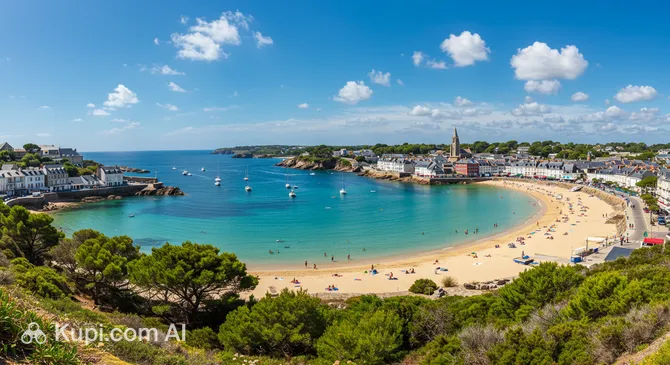
Fouesnant is a charming coastal town located in the Finistère department in western France, within the region of Brittany. It is picturesquely situated on the Cornouaille coast, just fifteen kilometers from Quimper and ten from Concarneau, forming—together with neighboring Bénodet and La Forêt-Fouesnant—the so-called "Breton Riviera," one of the region's most attractive coastal areas.

Fouesnant. Illustration.
Source: Kupi.com AI

With a population of about 9,864 people, Fouesnant is a compact yet lively seaside resort. Despite its size, it proudly holds the status of Brittany's top tourist destination, highlighting its significance. The atmosphere here is permeated with authentic Breton charm and a fresh sea breeze.

The town draws travelers with its exceptional natural heritage, the crown jewel of which is the famous Glénan archipelago. Furthermore, Fouesnant is renowned for its diverse beaches, charming seaside villas from the turn of the last century, and a rich architectural heritage, making it an ideal place to experience authentic Brittany.

Fouesnant is an excellent choice for those seeking a combination of relaxing seaside holidays, cultural enrichment, and an encounter with the unique spirit of Brittany. Come and discover this amazing corner of France!

You can find more interesting facts on the history of Fouesnant page.

Weather Overview

The climate in Fouesnant is mild throughout the year, which is characteristic of the seacoast. There are no sharp temperature fluctuations, making a holiday comfortable in any season.

In Fouesnant, you can expect moderately warm summers with low rainfall and cool, more humid winters. The warmest months are July and August, when the average temperature stays around 17.8°C - 17.9°C, and the maximum can reach 20.2°C. The coolest months are January and February, with an average temperature of about 8.0°C - 8.6°C. Precipitation is fairly evenly distributed, but with a slight increase in the autumn-winter period: from October to March, there is an average of 3-4 mm of precipitation, and the number of rainy days ranges from 14 to 17 per month. The spring and summer months (April to September) are characterized by less precipitation (about 2 mm) and approximately 10-12 rainy days per month.

To get a more detailed idea of the weather in Fouesnant and plan your trip in the best way possible, we recommend checking the detailed information on the Fouesnant Climate page.

Average monthly temperature

Average monthly precipitation

Interesting Facts

In addition to its picturesque landscapes and welcoming atmosphere, Fouesnant hides many surprising stories and facts that not everyone knows. This charming Breton town is ready to share its secrets with curious travelers.

  • The ancient roots of Fouesnant go back to the prehistoric era, as silently evidenced by menhirs—mysterious megalithic structures discovered on its territory. These stone giants hint that people inhabited this area long before the first written mentions of the town appeared.

  • In the 13th century, Fouesnant held the high status of the region's main barony, highlighting its significant political influence in medieval Brittany.

  • The town played a notable role on the eve of one of the key events of the French Revolution: the Revolt of Nédellec in 1792, which took place in Fouesnant, is considered by historians to be a prelude to the large-scale Revolt in the Vendée.

  • The arrival of the railway at the end of the 19th century cardinally changed the fate of Fouesnant, transforming it from a modest rural settlement into a popular tourist center. Evidence of that era of change are the charming seaside villas from the early 20th century, which have become an architectural highlight of the town.

  • Today, Fouesnant is known as a dynamic Breton town where various festive events are held throughout the year, allowing guests to immerse themselves in the authentic atmosphere of Brittany and get acquainted with its rich cultural traditions.

How to Get There

When planning a trip to this picturesque corner of Brittany, it is worth thinking through your route in advance. Fouesnant is located on the west coast of France, and you can get here in several ways, combining flights or train journeys with car transfers. You can find out more about how to get to Fouesnant on the dedicated page, and below we will look at the main transport hubs located in the region.

If you prefer air travel, the closest option on the list is Lorient South Brittany Airport (IATA: LRT). It is located not in Fouesnant itself, but in the city of Lorient, about 45.3 km from your destination. This is a small regional airport that accepts a limited number of flights. The journey from here by taxi or rental car will take about 1 hour and 30 minutes, making it a convenient arrival point for those who value proximity to the resort.

A larger and more popular transport hub is Brest Bretagne Airport (IATA: BES). It is located in the city of Brest, at a distance of about 68.7 km from Fouesnant. This is an important international airport for the region, serving a significant passenger flow. The drive from Brest to Fouesnant will take approximately 2 hours. Due to the higher number of flights, this option is often chosen by tourists traveling from distant cities or other countries.

You can also consider Rennes Airport (IATA: RNS), located in the administrative center of Brittany, the city of Rennes. Although it is much further away—approximately 171.1 km from Fouesnant—it is a large hub with an extensive route network. The trip from here to the coast will take more than 3 hours, but this option can be convenient if there are no direct tickets to Brest or Lorient.

For clarity, here is a summary of the main airports:

AirportPassenger trafficDistance
Pluguffan Airport18 24715 km
Lann Bihoue Airport6 21845 km
Brest Bretagne Airport810 79669 km
Pleurtuit Airport95 000163 km
Rennes Airport600 000171 km

Railway communication is also an excellent way to get to the Brittany region, although there is no station in the town of Fouesnant itself. One of the key hubs is Rennes Railway Station (Gare de Rennes), located in the city of Rennes, about 176.1 km from the resort. This is a major station that receives high-speed TGV trains from Paris and other metropolises. From Rennes, you can continue your journey on a regional train closer to the coast or use a rental car.

Another significant option is Nantes Railway Station (Gare de Nantes), located in the city of Nantes, 200.5 km from Fouesnant. Nantes is an important transport center in western France with a huge passenger flow. Upon arrival here, tourists often change to buses or take a taxi for the trip to the ocean, although the distance implies a fairly long transfer (about 3-4 hours on the road).

Below is a table with information on the nearest major railway stations:

StationPassenger trafficDistance
Rennes Station15.2 mln176 km
Nantes Railway Station15.5 mln200 km
Falmouth Railway Station247 000262 km
Angers Saint-Laud Station5.7 mln264 km
Penzance Station618 956272 km

Main Attractions

Fouesnant and its surroundings are famous for many interesting sites that attract travelers with their beauty and unique atmosphere. One of the main highlights is the Glénan Archipelago. This picturesque group of islands, located just a few kilometers off the coast, is often compared to tropical islands due to its dazzling white sandy beaches and crystal-clear turquoise water. A trip to the Glénan Islands offers a wonderful opportunity for boat trips, sailing, diving, or simply secluded relaxation in the heart of nature. It is also home to a famous sailing school.

For beach lovers, Fouesnant offers several wonderful options, with Cap Coz Beach standing out in particular. This is one of the most popular beaches in the region, known for its fine golden sand and calm sea, making it an ideal choice for families with children. The beach is well-equipped: you can rent sun loungers, enjoy water sports, or simply soak up the sun and sea breeze. A cozy promenade lined with cafes and restaurants stretches along the beach.

Near the center of Fouesnant lies the Marais de Penfoulic nature reserve. This unique site consists of extensive wetlands that have become home to many bird species, such as herons, ducks, and sandpipers, as well as diverse flora. Visitors can walk along specially designed trails and footbridges, observing wildlife and enjoying the peace and tranquility. It is an excellent spot for birdwatchers and anyone who appreciates the pristine beauty of nature.

In the heart of the town stands the Church of Saint-Pierre et Saint-Paul (Église Saint-Pierre et Saint-Paul). This ancient stone building is an important architectural and historical monument of Fouesnant. The church attracts attention with its characteristic Breton architecture, magnificent stained-glass windows, and a quiet, soothing atmosphere. A visit to the church provides an opportunity to touch the rich history of the region and appreciate the craftsmanship of architects from past eras.

Local Cuisine

The gastronomy of Fouesnant is a true immersion into the culinary traditions of Brittany, where the stars are the gifts of the Atlantic Ocean and authentic local products. Thanks to its coastal location, the town is famous for the freshest seafood, which forms the basis of many dishes.

Be sure to try the local oysters, mussels, and scallops, which are prepared here with exceptional skill. Often they are baked with aromatic herbs and the famous Breton butter, which helps reveal their delicate flavor. Freshly caught fish also holds a place of honor on the menus of Fouesnant's restaurants.

The signature of the region, and Fouesnant in particular, is the famous Breton pancakes. You will be offered two main types: galettes—savory buckwheat pancakes with various fillings such as cheese, ham, eggs, or seafood—and crêpes—thin sweet pancakes made from wheat flour, served with caramel, chocolate, or fresh local berries. These dishes perfectly reflect the simplicity and sophistication of local cuisine.

The traditional drink to accompany pancakes and seafood is cider—a low-alcohol apple beverage with a long-standing production tradition in Brittany. Exploring local markets will reveal other gastronomic treasures: the famous salted butter with sea salt crystals, mouth-watering salted butter caramels (caramel au beurre salé), and various Breton cookies such as palets bretons and galettes bretonnes. You can also find local cheeses and sausages here.

Locals and tourists in Fouesnant prefer to enjoy meals in cozy restaurants specializing in Breton cuisine, where a warm and welcoming atmosphere prevails. Local markets, which operate on specific days of the week, hold a special charm. They are not just a place to buy the freshest products, but also an opportunity to dive into authentic Breton culture, taste delicacies, and choose souvenirs from local artisans.

Travel Tips

Planning a trip to charming Fouesnant? To ensure your journey through this picturesque corner of Brittany goes smoothly and leaves only the most pleasant impressions, we have prepared some practical tips for you. They will help you better navigate the area and enjoy every moment of your vacation.

  1. Clothing and Essentials: Brittany's climate is quite changeable, so layering is your best friend. Be sure to bring a waterproof jacket or raincoat and comfortable shoes for long walks along the coast and Fouesnant's charming streets. Even in summer, evenings can be cool, so a light sweater or fleece jacket will come in handy. Don't forget sunscreen, a hat, and a power adapter (type E sockets are used in France). When visiting churches, while a strict dress code is rare in small towns, it is better to choose clothing that covers shoulders and knees.

  2. Transport in and around town: Within Fouesnant and its immediate surroundings, it is very pleasant to get around on foot or by bicycle—a wonderful way to enjoy the local scenery and fresh sea air. For longer trips around Brittany or to visit neighboring towns like Quimper, you can use local buses (check schedules at the tourist office or online). Renting a car will give you more freedom to explore the region. Taxis are available in Fouesnant, but it is recommended to book them in advance.

  3. Finances: The official currency in France is the Euro (EUR). Bank cards (Visa, Mastercard) are widely accepted in most shops, restaurants, and hotels. However, it's always useful to carry a small amount of cash for minor purchases, such as at markets or in small souvenir shops. ATMs (called Distributeur Automatique de Billets or DAB in France) are fairly common. In restaurants, a service charge (service compris) is usually already included in the bill, but if you particularly enjoyed the service, you can leave a small tip (5-10% of the bill).

  4. Health and Safety: Fouesnant is generally a very quiet and safe town, ideal for family vacations. Pharmacies (pharmacie) are easily recognized by a green cross; information about the duty pharmacy at night or on weekends can usually be found on the door of any of them. EU citizens are recommended to carry a European Health Insurance Card (EHIC). For all tourists, travel medical insurance is highly advisable. In emergencies, call the pan-European number 112. Observe standard precautions: keep an eye on your belongings, especially in crowded places and on beaches.

  5. Communication and Language: The official language is French. In tourist spots like hotels, restaurants, and tourist offices, staff often speak English. However, knowing a few basic phrases in French (e.g., Bonjour – Hello, Merci – Thank you, S'il vous plaît – Please, Excusez-moi – Excuse me) will be very warmly received by locals and make your communication more pleasant. Wi-Fi is available in many cafes, restaurants, and hotels. For constant internet access, you can consider buying a local SIM card (available at mobile shops in larger towns).

  6. Local Etiquette: Politeness and courtesy are highly valued in France. It is customary to say hello (Bonjour) when entering a shop, cafe, or other public place, and goodbye (Au revoir) when leaving. Using the formal "You" (Vous) with strangers is the norm. Bretons are proud of their culture and history; show an interest, and they will be happy to share information with you.

  7. What to Avoid: Try not to be overly noisy in public places, especially in restaurants and during the siesta, if one is observed. Also, it's best not to start conversations on sensitive political topics. Bretons are very proud of their unique identity and culture, so avoid derogatory comparisons of their region with other parts of France.

  8. Be Sure to Visit the Local Market! Lively markets are regularly held in Fouesnant (often on Friday mornings), where you can buy the freshest local products: seafood, cheeses, cider, honey, vegetables, fruits, and, of course, the famous Breton galettes and crêpes. This is a wonderful opportunity not only to buy delicious souvenirs but also to feel the real atmosphere of Breton life.

We hope these tips help you better prepare for your trip to Fouesnant and fully enjoy your stay in this beautiful and welcoming Breton town. We wish you an unforgettable journey!

Entertainment & Nightlife

Fouesnant, a charming coastal town in Brittany, offers its guests not only magnificent beaches and nature but also opportunities for pleasant evening leisure. While the nightlife here is not comparable to major metropolises, you can find cozy places to relax after a busy day and enjoy the hospitality of France.

The main focus of evening entertainment in Fouesnant is on a quiet and friendly atmosphere. You won't find noisy nightclubs open until dawn here, but you can enjoy socializing in local bars or spend time over dinner in one of the restaurants, many of which offer the freshest seafood. The main points of attraction in the evening are the embankments and the town's central streets. Areas adjacent to the ports, such as Cap-Coz or Beg Meil, are particularly lively. Traditional French bistros and cozy bars are concentrated here. For example, you can stop by Le Skipper Bar to enjoy local drinks or choose La Belle Vue restaurant for a seafood dinner with a view of the harbor. Another popular spot might be Crêperie du Port, which serves traditional Breton pancakes in the evening. The atmosphere in these establishments is usually laid-back, and the dress code in most of them is casual.

Evening venues typically come alive after 7:00 PM - 8:00 PM, especially during the tourist season (summer months) and on weekends. Prices in the bars and restaurants of Fouesnant can be described as average for a resort region in France. For getting around at night, it is best to use taxi services, as public transport may have a limited schedule. Fouesnant is considered a fairly safe place; however, as elsewhere, it's worth taking basic precautions during night walks, especially in secluded areas.

During the day, Fouesnant offers many options for active and cultural recreation. You can explore picturesque beaches such as Kerleven Beach, Cap Coz Beach, or Mousterlin Beach, enjoy water sports, or take a boat trip to the famous Glénan archipelago. Hikers and cyclists will appreciate the numerous trails running along the coast and through forested areas. It is also worth visiting local markets, such as the Fouesnant Market, where you can buy fresh produce and souvenirs. Although there are no major museums or world-class theaters in Fouesnant, its true charm lies in its natural beauty and the tranquil atmosphere of the Breton coast.

Parks & Museums

Fouesnant, a charming corner of Brittany in France, invites travelers to enjoy not only its picturesque landscapes but also to get acquainted with its cultural heritage. The town and its surroundings offer both peaceful green zones for relaxation and interesting sites that tell the story of the region's history and traditions.

Nature lovers should definitely check out the Marais de Penfoulic nature reserve. These are unique wetlands where you can observe various bird species, walk along specially equipped trails, and enjoy a peaceful atmosphere. The reserve features the Maison des Marais (House of the Marshes)—an information center that helps you gain a deeper understanding of this fragile ecosystem and its inhabitants. Another magnificent place for walking is Pointe de Mousterlin. This picturesque headland with long sandy beaches is ideal for coastal hikes, offering breathtaking sea views. For those who prefer woodland walks, the Bois de Penfoulic (Penfoulic Woods), located near the town center, is perfect. Its shaded paths are great for leisurely relaxation and outdoor picnics.

While Fouesnant is better known for its natural beauty, its cultural heritage also deserves attention. Central to the town's architectural character is the Church of Saint-Pierre et Saint-Paul (Église Saint-Pierre et Saint-Paul). This historical building is interesting for its Breton Gothic architecture and serves as an important spiritual and cultural hub for local residents. To dive deeper into Breton culture, it is worth attending local events and festivals that frequently take place in Fouesnant and its surroundings, showcasing traditional music, dance, and crafts. There aren't many specialized large museums in the town itself, yet the spirit of history and local identity is strongly felt in its old stone buildings and commitment to age-old traditions.

For a truly authentic experience, stop by one of the local markets—a great opportunity to try fresh regional products and purchase items made by Breton artisans. And if you are looking for seclusion and beautiful views, explore the lesser-known coastal paths, for example, in the area of Kerleven Beach (Plage de Kerleven) or along the coast of Cap Coz, which offer magnificent panoramas, especially at sunset.

Getting Around

Public transport in Fouesnant is primarily represented by a bus network that provides connections both within the town itself and with nearby settlements. This is a convenient and economical way for tourists to explore the region without the need to rent a car.

Buses are the main form of public transport in Fouesnant. Routes usually cover key areas of the town, including tourist spots, residential neighborhoods, and shopping zones. Schedules can vary depending on the day of the week and the season, so it is always recommended to check the current information at stops or on the official resources of the local transport operator, if available.

The fare system in Fouesnant generally allows you to purchase tickets directly from the bus driver. The estimated cost of a single ticket may be around 1.5-2.5 Euros, but for accurate information, it is better to consult official sources or ask upon boarding. For those planning to use transport frequently, multi-trip passes (known as "carnets") or day tickets may be available, which often prove more cost-effective. Information on where to buy such tickets, other than from the driver, should be clarified locally—these may be tobacco shops (tabacs) or tourist offices. Regarding mobile apps for route planning or buying tickets, in small towns like Fouesnant, they may not be as widespread as in major metropolises. However, it is worth checking for regional transport apps for Brittany or websites that may offer such functionality. In any case, up-to-date data is always available at stops or information centers.

Tourists planning to use public transport in Fouesnant should keep a few practical points in mind. Tickets purchased in advance or from the driver usually need to be validated upon entering the bus. Operating hours may be limited in the evenings and on weekends, especially outside the tourist season. It is recommended to have small change for buying a ticket from the driver, as they may not have change for large bills.

In addition to buses, you can use taxi services to get around Fouesnant and its picturesque surroundings. This is a convenient option for more comfortable and faster trips, especially if you are traveling with luggage or in a group. Given Fouesnant's location in Brittany, renting bicycles is a popular choice for exploring the area. This is a great way to enjoy nature, visit interesting sites at your own pace, and discover the charm of this corner of France.

Accommodation

Fouesnant offers travelers a variety of accommodation options capable of meeting the needs of both budget-conscious tourists and those seeking increased comfort. Here you can find cozy guest houses (chambres d'hôtes), mid-range hotels, as well as apartments and holiday homes, which are perfect for family vacations or a longer stay in this charming corner of Brittany.

Many tourists prefer to stay in areas located in close proximity to the picturesque Atlantic coast to fully enjoy the seascapes and Fouesnant's famous beaches, such as Cap Coz or Kerleven. The central part of the town is also attractive due to convenient access to local shops, cafes, restaurants, and main infrastructure facilities. For those seeking seclusion, there are accommodation options in quieter corners of the commune surrounded by nature.

In Fouesnant, you will find hotels of various categories, from cozy family-run inns to options with a wider range of services. The choice of a specific place will depend on your individual preferences and planned travel budget. If there are well-known hotels in the town, they often stand out for their location or quality of service.

When planning a trip to Fouesnant, especially during the peak tourist season, which traditionally falls in the summer months (July-August), it is highly recommended to book accommodation in advance. This will allow you not only to choose the best option in terms of price and quality but also to avoid situations with a lack of available rooms, as Fouesnant is a popular holiday destination.

The price range for housing in Fouesnant varies: you can find quite budget-friendly options as well as more expensive offers corresponding to a high level of comfort. The most common booking methods are popular international online platforms for travelers, as well as direct booking through official hotel websites or real estate rental agencies. Look out for special offers and discounts that may appear with early booking or during the off-season.

Nearby Cities

For those who want to explore the surrounding area, Fouesnant serves as an excellent starting point for day trips to several interesting nearby locations:

Quimper, located just 13 km away, will enchant you with its beautifully preserved historical center featuring half-timbered houses and the majestic Gothic Cathedral of Saint-Corentin. It is an ideal place for a leisurely walk and an introduction to authentic Breton culture.

Just 7 km from Fouesnant is Concarneau, famous for its unique medieval walled town, the Ville-Close, which is picturesquely situated on an island in the harbor. A visit to the Ville-Close is a true immersion into history, full of amazing discoveries and impressive views.

A little further away, 65 km, lies Brest—a major port city with a rich maritime history. Here, Océanopolis, one of Europe's largest aquariums, is a must-visit, as is the National Maritime Museum located within the walls of an ancient castle.

CityPopulationDistance
Concarneau19 8167 km
Quimper63 28313 km
Douarnenez14 01532 km
Quimperlé12 22035 km
Guidel11 76741 km

These nearby destinations offer a glimpse into the diverse culture and landscapes of the Brittany region. A trip to any of these cities will undoubtedly enrich your journey with new impressions and bright discoveries.

Shopping & Souvenirs

Fouesnant, a charming town in the heart of Brittany, offers a cozy and authentic shopping experience rather than a chase for global brands. Here you will find unique local goods reflecting the region's culture and traditions. The town is famous for its locally produced goods, especially cider, and handmade items, making shopping a pleasant addition to your exploration of Breton culture.

The main shopping spots in Fouesnant are concentrated in the town center. Strolling through its main streets, you will find small boutiques, souvenir shops, bakeries with fragrant pastries, and shops offering Breton delicacies. The atmosphere here encourages leisurely shopping and discoveries, allowing you to enjoy the local flavor without the hustle and bustle of large shopping malls.

In Fouesnant, you won't find the large shopping centers typical of big cities. For daily needs and a wider selection of goods, you can visit local supermarkets or small commercial zones. The main focus of shopping here is on uniqueness and local character rather than mass-market brands.

Be sure to visit the local market—it is the heart of Breton trade and a wonderful opportunity to immerse yourself in the region's atmosphere. The market in Fouesnant traditionally takes place on Fridays and offers the freshest products: fruits, vegetables, seafood, cheeses, as well as local delicacies and artisan crafts. It's a great place to try and buy something truly Breton and chat with the locals.

From Fouesnant and the Brittany region, it's worth bringing back various souvenirs and delicacies that will remind you of your trip:

  • Famous Breton cider (cidre) or the honey-based drink chouchen.
  • Traditional Breton sweets: salted caramel (caramel au beurre salé) in various forms, galettes bretonnes and palets bretons cookies.
  • Sea salt (fleur de sel), especially from Guérande, known for its quality.
  • Items with Breton symbols, such as the famous striped shirt (marinière) or objects featuring the triskelion.
  • Ceramics, perhaps inspired by the style of neighboring Quimper, known for its faience products.
  • High-quality canned seafood, such as sardines or fish pâtés.

Most shops in Fouesnant are open from approximately 9:00-10:00 AM to 7:00 PM. It is important to note that many small private shops may close for a lunch break, usually from 12:00/1:00 PM to 2:00/3:00 PM. On Sundays, most shops are closed, with the exception of bakeries and some tourist shops during the high season. The primary payment methods are cash (Euro) and bank cards (Visa, Mastercard). In small shops and markets, it is preferable to have cash on hand.

If you are not a resident of the European Union, you may be eligible for a VAT refund (Tax Free) on purchases made in France. To qualify, the total amount of your purchases made in one shop on one day must exceed 100 Euros. Look for shops with a "Tax Free Shopping" sign or ask the sales assistants. Don't forget to ask the seller for a special form (bordereau de détaxe) and present it along with your unopened purchases at customs when leaving the European Union to receive your refund.
Reached the end of the page?

That means the route is fully explored