Support

Notre-Dame de France

About

Towering above the picturesque town of Le Puy-en-Velay in the heart of the Auvergne region stands the majestic statue of Notre-Dame-de-France. This unique monument, depicting the Virgin Mary with the infant Jesus, is perched atop the Rocher Corneille — an ancient basalt formation nearly 100 meters high. The statue is not only an important spiritual symbol but also dominates the landscape, visible from many kilometers away before even entering the town.
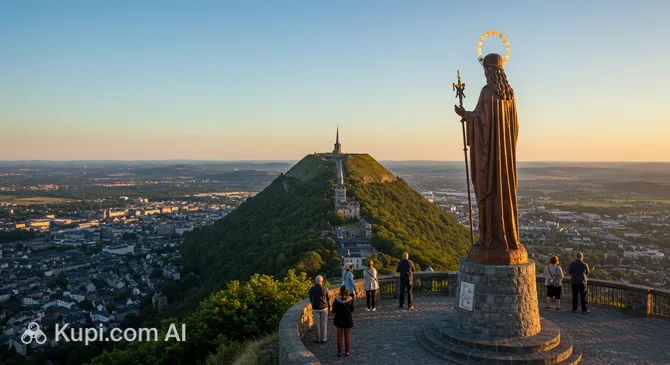
Notre-Dame de France
Notre-Dame de France. Иллюстрация. Источник: Kupi.com AI

The monumental 16-meter structure has a fascinating origin: it was cast from the metal of 213 cannons captured during the Siege of Sevastopol. Erected in 1860, the statue became an embodiment of the Virgin Mary's patronage over the country. The rock itself sits at an altitude of 757 meters above sea level, making it one of the most impressive vantage points, offering a breathtaking panoramic view of the red-tiled roofs, the valley, and the surrounding volcanic hills for which France is famous.

Today, Notre-Dame-de-France is a canonical landmark attracting both pilgrims and tourists alike. It is part of a grand architectural ensemble alongside the cathedral and the Saint-Michel d'Aiguilhe rock, creating a unique city silhouette that is rightly considered one of the most unusual and beautiful in Europe.

Contacts

To find the most up-to-date information about visiting the monument, you can use the official contact details of the tourism office and site management service.

How to contactContact
AddressRue du Cloître, 43000 Le Puy-en-Velay, France
Phone+33 4 71 04 11 33
Websitewww.lepuyenvelay-tourisme.fr

What to Do

A visit to this site begins with an atmospheric ascent along the Way of the Cross. Simple wooden crosses are placed along the trail, creating a contemplative mood and allowing visitors to feel the historical significance of this route for pilgrims. As you climb toward the summit, you will watch the town panorama gradually unfold, becoming more expansive with every step.

The main reward awaits at the top — the viewing platform at the base of the giant statue. From here, you get the best views of Notre-Dame Cathedral, the historic quarters, and the region's striking volcanic "needles." It is the perfect spot for panoramic photography or quiet contemplation of nature. Inside the cast-iron statue itself, you can appreciate the craftsmanship of that era's casting techniques by examining the structural details from within.

For those seeking spiritual solitude, a prayer area has been created at the foot of the monument, where lit candles are often seen. During the summer months, solemn open-air masses are occasionally held here, with particularly large crowds in September during the feast of the Nativity of Mary. If you have energy left, you can explore the adjacent trails to study the geological structure of the volcanic Rocher Corneille.

Getting There

The Notre-Dame-de-France monument is located in the heart of the historic center, making it easy to reach. If you are already in the town center, follow the signs for Notre-Dame Cathedral. The path to the statue begins right from there, following the Way of the Cross or specially designed stairs. The uphill walk takes 10 to 20 minutes depending on your pace, with an elevation gain of about 130 meters.

For those using public transport, city buses stop near the cathedral. If you are traveling by car, it is recommended to leave your vehicle in one of the parking lots in the lower part of town, such as Rue des Tables or Place Michelet, as access directly to the rock is restricted. Travelers from neighboring regions can easily reach the town from Clermont-Ferrand (about 120 km); the drive via the A75 highway takes approximately an hour and a half.

The landmark is highly accessible on foot from anywhere in the town center. For a comfortable ascent up the basalt steps and paths, wearing comfortable sports or hiking shoes is strongly recommended. During the summer season, the flow of tourists is high, but the wide paths allow you to enjoy the walk without feeling crowded.

Ближайший город: Le Puy-en-Velay

History & Facts

The history of this colossal statue is closely intertwined with major European events of the mid-19th century. The idea to erect a monument to the Virgin Mary in Le Puy-en-Velay was born on September 8, 1855, the feast of the Nativity of Mary. Following the victory in the Crimean War, General Pélissier suggested to Bishop de Morlhon that captured trophies be used to create a sacred image.

The material for casting the monument came from 213 Russian cast-iron cannons captured during the Siege of Sevastopol. Emperor Napoleon III personally supported the project and donated the metal to be smelted in Paris. Work on the statue continued for several years, and on September 12, 1860, it was ceremoniously installed atop the Rocher Corneille (Crow's Rock) in the presence of high-ranking clergy and thousands of pilgrims.

The choice of location was not accidental; the basalt rock has long been considered sacred. Since the 3rd century, believers have made pilgrimages to Mount Anis, associating it with miraculous healings. Notre-Dame-de-France became the crowning achievement of this pilgrimage complex, replacing earlier small shrines and solidifying the town's status as one of the primary centers for the veneration of the Virgin Mary in France.

The site gained additional spiritual significance through the 14-station Way of the Cross, which was established in the 1940s during a large-scale youth pilgrimage. The simple wooden crosses that remain today serve as a reminder of faith and resilience, blending the historical power of the monument with the personal religious experience of visitors.

Time Needed

To fully experience the Notre-Dame-de-France monument, most travelers find 1–1.5 hours to be sufficient. This allows enough time for a leisurely walk up the slopes of Rocher Corneille, an inspection of the statue itself, and time to enjoy the panoramic views from the observation deck.

If you plan to combine your visit to the Virgin Mary statue with a tour of the adjacent Notre-Dame Cathedral and a walk through the narrow streets of the old town, you should set aside at least 2–3 hours. Photographers and landscape enthusiasts may need extra time to wait for the perfect light to capture the town's terracotta roofs and the neighboring volcanic peaks.

Working Hours

Access to the statue and the viewing platform is organized according to a seasonal schedule, ensuring comfortable visits during daylight hours. Please note that while the Way of the Cross path is almost always accessible, entry to the enclosed monument area has specific time limits.

Opening hours:

  • Monday, Tuesday, Thursday, Friday, Saturday, and Sunday: 9:00 AM to 7:00 PM
  • Wednesday: 9:00 AM to 6:00 PM
DayWorking hours
Понедельник9:00 – 19:00
Вторник9:00 – 19:00
Среда9:00 – 18:00
Четверг9:00 – 19:00
Пятница9:00 – 19:00
Суббота9:00 – 19:00
Воскресенье9:00 – 19:00

Nearby

The town is rich in unique historical sites, many of which are within walking distance of the basalt rock. Exploring the surrounding area will allow you to dive deeper into the atmosphere of medieval Auvergne.

NameDistance
Digital Chapel - Land of Giants0.1 km
Les Flâneurs Restaurant0.2 km
Cathedral of Our Lady of Le Puy0.2 km
Saint Michael's Rock of Aiguilhe0.4 km
Le Bobar0.5 km
Pizzeria Le Golden0.6 km
Le Puy-en-Velay Tourist Train0.6 km

Reached the end of the page?

That means the route is fully explored