Support

Château de Polignac

About

Polignac Castle (Forteresse de Polignac) is a majestic medieval fortress rising from a massive volcanic hill in the Auvergne-Rhône-Alpes region. This historical marvel is located just 5 kilometers from the city of Le Puy-en-Velay in France. The fortress is situated on a unique basalt plateau surrounded by sheer cliffs, which historically made it virtually impregnable.
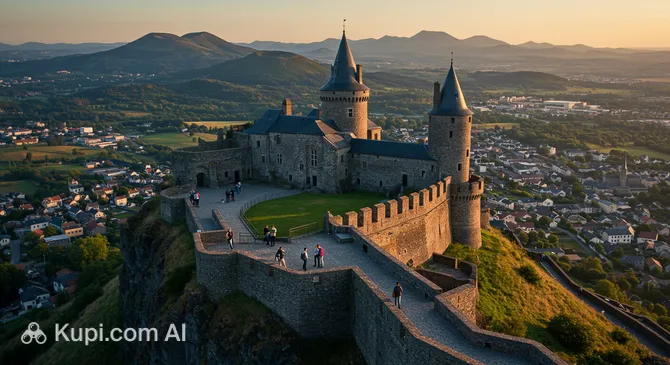
Polignac Castle
Polignac Castle. Иллюстрация. Источник: Kupi.com AI

For nearly a thousand years, the castle belonged to the powerful Polignac family, serving as a symbol of the strength and influence of the Lords of Velay. Today, this architectural monument attracts travelers with its rugged beauty and the opportunity to touch the living history of the Middle Ages. The basalt base of the castle consists of the remains of an ancient volcano, giving the site a special energy and landscape uniqueness.

The main reward for those who decide to climb to the walls of the citadel is a breathtaking 360-degree panorama. From the summit, views open up to the picturesque Velay region, the surrounding mountains, and the volcanic cone of Mont Bar. It is an ideal place for those who appreciate the combination of historical significance and natural majesty.

Contacts

For more information about your visit, ticket prices, or group tours, you can use the fortress's official contact channels.

How to contactContact
AddressPl. Princesse de Polignac, 43000 Polignac, France
Phone+33 4 71 04 06 04
Websitewww.forteressedepolignac.fr

What to Do

Your introduction to the fortress begins with a walk through the authentic medieval streets leading to the main entrance — the imposing Porte de Monsieur gate. Along the way, look out for the 15th-century private mansions that have preserved the charm of a bygone era, and stop by the cozy chapel of Notre-Dame de l'Oratoire.

Once inside the fortress walls, be sure to climb to the top of the main attraction — the powerful Donjon. This 32-meter-high 14th-century keep serves as the best observation deck, offering an exceptional view of the surrounding valleys. A walk along the ramparts will allow you to appreciate the sophisticated defensive system that protected the castle's inhabitants for centuries.

In addition to exploring the architecture, visitors can examine exhibitions detailing the daily life and military prowess of the Lords of Polignac. The spacious plateau area is perfect for quiet walks, where you can examine the remains of ancient structures and enjoy the silence, broken only by the wind blowing through the ancient stones.

Getting There

Reaching this majestic fortress is easy, as it is located just 5 kilometers northwest of the city of Le Puy-en-Velay. If you are traveling by car, the trip via the D103 road will take about 10 minutes. Parking spaces for visitors are available near the historic center of the Polignac commune.

For those who prefer public transport, buses run regularly from the center of Le Puy-en-Velay to the commune of Polignac. The stop is within walking distance of the fortress entrance. You can also use local taxi services, which is convenient if you are visiting with a large group or family.

Ближайший город: Le Puy-en-Velay

History & Facts

The history of this site dates back to the 10th century, when the first wooden fortifications appeared on the hilltop. They were intended to protect the northwestern approaches to the city. However, the true golden age began at the end of the 11th century when the Viscounts Armand settled here, took the name Polignac, and began constructing an impregnable stone citadel.

One of the most famous representatives of the lineage, Héracle I de Polignac, became renowned for his participation in the First Crusade in 1098, where, unfortunately, he perished. Throughout the 12th and 13th centuries, the Lords of Polignac, as Viscounts of Velay, were engaged in a constant struggle for influence in the region with the Bishops of Le Puy, which often led to serious armed confrontations.

The castle remained in the possession of the Polignac family for nearly a thousand years, becoming a symbol of their unwavering power and high status. Each century left its mark on the fortress's architecture, transforming it from a purely defensive structure into a majestic monument of medieval architecture that has survived to this day.

Time Needed

To explore every corner of the medieval fortress without rushing, climb the main tower, and take beautiful photos, a typical tourist will need about 1.5–2 hours. This is enough time to soak in the ancient atmosphere and enjoy the views.

If you plan to study the information boards in detail, visit the local chapel, and linger at the observation deck to contemplate the Auvergne landscapes, it's worth budgeting a bit more time. A visit to the fortress fits perfectly into a half-day itinerary when combined with a stroll through the village of Polignac itself.

Working Hours

The fortress is open to visitors daily, making it easy to include in your travel plans. The opening hours include a small lunch break, which is typical for many historical sites in the region:

Monday – Sunday: 10:00 – 12:00 and 13:30 – 18:00.

Please note that operating hours may vary depending on the season and public holidays, so it is recommended to check the current schedule on the official website before your visit.

10:00 – 12:00, 1:30 – 18:00

Nearby

Exploring the surroundings of the fortress will allow you to dive even deeper into the region's atmosphere and discover unique architectural and natural monuments. The site's location is very convenient for those who want to see as many attractions as possible in one trip.

In the immediate vicinity is a charming medieval village, and slightly further away are the famous rock churches and monumental statues that have made this region world-famous.

NameDistance
Shrine of Saint Joseph of Good Hope (Bon Espoir)2.4 km
Saint Michael's Rock of Aiguilhe2.7 km
Notre-Dame de France3.1 km
Digital Chapel - Land of Giants3.1 km
Les Flâneurs Restaurant3.2 km
Cathedral of Our Lady of Le Puy3.2 km
Pizzeria Le Golden3.3 km

Reached the end of the page?

That means the route is fully explored