Support

Musée national Adrien Dubouché

About

If you are looking for a place where fire and clay are transformed into true elegance, the Adrien Dubouché National Museum will be a real discovery for you. Located in the ancient city of Limoges, this museum is rightfully considered one of the most important cultural centers that France is proud of. It is dedicated not only to the famous Limoges porcelain but also to the global history of ceramics and glassmaking—from antiquity to the boldest contemporary installations.
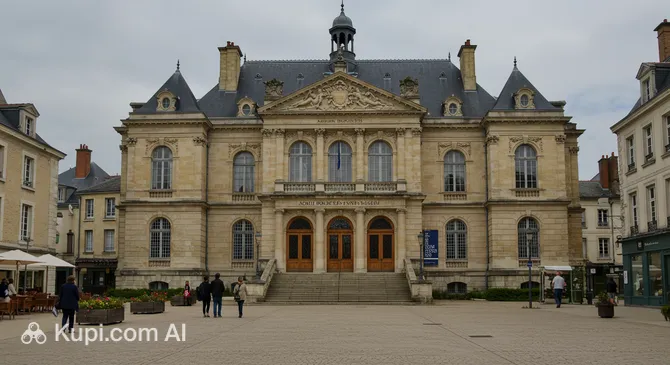
Adrien Dubouché National Museum
Adrien Dubouché National Museum. Иллюстрация. Источник: Kupi.com AI

Today, the museum houses one of the world's largest ceramic collections, numbering approximately 18,000 exhibits. Here, you can see rare pottery from Ancient Greece, exquisite faience, Islamic majolica, and masterpieces from China. Special attention is given to Venetian and Bohemian glass, making the panorama of applied arts truly comprehensive. The museum building itself is a work of art: the historical facade from the late 19th century is harmoniously complemented by a modern extension by architect Boris Podrecca.

The popularity of this site is confirmed by high ratings from travelers, who note the incredible aesthetics and depth of material presentation. Following a major renovation in 2012, the space has transformed into an ultra-modern venue where the traditions of the past meet the innovations of today. It is an essential stop for anyone wishing to touch the cultural code of the Limousin region.

Contacts

For more information before your visit or to book group tours, you can use the official communication channels. The museum is open to inquiries and provides all the necessary tourist information on its website.

How to contactContact
Address8Bis Pl. Winston Churchill, 87000 Limoges, France
Phone+33 5 55 33 08 50
Websitewww.musee-adriendubouche.fr

What to Do

A journey through the museum halls feels like an exciting immersion into the world of technology and beauty. You will begin your introduction in the technological zones, where all stages of porcelain creation are clearly demonstrated—from raw material extraction and the composition of kaolin to the intricacies of firing. It is particularly interesting to observe how the methods used by craftsmen have changed over the centuries.

Be sure to spend time in the galleries showcasing legendary dinner services. One of the main treasures is the 1855 Cérès riche service, created by the Pouyat manufactory. Equally impressive are the first pieces produced in Limoges back in 1771 and the Sèvres factory medallions. Oriental art lovers will appreciate the halls with Chinese blue porcelain and Korean ceramics, while admirers of European refinement will enjoy pieces from Italy, Germany, and England.

For family visits, the museum has prepared interactive mezzanines with technical demonstrations that will interest both children and adults. If you plan your visit for the first Sunday of the month, admission is free for everyone. Discounts are also available for young people under 26 and teachers. It is also recommended to stop by the contemporary art department to see how current artists, such as Zhuo Qi, experiment with classical materials.

Getting There

The museum is located at 8Bis Place Winston Churchill, right in the heart of the city, near the Champ-de-Foire square. It is easy to find, as the iconic building serves as an architectural landmark in the city center.

If you arrive by train, a walk from the Limoges-Bénédictins station takes about 20 minutes (approximately 1.5 km). The route passes through picturesque streets, allowing you to immediately soak in the atmosphere of the region. For those who prefer public transport, the T1 tram line is ideal—simply get off at the stop named Musée Adrien Dubouché.

Travelers arriving by car will find it convenient to use the spacious parking at Champ-de-Foire, located right next to the entrance. If you are coming from the capital, TGV high-speed trains run from Paris to Limoges in about three hours, after which you can take a taxi or use the extensive STUL bus network.

Ближайший город: Limoges

History & Facts

The museum owes its existence to Tiburce Morisot, the prefect of the Haute-Vienne department and father of the famous Impressionist painter Berthe Morisot. It was he who initiated the first art collections in 1845. However, the institution's true heyday began in 1865 when Adrien Dubouché took over the leadership. The son of a cloth merchant and a passionate patron of the arts, he not only donated his own funds but also founded a school of decorative arts so that local masters could find inspiration in the finest ceramic specimens.

A major milestone occurred in 1875 when Dubouché purchased and gifted the city a unique collection of 587 items belonging to his friend, the ceramic researcher Albert Jacquemart. In a gesture of gratitude, the museum was named after Dubouché during his lifetime. In 1881, shortly before the patron's death, the museum was granted national status, highlighting its importance to the entire country.

The museum's modern appearance is the result of a harmonious blend of eras. The main building, designed by Pierre-Henri Mayeux and completed in 1900, underwent a massive renovation in the early 21st century. Austrian architect Boris Podrecca added a contemporary extension to the historical ensemble, and in 2012, the renovated complex reopened its doors, becoming part of the prestigious Sèvres – Cité de la céramique organization.

Time Needed

To fully appreciate the scale and richness of the exhibition, we recommend setting aside at least 3 hours for your visit. This is enough time to walk through the main halls without rushing, study the technological process of porcelain production, and admire the collection's most famous masterpieces.

For true art connoisseurs and those who choose to use a guide or an audio guide, the visit may last up to 4 hours. Given that the museum houses around 18,000 exhibits, every hall offers a wealth of details deserving of close attention.

Working Hours

The museum's doors are open to visitors throughout the week, except for Tuesday, when the institution is closed. Please note that the schedule includes a midday break.

You can visit the exhibition according to the following schedule:

  • Monday: 10:00 AM – 12:30 PM, 2:00 PM – 5:45 PM
  • Tuesday: Closed
  • Wednesday – Sunday: 10:00 AM – 12:30 PM, 2:00 PM – 5:45 PM
Keep these times in mind so that your encounter with porcelain masterpieces is calm and thoughtful.

DayWorking hours
Понедельник10:00 – 12:30, 2:00 – 17:45
ВторникЗакрыто
Среда10:00 – 12:30, 2:00 – 17:45
Четверг10:00 – 12:30, 2:00 – 17:45
Пятница10:00 – 12:30, 2:00 – 17:45
Суббота10:00 – 12:30, 2:00 – 17:45
Воскресенье10:00 – 12:30, 2:00 – 17:45

Nearby

A stroll around the museum will allow you to dive deeper into the history and culture of the region. The city's central quarters are full of charming squares, medieval streets, and unique architectural monuments, all located just a few minutes' walk away.

Exploring these landmarks is a perfect complement to a museum visit, allowing you to see Limoges from different perspectives: from its religious heritage to its ancient craft traditions.

NameDistance
Le Versailles Brewery Museum0.2 km
Church of Saint Michael of the Lions, Limoges0.4 km
Traditional Butchers' House0.5 km
Limoges République Fried Chicken Restaurant0.5 km
Le Baron Brasserie0.6 km
Le Dandy's Bar, Club and Karaoke0.7 km
Limousin Aquarium0.8 km

Reached the end of the page?

That means the route is fully explored