Support

Manihi

About

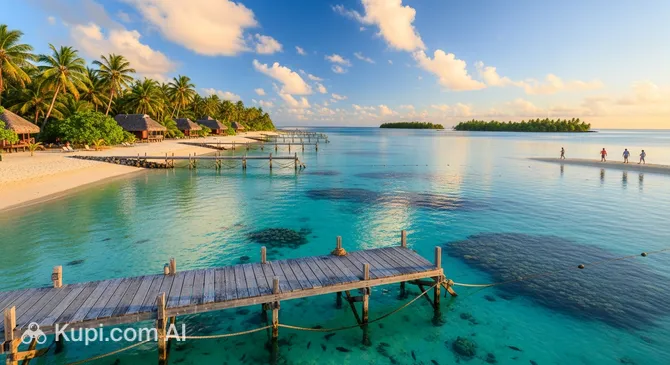
Welcome to Manihi, a breathtaking atoll often referred to as the "Island of Pearls." This necklace-shaped coral ring encloses a vibrant turquoise lagoon that resembles a giant, pristine swimming pool. It offers a serene and authentic escape, perfect for travelers seeking tranquility far from the hustle and bustle of busier tourist destinations.

Situated in the Tuamotu Archipelago of French Polynesia, Manihi is a remote paradise home to a close-knit community of approximately 800 residents. Life here moves at a relaxed pace, with the main village of Turipaoa serving as the center of activity near the pass that connects the lagoon to the open ocean.

Manihi. Source: Kupi.Binoculars

The island is world-renowned as the cradle of the Tahitian black pearl industry. The history of Manihi is deeply intertwined with these lustrous gems, as the region's first pearl farm was established here in the 1960s. Today, visiting a working pearl farm remains a highlight for many, offering a chance to learn about the delicate cultivation process and admire the unique colors of the pearls.

Beyond its famous exports, the atoll is a dream for water enthusiasts. The lagoon's crystal-clear waters are teeming with marine life, making it an exceptional spot for snorkeling and diving among colorful reef fish, manta rays, and sharks. Whether you are exploring the underwater wonders or simply basking in the tropical sun, Manihi invites you to experience the true essence of island living.

Weather Overview

Manihi offers a warm, tropical climate with temperatures that remain remarkably stable throughout the year. The average temperature generally hovers between 25°C and 27°C, with March and April being the warmest months, reaching highs of around 28°C. Even during the slightly cooler months of August and September, the weather remains pleasant with average lows rarely dropping below 25°C.

Rainfall is a common occurrence, characterized by a high frequency of wet days rather than heavy accumulation. January is typically the wettest month, featuring about 25 wet days, while July offers the driest conditions with roughly 15 days of rain. For a more comprehensive look at the conditions during your planned travel dates, you can check the weather in Manihi.

Interesting Facts

Beyond its reputation as a pearl-producing paradise, Manihi holds several geographical and historical secrets that add to its allure. Here are some fascinating details about this unique atoll in French Polynesia:

  • A Historical Moniker: When Dutch explorers Willem Schouten and Jacob Le Maire first arrived in 1616, they gave the island the name "Waterlandt." This early European name highlights the defining characteristic of the atoll, where the presence of the ocean is so overwhelming that dry land seems almost incidental.

  • The Solitary Gateway: Unlike some atolls that have multiple openings, Manihi interacts with the open ocean through a single navigable channel known as the Tairapa Pass. This bottleneck creates strong, nutrient-rich currents that support a thriving underwater ecosystem and serve as the only route for boats entering the lagoon.

  • A Lagoon-Dominant World: The geography of Manihi is a testament to the power of water. The central lagoon covers a massive area of approximately 160 square kilometers, dwarfing the surrounding land strips, or "motus," which total only about 13 square kilometers.

How to Get There

Reaching the secluded paradise of Manihi typically involves a combination of international and domestic air travel. Since the atoll is part of the Tuamotu Archipelago, most visitors first fly into the main gateway of Tahiti before connecting to a smaller aircraft. The journey itself offers spectacular aerial views of the scattered coral rings and the vast blue ocean. For a detailed breakdown of routes and travel tips, you can read more about how to get to Manihi.

While Manihi is served by its own local airfield, travelers often plan their itineraries around the larger hubs in the archipelago to island-hop. The Rangiroa Airport (IATA: RGI) is one of the most significant in the region, located in Rangiroa, approximately 193 km from Manihi. Another key transport node is Fakarava Airport (IATA: FAV), situated in Fakarava, about 185 km away. It is important to note that these airports are on separate islands; therefore, travel from these locations to Manihi requires a connecting domestic flight or a boat charter rather than ground transportation like a taxi or bus.

For clarity, here is a summary of the main airports in the vicinity:

Airport Name City Passenger Traffic Km from City
Rangiroa Airport Rangiroa Medium 193.3
Fakarava Airport Fakarava Small 185.5
Tikehau Atoll Airport Tikehau Small 257.3
Kauehi Airport Kauehi 176.9

As Manihi is a coral atoll surrounded by the Pacific Ocean, there are no railway stations on the island or in the surrounding archipelago. Train travel is not a mode of transport available in French Polynesia. Visitors rely exclusively on flights and boats to navigate between the islands and explore the stunning lagoons.

Main Attractions

Manihi is a destination defined by its shimmering lagoon and authentic Polynesian lifestyle. While it lacks the large-scale commercial tourism of other islands, its attractions are deeply rooted in nature and local culture. Here are the top places and experiences that make this atoll unique.

Pearl Farms are the signature attraction of Manihi, often called the "Island of Pearls." As the site of the first black pearl farm in French Polynesia, the atoll offers visitors a unique opportunity to witness the intricate process of pearl cultivation. Tours typically demonstrate the delicate grafting technique and the harvesting of these lustrous gems. It is a fascinating cultural and educational experience where you can learn about the patience and skill required to produce the famous Tahitian black pearl, and often purchase high-quality pearls directly from the source.

Turipaoa Village serves as the charming heart of the atoll. Located near the pass, this small settlement is home to the majority of the island's population. Walking through Turipaoa offers a glimpse into authentic island life, with streets lined with white coral sand and houses adorned with colorful flowers. Visitors can explore the local church, chat with friendly residents, and enjoy the slow, peaceful rhythm that defines the Tuamotu Archipelago. It is the perfect place to immerse yourself in the local community.

Tairapa Pass is the only channel connecting the lagoon to the open ocean and is a hotspot for marine biodiversity. This area is renowned among underwater enthusiasts for its exceptional drift snorkeling and diving opportunities. As the tide changes, the current carries swimmers through the clear water, offering effortless views of sharks, manta rays, giant napoleon wrasse, and schools of vibrant reef fish. The pass is a dynamic environment that showcases the raw beauty of the underwater world.

The Lagoon and Motus provide the ultimate setting for relaxation and exploration. The vast, crystal-clear lagoon is dotted with small, uninhabited islets known as motus. A popular activity is to take a boat excursion to one of these secluded spots for a "motu picnic." Here, you can enjoy freshly caught fish and coconut bread on a pristine beach, surrounded by nothing but turquoise water and coconut palms. It is an idyllic way to experience the solitude and natural splendor of the South Pacific.

Local Cuisine

The local cuisine of Manihi is a true reflection of its geography, heavily reliant on the bounty of the surrounding lagoon and the Pacific Ocean. The food scene here is defined by freshness and simplicity, with a delightful blend of traditional Polynesian flavors and French culinary influences. For visitors, dining on the atoll is less about haute cuisine and more about enjoying organic, locally sourced ingredients prepared with care and authenticity.

The absolute must-try dish is Poisson Cru au Lait de Coco (raw fish with coconut milk), which is considered the national dish of French Polynesia. It typically consists of fresh raw tuna or lagoon fish marinated in lime juice and mixed with diced vegetables like cucumber and tomato, all bathed in freshly squeezed coconut milk. Another staple is Pain Coco, a dense and slightly sweet coconut bread often served with breakfast or as a side to savory meals. Seafood lovers will also delight in grilled lagoon fish, such as parrotfish or mahi-mahi, and the local lobster, often prepared simply to highlight its natural sweetness.

To quench your thirst, nothing beats the refreshing taste of Pape Haari, or fresh coconut water, often drunk straight from a coconut harvested just moments before. For those looking for something stronger, the local Hinano beer is a ubiquitous favorite across the islands, perfect for sipping while watching the sunset. Fresh fruit juices made from pineapple, mango, or grapefruit are also widely available and provide a burst of tropical flavor.

Dining in Manihi is a unique experience largely centered around family-run pensions (guesthouses). Since the atoll has very few independent restaurants, most visitors enjoy communal meals at their accommodation, where hosts prepare hearty dinners featuring the catch of the day. In the main village of Turipaoa, you might find small "Snacks"—casual eateries serving simple dishes like steak frites, grilled fish, or burgers. A highlight of any gastronomic journey here is a motu picnic, where locals grill freshly caught fish over coconut husks on a secluded islet, offering an unforgettable meal in paradise.

Travel Tips

Planning a trip to the secluded atoll of Manihi requires a bit more preparation than a standard holiday, as its remote charm comes with limited amenities and a slower pace of life. To ensure your island getaway is as relaxing and trouble-free as possible, here are some essential practical tips to keep in mind before you pack your bags.

  1. Clothing and Gear: The climate is tropical and warm, so pack light, breathable fabrics like cotton or linen. Swimwear is essential, but equally important are reef shoes (plastic sandals) to protect your feet from sharp coral and stonefish in the lagoon. Don't forget high-SPF reef-safe sunscreen, a wide-brimmed hat, and sunglasses. A light sweater or windbreaker is useful for cooler evenings or boat rides. If you plan to visit the local church, bring modest clothing that covers your shoulders and knees. Electrical outlets are typically Type C or E (220V), so bring a universal adapter if needed.
  2. Transportation: Manihi is a small atoll with no public transport system—there are no buses, metros, or taxis, and ride-hailing apps do not operate here. The main village, Turipaoa, is small enough to explore on foot. For longer distances along the motu, some guesthouses provide bicycles. Transport between the airport and your accommodation is almost exclusively by boat, usually arranged in advance by your host.
  3. Finances: The local currency is the Pacific Franc (XPF). It is crucial to bring sufficient cash from the main island of Tahiti before arriving. While there may be a small post office agency, ATMs are often unavailable, unreliable, or do not accept international cards. Credit cards are accepted at some pearl farms and larger pensions, but small shops and local snacks operate on a cash-only basis. Tipping is not customary in French Polynesia, but a smile and a warm "Mauruuru" (thank you) are always appreciated.
  4. Health and Safety: There is a small medical center (infirmary) in Turipaoa, but it is not a full-service hospital and does not operate 24/7. Bring a well-stocked personal first-aid kit, including any prescription medications you need, as there are no commercial pharmacies on the island. Mosquito repellent is a must to prevent bug bites. Always stick to bottled or filtered water, as tap water is generally not potable. The island is very safe, but exercise caution when swimming in currents near the pass.
  5. Communication: The official language is French, while Tahitian (Pa'umotu dialect) is widely spoken by locals. English is understood at pearl farms and guesthouses catering to tourists, but knowing a few basic French phrases is very helpful in the village. Wi-Fi is usually available at pensions but can be slow or intermittent. For mobile data, it is best to purchase a prepaid SIM card (like Vini) at the airport in Tahiti before flying to the outer islands.
  6. Local Etiquette: Polynesians are incredibly hospitable. Always greet people with a friendly "Ia Orana" (Hello) when passing by. It is polite to remove your shoes before entering a private home or a bungalow. When walking through the village, dress modestly; wearing swimwear is appropriate for the beach or boat but not for walking around the shops or church areas.
  7. What to Avoid: Do not walk on the coral reefs. Not only is it dangerous due to sharp edges and potential marine life stings, but it also damages the fragile ecosystem. Avoid wasting fresh water; on a coral atoll, freshwater is a precious and limited resource, so take short showers and use water sparingly.
  8. Island Supplies: Shops in the village are small "magasins" with limited stock, often dependent on the arrival of the supply ship. If you have specific dietary requirements, favorite snacks, or need specific toiletries (like feminine hygiene products or specific batteries), it is highly recommended to buy them in Tahiti and bring them with you.

Visiting Manihi is about embracing simplicity and disconnecting from the complexities of the modern world. By coming prepared with the right gear and a respectful attitude, you will find yourself effortlessly slipping into the "island time" rhythm, ready to enjoy the pristine beauty of this Tuamotu gem.

Entertainment & Nightlife

Travelers expecting a bustling nightlife scene with neon lights, thumping bass, and crowded dance floors will find Manihi to be a refreshing contrast. The "nightlife" on this remote atoll is defined by profound tranquility, the soothing sound of the ocean, and a sky blanketed in more stars than you have likely ever seen. There are no nightclubs, discos, or dedicated bars on the island. Instead, the evening entertainment is centered around connection—with nature, with the local hosts, and with fellow travelers.

The social hub of the island is undoubtedly the local pensions (guesthouses). Since there are no independent restaurants or bars open late, the dining area of your accommodation becomes the de facto "club" for the evening. Here, guests gather for communal dinners that often extend into hours of conversation. It is not uncommon for the hosts to bring out a ukulele or guitar, filling the air with traditional Polynesian songs. The atmosphere is intimate and casual, with a dress code that rarely requires more than shorts and a t-shirt (and perhaps some mosquito repellent).

For those looking to venture out, the main village of Turipaoa offers a peaceful setting for an evening stroll. While you won't find a nightlife district, the village wharf is a popular spot at sunset. Locals often gather here to fish or simply chat as the day cools down. It is a safe and serene place to watch the sun dip below the horizon, painting the lagoon in shades of violet and orange. A walk through the quiet, flower-lined streets under the moonlight provides a romantic and meditative experience that is rare in the modern world.

Nature provides the most spectacular shows in Manihi. Stargazing here is world-class due to the complete lack of light pollution. Simply lying on the beach or the end of a pier allows you to witness the Milky Way in stunning clarity. Another unique nocturnal activity is night fishing, which can often be arranged with your pension host. venturing out onto the reef with a lantern to catch lobster or lagoon fish is an exciting way to experience the atoll's ecosystem after dark.

Practical advice for evenings in Manihi revolves around preparation. Since there are no 24-hour convenience stores or taxi services, you should plan ahead. If you wish to enjoy specific spirits or wines, it is advisable to purchase them at the duty-free shop in Tahiti before flying out, as the local shops have a limited selection and close early. Getting around at night is done on foot or by bicycle; however, street lighting is minimal to non-existent outside the village, so carrying a flashlight or headlamp is essential for safety and navigation.

Regarding daytime entertainment, Manihi remains untouched by mass tourism. There are no movie theaters, museums, shopping malls, or amusement parks. The "entertainment complexes" here are the coral gardens and the pearl farms. Cultural immersion replaces commercial attractions, with days spent learning traditional weaving, visiting a pearl grafting house, or simply exploring the uninhabited motus. The island invites you to slow down and find amusement in the simple, raw beauty of the Polynesian environment.

Parks & Museums

In Manihi, the concepts of "parks" and "museums" are redefined by the atoll’s geography and lifestyle. You will not find manicured city gardens or cavernous exhibition halls here. Instead, the entire island serves as an open-air sanctuary where the lush coconut groves act as green spaces and the working pearl farms function as living museums, preserving the history and techniques of the region's most famous industry.

The Coconut Groves of the Motus serve as the atoll's primary terrestrial "park." Covering the narrow strips of land that form the ring of Manihi, these extensive plantations are the green lungs of the island. Walking through these groves offers a serene experience shaded by towering palms and pandanus trees. These areas are not just scenic; they are vital to the local economy for copra production. Visitors can wander along the coral paths, observing the native flora and the nesting seabirds that find refuge in this tranquil, verdant environment.

The Coral Gardens, located within the lagoon, can be best described as an underwater botanical garden. While technically a marine environment, this area functions as a natural reserve that rivals any terrestrial park in biodiversity. Accessible by a short boat ride or sometimes directly from the shore, these shallow gardens display a kaleidoscope of coral formations—from brain coral to staghorn—teeming with life. It is a protected space where nature is the curator, offering an immersive look at the delicate ecosystem that sustains the atoll.

Pearl Farms are the closest equivalent to museums on the island, and they are arguably more engaging than static displays. As Manihi is the historical birthplace of the Tahitian black pearl industry, these farms are custodians of a rich cultural heritage. A visit here is an educational journey where you witness the biological history of the Pinctada margaritifera oyster. Guides explain the intricate grafting techniques developed over decades, effectively turning the workspace into a gallery of living art and science that defines the island's identity.

The Church of Turipaoa stands as a significant cultural and architectural landmark in the main village. While not a museum in the traditional sense, it houses the spiritual and artistic history of the community. Often built with coral lime and adorned with shell decorations or local wood carvings, the structure reflects the ingenuity and devotion of the residents. Inside, the atmosphere tells the story of the island's missionary past and its enduring Polynesian traditions, making it a quiet place for reflection and cultural appreciation.

For a truly authentic experience, explore the outer reef flats at low tide. This "hidden park" reveals itself only when the water recedes, exposing a rugged landscape of fossilized coral and rock pools. It is a fascinating area to observe small marine creatures like crabs, mollusks, and juvenile fish trapped in the pools, offering a raw and unfiltered glimpse into the interface between the ocean and the land.

Getting Around

Public transport in Manihi is virtually non-existent in the conventional sense. Due to the atoll's small population and unique geography—consisting of a ring of coral islets surrounding a lagoon—there are no subways, trams, public buses, or trains. The infrastructure is not designed for mass transit, and the paved roads are limited primarily to the main village of Turipaoa and the immediate vicinity of the airport.

The primary mode of "public" transportation for visitors is the boat transfer service. Upon arrival at the airport, which is located on a separate motu (islet), travelers are typically met by representatives from their pension or guesthouse. These boat transfers act as the essential link between the airstrip and your accommodation. There is no formal schedule; instead, these services are coordinated specifically around flight arrivals and departures.

Regarding payment, there are no travel cards, transit apps, or electronic ticketing systems. For airport transfers, the cost is often included in your accommodation package or added to your final room bill. If you need to arrange a specific boat ride outside of these transfers—for example, to visit a pearl farm or cross the lagoon—you will generally pay the boat operator directly in cash. The local currency, the Pacific Franc (XPF), is the only accepted form of payment for these informal services, and it is crucial to agree on the price before departing.

For getting around the main village of Turipaoa, walking is the most practical and popular option. The village is compact, and you can easily traverse it on foot in a short amount of time. Walking allows you to soak in the peaceful atmosphere, greet the locals, and enjoy the scenic views of the lagoon without the need for a vehicle. Since there are no sidewalks in the traditional sense, you share the quiet coral-sand roads with the occasional bicycle or scooter.

Bicycles serve as the main alternative to motorized transport. Many guesthouses offer bikes to their guests, either for free or for a small daily rental fee. Cycling is an excellent way to explore the length of the main motu, providing a breezy and leisurely way to see the coconut groves and coastline. There are no car rental agencies or taxi services on the island, so do not expect to hail a cab or book a ride via a smartphone app.

A special feature of transport in Manihi is that the lagoon itself acts as the main highway. Unlike cities where a historic metro might be the highlight, here the experience of commuting is defined by the water. Whether you are going to the airport, a picnic spot, or a pearl farm, your journey will almost certainly involve a boat ride across the crystal-clear turquoise waters, offering stunning views of marine life right beneath the hull.

Practical advice for tourists is to rely heavily on your accommodation host for all your transport needs. Since there is no central bus station or taxi stand, your host is your dispatcher. Always communicate your plans in advance—if you want to visit the village or see a specific attraction, ask your host to arrange the boat or lend you a bike. Be prepared for "island time," where strict timetables are replaced by a more relaxed, flexible approach to scheduling.

Accommodation

Accommodation in Manihi is a world away from the multi-story hotels and sprawling resorts found on more commercialized islands in French Polynesia. The atoll is characterized by its intimate, family-run establishments known as pensions (guesthouses). These provide a rustic and authentic Polynesian experience, often consisting of traditional bungalows located right on the beach or sometimes perched over the lagoon water. The focus here is on hospitality and immersion in the local lifestyle rather than standardized luxury.

Most accommodation options are situated in two main areas. Some are located near the main village of Turipaoa, offering convenient access to local life, the church, and the few small shops. Others are tucked away on private motus (islets) scattered across the lagoon. Staying on a motu offers unparalleled seclusion and quiet, effectively giving you your own private island experience, though it requires a boat transfer arranged by your host to reach the main village or airport.

Because dining options on the atoll are extremely limited, with no independent restaurants open for dinner, accommodation is almost exclusively booked on a half-board basis (demi-pension). This means breakfast and dinner are typically included in the price of your stay. These communal meals are a highlight of the Manihi experience, featuring fresh seafood and local dishes shared with the host family and other guests in a friendly, social atmosphere.

Booking Tips and Prices: Due to the small number of guesthouses on the island, capacity is very limited. It is highly recommended to book well in advance, especially during the peak travel season from June to August. Prices generally fall into the mid-range category for French Polynesia. While they are significantly more affordable than the luxury resorts of Bora Bora, they are not "budget" in the global sense. Reservations can be made through major online travel platforms or by contacting the pensions directly via email.

Nearby Cities

While Manihi offers the seclusion of a remote atoll, it is typically experienced as part of a broader journey through the islands of the South Pacific. The inter-island flight network connects the Tuamotu Archipelago with the major hubs of the Society Islands, allowing travelers to easily combine the quiet charm of the "Island of Pearls" with the vibrant culture and dramatic landscapes of the region's most famous destinations. Here are some key locations to consider adding to your itinerary before or after your stay in Manihi.

Papeete, located on the island of Tahiti, is the vibrant capital and the primary gateway for international travelers entering French Polynesia. As the economic and cultural heart of the territory, it offers a stark contrast to the quiet isolation of the atolls. Before heading to the outer islands, visitors can explore the colorful Marché de Papeete to purchase local crafts and vanilla, or enjoy the famous food trucks, known as roulottes, at Vai'ete Square. It is the essential hub for connecting flights and stocking up on supplies.

Bora Bora is renowned worldwide for its stunning turquoise lagoon and the majestic silhouette of Mount Otemanu. Often visited in conjunction with the Tuamotus to experience the diversity of Polynesian geology, it represents the pinnacle of "high island" scenery. The destination is famous for its luxury overwater bungalows and pristine white sands, such as Matira Beach. It provides a sophisticated resort atmosphere that complements the rustic, authentic experience found in Manihi.

Moorea offers a perfect blend of dramatic nature and accessibility, located just a short ferry ride from Tahiti. Known as the "Magical Island," it features lush, jagged mountains and two breathtaking bays: Cook's Bay and Opunohu Bay. It is a haven for nature lovers, offering activities such as hiking through pineapple plantations or relaxing on public beaches. Its relaxed yet active vibe makes it a popular stop for those seeking adventure before retreating to the quieter atolls.

City Population Distance (km)
Papeete 131,695 519
Moorea 18,000 540
Raiatea 12,500 647
Bora Bora 10,605 663
Huahine 6,000 600

These destinations showcase the incredible variety within the archipelago, ranging from urban excitement and volcanic peaks to the serene coral rings of the Tuamotus.

Shopping & Souvenirs

Shopping in Manihi is a unique experience that reflects the atoll's remote and authentic character. Unlike the bustling commercial centers of larger islands, you will not find designer boutiques, duty-free promenades, or extensive retail districts here. Instead, the shopping scene is intimate and focused primarily on local craftsmanship and the island's most famous export: the Tahitian black pearl. Visitors should come with the expectation of purchasing meaningful, locally sourced mementos rather than engaging in a traditional retail therapy spree.

The main—and essentially only—commercial area is located in the village of Turipaoa. This small settlement near the pass is where the island's few general stores, known locally as "magasins," are situated. These modest, family-run shops stock basic necessities such as food, toiletries, and simple clothing. For tourists, a walk through the village might reveal small stands or homes where locals sell handmade items, but there are no designated shopping streets or pedestrian zones.

It is important to note that there are no shopping malls or large department stores on the atoll. The retail infrastructure is designed to sustain the local population of approximately 800 residents rather than mass tourism. If you require specific luxury items, electronics, or extensive fashion options, it is highly advisable to make those purchases in Papeete before traveling to the outer islands.

Similarly, Manihi does not have a formal public market or a dedicated flea market. However, the spirit of a market can often be found in the informal interactions with local artisans. You may encounter residents weaving traditional items or crafting jewelry on their porches. In some cases, the guesthouses (pensions) may have a small display area featuring local handicrafts for sale, acting as a mini-market for their guests.

When it comes to souvenirs, the undisputed highlight is the Tahitian Black Pearl. As the site of the first pearl farm in French Polynesia, Manihi offers the rare opportunity to purchase loose pearls or jewelry directly from the source. Visiting a pearl farm allows you to select pearls based on their size, shape, and luster, often at better prices than in international jewelry stores. Besides pearls, look for "nacre" (mother-of-pearl) carvings, shell necklaces, and intricate woven items like hats and baskets made from pandanus leaves, which showcase the delicate skills of the Pa'umotu people.

Store opening hours in Manihi are generally limited and can be quite flexible, often operating on "island time." The small shops in Turipaoa typically open early in the morning, around 7:00 AM, and may close for a long lunch break from 12:00 PM to 2:00 PM, reopening until the late afternoon. On Sundays and holidays, most shops are closed or have very restricted hours.

Regarding payment, cash is absolutely essential. The local currency is the Pacific Franc (XPF). Most small shops, artisans, and even some smaller pearl farms do not accept credit cards, and the atoll's banking infrastructure is limited. While some larger pearl farms may accept credit cards, it is safer to withdraw sufficient cash in Tahiti before your arrival. Tax-free shopping (détaxe) is generally not applicable in the small village shops, though major pearl purchases at certified farms may occasionally offer paperwork for VAT refunds upon departure from the territory, so it is worth asking the farmer directly.
Reached the end of the page?

That means the route is fully explored