Support

Schloss Lutherstadt Wittenberg

About

The majestic Wittenberg Castle and its famous Castle Church (Schlosskirche) are more than just architectural monuments; they are the heart of the global Reformation. Located in the charming town of Wittenberg, this ensemble is a highlight of any trip Germany offers to history and culture enthusiasts.
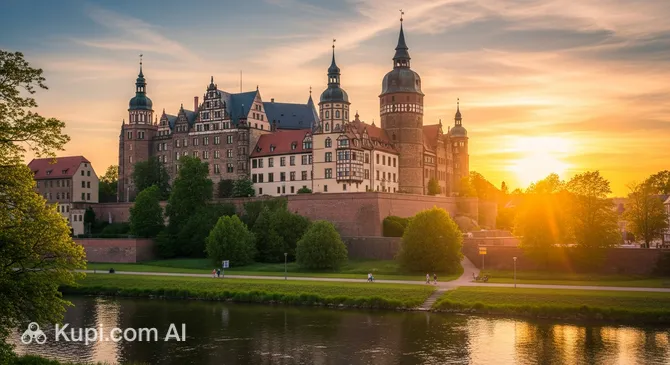
Wittenberg Castle
Wittenberg Castle. Иллюстрация. Источник: Kupi.com AI

Built at the turn of the 15th and 16th centuries in the Late Gothic style, the castle became famous for an event that changed the course of history: it was on the doors of the local church that Martin Luther posted his theses. Today, the site is listed as a UNESCO World Heritage site. The building is easily recognized by its massive 88-meter round tower, inscribed with golden letters from Luther’s famous hymn: "A Mighty Fortress Is Our God."

Modern tourists are drawn here by the unique synthesis of medieval power and Neo-Gothic elegance. Inside the church, priceless relics have been preserved, including a historic organ and masterfully crafted tombstones of great scholars and theologians. This is a place where the spirit of history is felt in every architectural element, turning a simple walk into a fascinating journey into the past.

Contacts

For information regarding special events, organ concerts, or changes to the opening hours, you can contact the administration directly.

How to contactContact
AddressSchloßpl. 1, 06886 Lutherstadt Wittenberg, Германия
Phone+49 4934 91498610
Websitelutherstadt-wittenberg.de

What to Do

The main highlight for every visitor is the famous "Theses Door." Although the original wooden doors have not survived, they have been replaced by an impressive bronze replica weighing one ton, featuring the full text of Luther's 95 Theses in Latin. Above the door, you can see an exquisite mosaic depicting Christ surrounded by the great reformers.

Once inside the church, be sure to notice the tombs of Martin Luther and Philipp Melanchthon. A visit here often feels like a pilgrimage. The interior of the church is striking with its 19th-century Neo-Gothic decor, majestic altar, and statues of Protestant figures. If you are lucky, you might hear the sound of the historic Friedrich Ladegast organ, which is still used during services and concerts.

In addition to exploring the church itself, it is worth strolling through the castle courtyard and climbing to the tower's observation deck to see the city panorama and the curves of the Elbe River. The site takes on a special charm in late October during the Reformation Day celebrations, which include musical festivals and themed fairs that immerse the town in the atmosphere of the 16th century.

Getting There

The Castle Church is located in the western part of the historic center at Schloßpl. 1. If you are traveling from Berlin, the most convenient way is to take an ICE high-speed train or a regional express to Wittenberg Hauptbahnhof. The journey takes about one hour, and the castle is a pleasant 15–20 minute walk from the station through historic streets.

For those preferring local public transport, Tram No. 4 is a good option. Local buses also run from the station, stopping near Schloßplatz. If you are arriving by car, follow the A9 or A38 autobahns; parking is available in designated lots around the perimeter of the Old Town's pedestrian zone.

Your main landmark will be the church's tall 88-meter tower, which is visible from almost anywhere in the city. You can also use a local taxi to get quickly from your hotel or the train station directly to the castle entrance.

Ближайший город: Wittenberg

History & Facts

Wittenberg gained status as an important political and cultural center in the late 13th century, becoming the residence of the Dukes of Saxe-Wittenberg. However, Wittenberg Castle began to take its modern shape in the early 16th century when Elector Frederick III (the Wise) initiated a large-scale reconstruction of the complex. The Castle Church, consecrated in 1511, became a masterpiece of late Gothic architecture of that era.

The most significant event in the castle's history took place on October 31, 1517. According to tradition, it was on this day that Doctor of Theology Martin Luther nailed his famous 95 Theses against the sale of indulgences to the church's north door. This bold act became the starting point of the Reformation, which forever changed the religious and cultural map of Europe.

Over the centuries, the building has faced many trials. In 1760, during the Seven Years' War, the church was severely damaged by artillery fire, and the original wooden doors were destroyed. The current appearance of the church, with its majestic Neo-Gothic tower and bronze doors, is the result of a major late 19th-century restoration carried out under the decree of the Prussian kings.

Today, the church serves not only as an architectural monument but also as the final resting place for key figures in German history. Inside are the tombs of Martin Luther himself, his collaborator Philipp Melanchthon, and their patron, Elector Frederick III the Wise. This makes it one of the most important pilgrimage sites for Protestants worldwide.

Time Needed

A standard tour of the Castle Church and the castle courtyard typically takes visitors between 1 and 2 hours. This is plenty of time to examine the "Theses Door" in detail, explore the interior, and pay respects at the graves of the great reformers.

If you plan to attend one of the regular organ concerts or book an extended tour focusing on Neo-Gothic architectural features, you should allow about 3 hours for your visit. Also, don't forget to set aside some time to climb the tower, which offers a picturesque view of the Elbe River and the rooftops of the old town.

Working Hours

The Castle Church doors are generally open to visitors daily. From Monday to Saturday, you can explore the interiors from 10:00 AM to 4:00 PM. On Sundays, the schedule changes due to formal services, and the church opens for tourists from 11:30 AM to 4:00 PM.

Please note that access to the church may be limited during weddings, concerts, or special church holidays. It is recommended to check the schedule on the official website before your trip, especially if your visit coincides with the Reformation Day festivities at the end of October.

DayWorking hours
понедельник10:00–16:00
вторник10:00–16:00
среда10:00–16:00
четверг10:00–16:00
пятница10:00–16:00
суббота10:00–16:00
воскресенье11:30–16:00

Nearby

A walk around the castle area allows you to dive deeper into the Reformation era and see the city as the great humanists of the past knew it. Almost all significant historical sites are located along the "Mile of History" — Wittenberg's main pedestrian axis.

NameDistance
All Saints' Church0 km
Wittenberg Market Square0.4 km
Charles Bar0.4 km
Wittenberg Zoo0.4 km
ARSENAL Shopping Center0.5 km
Town Church of Wittenberg0.5 km
Irish Harp Pub0.7 km

Reached the end of the page?

That means the route is fully explored