Support

Fortezza of Rethymno

Nearby interesting places

About

The Fortezza of Rethymno is a majestic 16th-century Venetian fortress towering over the city of Rethymno on the picturesque island of Crete in Greece. Considered one of the largest and best-preserved fortifications built by the Venetians on the island, it is a true symbol of the city and its main historical attraction.

Located on Palaiokastro Hill, the fortress dominates the old town and the port, offering visitors breathtaking panoramic views of the historic center and the endless Aegean Sea. Most of the Fortezza's territory is open-air, making it an ideal place for leisurely walks, especially at sunset, and for taking stunning photographs.
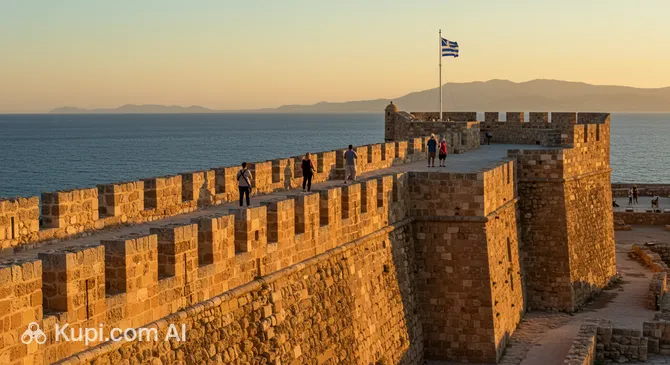
Fortezza of Rethymno. Illustration.
Source: Kupi.com AI

Traveler photos:

Strolling through its grounds, you can explore the massive walls and bastions, see the remains of old barracks, churches, and water cisterns. Inside the fortress, there is also a small open-air theater where cultural events are held during the summer months. A visit to the Fortezza is not just a sightseeing tour, but a true immersion into the rich history and atmosphere of medieval Crete.

Contacts

For planning a visit to the Fortezza, it is helpful to know the basic contact information. Operating hours may vary depending on the season, so it is recommended to check the current schedule before your visit.

How to contactContact
AddressRethimno 741 31, Greece
Phone number+30 2831 028101

What to Do

A visit to the Fortezza is an opportunity to dive headfirst into history while walking through its vast territory. You can explore the powerful fortress walls, which have a total length of about 1.3 km, and walk around four majestic bastions. Inside the fortress, a mosaic of history unfolds: here, the remains of barracks, a gunpowder store, the counselor's house, the bishop's palace, and water cisterns have been preserved. Walking through the open space among sparse pine trees, you will feel the scale of this grand structure.

Among the key buildings to see, the Mosque of Sultan Ibrahim stands out; it was converted from the Venetian Cathedral of St. Nicholas in the 17th century. Nearby, you can find the small Church of St. Catherine, notable for being converted from a former water cistern. Located near the main gate is the old arsenal building, where exhibitions are held periodically in its two-story interior.

The Fortezza is not only a historical monument but also a living cultural center. During the summer months, the famous Renaissance Festival takes place at the Erofili open-air theater on the fortress grounds, along with other concerts and theatrical performances. Additionally, truly breathtaking panoramic views of the Rethymno old town and the endless Cretan Sea open up from the height of the fortress walls—it's an ideal place for creating unforgettable photos. A visit to the fortress will be interesting for both adults and children, who will enjoy exploring the towers and spacious grounds of this once-mighty fortification.

Getting There

Getting to the Fortezza of Rethymno is easy, as it is conveniently located in the northern part of the city's historic center on Palaiokastro Hill. If you are staying in the Old Town of Rethymno, the best way is a leisurely walk. The route through the picturesque streets takes only 10–20 minutes, depending on your starting point. It is about one kilometer from the main port and the waterfront to the entrance of the fortress.

For those traveling by car, there are parking areas near the fortress where you can leave your vehicle. If you are in more distant areas of the city or prefer not to walk, you can use city public transport or taxi services, which will quickly take you to the foot of the hill where this majestic landmark of Greece is located.

Nearest city: Rethymno

History & Facts

The history of the Fortezza is inextricably linked to the constant struggle for control over Crete. The idea for its construction did not arise by chance: the catalyst was a destructive attack by the Turks in 1571, after which the Venetians realized the need for a powerful fortification to protect the city and the port. Construction began in 1573 on Palaiokastro Hill and lasted until 1590. Italian architects were tasked with creating an impregnable citadel capable of withstanding a long siege and ensuring the safety of the residents.

Initially, the fortress was designed as a model of Venetian fortification architecture—a polygonal structure with four massive bastions and three outworks (additional fortifications). However, history made its own adjustments. In 1646, after a long siege, the fortress was captured by the Turks. This period left a noticeable mark on its appearance: the main cathedral was converted into a mosque with a minaret, and new buildings reflecting Ottoman architecture appeared on the grounds.

Interestingly, the history of Palaiokastro Hill is rooted in a much deeper antiquity than it might seem at first glance. Archaeological excavations have confirmed that the first settlements here existed as far back as Neolithic and Minoan times. Moreover, there are suggestions that an acropolis with temples stood on this site in antiquity. Thus, the Fortezza is not just a Venetian bastion but a multi-layered historical monument that has become a true symbol of defense and the fusion of cultures in Crete.

Time Needed

When planning a visit to the Fortezza of Rethymno, you should expect that a full tour of its extensive grounds will take on average from 1.5 to 2.5 hours. This is enough time to take a leisurely walk along the massive fortress walls, enjoy panoramic views of the city and the sea, and see the main surviving structures, such as the Mosque of Sultan Ibrahim and the remains of Venetian buildings. During this time, you can get a complete impression of the scale and historical significance of this grand structure.

However, if you want to dive deeper into the history of this place or simply enjoy its atmosphere without rushing, your visit may take longer. For example, if your visit coincides with one of the cultural events often held during the summer at the Erofili Theatre, or if you want to explore every corner of the fortress in detail, set aside up to half a day for your walk. It is also worth considering time for photography, as the views from the bastions are truly mesmerizing and perfect for capturing memories.

Working Hours

You can visit the Fortezza of Rethymno throughout the year, but the operating hours depend on the season. During the summer period, the fortress is typically open to guests daily from morning until evening, approximately from 8:00 to 19:15–20:00. In the winter months, hours are reduced, and access is usually possible from 10:00 to 17:00. Since the schedule can change, it is highly recommended to check the current operating hours on the official website or at local tourist information centers before your visit.

For a standard visit and sightseeing of the fortress, advance ticket booking is generally not required—they can be purchased at the ticket office at the entrance. However, if your visit coincides with cultural events, such as concerts or performances at the Erofili Theatre, you may need to book tickets for those in advance.

8:00 – 19:15

Nearby

A visit to the majestic Fortezza is a key part of the itinerary for any guest of Rethymno, but a trip to the city would be incomplete without a stroll through its surroundings. The Old Town, stretching at the foot of the fortress, is a labyrinth of narrow streets, Venetian mansions, and cozy squares that hold centuries of history.

Exploring the attractions within walking distance of the Fortezza will allow you to dive deeper into the unique atmosphere of this Cretan city. Just a few minutes' walk away, you will find iconic historical monuments, museums, and charming corners that will make your trip to Greece even more fulfilling and memorable.

NameDistance
Heroes of Polytechnic Square0.3 km
Rimondi Fountain0.4 km
Neradje Mosque0.4 km
Drink n Roll0.5 km
Archaeological Museum of Rethymno0.5 km
Stella's Kitchen0.5 km
Guora Gate0.6 km

Have you reached the end of the page?

So the route has been studied inside and out