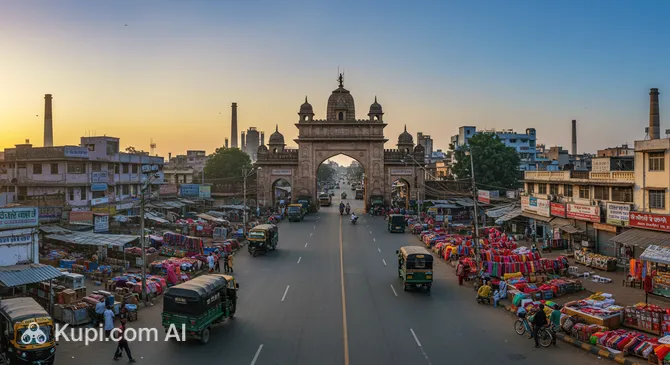
Bhiwandi, located in the state of Maharashtra, India, is a dynamic industrial hub that plays a key role in the region's economy. Situated just 20 kilometers northeast of Mumbai, this city is an essential part of the Greater Mumbai metropolitan area. With a population of over 700,000, Bhiwandi pulses with the rhythm of continuous production and trade, attracting those who want to see the "engine room" of the country's industrial power.
Bhiwandi. Illustration.
Source: Kupi.com AI
The city is widely known as the "Manchester of India" due to its colossal textile industry. Thousands of power looms and logistics warehouses are concentrated here. The city's rich heritage is inextricably linked to the development of trade: Bhiwandi has evolved from a small settlement into one of the largest warehousing centers in Asia, supplying goods not only to India but also to international markets.
Despite being primarily a manufacturing hub, Bhiwandi’s atmosphere is filled with the energy of change. Its geographical location in the Ulhas River valley and proximity to major highways make it a strategically significant point on the country's map. A visit to this city offers a unique opportunity to see the real sector of the Indian economy and experience the scale of local entrepreneurship.
Weather Overview
The climate in Bhiwandi is typical of the tropical region of Maharashtra and is characterized by distinct seasonality. Temperatures remain quite high throughout the year, with an annual average of about 27°C. The hottest period is in April and May, when the thermometer often rises to 35–40°C, creating a sweltering atmosphere.
Particular attention should be paid to the monsoon season, which lasts from June to September. During this time, heavy rainfall hits the city—peaking in July, when more than 500 mm of rain falls. If you are planning a visit, keep in mind that the weather in Bhiwandi during this period can make getting around the city difficult due to high humidity and potential road flooding.
The most favorable time to visit is considered to be winter (November to February). During these months, the weather is comfortably dry, with daytime temperatures around 25–30°C and cool nights. Expect a warm summer with occasional rain and mild, practically dry winters, which are ideal for exploring the industrial scale of the "Manchester of India."
Average monthly temperature
Average monthly precipitation
Interesting Facts
Bhiwandi is a city of contrasts and incredible industrial power, hiding several interesting facts behind its facade as a manufacturing hub.
The city earned the nickname "Manchester of India" due to having the highest concentration of power looms in the country; textiles from here are supplied to all corners of the world.
Bhiwandi is considered one of the largest logistics hubs in Asia—the number of warehouses here is counted in the thousands, making it a critical link in India's supply chain.
The strategic Mumbai-Agra highway passes through the city, which means the flow of freight traffic here practically never stops, day or night.
According to historical data, the literacy rate in the city exceeds 66%, highlighting the local population's drive for development despite its status as a working-class suburb.
The city is situated at an elevation of only 23 meters above sea level in the scenic, though heavily urbanized, Ulhas River valley.
How to Get There
The transport accessibility of Bhiwandi is due to its strategic position within the Greater Mumbai area. The city is an important transit point through which key ground routes of Maharashtra pass. If you are planning a visit, it is useful to look up information in advance on how to get there, taking local traffic conditions into account.
The city does not have its own airport. The nearest air gateway is Chhatrapati Shivaji Maharaj International Airport in Mumbai (BOM), located about 30 kilometers away. From the airport, the most convenient way to reach Bhiwandi is by taxi or by booking a transfer through mobile apps like Uber or Ola. Depending on traffic, the journey can take between one and two hours.
Rail travel is another reliable way to reach the city. Bhiwandi's stations are integrated into the Mumbai Suburban Railway network (Central Line), allowing for budget-friendly and relatively fast travel from central Mumbai or Thane. However, tourists should be aware of the heavy crowds on suburban trains during morning and evening rush hours.
Station
Passenger traffic
Distance
Kalyan railway station
9
10 km
Lokmanya Tilak Terminus
12
29 km
Bandra Terminus
8
33 km
Mumbai Central railway station
12
42 km
Churchgate railway station
9
45 km
For those who prefer buses, the MSRTC state corporation operates regular services from Mumbai and neighboring Thane. Traveling by car via the Mumbai-Agra highway provides maximum flexibility, though you should be prepared for heavy truck traffic, which is a hallmark of this warehousing hub.
Main Attractions
Bhiwandi is primarily an industrial giant, so there are few classic tourist attractions. The city is interesting for its urban aesthetics and the sheer scale of production. The main landmark and focal point of city life is Chhatrapati Shivaji Maharaj Chowk. This central hub features a monument to the great Maratha ruler and is the best place to feel the city's bustling and energetic character.
For those looking to organize their travel through the region or find interesting local routes, contacting the My Travel agency can be very helpful. Their specialists can help you navigate the traffic flows and suggest the best ways to reach more traditional cultural sites in neighboring areas.
A special atmosphere is created by the local markets and the endless rows of textile warehouses. A walk through the warehouse zones can serve as an industrial tour of sorts, demonstrating how the state's "textile capital" operates. Although the city is not rich in ancient temples, you can find local shrines in the vicinity, such as the Gol Masjid, which reflect the religious diversity of Bhiwandi's working population.
Local Cuisine
The culinary scene in Bhiwandi is a vivid reflection of Maratha traditions and the cultures of the many migrants working in local factories. The food here is simple, hearty, and very spicy. The main focus is on street food, which allows workers to have a quick and inexpensive bite. Be sure to try the famous vada pav—a spicy potato patty in a soft bun, often called the "Indian burger."
Beyond street stalls, there are decent establishments in the city. At the restaurant within the Hotel Arc Palace, you can taste North Indian cuisine, including fragrant biryani and various types of curry. Another popular spot among locals and visitors is the restaurant at the Sagar Plaza Hotel, which serves traditional mhadi flatbreads with vegetable sabzi.
The culture of tea drinking is deeply ingrained here: you will be offered hot masala chai with spices and milk on every corner. For refreshing drinks, try nimbu pani (local lemonade), which is excellent for beating the heat. Bhiwandi's gastronomic identity is not about fancy presentation but about authentic flavors that are best discovered in bustling markets and simple local diners.
Travel Tips
A trip to Bhiwandi requires some preparation, as this city lives by the rules of a large industrial center. Here are some practical tips to make your visit more comfortable and safe.
Clothing and Essentials: Choose clothing made of light, natural fabrics (cotton, linen), as it can be very hot and humid in the city. Due to the abundance of dust in industrial areas, a protective mask might come in very handy. Comfortable closed-toe shoes are a must for walking through industrial zones.
Transport: To get around the city, it is best to use taxis through the Uber or Ola apps. Avoid using irregular rickshaws without a meter. Remember the serious traffic jams—add an extra hour to any trip.
Finances: The main currency is the Indian Rupee (INR). Be sure to carry cash with you for shops and markets, as cards are not accepted everywhere. ATMs are available in the center, but they can be crowded.
Health: Drink only bottled water and avoid ice in street cafes. Pharmacies can be found in central areas, but it is better to bring specific medications with you.
Communication: The main languages are Marathi and Hindi. English is understood by hotel staff and major traders. We recommend buying a local SIM card (e.g., Airtel or Jio) for access to maps and translators.
Local Etiquette: Greet people with the traditional "Namaste." In working-class districts, behave with restraint, respect the privacy of factory workers, and always ask for permission before taking photos of people.
What to Avoid: Do not visit outlying warehouse zones alone after dark. Avoid overly revealing clothing to prevent unnecessary attention in a conservative working environment.
Extra Tip: If you plan on buying fabrics, do it in the first half of the day, when the markets are less hectic and it is easier to find sellers willing to chat.
Despite its purely business-like status, Bhiwandi will reveal itself as an energetic and welcoming city if you show a little patience and curiosity!
Entertainment & Nightlife
The entertainment scene in Bhiwandi is predominantly local, as the city is focused on work and industry. There are no noisy nightlife districts with clubs or huge concert halls typical of neighboring Mumbai. Most evening activity is centered around the central squares and shopping areas, where residents gather after the workday to discuss news and enjoy snacks at street cafes.
One of the few places where you can spend an evening in a more relaxed and modern setting is the RD Lounge. Such venues offer guests a chance to take a break from the city noise, listen to music, and enjoy drinks. These spots are usually popular with young people and the business community, offering an atmosphere conducive to quiet conversation.
Daytime leisure for locals often includes trips to the cinema for the latest Bollywood premieres or family walks along the Ulhas River. For those seeking large-scale entertainment, theaters, or high-end shopping, a short trip to Mumbai or Thane is the ideal option, where the nightlife and cultural programs are presented in all their diversity.
Parks & Museums
As the industrial heart of the state, Bhiwandi does not yet boast an abundance of green zones or cultural institutions. Most of the city is densely built up with factories and warehouses, so for classic outdoor recreation, locals often travel to neighboring districts. Nevertheless, for those who want to see the city's life from the inside, the area around Shivaji Chowk can be of interest, where small squares serve as resting spots during work breaks.
There are no museums in the traditional sense within Bhiwandi itself, but the districts of old textile manufactories act as a "living museum" of industrialization. For cultural enrichment, visitors usually head to neighboring Thane or Mumbai, where art galleries and historical exhibits are concentrated. However, you can find cozy places to relax in Bhiwandi, such as the RD Lounge, where the modern interior creates a pleasant contrast with the noisy streets.
Despite the lack of large parks, the area's ecological potential is linked to the Ulhas River. In the development plans for the Greater Mumbai area, more and more attention is being paid to the greening of such industrial zones. For now, the best way to enjoy nature remains a trip to the nearby lakes of Thane or Sanjay Gandhi National Park, both within reach for a day trip.
Getting Around
The transport system in Bhiwandi is highly adapted to the needs of a major logistics hub. The backbone of public transport consists of MSRTC (Maharashtra State Road Transport Corporation) buses, which connect the city with Mumbai, Thane, and other towns in the state. Numerous private mini-buses and vans also operate within the city, providing the most budget-friendly way for local workers to get around.
Auto-rickshaws are an inseparable part of the cityscape. They are the most mobile form of transport, capable of maneuvering through dense flows of trucks. You should agree on the fare for a rickshaw ride in advance or ensure the driver turns on the meter. For greater comfort and safety, tourists are recommended to use mobile apps like Uber or Ola—this avoids the need to haggle and guarantees a fixed price for the trip.
An important feature of Bhiwandi is its connection to the Mumbai Suburban Railway network. Although the main line passes through neighboring stations, suburban trains remain critical for the daily commute of thousands of people. Travelers should keep in mind that pedestrian infrastructure in industrial zones is poorly developed, and roads are often congested with trucks, so you should plan your travel time through the city with a significant buffer, especially during peak hours.
Accommodation
Since Bhiwandi is a major business and industrial center, the local hotel sector is primarily oriented towards business travelers and those passing through the city. You won't find luxury resorts here, but you can find functional options with a good level of service for short or long-term stays.
Among the most comfortable options are mid-range hotels. For example, the Sagar Plaza Hotel offers a standard set of amenities suitable for resting after business meetings. The Hotel Arc Palace is also popular, often chosen for its convenient location and good value for money.
If you are planning a business trip, we recommend looking at the Pimplas area—this is where more modern apartments and resorts are concentrated, adapted to the needs of professionals visiting the textile factories and warehouses. During peak periods of business activity, availability can run out quickly, so it is worth booking in advance using popular international services or by contacting the management directly.
Nearby Cities
Bhiwandi serves as an excellent starting point for exploring the industrial and natural riches of the Thane district. Thanks to the well-developed road network, travelers can easily take day trips to neighboring cities, each with its own unique character and economic importance.
Just 10 kilometers away is Thane—the "City of Lakes" and an important administrative center. It is worth heading there for shopping in modern malls and strolls along the embankments. Approximately the same distance away is Kalyan, a major railway junction with a rich history that also serves as an important regional trading point. If you are interested in a quieter atmosphere or visiting religious sites, you can visit Ulhasnagar.
Exploring the outskirts of Bhiwandi allows you to see the multi-faceted nature of Maharashtra: from giant warehouse terminals to quiet coastal areas along the Ulhas River. Each of these destinations is accessible by suburban train or taxi, making regional exploration a simple and engaging activity.
Shopping & Souvenirs
Shopping in Bhiwandi is a true haven for those looking for textiles and fabrics at wholesale prices. The city is not called the "Manchester of India" for nothing: trade here is concentrated in huge markets and warehouse zones. The main interests are cotton fabrics, ready-made garments, and home textiles. If you want to purchase high-quality cloth directly from manufacturers, head to the city's central textile markets.
Unlike Mumbai, there are no giant shopping malls with international brands here; instead, there is an abundance of local shops and B2B showrooms. Establishments like My Travel can help tourists organize logistics for large purchases. At the local markets, you can also find an excellent selection of spices and traditional Indian goods, which make for useful souvenirs.
Shops in Bhiwandi usually operate from 10 AM until late evening, but keep in mind that in industrial areas, schedules may depend on factory operations. Cash in Indian Rupees is most commonly accepted, although larger outlets and hotels, such as the Sagar Plaza Hotel, may accept card payments. Be sure to haggle in the markets—it is an integral part of the local shopping culture.