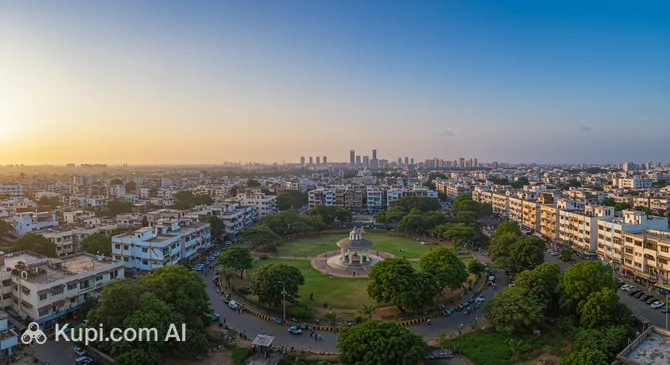
Bhayandar is a rapidly developing suburb located in the state of Maharashtra, within the vast and multifaceted India. Situated northwest of Mumbai, it is an essential part of the metropolitan area and home to over 800,000 residents. This place carries the typical flavor of an Indian megacity, where modern high-rise complexes stand alongside traditional neighborhoods, and the rhythm of life is set by the suburban train schedule.
The city is geographically divided into two parts—East and West—by the Vasai Creek. The West side is considered more urbanized and residential, while the East side has a pronounced industrial character. Despite its reputation as a "bedroom community" for those working in central Mumbai, Bhayandar possesses its own unique atmosphere and energy, offering travelers a glimpse into the authentic everyday life of the Indian middle class away from the beaten tourist tracks.
Bhayandar. Illustration.
Source: Kupi.com AI
For the curious tourist, an introduction to Bhayandar can begin with a stroll through its bustling markets or by exploring the history of the city's development, which grew from a quiet fishing village into a major industrial hub in just a few decades. Here, you can feel a real contrast: from the chaotic traffic on the main streets to the tranquility of local temples.
We invite you to visit Bhayandar to feel the pulse of modern Maharashtra. It is an excellent spot for those who want to combine affordable travel with the ability to quickly reach the region's main attractions, while enjoying the hospitality and authentic cuisine of the local neighborhoods.
Weather Overview
Bhayandar is characterized by a typical tropical monsoon climate, which dictates the rhythm of life for the entire region. There are three main seasons here: a hot summer, a wet rainy season, and a mild, dry winter. You can find current information on the weather in Bhayandar page.
The most comfortable time to visit the city is from November to February. During this time, pleasant dry weather sets in with average temperatures ranging from +20°C to +30°C. Summer begins in March and lasts until June, characterized by exhausting heat (up to +38°C) and high humidity, which can be a challenge for unaccustomed tourists. From June to September, powerful monsoons arrive, bringing heavy rainfall that often causes temporary flooding on the roads.
When planning your trip, expect warm or hot summers with occasional cloud cover and dry, sunny winters when rain is practically non-existent. Proximity to the Arabian Sea slightly moderates temperature fluctuations, but high humidity is felt year-round, so clothing made from light natural fabrics is the best choice for any season.
Average monthly temperature
Average monthly precipitation
Interesting Facts
Bridge over Vasai Creek: Bhayandar is connected to the neighboring Kashimira area by one of the longest bridges in the region, spanning approximately 1.5 kilometers.
Fishing Past: As recently as the early 1980s, the city was a small fishing village, but rapid urbanization transformed it into a densely populated metropolis in just a few decades.
Digital Divide: The city is clearly divided into East and West Bhayandar even at the postal code (PIN code) level, emphasizing its administrative and geographical structure.
Chemical Giant: The city is home to Gharda Chemicals, one of India's largest manufacturers of plant protection products, making Bhayandar an important point on the country's industrial map.
"Bedroom Community" Status: Bhayandar is considered one of Mumbai's fastest-growing suburbs; over the last 12 years, its population has increased by nearly 300,000 people.
How to Get There
Bhayandar is an important transport hub, closely linked to Mumbai and other cities in the state of Maharashtra. The main way to get here remains the railway, which provides quick access to the center of the metropolis even in heavy traffic. You can find detailed information about routes on the specialized pages of our guide.
For those arriving from afar, the nearest major air hub is Mumbai International Airport (IATA: BOM). It is located about 40–60 kilometers from Bhayandar, and travel time by taxi can range from 1.5 to 2.5 hours depending on road conditions. There is no direct air connection to the city itself, so travelers usually use ground transport after landing.
The Bhayandar railway station belongs to the Western Line of the Mumbai Suburban Railway. Trains run regularly, allowing you to reach Chhatrapati Shivaji Terminus in about an hour. This is the most economical and predictable way to get around, although the high volume of passengers during peak hours should be taken into account. The city is also connected to neighboring areas by a network of BEST bus routes and private carriers.
Station
Passenger traffic
Distance
Lokmanya Tilak Terminus
12
26 km
Bandra Terminus
8
26 km
Kalyan railway station
9
30 km
Mumbai Central railway station
12
37 km
Churchgate railway station
9
40 km
Main Attractions
Although Bhayandar is primarily known as a residential and industrial area, there are several interesting locations worth visiting. One of the main spiritual and architectural landmarks is the Sri Sri Radha Giridhari Temple, belonging to the ISKCON society. This place attracts not only believers but also lovers of beautiful temple architecture, offering an atmosphere of peace amidst the urban noise.
For those interested in the region's colonial heritage, Ghodbunder Fort is a must-visit. Situated on a hill overlooking the Vasai Creek, this historical site was once an important strategic point for the Portuguese and later came under the control of the Marathas and the British. Today, the ruins of the fort allow you to touch the past and enjoy panoramic views of the surroundings.
Another important religious monument in the city is St. Jerome Church. This temple is a testament to the long history of Christianity in the coastal areas of Maharashtra. The church building stands out for its classical architecture and serves as a hub for the local Catholic community, especially during major religious holidays.
While Bhayandar may not be a classic tourist center, its attractions allow for a better understanding of India's cultural diversity. A walk through the local markets or a visit to the small local temples scattered throughout the city will complete the overall picture of life in this lively Mumbai suburb.
Local Cuisine
The cuisine of Bhayandar is a vibrant kaleidoscope of flavors characteristic of coastal Maharashtra. Street food culture reigns here, and you simply must try the classic vada pav (an Indian-style potato burger) or pav bhaji. Thanks to its proximity to the Arabian Sea, local eateries are famous for fresh seafood: be sure to order a Marathi-style fish curry, which is known for its spiciness and the aroma of coconut milk.
The city's gastronomic scene is represented by both traditional Indian diners and modern cafes. If you fancy something exotic, visit Bang Tan Shefs Korean Restaurant and Multi-Cuisine Cafe, which offers original Southeast Asian dishes. For those who prefer the familiar taste of fast food, there is a Burger King in the city, offering a menu tailored to local preferences (for example, more vegetarian options).
Special attention should be paid to local drinks. On a hot day, nothing is more refreshing than a glass of cool lassi or sweet masala chai, which is sold on every corner. Alcohol in Bhayandar is available in specialized bars and restaurants, but the consumption culture here is moderate. Locals often eat at markets, such as the East Market, where you can find the freshest ingredients and authentic spices that make excellent gastronomic souvenirs.
Travel Tips
A trip to Bhayandar will give you a unique experience of getting to know the real India. To make your journey comfortable and safe, we have prepared some practical tips.
Clothing and Essentials: Choose light clothing made from natural fabrics (cotton, linen), as the humidity in the region is high. When visiting temples, such as ISKCON, be sure to cover your shoulders and knees. Don't forget comfortable shoes for walking through markets and a universal power adapter for Type D or C sockets.
Transport: The best way to get around is by suburban trains and auto-rickshaws. Download the Uber or Ola apps for calling taxis. Avoid traveling to central Mumbai on commuter trains during peak hours (7:00–10:00 AM and 5:00–8:00 PM) to avoid heavy crowds.
Finances: The official currency is the Indian Rupee (INR). Major shopping centers like Maxus Mall accept cards, but you will need cash for markets and rickshaws. ATMs are common, but it's always better to have a supply of small bills.
Health and Safety: Drink only bottled water and avoid ice in street drinks. Keep an eye on your belongings in crowded places. The western part of the city is considered quieter, while it's better not to walk alone in the eastern industrial zones late at night.
Communication: The main languages are Marathi and Hindi, but English is widely spoken in shops, hotels, and among young people. Learn a couple of phrases: "Namaste" (greeting) and "Shukriya" (thank you)—this always wins over the locals.
Local Etiquette: In India, it is customary to remove your shoes before entering a home or temple. Try to use your right hand for handing over money or food, as the left is considered unclean.
What to Avoid: Do not accept offers from dubious "guides" at stations and do not take photos of people without their permission, especially in residential or religious neighborhoods.
Additional Tip: If you plan to travel during the monsoon season (June–September), be sure to bring a sturdy umbrella or raincoat—rains can be very heavy and prolonged.
Following these simple rules will help you enjoy the flavor of Bhayandar and make your trip truly pleasant and memorable!
Entertainment & Nightlife
Nightlife in Bhayandar has a quiet, suburban character. You won't find massive world-renowned nightclubs here, as locals prefer to travel to Mumbai districts like Bandra or Juhu for loud parties. Nevertheless, there are several decent spots for evening relaxation within the city itself where you can spend time in pleasant company with music and a good dinner.
For those seeking high-quality service and a cozy setting, the Seven Eleven Club & Hotels is an excellent choice. This is one of the city's most prestigious establishments, offering both restaurant services and opportunities for relaxation at the bar. Fans of a lounge atmosphere should check out BarCode Lounge, a popular gathering spot for young people and office workers after a day's work. Atlake The Dining Bar is also popular, known for its combination of delicious cuisine and a wide selection of drinks.
Daytime entertainment in Bhayandar centers around shopping malls like Maxus Mall, which houses cinemas showing the latest Bollywood releases. The city also comes alive during major festivals such as Ganesha Chaturthi, when the streets transform into massive celebration venues with music and dancing. For nighttime walks, it is better to choose the well-lit central streets of the West side, and for traveling late at night, it is recommended to use taxis or ride-hailing apps.
Parks & Museums
Bhayandar is primarily an urbanized area, so there are not many classic museums or large park complexes. The main places for walking are small municipal gardens and squares, such as Kanak Garden, which serve as islands of greenery amidst the dense buildings. Locals use these spaces for morning jogs and relaxing with children.
One of the city's significant cultural points is the Chhatrapati Shivaji Maharaj Statue. This site holds great importance for the national pride of Maharashtra's residents, as Shivaji is the legendary ruler and founder of the Maratha Empire. The area around the monument often serves as a gathering place for city events and celebrations.
If you are looking for large-scale natural areas, it is worth heading outside the city. The nearest large natural site is Sanjay Gandhi National Park, located about 20 kilometers away. There, you can visit the ancient Kanheri Caves and enjoy the forest silence. In Bhayandar itself, the lack of large museums is compensated for by the living culture of local temples and markets, which are themselves a kind of "open-air museum" showcasing everyday Indian life.
Getting Around
The backbone of Bhayandar's transport system is the Mumbai Suburban Railway (Western Line). The Bhayandar and Bhayandar East stations are the city's key arteries, through which hundreds of thousands of people pass daily. Trains are the fastest way to get to any point in the metropolitan area. Tickets can be purchased at station ticket offices or via the UTS mobile app, which helps avoid queues.
Within the city itself, the most popular mode of transport is the auto-rickshaw. They are maneuverable and allow you to move quickly through narrow streets, but you should agree on the fare in advance or ensure the meter is turned on. Municipal BEST and MBMT buses also run along main routes, connecting residential neighborhoods with the railway stations.
The traffic situation in Bhayandar can be difficult: narrow roads and a high volume of vehicles often lead to traffic jams, especially during peak hours. Tourists are recommended to plan their trips for the middle of the day or use Uber and Ola services for greater comfort. It is worth noting that the Mumbai Metro is actively expanding, and the nearest stations of the new lines (for example, in the Kashimira area) are already beginning to ease the transport load on the region.
Accommodation
The housing stock in Bhayandar is mainly oriented toward local residents and business travelers, so budget hotels and guesthouses predominate. Tourists should pay attention to the western part of the city (Bhayandar West), as it is considered more developed and is closer to the main transport hubs. A popular choice among visitors is economy-class chain hotels like OYO, which offer basic amenities at affordable prices.
If you are looking for a higher level of comfort, you should consider the Seven Eleven Club & Hotels. This establishment offers quality service, a swimming pool, and modern rooms, making it one of the best accommodation options in the area. For those planning a long-term stay, there is a well-developed rental market for private apartments and furnished rooms in modern residential complexes.
It is recommended to book accommodation in advance, especially if your trip coincides with major Indian holidays when the demand for rooms increases. The cost of living varies from 1,000 to 4,000 rupees per night depending on the hotel level. When choosing a hotel, always check for air conditioning, as the region's climate can be very hot and humid.
Nearby Cities
Bhayandar serves as an excellent starting point for exploring the surroundings of North Mumbai and adjacent historical areas. Thanks to the developed railway connection, travelers can easily plan day trips to neighboring cities, each with its own unique character.
Just a few kilometers to the north is the city of Vasai, known for its majestic fort and beautiful beaches. It is an ideal place for those who want to escape the city bustle and enjoy the silence by the ocean. To the east lies the large administrative center of Thane, famous for its lakes and modern shopping complexes. And, of course, don't forget Mumbai itself—the center of this global metropolis can be reached by suburban train in an hour to see the Gateway of India and colonial architecture.
The region around the city offers a variety of leisure options: from pilgrimages to ancient temples to relaxing on the coast. We recommend not limiting yourself only to Bhayandar and taking the time to explore neighboring locations to fully experience the flavor of the state of Maharashtra.
Shopping & Souvenirs
Shopping in Bhayandar is primarily an immersion into the atmosphere of traditional Indian bazaars. The city's main shopping points are the Bhayandar Flower Market and the lively East Market. Here you can find everything from the freshest seafood and exotic spices to inexpensive clothing, shoes, and household items. These are the best places for those who want to buy high-quality Indian fabrics or jewelry at very attractive prices.
For fans of a more modern shopping format, the city has Maxus Mall. This is a full-scale shopping and entertainment center featuring well-known clothing, electronics, and perfume brands, as well as a food court and a cinema. Additionally, for design consultations or specialized services, you can contact Archwal Consultants if your interest goes beyond ordinary souvenirs.
As gifts from Bhayandar, it's worth bringing back traditional sweets, spice sets, or locally produced textiles. Most shops are open from 10:00 AM to 9:00 PM, while markets open much earlier. It's worth remembering that bargaining is common in street stalls and bazaars, and payment is most often made in cash, although major shopping centers accept bank cards without issues.