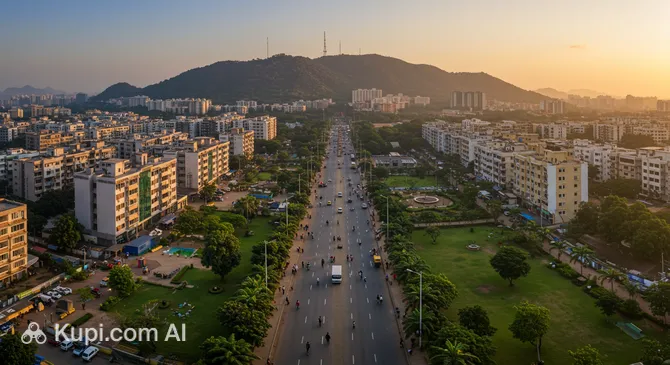
Kalamboli is a rapidly developing satellite city located in the state of Maharashtra, India. Founded as part of a large-scale urban development project by the City and Industrial Development Corporation (CIDCO) in the 1970s, it was created as a modern residential and industrial hub to decongest overcrowded Mumbai. Today, it is an important economic center where functional modernist architecture blends harmoniously with the energetic pace of a modern metropolis.
Kalamboli. Illustration.
Source: Kupi.com AI
Geographically, the city occupies a strategically advantageous position on the way to Pune, and its population exceeds 1.2 million people. Kalamboli is clearly divided into functional sectors: here you will find modern residential complexes, developed social infrastructure, and massive commercial zones. Walking through its streets, you can feel a unique multinational atmosphere created by migrants from all corners of the country who have come here in search of new opportunities.
One of the city's most notable features is its historical heritage as a major trading hub — it is home to the famous Kalamboli Steel Market, one of the largest iron and steel markets in India. Despite its industrial character, the city attracts tourists with its proximity to the region's natural beauty and the opportunity to see the India of the future, built on principles of clear planning. A visit to Kalamboli is an excellent choice for those who want to explore the country's modern economic life and find a convenient base before exploring the surroundings of Navi Mumbai.
Weather Overview
Kalamboli is characterized by a typical tropical monsoon climate, common to the western coast of India. The weather remains warm throughout the year; however, there are three distinct seasons: a hot summer, a humid monsoon period, and a mild, dry winter. The average annual temperature ranges between 24–30°C, creating eternal summer conditions. More detailed information can be found by studying the climate of the city of Kalamboli.
The summer months (March to May) can be quite sweltering, with the thermometer rising to 35–37°C amid high humidity. From June to September, the city is in the grip of the monsoons: heavy rainfall occurs during this time (peaking in July at over 600 mm), and the surroundings are covered in lush greenery. Winter, lasting from November to February, is considered the most comfortable time to visit: the temperature stays at a pleasant level of around 24–26°C, and there is almost no rain.
Average monthly temperature
Average monthly precipitation
Interesting Facts
Satellite City: Kalamboli was designed from scratch by CIDCO in the 1970s as part of an ambitious plan to create Navi Mumbai — the world's largest planned technopolis.
The Region's Steel Heart: The city is home to the Kalamboli Steel Market — a colossal logistics and trading center considered one of the largest iron and steel markets in all of India.
Transport Crossroads: The city occupies a unique position at the intersection of the country's most important transport arteries: the Mumbai-Pune Expressway, the Sion-Panvel Highway, and National Highway 48.
Modernist Planning: The entire city is divided into clear sectors, making its structure logical and functional, unlike the chaotic layout of many historical Indian cities.
Multicultural Melting Pot: Thanks to its industrial status, Kalamboli has become home to people from various Indian states, which is reflected in the diversity of local cuisine and cultural traditions.
How to Get There
Kalamboli features excellent transport accessibility, as the city was originally designed as a crucial logistics hub on the route from Mumbai to Pune. Travelers have several convenient ways to reach this area, whether by air, rail, or modern highways. For detailed route planning, we recommend checking the section on how to get to Kalamboli.
The nearest major air hub is Chhatrapati Shivaji Maharaj International Airport (BOM) in Mumbai, located approximately 40–50 kilometers away. The journey from the airport by taxi or bus takes about 1–1.5 hours depending on traffic. The airport receives flights from almost all major cities in the world and India, serving as the main air gateway to the region.
Rail connections are also well-developed. While the station in Kalamboli itself primarily handles freight (related to the steel market), passengers find it more convenient to use the station in neighboring Panvel or the hub stations of Navi Mumbai. These stations connect the area with central Mumbai and other regions of India via suburban and long-distance train lines.
Station
Passenger traffic
Distance
Kalyan railway station
9
22 km
Lokmanya Tilak Terminus
12
23 km
Bandra Terminus
8
28 km
Mumbai Central railway station
12
31 km
Churchgate railway station
9
31 km
For those who prefer road transport, Kalamboli is an ideal point: the Mumbai-Pune Expressway and the Sion-Panvel Highway both pass through it. Comfortable buses and taxis regularly run from central Mumbai, making the trip quick and convenient.
Main Attractions
Since Kalamboli was designed as a modern industrial and residential hub, there are few classic ancient monuments here; however, the city and its surroundings offer a unique experience for travelers. The main "attraction" of an industrial nature is the Kalamboli Steel Market. This is one of the largest metal markets in India, the scale of which impresses even seasoned tourists interested in the region's industrial power.
For those seeking spiritual peace, modern temples like the Shri Vishnu Temple are located within the city and its immediate vicinity. These places serve as focal points for the local community and allow guests to get acquainted with the religious traditions of Maharashtra in a calm, unhurried atmosphere. The architecture of local shrines reflects modern trends while maintaining traditional canons.
Nature lovers should pay attention to the city's surroundings. Nearby is the scenic Powai Lake — a popular spot for walks and outdoor picnics. Additionally, Kalamboli offers convenient access to historical hill forts in the region, making the city a great base for trekking and history enthusiasts. This combination of industrial scale and proximity to natural locations makes exploring the Navi Mumbai area truly diverse.
Local Cuisine
The gastronomic face of Kalamboli is a vibrant reflection of Maharashtra's traditions, seasoned with flavors from across India. Thanks to its multicultural population, the local cuisine here is incredibly diverse. The main emphasis is on hearty, spicy, and affordable dishes that can be found in small family restaurants as well as street food stalls.
Be sure to try the legendary Vada Pav (an Indian burger with a potato patty) and Misal Pav — a spicy sprout curry served with soft bread. These dishes are the region's signature. Pav Bhaji — a thick vegetable mash with butter and spices — is also very popular. Proximity to the coast ensures the availability of fresh seafood prepared with coconut and local marinades, characteristic of Konkan cuisine.
The dining culture in the city is democratic: locals love spending time in cafes over a cup of aromatic Masala Chai or fresh juice. Vegetarian dishes predominate on most menus, but finding high-quality meat or "Malvani" style fish is also easy. The general character of Kalamboli's food scene is simplicity, authenticity, and an abundance of spices that every gourmet will remember.
Travel Tips
Kalamboli is a functional and energetic city whose visit requires minimal preparation for a comfortable stay. Here are some practical tips to help you navigate on the ground:
Clothing and Seasonality: The optimal time to visit is from October to March. Bring light clothing made of natural fabrics, as a tropical climate prevails here. During the monsoon season (June–September), a raincoat and sturdy shoes are essential.
Transport: To travel around the city, it is most convenient to use auto-rickshaws or order taxis through Uber/Ola. For longer trips to Mumbai, it is better to choose suburban trains to avoid hours of traffic jams.
Finance: The official currency is the Indian Rupee (INR). Large stores and hotels accept cards, but always keep small denominations of cash for rickshaws, markets, and street food.
Health and Safety: Always drink only bottled water. There are many pharmacies in the city, but it is better to have a basic first-aid kit with you. Kalamboli is a fairly safe area, but standard precautions in crowded places are always advisable.
Communication: The main languages are Marathi and Hindi, but English is widely spoken in the service sector and among the youth. You can buy a local SIM card at mobile shops by presenting your passport.
Local Etiquette: It is customary to remove your shoes when entering temples or private homes. Show respect for local traditions and always ask for permission before taking photos of people.
What to Avoid: You should not plan long walks during the peak heat (from 12:00 to 16:00), and it is not recommended to try street food in questionable places if your stomach is not used to local spices.
Shopping: Be sure to visit local markets for fresh fruit and spices, but don't forget to politely haggle — it's part of the local culture.
Following these simple rules will allow you to fully enjoy the dynamics of this modern Indian hub and make your trip pleasant and predictable.
Entertainment & Nightlife
The entertainment scene in Kalamboli is primarily geared towards local residents and family leisure. Here you will find cozy cafes and restaurants offering traditional Maharashtrian cuisine. Evening life in the district itself is quiet: residents prefer gathering in modern cinemas or spending time in the park areas of residential sectors. This place is ideal for those who want to take a break from the hustle and bustle of the big city in a safe and predictable environment.
If you are looking for loud nightclubs or bars with live music, you should head to neighboring areas of Navi Mumbai or the central part of Mumbai, where the region's main nightlife is concentrated. Nevertheless, Kalamboli regularly hosts colorful festivals, such as Ganesh Chaturthi, when the streets transform, filled with music and traditional dances, involving all guests of the city in the celebration.
For daytime leisure, tourists often choose to stroll through local markets or take trips to nearby natural sites like Powai Lake. Safety in the area is at a high level, allowing for evening walks without unnecessary concern. For travel at night, it is best to use official taxi apps, which operate around the clock.
Parks & Museums
Green zones in Kalamboli were established during the city planning stage by CIDCO to provide residents with a comfortable environment. In various sectors of the city, you can find well-maintained squares and small parks that serve as a retreat from urban noise. The walking areas around Powai Lake are particularly popular, where one can enjoy views of the water and fresh air, which is a rarity for industrially developed areas.
As for museums, there are practically none directly in Kalamboli, as the city is focused on modern infrastructure. However, culture enthusiasts can easily reach the cultural centers of neighboring Navi Mumbai or Mumbai itself, where major galleries and historical exhibitions are concentrated. For tourists, Kalamboli itself is more interesting as an example of modern urban planning, where the functional architecture of the sectors serves as an open-air "museum."
The city's development continues, and new recreational spaces are regularly included in construction plans. Today's Kalamboli offers tourists a chance to see how modern public spaces are created in India, where functionality is combined with the need to preserve green islands amidst the concrete jungle.
Getting Around
The public transport system in Kalamboli efficiently connects the city with other parts of Navi Mumbai and Mumbai itself. The backbone of travel consists of municipal NMMT and BEST buses that run on regular routes. For tourists, this is a budget-friendly way to reach key points in the region, though it should be noted that buses can be very crowded during peak hours.
The most popular and convenient means of transport for short distances are auto-rickshaws. They are available everywhere, and riding in them allows for quick maneuvering through city traffic. Taxi services like Uber and Ola also work excellently in Kalamboli, providing the most comfortable option for travelers with luggage. The payment system in taxis is transparent and handled via apps, while on buses, tickets are purchased from the conductor in cash.
Since the city is designed with wide highways, it is convenient to move around by rented car or use car-sharing services. Nearby railway stations provide connections to suburban trains, which are the main transport artery of the entire metropolis. Tourists are recommended to use official apps for route planning to avoid traffic jams on busy highways.
Accommodation
Accommodation in Kalamboli is mainly represented by mid-range hotels and budget options, which are popular with business travelers and transit tourists. Since the city is located at the intersection of key highways, many hotels are concentrated along the main roads, providing easy access to transport and neighboring areas of Navi Mumbai.
Among the popular options, 3-star category hotels like Collection O Guru Heritage stand out. Such establishments usually offer a standard set of services: clean air-conditioned rooms, free Wi-Fi, parking, and an on-site restaurant or food delivery service. Also, apartments and studios suitable for long-term stays, such as OYO Home systems, are widely represented in the area, providing home-like comfort and private kitchens.
If you plan to visit Kalamboli during major holidays or business exhibitions, it is recommended to book accommodation in advance through international services. Prices here are usually lower than in central Mumbai, making the city an attractive option for budget-conscious travelers. For the most comfortable stay, it is better to choose hotels located in residential sectors, away from noisy industrial zones.
Nearby Cities
Kalamboli serves as an excellent starting point for exploring the surroundings of Maharashtra, thanks to its location at the intersection of key roads. Just a few kilometers away are interesting cities and natural attractions that are perfect for day trips and allow you to see India from different perspectives.
Very close by is Panvel — an important transport hub and the oldest settlement in the region, known for its temples and proximity to nature reserves. If you are looking for more large-scale experiences, head to Thane, the city of lakes, or historic Kalyan, where you can feel the rhythm of the modern Indian province. Each of these destinations is easily accessible by both train and car.
Don't forget the proximity to Mumbai, which can be reached in less than an hour. The surroundings of Kalamboli offer an amazing variety: from industrial landscapes to quiet green zones, making every mini-trip rich and memorable. We recommend not limiting yourself to the city itself and exploring this hospitable region.
Shopping & Souvenirs
Shopping in Kalamboli is primarily about practicality and local flavor. The city's main trading point is undoubtedly the Kalamboli Steel Market. While this place is geared towards wholesale metal trade and is unlikely to be suitable for buying souvenirs, its scale and bustling activity present a unique sight for those interested in India's industrial life.
For daily shopping and finding local goods, tourists should head to the city's central sectors. Here, numerous shops for clothing, electronics, and household goods are located. For authentic souvenirs such as Indian spices, textiles, or traditional Maharashtrian jewelry, it is better to visit the local markets that operate in every residential block. For larger shopping malls with global brands and entertainment zones, residents usually travel to neighboring areas of Navi Mumbai.
Most shops in Kalamboli are open from morning until late evening, and in small stalls, it is customary to pay in cash rupees, although modern retail outlets increasingly accept cards and app-based payments. If you want to bring home something special, look for products from local artisans and traditional sweets sold in the city's confectionery shops.