Support

Tamiang Layang

About

Welcome to Tamiang Layang, the charming capital of the East Barito Regency. Serving as a vital gateway that connects the interior of the province with South Kalimantan, this town offers a unique blend of cultural diversity and warm hospitality. It is a place where the bustling energy of a transit hub meets the laid-back atmosphere of a traditional community, making it an intriguing stop for travelers exploring the authentic side of Borneo.

Geographically situated in Indonesia, the city lies on the flat eastern plains of Central Kalimantan. The town is enveloped by a tropical rainforest climate, ensuring lush green surroundings year-round. With a modest population of approximately 10,780 residents, Tamiang Layang maintains a cozy, small-town feel where local traditions are woven into daily life.

The region is deeply rooted in the ancient heritage of the Dayak Ma'anyan people. Visitors interested in the past can explore the history of Tamiang Layang, which is often linked to the legendary Nansarunai Kingdom. This rich cultural background is evident in the local customs, motifs, and the harmonious way of life shared by the diverse ethnic groups residing here.
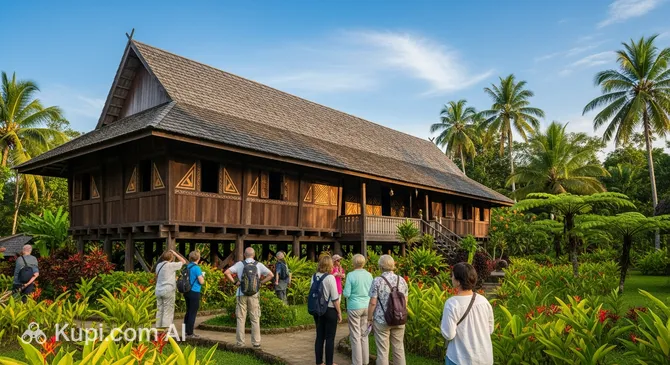
Tamiang Layang. Source: Kupi.Binoculars

Travelers to Tamiang Layang should not miss the Museum Lewu Hante, located nearby in the Pasar Panas area. This impressive structure is built in the style of a traditional Rumah Betang (Dayak longhouse) and serves as a cultural center showcasing local artifacts and architecture. Another notable landmark is the Tugu Gunung Perak, a monument that stands as an icon of the city. For nature lovers, the Luaw Banse area in the neighboring village of Jaweten offers a serene escape with its beautiful swamp forest scenery and fishing spots.

Whether you are passing through or planning a deeper exploration of East Barito, Tamiang Layang invites you to experience its friendly spirit and unique cultural tapestry. It is a destination that promises a genuine connection with the heart of Kalimantan.

Weather Overview

The climate in Tamiang Layang is characteristically tropical, offering consistent warmth regardless of when you choose to visit. Average temperatures remain stable throughout the year, generally hovering around 27°C. Daytime highs typically range between 30°C and 32°C, peaking slightly in September, while nights stay pleasant with minimum temperatures usually settling between 23°C and 24°C.

Rainfall is a frequent occurrence in the region, with a high number of wet days recorded year-round. The period from November through March is particularly active, often featuring precipitation on 26 to 29 days per month. The middle of the year offers a slight respite, with August and September seeing fewer rainy days, though visitors should still be prepared for showers. For a detailed forecast to help schedule your trip, you can consult the guide to weather in Tamiang Layang.

Expect warm, humid conditions year-round with frequent rainfall, particularly during the wet season from late autumn to early spring, while the months of August and September offer slightly more dry days.

Interesting Facts

Beyond the main attractions, Tamiang Layang holds many fascinating secrets and deep cultural roots that define its identity. Here are some intriguing facts about this Central Kalimantan town that often go unnoticed by the casual traveler.

  • Bamboo Origins: The name "Tamiang" is widely believed to be derived from a specific species of bamboo (Schizostachyum blumei) known locally as "Buluh Tamiang." This plant was once abundant in the area, and the name serves as a linguistic reminder of the region's original, lush landscape before modern settlement expanded.

  • Echoes of a Lost Kingdom: While many know of the Nansarunai Kingdom, few realize that its tragic history is preserved primarily through song. The fall of this ancient Ma'anyan civilization is immortalized in traditional "Wadian" chants known as "Nansarunai Usak Jawa," a sorrowful oral record of the kingdom's destruction that has been passed down for generations.

  • A Pungent Delicacy: The town is a hub for a polarizing yet beloved local dish called Wadi. This traditional fermented fish, preserved with salt and roasted rice powder, carries a very strong aroma and distinct sour-salty taste, making it a true culinary adventure for visitors brave enough to try it.

  • The Ijambe Ritual: Tamiang Layang is one of the few places where you might witness the elaborate Ijambe ceremony. This is a massive secondary funeral rite performed by the Ma'anyan Dayak community, involving the cremation of ancestral bones to guide spirits to the afterlife, often accompanied by days of traditional music and gathering.

How to Get There

Reaching this part of Central Kalimantan usually involves an overland journey from one of the major transport hubs in the region. While the town itself is tucked away in the interior, the road network connects it to neighboring provincial capitals. For a detailed guide on routes and transportation options, you can read more about how to get to Tamiang Layang.

The city of Tamiang Layang does not have its own airport, so most travelers fly into neighboring cities and continue by road. The closest facility is Tjilik Riwut Airport (PKY) in Palangkaraya, located approximately 135 km away. The drive from there typically takes around 3 hours and 45 minutes by taxi or rented car. Alternatively, many visitors choose to arrive via Syamsudin Noor International Airport (BDJ) in Banjarmasin. Although it is situated in the neighboring province of South Kalimantan, about 153 km away, it is a major hub with significantly higher flight frequency. The travel time from Banjarmasin is roughly 4 hours.

For clarity, here is a summary of the main airports serving the region:

Airport Name City Passenger Traffic Distance (km)
Tjilik Riwut Airport Palangkaraya 695k 135.2
Syamsudin Noor International Airport Banjarmasin 3.3M 153.5
Sultan Aji Muhamad Sulaiman Airport Balikpapan 5.1M 214.9
H. Asan Airport Sampit 68k 246.1

There are no railway stations serving Tamiang Layang or the immediate surrounding region, as passenger train infrastructure is not widely developed in Kalimantan. Visitors relying on public transport usually take long-distance buses or travel shuttles (known locally as "travel") from Palangkaraya or Banjarmasin to reach the town.

Main Attractions

While Tamiang Layang is often viewed primarily as a transit hub, the city and its surrounding East Barito region hold several captivating sites for those willing to explore. From cultural landmarks to natural wonders, the area offers a glimpse into the authentic heritage and landscape of Indonesia's Central Kalimantan province.

For a deeper dive into local culture beyond the general architecture, a visit to Museum Lewu Hante in the Pasar Panas area offers a look at specific historical treasures. Inside this cultural center, visitors can find unique artifacts such as the Upu and Wawei statues. These figures are significant to the Ma'anyan community, providing a tangible connection to the spiritual beliefs and social hierarchy of their ancestors, making the museum a valuable stop for history enthusiasts.

For nature enthusiasts and those interested in local legends, Liang Saragi in the nearby village of Ampari is a must-visit. This unique cave system features a river flowing through its interior, inviting visitors to explore its cool, dark chambers. Beyond its geological beauty, the cave is steeped in folklore, believed by locals to be the site of a tragic ancient love story. The combination of adventure and mystical atmosphere makes it a fascinating spot for travelers looking for something off the beaten path.

A popular recreational spot for locals and visitors alike is Bendungan Tampa (Tampa Dam). Situated approximately 11 kilometers from the town, this dam functions as a crucial irrigation source but has evolved into a scenic leisure destination. Surrounded by expansive green rice fields, it offers a peaceful setting for picnics and sunset viewing. The calm waters and fresh breeze provide a refreshing escape from the tropical heat, making it a favorite location for afternoon relaxation.

Additionally, the region is home to the rare and exotic Black Orchid (Coelogyne pandurata). Visitors can head to the Taman Anggrek Hitam (Black Orchid Park) in Siong village to see this magnificent flower in its natural habitat. Famous for its distinctive black-tongued petals and sweet fragrance, this species is one of Borneo's most treasured floral wonders. The conservation area offers a unique opportunity for botany lovers to witness this striking orchid growing in the wild.

Local Cuisine

The culinary landscape of Tamiang Layang is deeply influenced by the traditions of the Dayak Ma'anyan people, offering a distinct flavor profile that relies heavily on freshwater fish and aromatic herbs gathered from the surrounding rainforests. The food here is characterized by its bold use of spices, fermentation, and fresh ingredients, creating savory and often tangy dishes that pair perfectly with steaming hot rice.

One of the most iconic dishes you must try is Kandas Sarai. Unique to the East Barito region, this is a type of dry sambal made from grilled fish—typically catfish or snakehead—that is pounded together with generous amounts of fresh lemongrass, chilies, and shallots. The result is a fragrant, spicy, and savory mixture that serves as an appetizing side dish. Another local favorite is Juhu Singkah, a traditional soup made from young rattan shoots. While it has a slightly bitter undertone, the shoots are cooked with spices and often fish head to create a creamy, savory curry that is beloved by locals.

As mentioned in local lore, the region is famous for Wadi, a fermented fish delicacy. In Tamiang Layang, you will often find it fried with onions and chilies to temper its strong aroma, transforming it into a rich, salty condiment that stimulates the appetite. For those seeking vegetables, look for dishes featuring Kalakai (kelakai), a type of edible fern that grows abundantly in the peatlands. It is often sautéed with garlic or cooked in a light broth, offering a texture similar to spinach but with a unique earthy taste.

When it comes to beverages, the daily choice for most residents is sweet iced tea or locally brewed coffee, which provides a refreshing break from the tropical heat. In more traditional settings or during cultural ceremonies, you might encounter Tuak or Baram, traditional rice wines that play a significant role in Dayak hospitality and rituals. These alcoholic drinks are homemade and vary in sweetness and potency, representing a warm welcome to guests.

The dining scene in Tamiang Layang is unpretentious and community-focused. You won't find high-end fine dining establishments; instead, the best food is found in small, family-run eateries known as warungs. These open-air spots line the main roads and offer an authentic taste of home-cooked meals. In the evenings, local markets often come alive with vendors selling grilled snacks and sweets, providing a perfect opportunity for tourists to mingle with friendly residents and sample the town's authentic flavors.

Travel Tips

To ensure your journey to Tamiang Layang is as smooth as it is memorable, a little preparation goes a long way. These practical tips are designed to help you navigate the local customs, tropical climate, and logistics of this welcoming town in Central Kalimantan with ease.

  1. Pack for the Tropics and Rain: Given the region's warm and humid climate, bring lightweight, breathable clothing made of natural fabrics like cotton or linen. Since rain is frequent throughout the year, a sturdy umbrella or a high-quality raincoat is an essential item in your luggage. Additionally, while the vibe is relaxed, it is best to dress modestly—covering shoulders and knees—to respect local cultural norms.

  2. Navigating the Town: Public transportation options like metros or city buses do not exist here. The most common way to get around for short distances is by Ojek (motorcycle taxi). While ride-hailing apps might be available in larger provincial capitals, coverage can be spotty or non-existent in smaller towns like Tamiang Layang, so it is reliable to arrange transport through your accommodation or negotiate with local drivers.

  3. Cash is King: The local currency is the Indonesian Rupiah (IDR). While there are ATMs in the town center (typically Bank BRI, BNI, or Mandiri), many small eateries (warungs) and local markets do not accept credit cards. It is highly recommended to withdraw sufficient cash in larger cities like Palangkaraya or Banjarmasin before arriving, or use the local ATMs to stock up on smaller denominations.

  4. Stay Healthy and Hydrated: Never drink tap water; always stick to sealed bottled water or boiled water. As Tamiang Layang is surrounded by nature and rainforests, mosquitoes are common. Bring a strong insect repellent and consider wearing long sleeves in the evenings to protect against bites. Pharmacies, known as Apotek, are available in town for basic supplies, but carry any specific prescription medications you need.

  5. Overcoming Language Barriers: The primary language is Bahasa Indonesia, and the local dialect is Ma'anyan; English is not widely spoken outside of specific business circles. Downloading an offline translation app or carrying a phrasebook is incredibly useful. For mobile connectivity, Telkomsel usually offers the most reliable signal coverage in this part of Kalimantan, so purchasing a SIM card from a major provider is a smart move.

  6. Respect Local Etiquette: The people of East Barito are known for their friendliness. When greeting locals, a smile and a nod go a long way. If you shake hands, it is polite to touch your chest afterwards as a sign of sincerity. Always use your right hand for eating, giving, or receiving items, as the left hand is traditionally considered unclean.

  7. What to Avoid: Avoid entering homes or places of worship with your shoes on; always look for a pile of footwear at the door as a cue to remove yours. Also, refrain from pointing at people or objects with your index finger, which can be seen as rude—using your thumb with the other fingers folded is the polite alternative.

  8. Culinary Adventure Tip: If you decide to try the local fermented fish dish, Wadi, be prepared for a very strong, pungent aroma. It is a delicacy here, but the smell can be overpowering for first-timers. Ask for it to be fried dry (goreng kering) with plenty of spices for the most palatable introduction to this unique flavor.

By keeping these tips in mind, you will be well-equipped to embrace the authentic charm of Tamiang Layang. Enjoy the warm hospitality of the locals and the unique rhythm of life in this fascinating corner of Indonesia!

Entertainment & Nightlife

Nightlife in Tamiang Layang is defined by a relaxed, community-focused atmosphere rather than the high-energy clubbing scene found in larger metropolitan areas. As the sun sets, the town shifts into a slower gear, where entertainment revolves around socializing at local coffee shops, enjoying live acoustic music, and exploring the vibrant street food culture. The primary hub for evening activities is along the main thoroughfare, Jalan Ahmad Yani, where you will find a concentration of cafes and eateries that stay open late, serving as the social heart of the town.

For those looking to experience the local hangout culture, ZL Cafe & Resto is a popular choice among residents. Known for its comfortable setting and extensive menu, it is a great spot to enjoy a late-night coffee or a heavy meal while soaking in the bustling ambiance. Another excellent venue is Cafe Mangunraun, which offers a cozy environment perfect for unwinding after a day of travel. If you prefer a place with a bit more natural charm, Nuansa Cafe on Jalan Teluk Dalam provides a laid-back "nature" vibe, making it a favorite for groups of friends looking to chat the night away.

Karaoke is a beloved pastime in this region, and you may find several family-friendly karaoke venues scattered around the town. These spots offer private rooms where you can sing your heart out in a comfortable, air-conditioned setting. Additionally, the area around Taman Kota Tamiang Layang (the city park) often comes alive in the evenings. Here, you can experience the local "angkringan" culture—traditional street food stalls where people sit on mats or small benches to enjoy affordable snacks like grilled skewers and cat rice (nasi kucing) under the stars.

When planning your evening out, keep in mind that the nightlife here winds down relatively early compared to big cities, with most places closing by 11:00 PM or midnight. The dress code is universally casual; t-shirts and jeans are perfectly acceptable everywhere. For transportation, ride-hailing apps may be unreliable late at night, so it is best to arrange a local ojek (motorcycle taxi) or have your own vehicle. Safety is generally not a major concern in the town center, but it is always wise to stay in well-lit areas and carry enough cash (IDR), as many smaller venues do not accept cards.

While the nights are quiet, daytime entertainment in Tamiang Layang offers its own charm. Families and thrill-seekers can visit Waterboom Atlantis, a local water park that provides a refreshing escape from the tropical heat. For a dose of culture, the Museum Lewu Hante stands as a testament to the region's rich heritage, offering a fascinating look at Dayak architecture and history before you head out for your evening adventures.

Parks & Museums

Exploring Tamiang Layang offers a peaceful journey into the heart of Central Kalimantan, where modest green spaces provide respite from the tropical heat and cultural landmarks preserve the rich heritage of the Dayak Ma'anyan people. While the town does not boast the sprawling botanical gardens or massive museum complexes of a metropolis, it presents authentic sites that allow visitors to connect deeply with the local nature and history.

For those seeking a breath of fresh air within the town limits, Taman Kota Tamiang Layang (City Park) is the primary green lung and social hub. Located centrally, this park is a favorite gathering spot for residents, particularly in the late afternoon. It features paved pathways suitable for jogging or a leisurely stroll, surrounded by shade trees that offer relief from the sun. It is an excellent place for tourists to observe local life, as families often gather here to relax, and the atmosphere becomes quite lively in the evenings with small food stalls popping up nearby.

A more unique natural attraction lies just outside the main town in Siong village: the Taman Anggrek Hitam (Black Orchid Park). This conservation area is dedicated to protecting the majestic Black Orchid (Coelogyne pandurata), the flora mascot of the province. Unlike a manicured garden, this park offers a more rugged, forest-like environment where these rare flowers grow in their natural habitat. For botany enthusiasts, walking through this area provides a thrilling opportunity to spot the exotic bloom, celebrated for its striking black lip and pale green petals, amidst the dense tropical vegetation.

When it comes to history and culture, the Museum Lewu Hante stands as the region's most significant repository of heritage. Situated in the Pasar Panas area, the building itself is a magnificent exhibit, constructed in the architectural style of a traditional Dayak "Rumah Betang" or longhouse. Historically, these structures housed entire communities, and today, the museum preserves that spirit by displaying a collection of ancestral weapons, gongs, traditional weaving, and ceremonial items. It offers a profound insight into the lives of the Ma'anyan people and the ancient Nansarunai Kingdom, making it an essential stop for cultural travelers.

While not a museum in the traditional sense, the Tugu Gunung Perak is another key cultural landmark that commands attention. This monument is rich in symbolism, representing the spiritual and social values of the local community. Often used as a backdrop for official ceremonies and events, the site features motifs that reflect the "Kaharingan" belief system and the cosmology of the Dayak tribes. Visiting this site provides a visual understanding of the artistic and spiritual pillars that support the local identity.

For an authentic experience, try to visit the cultural sites during a local festival or event. The grounds around Museum Lewu Hante often come alive with traditional music and dance rehearsals, offering a glimpse into the living culture of East Barito that you won't find in static displays.

Getting Around

Navigating Tamiang Layang differs significantly from moving around a major metropolitan area. Travelers should be aware that there is no formal public transport infrastructure such as a metro, tram, trolleybus, or scheduled city bus service within the town limits. Instead, the local transportation network is informal and decentralized, relying heavily on small-scale service providers to connect the town center with residential areas and surrounding villages.

The most ubiquitous and practical form of transport for short distances is the Ojek (motorcycle taxi). These drivers typically congregate at specific street corners, known locally as "pangkalan," particularly near the main market (Pasar Tamiang Layang), government offices, and busy intersections. Unlike the uniformed drivers seen in larger provincial capitals, these local operators usually work independently. They offer the fastest way to weave through local streets and are often the only option for reaching specific destinations without a private vehicle.

Regarding payment, the system is exclusively cash-based. There are no travel cards, electronic passes, NFC readers, or ticketing apps available for local transit. Transactions are conducted in the local currency. For tourists, the golden rule is to negotiate and agree on a fare before the journey begins. Prices are generally affordable, but without a fixed meter, clarifying the cost upfront is essential to avoid misunderstandings. It is highly recommended to carry small denominations of notes, as drivers rarely have change for large bills.

For travel between the town center and neighboring districts or outlying settlements, you may encounter shared minibuses or vans, often referred to locally as "Taksi" or "Angkot." These vehicles do not follow a strict minute-by-minute timetable. Instead, they typically park at the main terminal or market area and wait until they have a sufficient number of passengers before departing. Operating hours for these services are generally limited to daylight hours, roughly from 6:00 AM to 5:00 PM, with transport becoming very scarce or non-existent after sunset.

Given the compact nature of the town, walking is a viable alternative for exploring the immediate commercial center, where shops and eateries are clustered together. However, sidewalks can be uneven or non-existent in some parts. For visiting attractions on the outskirts, such as the Tampa Dam or orchid conservation areas, renting a car with a driver is the most practical and comfortable solution. While ride-hailing apps are ubiquitous in other parts of the world, their coverage here is often spotty or unavailable, so visitors should not rely on them as a primary means of getting around.

Accommodation

Accommodation in Tamiang Layang primarily caters to travelers passing through the East Barito region or visiting for business and local affairs. As a relatively small town, it does not feature international luxury hotel chains or sprawling five-star resorts. Instead, the hospitality scene is dominated by modest, locally-run establishments such as small hotels, guest houses (known locally as wisma or penginapan), and simple homestays. These options provide functional and comfortable amenities suitable for short stays.

The most convenient area to base yourself is within the town center, particularly along or near the main thoroughfare, Jalan Ahmad Yani. Staying in this area places you within walking distance of local warungs (eateries), convenience stores, and the central market. Being in the heart of the town also ensures easier access to transportation options like ojeks (motorcycle taxis), which are essential for getting around since public transport is limited.

When planning your stay, it is helpful to know that booking methods here can be quite traditional. While some properties may be listed on Indonesian travel apps like Traveloka or Tiket.com, many smaller guest houses do not have a significant online presence. It is often common practice to book directly by phone or simply walk in to secure a room, especially on weekdays. However, during major local events or holidays, availability can tighten, so trying to reserve in advance is still recommended if possible.

In terms of pricing, accommodation in Tamiang Layang is generally very affordable, falling squarely into the budget to lower-mid-range categories. Most rooms are reasonably priced, offering basic facilities such as air conditioning and private bathrooms. Visitors should be prepared to pay in cash (Indonesian Rupiah), as credit card facilities are rarely available at the front desks of smaller lodgings. Keeping a sufficient amount of cash on hand for your room deposit and payment is a practical necessity in this part of Central Kalimantan.

Nearby Cities

For those looking to explore the surroundings, Tamiang Layang serves as an excellent base for day trips to several interesting nearby locations:

City Population Distance (km)
Banjarmasin 692,793 147
Balikpapan 598,043 212
Palangkaraya 249,434 138
Banjarbaru 216,600 151
Martapura 198,239 148

Situated roughly 138 kilometers away, Palangkaraya is the capital of Central Kalimantan and offers a mix of urban convenience and natural beauty. Visitors can admire the iconic Kahayan Bridge or take a relaxing boat tour along the Kahayan River to observe traditional life along the banks. As the administrative center of the province, it provides a wider range of dining and shopping options compared to the smaller towns in the region.

Crossing the provincial border into South Kalimantan, Banjarmasin is a vibrant destination famous for its unique river-based culture. Known as the "City of a Thousand Rivers," it is renowned for its traditional floating markets, particularly the one at Lok Baintan, where traders sell fresh produce from boats at dawn. It is a bustling city perfect for experiencing the energetic trade and rich culinary heritage of Borneo.

Just a short distance from Banjarmasin lies Martapura, widely recognized as the center of the diamond and gemstone industry in Kalimantan. Travelers can visit the Cahaya Bumi Selamat market to browse sparkling jewelry and polished stones, often sourced from local mines. The city is also a significant religious hub, home to the majestic Al-Karomah Great Mosque, making it a culturally and visually enriching stop for a day trip.

These nearby destinations offer a glimpse into the diverse culture and landscapes of the region.

Shopping & Souvenirs

Shopping in Tamiang Layang offers a distinctively authentic experience that stands in contrast to the polished malls of major metropolitan areas. As a small transit town in Central Kalimantan, the retail scene here is driven by functionality and tradition rather than luxury or high-end fashion. Visitors will not find sprawling shopping complexes or international brand outlets; instead, the town provides a genuine glimpse into the daily lives of the Dayak Ma'anyan people through its bustling traditional markets and modest, family-owned shophouses.

The commercial heartbeat of the city runs along Jalan Ahmad Yani. This main thoroughfare serves as the primary shopping district, lined with rows of "ruko" (shophouses) that sell everything from clothing and electronics to household goods and groceries. A stroll down this street allows travelers to pick up basic supplies, mobile phone accessories, or casual local apparel. It is a functional area where locals conduct their daily business, offering a convenient stop for travelers passing through the region.

Travelers looking for large-scale modern retail therapy should be aware that Tamiang Layang does not possess modern shopping malls or department stores. For those in need of standard conveniences, there are several minimarkets and local supermarkets scattered around the town center that offer fixed-price goods, snacks, and toiletries in air-conditioned comfort. For more extensive shopping needs, residents typically travel to the larger neighboring cities of Palangkaraya or Banjarmasin.

The true charm of shopping in Tamiang Layang lies in its traditional markets. The Pasar Tamiang Layang is the central hub of activity, particularly in the early morning hours. Here, the atmosphere is vibrant and sensory, with vendors selling fresh river fish, exotic local fruits, and vegetables harvested from the surrounding peatlands. Another notable spot is the Pasar Panas area near the provincial border. Historically a meeting point for traders, it retains a lively atmosphere where visitors can find a mix of goods from both Central and South Kalimantan, ranging from fresh produce to simple household tools.

When it comes to souvenirs, the region offers unique items that reflect its cultural heritage. The most iconic take-home gift is Wadi, the fermented fish delicacy famous in East Barito. While its aroma is strong, it is a prized culinary souvenir for food adventurers; ensure it is well-sealed for travel. Additionally, visitors can look for Dayak handicrafts, particularly intricate woven rattan products like mats (tikar), baskets (anjat), and hats. These items showcase the skilled craftsmanship of the local community and make for lightweight, meaningful gifts.

Most shops along the main streets operate from around 8:00 AM to 9:00 PM, though traditional market stalls often close by early afternoon once the fresh produce is sold. Payment is almost exclusively in cash (Indonesian Rupiah). While a few larger convenience stores might accept debit cards, small vendors and market traders do not. Bargaining is common and expected in the traditional markets, so do not hesitate to negotiate politely for a better price.

Tax-free shopping or VAT refund schemes are not available in Tamiang Layang, as these facilities are generally restricted to major international airports and luxury retailers in Indonesia's largest tourist hubs.

Reached the end of the page?

That means the route is fully explored