Support

Porta Romana

About

Porta Romana is one of the most impressive and well-preserved city gates in Siena, located in Italy. Built in the 14th century, it is an integral part of the city's historic walls and serves as a striking example of medieval defensive architecture, representing a significant historical monument.
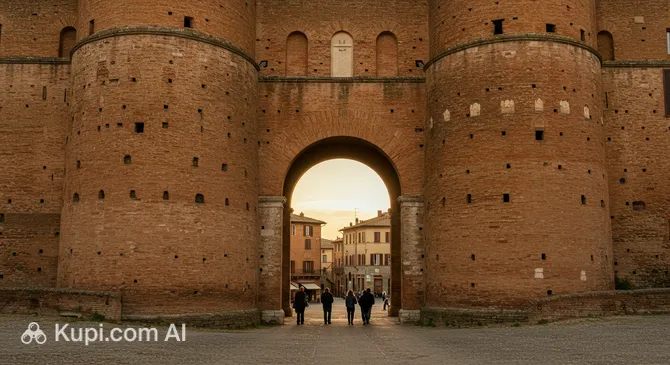
Porta Romana. Illustration.
Source: Kupi.com AI

Traveler photos:

The construction of these monumental gates was completed in 1330, replacing the older Porta S. Martino. Porta Romana stands out for its powerful structure and imposing walls, demonstrating the engineering skill of that era and the importance of city fortifications for medieval Siena.

Located in the historic city center, Porta Romana today is an important tourist attraction. These gates are not just an architectural object but a living symbol of Siena's rich history and medieval heritage, inviting travelers to touch the past and feel the atmosphere of bygone centuries.

Contacts

Porta Romana is a historical monument, so it does not have direct contact details like a phone number or email address. For information about visiting, as well as general travel inquiries regarding Siena, you can contact local tourist information centers or visit the city's official tourism websites.

How to contactContact
AddressVia Roma, 83, 53100 Siena SI, Italy
Phone number+39 0577 292111
Websitewww.comune.siena.it

What to Do

Visiting Porta Romana is, first and foremost, an opportunity to examine its impressive architecture in detail and immerse yourself in the historical context. The gate itself, being a prime example of medieval fortification art, is of great interest to history and architecture enthusiasts. It is also a perfect spot for photos, as the gate is located in a picturesque part of Siena, allowing you to capture the spirit of the ancient city.

Exploring Porta Romana provides a unique chance to understand how city fortifications evolved and improved over the centuries. You can imagine the role these powerful structures played in the defensive system of medieval Siena, protecting its residents from external threats. It is a kind of journey back in time, allowing you to connect with the city's past.

Furthermore, a walk to Porta Romana can serve as a starting point for further exploration of Siena. In the vicinity of the gate, there are other significant landmarks such as the famous Piazza del Campo, the majestic Palazzo Pubblico, and the magnificent Siena Cathedral. Visiting them will provide a more complete understanding of the rich cultural and historical heritage of this amazing Italian city.

Getting There

Getting to Porta Romana in Siena is quite simple, especially if you are already exploring the historic city center. Siena is a compact city, and many of its famous landmarks, including these majestic gates, are within walking distance of each other. A walk through the narrow medieval streets is an adventure in itself on the way to Porta Romana.

If you prefer public transport or are staying in a more distant part of Siena, city buses are at your service. Several routes pass near the historic center and, consequently, Porta Romana. It is recommended to check the bus numbers and schedules at a local tourist information center or on the city's official transport websites in advance.

For travelers arriving in Siena by car, it's important to remember that traffic in the historic center (ZTL zone – Zona a Traffico Limitato) is strictly restricted. The best option is to leave your car in one of the designated parking lots located on the outskirts of the city and then walk to Porta Romana. This will not only help you avoid potential fines but also give you the chance to enjoy a leisurely stroll through Siena's atmospheric streets.

Nearest city: Siena

History & Facts

Porta Romana was built in 1330, replacing an older gate known as Porta S. Martino. This significant construction took place when Siena was experiencing its golden age, at the height of its power and glory. This city in Italy was actively developing both economically and politically, and the new, more impressive gate became a symbol of its prosperity and ambition.

As an integral part of Siena's historic city walls, Porta Romana played a key role in the city's defensive system. The construction of this gate was a major event in Siena's history, highlighting its strategically important position and growing influence in the region. The gate was not just an architectural ornament or an entrance to the city, but a powerful fortification designed for protection.

In the 14th century, Siena was famous for its sophisticated and powerful defensive system, and Porta Romana was one of its most important elements. The gate was designed with great attention to detail to ensure the maximum safety of the city and its residents from any external threats. Over the centuries, it has served not only as a reliable defense but has also stood as a silent witness to many historical events, playing a significant role in the fate of Siena.

Time Needed

To see the Porta Romana gates themselves in Siena, an average visitor will usually need relatively little time—roughly from 30 minutes to one hour. This will be enough to appreciate their monumentality, examine the architectural details, take photos, and soak in the atmosphere of this historic structure.

However, if you plan to do more than just a quick look and want to study their history and construction features in more detail—or perhaps make some sketches or simply enjoy the moment—you should set aside a bit more time. Also, keep in mind that Porta Romana often serves as a starting point for walks through the adjacent streets of Siena.

If your interest extends to the surrounding attractions, visiting Porta Romana can be part of a longer excursion lasting several hours. In this case, the gate will be one of the stops on your route through charming Siena, and the total time spent in the area will naturally increase.

Working Hours

Porta Romana in Siena is an open architectural structure, so it does not have strict opening hours. Tourists can view these historic gates at any time of day, which is particularly convenient for those who want to take photos at sunrise or sunset, or simply enjoy the atmosphere of the ancient city without rushing. Access to the gate is free and does not require advance booking or tickets.

Since Porta Romana is part of the city's infrastructure and an open-air monument, it is available to visit year-round. You don't need to worry about seasonal restrictions or special schedules, making it an easily accessible attraction for all travelers visiting Siena.

Nearby

Visiting Porta Romana is a wonderful opportunity to touch the medieval history of Siena. However, to make your trip even more fulfilling and memorable, don't limit yourself to just seeing these majestic gates. Exploring the surrounding area will allow you to dive deeper into the atmosphere of this unique Italian city and discover its other treasures.

There are many interesting places near Porta Romana, each reflecting the rich culture and history of Siena in its own way. From other ancient gates to museums and picturesque gardens, a walk around this area will give you plenty of impressions and help you form a more complete picture of city life.

NameDistance
Porta Pispini0.5 km
Tufi Gate0.6 km
Accademia dei Fisiocritici Museum0.7 km
Palazzo Pubblico0.8 km
Il Bocconcino0.8 km
National Picture Gallery of Siena0.8 km
Piazza del Campo0.8 km

Have you reached the end of the page?

So the route has been studied inside and out