Support

Siena Cathedral

About

Siena Cathedral, officially known as the Cathedral of Santa Maria Assunta (Cattedrale di Santa Maria Assunta), is a jewel of Gothic architecture located in the heart of Siena. Dedicated to the Assumption of the Virgin Mary, this cathedral is one of the most important artistic and historical monuments in Italy and is rightfully considered one of the most beautiful buildings in the country, capturing the imagination both inside and out. Its construction began in the 13th century, and over the centuries, the best masters of their time contributed to its unique appearance.
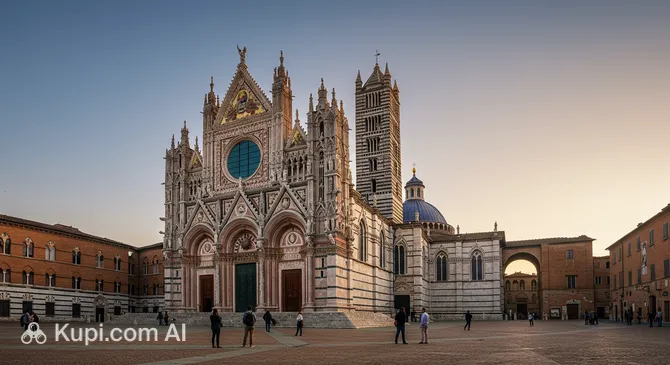
Siena Cathedral. Illustration.
Source: Kupi.com AI

Traveler photos:

The cathedral rises majestically on the highest hill in the city, dominating Cathedral Square (Piazza del Duomo). Its facade, made of white, greenish-black, and red marble, is decorated with intricate carvings and sculptures, creating an unforgettable first impression. Inside, visitors are greeted by the famous striped interior of alternating layers of white and dark marble—a symbol of the city of Siena. The unique inlaid marble floor, consisting of 56 panels with Biblical scenes and allegorical stories, deserves special attention.

The architectural plan of the cathedral is a Latin cross with a transept, a majestic dome, and a bell tower. The dome, resting on an octagonal base, was crowned with an elegant lantern added by the famous architect Gian Lorenzo Bernini. Every detail of the cathedral, from the stained-glass rose window on the facade to the works of art by great masters such as Donatello, Michelangelo, and Pinturicchio kept inside, tells a centuries-old story of faith, art, and the ambitions of the Siena Republic.

Contacts

To plan your visit, confirm current opening hours, ticket prices, and potential schedule changes, it is recommended to contact the cathedral's information center directly or visit its official website. All necessary information for tourists is available via the following contacts.

How to contactContact
AddressPiazza del Duomo, 8, 53100 Siena SI, Italy
Phone number+39 0577 283048
Websiteoperaduomo.siena.it

What to Do

A visit to Siena Cathedral is an unforgettable immersion into the world of art and architecture. Inside the temple, your attention will immediately be drawn to one of its main gems—the exceptionally beautiful and large-scale mosaic floor. This "marble carpet," consisting of 56 panels, was created by the best Sienese masters over several centuries, from the 14th to the 19th. It depicts biblical scenes, allegorical figures, and scenes from ancient history. The unique atmosphere of the cathedral is also created by its famous interior finish of alternating stripes of white and dark greenish-black marble, symbolizing the heraldic colors of Siena. The space of the main nave, separated from the side aisles by majestic semicircular arches, allows you to fully appreciate the grandeur of the medieval architects' design.

The cathedral houses outstanding works of art within its walls. Be sure to notice the richly decorated pulpit created by sculptor Niccolò Pisano—one of the masterpieces of Italian Gothic. You can also see the statue of John the Baptist, sculpted by the great Donatello. In addition, various parts of the cathedral contain works by other renowned masters, including Michelangelo and Pinturicchio, whose frescoes decorate the Piccolomini Library located inside the temple. This is a separate treasure where ancient manuscripts are kept, and the vibrant paintings dedicated to the life of Pope Pius II are awe-inspiring.

For a deeper look at the cathedral's history and art, it is worth visiting the Cathedral Museum (Museo dell'Opera del Duomo) located nearby. Its halls house many original treasures that previously decorated the cathedral, including the famous "Maestà" altarpiece by Duccio di Buoninsegna and original stained-glass windows created from sketches by Cimabue. In addition, the unique "Gate of Heaven" (Porta del Cielo) route is available to visitors, allowing you to climb to the upper levels and roof of the cathedral, which offers breathtaking views of the city and its surroundings.

Getting There

Siena Cathedral rises majestically in the heart of the historic center of Siena, on Cathedral Square (Piazza del Duomo). It is important to remember that most of the city center is a Limited Traffic Zone (ZTL), so the most convenient and pleasant way to reach the cathedral is a walk through the picturesque medieval streets. Since the cathedral is located at the city's highest point, the path to it is always a slight climb, which is more than rewarded by the views and the atmosphere of the ancient city.

If you arrive in Siena by train, you will find the railway station at the foot of the hill, about two kilometers from the center. From there, you can reach the historic part by one of the many local buses that regularly head toward the center (for example, to the Piazza Gramsci or Postierla stops). You can also ascend into the city from the station using a convenient escalator system, which significantly reduces the effort. For those arriving by intercity bus, the final stop is usually at Piazza Gramsci, from where the cathedral can be reached on foot in 10–15 minutes.

Travelers by car should be especially careful due to the ZTL zone. Entry into the center for non-residents is prohibited and carries high fines. You must leave your car in one of the paid parking lots located outside the city walls. From there, you can either walk to the cathedral or use city transport. Some parking lots, such as "S. Caterina Fontebranda," are equipped with elevators and escalators that lead almost directly to the cathedral. Alternatively, you can always use a taxi, which will take you as close as possible to Piazza del Duomo.

Nearest city: Siena

History & Facts

The history of Siena Cathedral is shrouded in legends and begins long before its Gothic walls were erected. According to tradition, a temple dedicated to the Roman goddess Minerva stood on this site in ancient times. While there is no definitive confirmation of this, it is known that a more modest church was already located here in the 9th century, which nevertheless played an important role in history: the election of Pope Nicholas II took place within its walls in 1058. The construction of the current grand cathedral, which became one of the greatest examples of Italian Gothic architecture, began in the late 12th century and was carried out in stages over many decades. Various sources point to key dates: the consecration in 1179, the laying of a new plan by Gothic master Niccolò Pisano in 1215, and the completion of the dome by 1264.

The 14th century was the pinnacle of the Siena Republic's power and ambition, and this was reflected in a truly grandiose plan to expand the cathedral. The townspeople intended to turn the existing building into just a transept (cross-aisle) of a new, giant cathedral—the "Duomo Nuovo." This project was meant to exceed the size of all churches in Europe and even eclipse St. Peter's Basilica in Rome. However, these bold plans were not destined to come true. Work began in 1339 but was soon halted due to tragic events: the plague epidemic of 1348, known as the "Black Death," wiped out most of the city's population. Engineering miscalculations regarding the stability of the foundation also contributed. Today, the giant unfinished wall—the "Facciatone"—stands next to the cathedral as a silent monument to former greatness, reminding us of the Sienese's unfulfilled dream.

Even without the grand expansion, Siena Cathedral amazes with its unique features, many of which have symbolic meaning. For example, the famous "striped" finish of the facades and columns made of alternating layers of white and dark greenish-black marble is not just a decorative element. According to legend, these colors are the heraldic symbol of Siena and refer to its founders—Senius and Aschius, the sons of Remus, who arrived in these parts on black and white horses. The facade, created by Giovanni Pisano, is considered a masterpiece of Gothic sculpture, and the interior has been worked on for centuries by the greatest masters, including Donatello and Michelangelo, leaving behind priceless works of art.

Time Needed

When planning a visit to Siena Cathedral, you should aim for 1.5–2 hours for a basic yet attentive tour. This time is usually enough to leisurely walk around the main hall, examine the famous inlaid marble floor in detail, admire the pulpit by Niccolò Pisano, and peek into the magnificent Piccolomini Library with its vibrant frescoes. Such a visit will give you a complete impression of the grandeur and beauty of the cathedral's interior without delving into other parts of the complex.

However, to truly immerse yourself in the world of Siena Cathedral, it is better to set aside at least 3–4 hours, or even a full half-day. The cathedral is only part of a large museum complex, and the standard "Opa Si Pass" often includes access to the Cathedral Museum (Museo dell’Opera), the Baptistery, the Crypt, and the climb to the "Facciatone" panoramic viewpoint—the unfinished facade of the new cathedral, which offers one of the best views of Siena. Each of these parts deserves separate attention and will add at least an hour to your visit.

If you want a completely unique experience, add the exclusive "Gate of Heaven" (Porta del Cielo) route to your plan. This tour of the cathedral's upper levels and roof takes an additional 30 minutes but rewards you with stunning views of the interior from above and of the city. Ultimately, the length of your visit depends on your personal interest in art and history—you can easily spend even more time here, discovering new details.

Working Hours

Siena Cathedral is open to visitors year-round; however, its operating hours may change depending on the season and religious holidays. During the main tourist season, roughly from April to October, the cathedral is usually open Monday through Saturday from 10:00 AM to 7:00 PM, and on Sundays and public holidays from 1:30 PM to 6:00 PM. In the winter period, from November to March, opening hours are generally reduced to 5:30 PM. It is important to remember that last entry is allowed 30 minutes before closing.

Given the cathedral's immense popularity, it is highly recommended to book tickets in advance, especially if you plan to visit during high season or want to access special routes like the "Gate of Heaven" (Porta del Cielo). This will help avoid long lines and guarantee access to all parts of the complex. Since schedules can change, be sure to check the official cathedral website for up-to-date information on opening hours and ticket availability before your visit.

DayOpening hours
Monday10:00 – 19:00
Tuesday10:00 – 19:00
Wednesday10:00 – 19:00
Thursday10:00 – 19:00
Friday10:00 – 19:00
Saturday10:00 – 19:00
Sunday1:30 – 18:00

Nearby

Visiting Siena Cathedral is undoubtedly a key part of the itinerary for any guest in Siena. However, you should not limit yourself only to viewing this architectural masterpiece. The cathedral is the heart of an entire quarter filled with historical and cultural treasures, and exploring its surroundings will allow you to feel the spirit of the medieval city and the greatness of the Siena Republic more deeply.

Just a few steps from the main entrance of the cathedral, famous squares, ancient palaces, and world-class museums await you. A walk through these places will enrich your impressions, as each of these attractions is part of a single historical ensemble formed over centuries. Below is a list of interesting sites located in the immediate vicinity.

NameDistance
Santa Maria della Scala0.1 km
Piazza del Duomo (Siena)0.1 km
Fountain of the Goose (Fontanina Contrada dell'Oca)0.2 km
Torrefazione Fiorella0.2 km
Piazza del Campo0.2 km
Palazzo Pubblico0.3 km
Il Bocconcino0.3 km

Have you reached the end of the page?

So the route has been studied inside and out