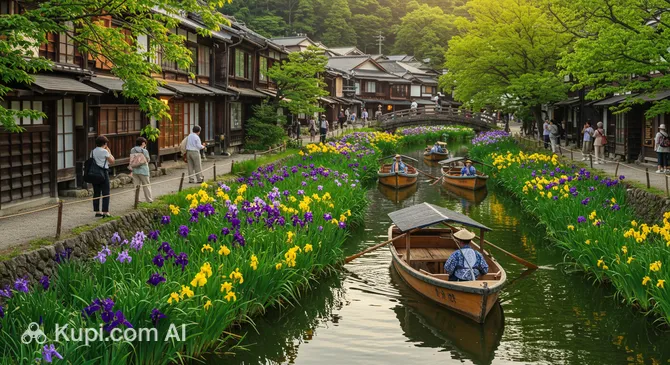
While Itako may not be a major destination for large-scale shopping in Japan, the city offers its own opportunities for pleasant purchases, especially if you are looking for local goods and souvenirs. Here, you can immerse yourself in the more authentic atmosphere of Japanese shops, distinct from the hustle and bustle of major metropolises. The city and Ibaraki Prefecture are famous for agricultural products, so it is worth paying attention to local delicacies.
Main shopping points in Itako are likely to be concentrated along the central streets or in the railway station area. Here, you can find small private shops, stalls with traditional goods, and stores catering to the daily needs of local residents. A walk through these streets will allow you to better feel the local character.
Large modern shopping centers common in big cities might not be found in Itako. However, you may encounter small local department stores or shopping rows featuring goods of various categories – from clothing to household supplies. Supermarkets also often have departments with non-food items and souvenirs.
Regarding markets, in Japanese cities of this size like Itako, you can sometimes find local morning markets (asaichi), where farmers sell fresh vegetables, fruits, as well as seafood and other local specialties. This is an excellent place to try seasonal products and see the daily life of the townspeople. It is best to check on-site for information about such markets.
As souvenirs from Itako and the Ibaraki region, consider local food products such as fermented soybeans natto (if you are ready for culinary experiments), various types of pickles (tsukemono), or local sake. Traditional Japanese souvenirs are also popular: ceramics (possibly Kasama-yaki style items from Ibaraki Prefecture), chopsticks, fans, textiles, or small dolls. If your visit coincides with the Iris Festival (Ayame Matsuri), you can find themed souvenirs.
Shops in Itako, as in most small towns in Japan, are typically open from approximately 10:00-11:00 AM to 7:00-8:00 PM. Small private shops may have their own individual schedules and a day off once a week. Regarding payment, cash remains a widely used method, especially in small shops and markets. Credit cards are accepted in larger retail outlets and supermarkets. Japanese transport IC cards (such as Suica or Pasmo) may also be accepted in some places.
For foreign tourists in Japan, a Tax-Free system is in place. If you make purchases over a set minimum (usually 5,000 yen excluding tax) in licensed stores (look for "Tax-Free Shop" or "Japan Tax-Free Shop" signs), you can apply for a consumption tax refund. You will need your passport for this. The procedure is usually completed right in the store at the time of purchase.