Support

Kyotango

About

Kyotango is a charming city nestled on the northern tip of Kyoto Prefecture, right on the picturesque coast of the Sea of Japan. It is a place where majestic mountains meet vast expanses of water, creating landscapes of astonishing beauty. Travelers can expect green hills, dense forests, and idyllic beaches that offer a sense of seclusion and perfect harmony with nature. Kyotango provides a unique look at traditional Japan, far from the hustle and bustle of big cities.
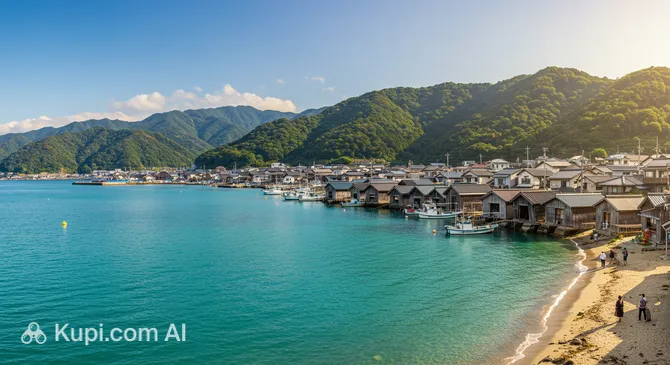
Kyotango. Illustration.
Source: Kupi.com AI

Covering an extensive area of over 500 square kilometers, Kyotango is one of the most spacious cities in the Kinki region, despite a relatively small population of about 50,857 residents. It was formed in 2004 through the merger of several towns, allowing it to become an important administrative center for the northern part of Kyoto Prefecture while maintaining its traditional charm and the calm, relaxed atmosphere so valued by its guests.

Kyotango attracts tourists with its unique features. One of the main highlights is the famous "singing sands" on the local beaches — a rare natural phenomenon that is certainly worth hearing and feeling. Additionally, the city is famous for its hot springs (onsens), where you can relax and immerse yourself in the atmosphere of a truly Japanese vacation. Here, you can also enjoy leisurely strolls through coastal villages, meet hospitable locals and learn about their centuries-old traditions, and admire views of Amanohashidate, one of the three most scenic spots in the country.

If you are looking for a place for a peaceful getaway where you can enjoy pristine nature, experience authentic Japanese culture, and taste the freshest seafood, Kyotango will be a true discovery for you. This city will provide unforgettable impressions and allow you to see another side of the Land of the Rising Sun. Come to Kyotango to experience its unique charm!

You can find more interesting facts on the Kyotango city history page.

Weather Overview

The weather in Kyotango is characterized by distinct seasons. In summer, from June to August, average temperatures range from 21°C to 27°C. August is the warmest month with an average temperature of about 27.2°C. July is also very warm, with an average temperature of 25.7°C, and it is in this month that the highest amount of precipitation occurs (about 10 mm) and around 19 rainy days are observed. Winters, from December to February, are cool, with average temperatures around 5-7°C; these months also see a significant number of days with precipitation (up to 22 days in January and December), although the total amount is small (about 4 mm per month). Expect warm and fairly humid summers, especially in August for temperature and July for rainfall, and cool winters with frequent but not overly heavy precipitation. For more detailed information, you can study the Kyotango climate.

Average monthly temperature

Average monthly precipitation

Interesting Facts

Beyond its scenic landscapes and cultural attractions, Kyotango holds many surprising details and unique features that make it a truly special place. Here are just a few of them:

  • Some beaches in Kyotango possess a rare natural phenomenon — "singing sand." When walking on such a beach, the grains of sand produce a characteristic sound due to their special structure and moisture level. This phenomenon is considered a great rarity even in Japan.

  • The official symbols of Kyotango are the Pseudolysimachion ornatum flower and the Japanese beech tree (Fagus crenata). These plants are widespread in the forests surrounding the city, emphasizing its close connection with nature.

  • Kyotango is a place where traditional fishing villages and modern resort areas harmoniously coexist. Many locals are still involved in fishing, carefully preserving and passing down ancient methods of catching and processing seafood from generation to generation.

How to Get There

You can reach this picturesque corner of Kyoto Prefecture in various ways, combining air and land transport. Since Kyotango is located on the coast of the Sea of Japan, far from major metropolises, the journey here often becomes an adventure in itself with beautiful views. You can find more details on how to get to Kyotango, including all available routes and schedules.

There is no airport in the city of Kyotango itself, so most tourists arrive via major transport hubs in the Kansai region. The main air gateway for international visitors is Kansai International Airport (KIX). It is located in the city of Osaka, approximately 134 km from Kyotango. This is one of Japan's most important airports with a huge passenger flow. A trip from here by car or taxi will take about 3 hours and 40 minutes.

For domestic flights, Itami Airport (ITM) is convenient, also located in Osaka, 99 km from the destination. This is a major hub receiving many flights from across the country. The journey by taxi or bus from Itami to Kyotango will take approximately 2 hours and 50 minutes. If you are looking for the geographically closest option, consider Tottori Airport (TTJ) in Tottori city. It is only 82 km away, and the drive by car takes about 2 hours and 25 minutes, although the number of flights here is significantly lower.

For clarity, here is a summary of the main airports through which you can reach the region:

AirportPassenger trafficDistance
Tajima57 19428 km
Tottori Airport401 79682 km
Itami Airport14.8 mln99 km
Kobe Airport3.6 mln111 km
Kansai International Airport30.6 mln134 km

Rail travel is one of the most popular and comfortable ways to get to Kyotango. Although there are no Shinkansen stations in the city, it is served by the scenic private Kyoto Tango Railway (Tantetsu). Typically, travelers take JR limited express trains to Fukuchiyama, Miyazu, or Amanohashidate stations, where they transfer to local trains going to the city's main stations, such as Amino, Mineyama, or Kumihama. A train trip from Kyoto or Osaka takes 2.5 to 3 hours and offers unforgettable views of the coast and mountains.

Main Attractions

Kyotango, located on the picturesque Tango Peninsula in Kyoto Prefecture, offers travelers a unique blend of natural wonders and cultural discoveries. From "singing" beaches to majestic cliffs and breathtaking sunsets, this coastal city is rich in places that will leave a lasting impression.

One of the most amazing spots in Kyotango is Kotohikihama Beach (琴引浜). It is famous for its "singing sand" (nakisuna), which makes a distinct sound when walked upon. This rare natural phenomenon, along with the crystal-clear waters of the Sea of Japan and the scenic surroundings, makes the beach a popular spot for relaxation and walks. There is also a small museum nearby dedicated to this unique sand and the preservation of its purity.

No less impressive is the Tateiwa Rock (立岩). This monumental basalt rock, standing about 20 meters high, rises proudly near the coast and is steeped in ancient legends. According to one, it is a petrified giant or demon defeated by a local hero. Tateiwa attracts tourists with its natural power, photogenicity, and mystical atmosphere, especially at sunset.

For lovers of romantic landscapes and tranquility, the Yuhigaura Coast (夕日ヶ浦海岸) is a must-visit. The name of this place translates as "Sunset Bay," and it fully lives up to it. The sunsets here are considered some of the most beautiful in the region, painting the sky and sea in incredible shades. Besides the stunning views, the Yuhigaura coast is also known for its onsens (hot springs), where you can relax and enjoy the peace after a busy day.

Another natural gem of Kyotango is Tango Matsushima (丹後松島). This stretch of coastline is famous for its picturesque views reminiscent of the famous Matsushima Bay, which is one of Japan's three most beautiful landscapes. Numerous rocky islets covered with pine trees and scattered in emerald waters create a peaceful and breathtaking panorama. It is an ideal place for leisurely walks, photography, and connecting with nature.

Local Cuisine

The gastronomy of Kyotango is a true discovery for connoisseurs of Japanese cuisine, especially if you are a fan of the freshest seafood. Located on the coast of the Sea of Japan, the city is famous for its sea bounty, which forms the basis of the local culinary heritage. Here, you will find yourself immersed in a world of refined tastes and centuries-old traditions.

The main star of the local cuisine is undoubtedly the legendary Matsuba crab. This delicacy crab is caught in the cold waters of the Sea of Japan and is particularly valued during the winter season. You can try it in various forms: delicate sashimi, boiled, or grilled — each version reveals its unique, premium taste. For many gourmets, Matsuba crab from Kyotango is the pinnacle of gastronomic pleasure.

Besides crab, local markets and restaurants abound with other marine delicacies. It is definitely worth trying dishes made from hamo (pike conger) and ayu (sweetfish), prepared according to ancient recipes. Fresh oysters, sea urchins, and squid also hold a place of honor on the menu. Many coastal restaurants offer dishes prepared right before your eyes, from a simple grill menu to exquisite kaiseki sets, allowing you to enjoy not just the taste, but the process as well.

The food culture in Kyotango is diverse. Locals and tourists often visit cozy restaurants specializing in seafood. Don't overlook the street food: grilled scallops on skewers, rice cakes filled with seaweed, or seasonal sweets made from local fruits are a great addition to a city stroll. For full immersion in the gastronomic atmosphere, visit the local markets where you can see the full variety of the fresh catch.

As for drinks, in Kyotango, as throughout Japan, you will be offered traditional Japanese tea, various types of sake, and local beer. While specific local drinks may not be as widely known, you can always find something that perfectly complements a seafood meal. Gastronomic festivals, often dedicated to the region's seafood and agricultural products, are also excellent opportunities to experience local cuisine in all its diversity.

Travel Tips

Welcome to Kyotango! To make your trip to this charming corner of Japan as comfortable and memorable as possible, we have prepared some practical tips. They will help you better navigate and enjoy every moment of your stay.

  1. Clothing and Essentials: The climate in Kyotango is temperate, with distinct seasons. In summer, bring light clothing, but don't forget sun protection and a light jacket for the evening. In winter, warm clothes will be needed, including a hat, gloves, and a scarf. Spring and autumn offer mild weather, ideal for layered clothing. Be sure to bring comfortable shoes for walking, as Kyotango is great to explore on foot. Don't forget an adapter for electrical appliances (Japan uses type A and B sockets, 100V voltage). When visiting temples and shrines, dress modestly: it is advisable to cover shoulders and knees.

  2. Transport: It is most convenient to move around Kyotango and its surroundings by local trains and buses, although their schedules may not be as frequent as in large cities. For more flexibility, especially if you plan to explore the coast and natural beauty, consider renting a car. Taxis are available but can be an expensive pleasure. Check for taxi-hailing apps specific to the region or use taxi services at stations.

  3. Finance: The local currency is the Japanese yen (JPY). While credit cards are accepted in many hotels, large stores, and restaurants, always have enough cash with you, especially for small establishments, markets, and when paying for transport in rural areas. ATMs can be found in post offices and some convenience stores (e.g., 7-Eleven), but not all accept international cards. It is better to exchange currency in advance or upon arrival at the airport. Tipping in Japan is not practiced and can be perceived as an insult.

  4. Health and Safety: Kyotango, like Japan in general, is considered a very safe place. Pharmacies (薬, kusuri) exist, but not all are open 24/7, and staff may not speak English. Bring a basic set of medications with you. Before the trip, take out medical insurance. In emergencies, call 119 (ambulance and fire service). Observe standard precautions: keep an eye on your belongings, especially in crowded places.

  5. Communication: The official language is Japanese. English proficiency may be limited, especially among the older generation and outside tourist areas. Learn a few basic phrases: "Konnichiwa" (Hello), "Arigato" (Thank you), "Sumimasen" (Excuse me/Sorry). For convenience, purchase a local SIM card or rent a pocket Wi-Fi router. Free Wi-Fi is available in some hotels, cafes, and tourist information centers.

  6. Local Etiquette: Japanese people are very polite. A greeting is usually accompanied by a bow. In public places, especially on transport, try not to talk loudly on the phone. Remove your shoes before entering homes, some temples, and traditional restaurants (look for a special shoe shelf). Do not stick chopsticks vertically into rice — this is associated with funeral rituals.

  7. What to Avoid: Do not litter — take your trash with you if you can't find a bin. Also, try not to eat while walking on the street unless it is in places specifically designated for it (e.g., street festivals). This is considered impolite.

  8. Extra Tip: Kyotango is famous for its onsens (hot springs) and beautiful beaches. Be sure to make time to visit one of the local onsens — it is a great way to relax and experience an important part of Japanese culture. Also, try the fresh seafood that this region is famous for.

We hope these tips make your stay in Kyotango even more pleasant and fulfilling. We wish you an unforgettable journey and bright impressions from this amazing corner of Japan!

Entertainment & Nightlife

Nightlife in Kyotango is significantly different from the neon frenzy of Tokyo or Osaka. This is a place where evening leisure is permeated with the authentic atmosphere of the Japanese province, coziness, and gastronomic discoveries. If you are traveling through Japan in search of tranquility and local color, the evenings here will be a pleasant surprise. Instead of noisy dance floors, traditional izakayas (Japanese pubs) and cozy restaurants where you can spend time with locals take center stage.

The center of evening activity can be found in the areas around the Amino and Mineyama railway stations. Most establishments open after sunset are concentrated here. The main format of entertainment is a leisurely dinner with a tasting of local sake and the freshest seafood, especially the famous Taiza crab during the season. Also popular are "snack bars" (sunakku) — small establishments with karaoke where the hostess (mama-san) keeps the conversation going with guests. This is a unique cultural experience that allows you to see the life of the Japanese heartland from the inside.

The atmosphere in Kyotango's establishments is very democratic and friendly. There is no strict dress code: casual style is appropriate everywhere. The crowd consists mainly of locals relaxing after work, which guarantees immersion in the linguistic environment. Many bars and restaurants stay open until 11:00 PM or midnight, but some close earlier, so it is better to start the evening around 7:00 PM.

A few practical tips for tourists: be sure to have Japanese yen in cash, as small bars may not accept cards. Public transport in rural areas stops running quite early, so find out the number of a local taxi in advance or ask the restaurant staff to call a car for you. If you are in a rental car, remember the strict zero-tolerance policy for drinking and driving; use the "daiko" service, where a driver arrives and takes you home in your own car.

In terms of safety, Kyotango is an ideal place. The crime rate here is extremely low, and night walks are perfectly safe. The only difficulty might be the language barrier and the lack of street lighting away from the main streets, so stay close to the lively quarters of Amino and Mineyama.

During the day, the city offers completely different types of leisure related to nature and history. You can visit picturesque beaches that are part of the San'in Kaigan Geopark or explore local shrines. For those seeking relaxation, it's worth checking out the hot springs (onsens), many of which offer magnificent views of the Sea of Japan, creating a perfect contrast to the evening program.

Parks & Museums

Kyotango, located in Kyoto Prefecture, invites travelers to enjoy a harmonious blend of picturesque natural landscapes and rich cultural heritage. This coastal city offers both peaceful green zones and fascinating places to learn about its history and traditions.

One of the main natural gems of Kyotango is its coastline, which is part of the San'in Kaigan National Park, also recognized as a UNESCO Global Geopark. Here, breathtaking cliffs, secluded bays, and the crystal-clear waters of the Sea of Japan await you. Special attention should be paid to Kotohikihama Beach, known for its "singing sand" — a unique natural phenomenon where the sand makes sounds when walked upon. It is not only a beautiful place to relax but also a natural monument attracting visitors with its uniqueness.

Not far from the coast rises the majestic Tateiwa Rock — an impressive monolith about 20 meters high that has become one of the region's symbols. This giant basalt rock, steeped in local legends, makes an indelible impression with its power and is a popular spot for photographers and nature lovers.

To gain a deeper understanding of the region's unique natural features, visit the Kotohikihama Singing Sand Cultural Museum (琴引浜鳴き砂文化館). Here you will learn not only about the "singing sand" phenomenon but also about the coastal marine ecosystem and measures to preserve this fragile natural environment. The museum offers interactive exhibits that will be interesting for both adults and children.

For those interested in ancient history, Kyotango offers a deep dive into the past at the Tango Ancient History Museum (京丹後市立丹後古代の里資料館). The museum's exhibits are dedicated to the region's rich archaeological heritage, including finds from the Kofun period. Near the museum, you can see the ancient mounds themselves, such as Amino Choshiyama Kofun — one of the largest keyhole-shaped mounds on the Sea of Japan coast, witnessing the ancient civilizations that flourished on this land.

The city is also famous for producing high-quality silk known as Tango chirimen. Although there may not be many large standalone museums dedicated exclusively to this craft, the history of silk production is deeply woven into the culture of Kyotango. In some areas, you can find old buildings related to silk production and trade, and visit workshops where this traditional art is demonstrated.

For a more authentic experience, step off the beaten tourist path and explore the small fishing villages along the coast, where you can observe the daily life of locals and try the freshest seafood. And after a full day of exploration, there is nothing better than relaxing in one of the many onsens (hot springs) that the Tango Peninsula is also famous for.

Getting Around

Kyotango, being a city with a relatively small population, offers several convenient ways to get around. The backbone of public transport here is buses, which connect various city districts and nearby settlements. Also, local train lines may pass through Kyotango or its surroundings, providing access to more remote points in the region.

The fare payment system in Kyotango is fairly standard. In buses, you can usually pay with cash directly upon entry or exit; it is advisable to have small change. For more frequent use of transport and for train travel, prepaid transport cards (such as the ICOCA cards common in the Kansai region) are convenient and may also be accepted on some buses. It is best to check locally for the availability of day passes or tourist passes, for example, at train stations or tourist information centers.

Bus tickets are usually purchased from the driver or paid for upon exit, depending on the system (sometimes you need to take a ticket upon entry if the fare is zone-based). Train tickets are sold at station counters or special vending machines. Transport cards are also topped up at machines at railway stations. Public transport in Kyotango runs on a schedule, which may be less frequent than in major metropolises, especially in the evening and on weekends. It is recommended to check the timetable at stops or online in advance if such information is available.

Besides public transport, other ways of moving around are available in Kyotango. Taxis can be found at stations or ordered by phone, though this is a more expensive option. For exploring the picturesque surroundings of the Tango Peninsula, renting a car can be an excellent choice, providing greater freedom of movement. In warmer months, a bicycle can be an enjoyable way to get to know the city and its nature; it's worth inquiring about rental options at local rental points.

One of the features of the transport system in the region to which Kyotango belongs is the presence of scenic railway routes, such as the Kyoto Tango Railway (Tantetsu) lines. A trip on such a train is not just a way to get from point A to point B, but a real mini-journey with beautiful views of the coast and nature. Some bus routes may also pass through very beautiful places, opening up panoramas of the Sea of Japan.

Accommodation

In the city of Kyotango, travelers will find various accommodation options to suit different preferences and budgets. You can stay in traditional Japanese inns — ryokans, which offer a unique cultural experience, as well as in more familiar modern-style hotels. Minshuku (family-run guest houses) are also popular, and in some cases, apartment or house rentals are available for a more secluded getaway.

When choosing a place to stay in Kyotango, it is worth looking at areas near the picturesque coast of the Sea of Japan, which allows you to enjoy beautiful views and beaches. Another convenient option is accommodation near major transport hubs, which makes it easier to move around the city and its surroundings. The city offers various hotels and guest houses, from cozy small ones to larger complexes offering a wide range of services.

The price range for accommodation in Kyotango varies: you can find budget options, mid-range hotels, or more luxurious offers. It is recommended to book your stay in advance, especially if your trip is planned for popular tourist seasons such as cherry blossom time, summer festivals, or the autumn foliage viewing period. You can book accommodation through popular international and Japanese online platforms or, in some cases, by contacting the hotel or guest house directly.

Nearby Cities

For those who want to explore the surrounding area, Kyotango serves as an excellent starting point for day trips to several interesting nearby locations:

CityPopulationDistance
Yosano19 72611 km
Miyazu16 56416 km
Toyooka77 00524 km
Maizuru78 73034 km
Yabu21 81336 km

Very close by, just 24 km away, is Toyooka, famous for its Kinosaki Onsen resort. This charming town with seven public baths (soto-yu) and a traditional atmosphere is perfect for a relaxing day. Also in Toyooka, you can visit the unique Genbudo Park with its impressive basalt caves. A bit further, 34 km away, is the port city of Maizuru. It attracts visitors with its Red Brick Park — a complex of historical buildings from a former naval arsenal — and the Goro Sky Tower observation deck, which offers panoramic views of the scenic Maizuru Bay.

If you are up for a longer trip (about 76 km), Tottori offers a completely different experience. The city's main highlight is the famous Tottori Sand Dunes — the largest in Japan, where you can not only enjoy the unusual landscape but also ride camels or go sandboarding. Next to the dunes is the Sand Museum, with exhibitions dedicated to world-class sand sculptures.

These nearby destinations provide insight into the diverse culture and landscapes of the region. Each trip promises new discoveries and impressions, complementing your journey through Japan.

Shopping & Souvenirs

Shopping in Kyotango is an immersion into the world of local traditions and unique goods, rather than a chase after global brands. The city and its surrounding Tango Peninsula are famous for their crafts, especially silk, as well as the freshest seafood and agricultural products. Here, you will find not large shopping malls, but rather small, cozy shops and stalls offering authentic goods.

In Kyotango, there are no distinct centralized shopping streets like in major cities. Shops are generally scattered across the city's main districts, such as Amino or Mineyama, and are also found near tourist attractions and transport hubs. You should look for small specialized stores and family businesses where you can find something truly special.

Large modern shopping centers are not a characteristic feature of Kyotango. Instead, local shops and small commercial buildings that bring together several retail points prevail. The shopping experience here is more intimate and focused on getting to know local products.

Special attention should be paid to local markets. Given Kyotango's coastal location, you can find fresh seafood markets here where fishermen sell their catch. Farmer's markets are also popular, offering seasonal vegetables, fruits, and other delicacies of the Tango region. Such markets are a great place not only for shopping but also for getting to know the local culture.

The main souvenir worth bringing from Kyotango is certainly items made of Tango Chirimen — this is the famous local crepe silk. These can be kimonos, scarves, shawls, wallets, or even just cuts of fabric with unique patterns. Local alcoholic beverages like sake, various seafood (dried, canned), sea salt, and traditional Japanese sweets made from local ingredients are also popular.

Most shops in Kyotango usually operate from 10:00 AM or 11:00 AM until 6:00 PM or 7:00 PM. Small private shops may have their own schedules and closing days. As for payment, although credit cards are becoming more common, especially in tourist-oriented places, it is always recommended to have enough cash with you, especially for purchases at markets and in small shops.

For foreign tourists in Japan, a tax-free system is in place. Look for stores with the "Japan Tax-Free Shop" logo. Usually, for a tax refund, the purchase amount in one store on one day must exceed 5,000 yen (excluding tax). You will need to present your passport at the time of purchase. Note that not all small shops may provide this service; it is more common in larger retail outlets and souvenir shops.

Reached the end of the page?

That means the route is fully explored