Support

TambaSasayama

About

Tamba-Sasayama is a charming city in Japan, where centuries-old traditions and a modern way of life intertwine harmoniously. It attracts travelers with its unique atmosphere of comfort, historical charm, and the opportunity to immerse oneself in authentic Japanese culture far from the noise of major metropolises. It is a true corner where the past and present merge, creating a feeling of time flowing slowly.

Located in Hyogo Prefecture, about an hour's drive from major centers like Kyoto and Osaka, Tamba-Sasayama is surrounded by picturesque hills and forests. With a population of about 39,000 people, the city maintains the peace and tranquility of a small provincial settlement, where every corner breathes history. The clean air and beautiful views make it a wonderful place for walks and nature contemplation.
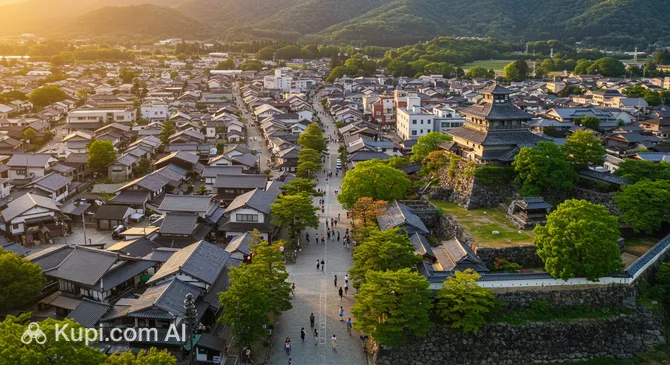
Tamba Sasayama. Illustration.
Source: Kupi.com AI

The main pride of Tamba-Sasayama is its rich historical heritage. Once a prosperous castle town, today you can see many beautifully preserved traditional buildings, walk along ancient streets, and explore the majestic Sasayama Castle ruins, surrounded by a picturesque moat. The city is also famous for its slow pace, friendly atmosphere, as well as many cozy cafes, craft shops, and small museums that reveal unique aspects of local culture.

If you dream of feeling the spirit of real Japan, enjoying the beauty of nature, getting to know local traditions, and discovering unexplored pages of Japanese history, Tamba-Sasayama will be the perfect destination for you. This city will provide unforgettable impressions and allow you to relax your soul, offering a unique experience of immersion in Japanese culture.

You can find more interesting facts on the Tamba-Sasayama city history page.
Weather Overview

The weather in Tamba-Sasayama is distinctly seasonal. In summer, especially in July and August, it is warm and humid: the average temperature rises to 26-27°C, and July stands out with the highest amount of precipitation and rainy days (about 10 mm and 20 days respectively). Winters, from December to February, are cool, with an average temperature of about 3-5°C. During this period, there is less precipitation, but the number of days with it (rain or snow) remains noticeable, for example, about 14 days with precipitation in January with a total volume of 2 mm. Overall, prepare for a warm and humid summer and a cool winter with a probability of precipitation.

For more detailed information on climate conditions and monthly forecasts, we recommend checking the Tamba-Sasayama Climate page.

Average monthly temperature

Average monthly precipitation

Interesting Facts

In addition to its picturesque landscapes and rich history, Tamba-Sasayama hides many amazing details and little-known stories that make this city truly unique. Here are just a few curious facts that will help you look at it from a new perspective:

  • The city was founded in the early 17th century as a strategic castle town by the personal order of Tokugawa Ieyasu, the founder of the Edo shogunate. You can still see the impressive remains of Sasayama Castle, reminding of its former military significance and strategic importance.

  • Thanks to its beautifully preserved traditional architecture, with its old wooden houses and merchant rows, Tamba-Sasayama often becomes a living set for filming historical movies and television series, transporting viewers to the atmosphere of Edo-era Japan.

  • The official symbols of the city are the elegant lily (Lilium japonicum) and the famous sakura. In spring and summer, these flowers transform the city, and local festivals, such as the colorful black soybean harvest festival, add bright colors to its cultural life.

  • Tamba-Sasayama is one of the oldest centers of Japanese pottery art, known as Tamba pottery (Tamba-yaki). The traditions of this craft are carefully preserved and passed down from generation to generation for many centuries, and the products of local masters are highly valued throughout Japan and beyond.

How to Get There

When planning a trip to this historical corner of Japan, it is important to think through your route in advance. Tamba-Sasayama has good transport accessibility, making it easy to get here from major metropolises in the Kansai region. You can find out all the details and alternative routes by visiting the how to get to Tamba-Sasayama page, which contains complete information for travelers.

There is no airport in the city of Tamba-Sasayama itself, so most tourists arrive at major air hubs in neighboring cities. One of the most convenient options is Itami Airport (IATA: ITM), located in the city of Osaka. It is only 37.9 km from Tamba-Sasayama and serves primarily domestic flights. The journey from here by taxi or car will take approximately 77 minutes. This is an excellent choice if you are flying with a domestic transfer within Japan.

For international travelers, the main gateway is Kansai International Airport (IATA: KIX), also located in the city of Osaka (on an artificial island in the bay). The distance to Tamba-Sasayama is about 72 km. A car trip from this major aviation hub will take approximately 128 minutes. The airport receives flights from all over the world and offers a wide range of services for tourists.

For clarity, here is a summary of information on the main airports through which you can reach the region:

AirportPassenger trafficDistance
Itami Airport14.8 mln38 km
Kobe Airport3.6 mln49 km
Tajima57 19462 km
Kansai International Airport30.6 mln72 km
Tottori Airport401 796108 km

Rail travel is one of the most popular and reliable ways to reach the city. The main transport hub is Sasayamaguchi Station, located on the JR Fukuchiyama Line (also known as the JR Takarazuka Line). Rapid trains from Osaka and other major cities in the region run here regularly. It is worth noting that the station is some distance from the historical city center, so upon arrival, you will likely need to transfer to a local bus, which will take you to the castle and old quarters in 15–20 minutes.

In addition to trains, Tamba-Sasayama can be reached by intercity buses that depart from major stations in Osaka and Kobe. This is often a more economical option that allows you to enjoy views of the Japanese countryside along the way. If you prefer freedom of movement, renting a car is an excellent solution, as the region has high-quality expressways connecting the city with the Hyogo prefecture road network.

Main Attractions

Tamba-Sasayama, a charming city in Hyogo Prefecture, offers travelers a unique combination of rich history, traditional culture, and beautiful nature. Everyone will find something to their taste here, from ancient castles to blooming gardens and craft centers. Let's get acquainted with some of the most interesting sights of this cozy corner of Japan.

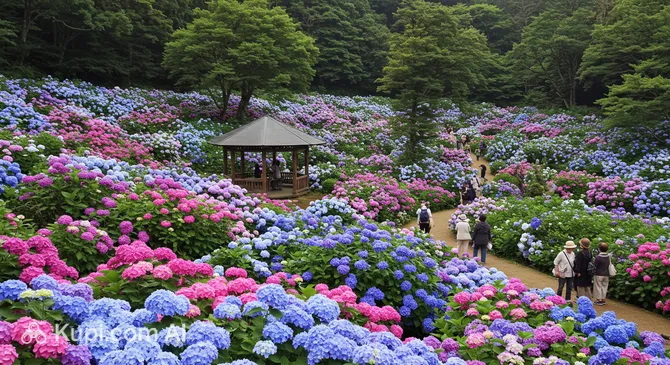
One of the city's gems is the Yuri Tamamizu Hydrangea Garden. This picturesque garden is especially beautiful during the hydrangea blooming season, when thousands of flowers of all possible shades create a truly magical atmosphere. A walk along its well-kept paths provides peace and aesthetic pleasure, making it an ideal place for nature lovers and photography enthusiasts.

Yuri Tamamizu Hydrangea Garden. Illustration.
Source: Kupi.com AI

Traveler photos:

The heart of Tamba-Sasayama's historical heritage is rightfully considered Sasayama Castle. Although the original main tower has not survived, the impressive Oshoin (Grand Hall) was carefully restored and is one of the largest wooden structures of its type in Japan. A visit to the castle and its surroundings, including the preserved moats and walls, allows you to immerse yourself in the samurai era and appreciate the skill of Japanese architects. It is a must-visit place for everyone interested in the country's history.

Located near the castle is the Aoyama Historical Village – a beautifully preserved district where samurai once lived. Walking through the narrow streets past traditional houses, some of which are open to the public as museums, you can feel the spirit of old Japan. Here you can learn about the life and culture of the samurai class, which makes this place especially attractive for history buffs and fans of authentic atmospheres.

For those interested in traditional crafts, the Tamba Traditional Crafts Park \"Sue no Sato\" is worth a visit. This park is dedicated to the famous Tamba-yaki pottery, one of Japan's six ancient pottery styles. Visitors can not only see the works of local masters and learn about the history of this craft but also try their hand at creating their own ceramic piece in workshops. This is a wonderful opportunity to touch the living heritage of the region and take home a unique souvenir.

Local Cuisine

The gastronomic world of Tamba-Sasayama is a true discovery for gourmets who value authentic flavors and quality local products. The city is famous for its culinary traditions based on the freshest seasonal ingredients grown on the fertile lands of the region.

Be sure to try the famous Tamba black soybeans (Tamba-kuro mame). These large, sweetish beans are a real delicacy used in a wide variety of dishes: from traditional desserts and sweet pastes to sauces and even ice cream. Another gastronomic pride of the region is Tamba marbled beef. It is valued for its incredible tenderness and rich flavor. Local restaurants will offer you steaks, sukiyaki, or flavorful skewers made from this superb beef.

In addition to these star products, Tamba-Sasayama's cuisine is rich in seasonal gifts of nature. In farmers' markets and local shops, you will find fresh vegetables, aromatic mushrooms, sweet chestnuts, as well as dishes made from wild boar. In autumn, the city comes alive with numerous harvest festivals, and in October, a large-scale gastronomic festival takes place where you can taste the best of what this generous land offers.

As for drinks, your meal will be perfectly complemented by traditional Japanese tea, which is especially pleasant to drink from local Tamba-yaki ceramics. You can also find a variety of non-alcoholic drinks and, of course, locally produced sake in restaurants and cafes, which pairs perfectly with regional cuisine dishes.

The food culture in Tamba-Sasayama involves enjoying food in a calm setting. Locals and tourists prefer to dine in cozy restaurants specializing in local delicacies or visit lively farmers' markets where you can not only buy fresh products but also try prepared dishes. Some Tamba-yaki ceramic workshops offer not only the chance to create your own dishes but also to taste traditional treats in them, which adds a special flavor to the gastronomic experience.

Travel Tips

Welcome to the charming city of Tamba-Sasayama! To make your journey through this corner of Japan as comfortable and memorable as possible, we have prepared some practical tips. They will help you navigate better and enjoy every moment of your stay here.

  1. Clothing and Essentials:

    The climate in Tamba-Sasayama, as in all of Japan, is clearly seasonal. In summer (June-August) it is hot and humid, so choose light, breathable clothing. In winter (December-February) it can be cold, and sometimes it snows – stock up on warm layered clothing, a hat, and gloves. Spring and autumn offer mild weather, ideal for light jackets and sweaters. The key element of your wardrobe is comfortable shoes, as you will be walking a lot through historical streets and possibly nature trails. Don't forget an adapter for electrical appliances (Japan uses Type A and B sockets, 100V voltage) and a portable battery. When visiting temples and shrines, choose modest clothing that covers shoulders and knees; be prepared to remove your shoes at the entrance.

  2. City Transport:

    Tamba-Sasayama is a small city, and the main form of public transport here is local buses. Their schedule should be checked in advance, as they may not be very frequent. Taxis are available but can be an expensive pleasure. If you plan to explore the surroundings and the picturesque countryside of the region, renting a car can be a great option (an international driver's license will be required, and remember left-hand traffic). For a leisurely acquaintance with the city itself, a bicycle is perfect – look for rental points.

  3. Finances: All About Money:

    The local currency is the Japanese yen (JPY, ¥). It is best to exchange money at the airport upon arrival or at banks in major cities before traveling to Tamba-Sasayama, as the number of exchange points here may be limited. Credit and debit cards (Visa, Mastercard) are accepted in hotels, large shops, and some restaurants; however, always have enough cash with you, especially for payment in small establishments, at markets, and in temples. ATMs that accept international cards can most often be found in post offices (Japan Post Bank) and 24-hour convenience stores like 7-Eleven (Seven Bank). An approximate daily budget (excluding accommodation) is 7,000-15,000 JPY. Important to remember: tipping is not accepted in Japan and may be perceived as a misunderstanding.

  4. Health and Safety:

    Pharmacies (look for the sign 薬 - kusuri) are available in Tamba-Sasayama, but not all are open 24 hours. We recommend bringing a basic first-aid kit. Travel insurance is mandatory! In case you need medical assistance, hotel staff can point you to the nearest clinic. Japan in general, and Tamba-Sasayama in particular, are very safe places. However, standard precautions like watching your personal belongings are never redundant. There are practically no "unsafe" areas here.

  5. Communication and Connectivity:

    The main language of communication is Japanese. English may be common in tourist spots and hotels, but overall, especially in small towns, be prepared for the fact that not all locals speak it. Learn a few simple phrases: \"Konnichiwa\" (Hello), \"Arigato\" (Thank you), \"Sumimasen\" (Excuse me). For connectivity convenience, we recommend purchasing a tourist SIM card or renting a pocket Wi-Fi router at the airport. Free Wi-Fi is available in some hotels and public places. Google Maps and Google Translate apps will be useful.

  6. Local Etiquette and Traditions:

    Respecting local customs will make your trip more pleasant. A greeting is usually accompanied by a slight bow. In public places, especially on transport, try to speak quietly. It is not common to eat and drink on the go (except for designated areas, such as at festivals). Be sure to remove your shoes before entering homes, many temples, traditional restaurants, and ryokans (Japanese-style inns). When using chopsticks, do not stick them vertically into rice and do not pass food from chopsticks to another person's chopsticks. Also note that there are few trash cans on the streets – be prepared to carry your trash with you to the hotel or a special container.

  7. Things to Avoid:

    To avoid offending locals and avoid awkward situations, try not to point your finger at people or objects – it's better to use an open palm. It is also considered impolite to blow your nose loudly in public; if necessary, it is better to do it in a private place, such as a restroom.

  8. Special Tip for Tamba-Sasayama:

    The city is famous for its unique Tamba-yaki ceramics, one of Japan's six ancient pottery traditions, as well as its famous black soybeans (kuromame). Be sure to take the opportunity to try local delicacies. You might be able to visit a pottery workshop or catch one of the local festivals if your travel dates coincide. Explore local markets – it's a great way to discover authentic products and buy souvenirs.

We hope these tips help you plan an unforgettable trip to Tamba-Sasayama. We wish you vivid impressions and a pleasant stay in this amazing city!

Entertainment & Nightlife

Tamba-Sasayama, a charming city in Hyogo Prefecture, offers its guests various opportunities for recreation and entertainment. Although the city is better known for its rich history and traditional atmosphere of the samurai past, you can also find pleasant options for evening pastimes here, which may differ from the noisy nightlife of megacities but offer their own unique charm.

Nightlife in Tamba-Sasayama is mainly concentrated around cozy local establishments. Instead of large and loud night clubs, travelers will discover traditional Japanese pubs here – izakaya. In them, you can enjoy a wide selection of local sake, shochu, and beer, as well as a variety of Japanese snacks in a relaxed atmosphere. Small bars with a soulful atmosphere and restaurants that are open until late in the evening and offer a delicious dinner are also popular. The crowd here is usually mixed – both locals and tourists – and the setting is conducive to quiet conversation and immersion in the local culture.

The main evening establishments are usually concentrated in the central part of the city, especially on the streets adjacent to the historical district or near major transport hubs. Most izakaya and bars work until late in the evening, often until midnight or slightly longer, especially on Friday and Saturday. There is usually no special dress code; a comfortable everyday style of clothing (smart casual or casual) is welcomed. The atmosphere in such places is usually very friendly and welcoming.

Speaking of practical points, prices in local establishments in Tamba-Sasayama are generally more moderate compared to Japan's major tourist centers. For moving around at night, a taxi will be the most convenient option, which can be called or found at special stands. Tamba-Sasayama, like most cities in Japan, is considered a very safe place for night walks, but it is always wise to follow standard precautions, especially if you are traveling alone.

While there are no specific bars or night clubs listed for Tamba-Sasayama, the best way to find a suitable place for evening relaxation is to walk through the central streets of the city. Look for signs saying \"居酒屋\" (izakaya) or small, cozily lit bars that can often be found off the main streets. Do not hesitate to ask for recommendations from your hotel staff or locals – they can often point out interesting and authentic spots.

During the day, Tamba-Sasayama offers guests many cultural and natural attractions. You can devote time to exploring well-preserved historical quarters, visit local museums to gain a deeper understanding of the region's rich heritage, or walk through the grounds of Sasayama Castle. Nature and landscape lovers should pay attention to places like the Yuri Tamamizu Hydrangea Garden, where you can enjoy magnificent blooms in season. The city is also known for its traditional crafts and delicious local products, which can be purchased in numerous souvenir shops and markets.

Yuri Tamamizu Hydrangea Garden. Illustration.
Source: Kupi.com AI

Traveler photos:

Parks & Museums

Tamba-Sasayama is a city where natural beauty and rich cultural heritage are harmoniously intertwined, offering visitors both peaceful green corners and fascinating immersions into history.

Among the city's green gems, the Yuri Tamamizu Hydrangea Garden stands out particularly. This picturesque spot attracts thousands of visitors, especially during the blooming season when the slopes are covered with a carpet of multi-colored hydrangeas. It is an ideal place for leisurely walks and enjoying the beauty of nature. Another significant green space is the park spreading around the ruins of Sasayama Castle. Here you can not only touch history but also relax in the shade of trees, admiring the restored main building of the castle, Oshoin. For those interested in traditional crafts combined with nature, it's worth visiting the Sue-no-Sato Traditional Crafts Park, dedicated to the famous Tamba-yaki pottery, where you can see the works of masters and even try your hand at potting.

Yuri Tamamizu Hydrangea Garden. Illustration.
Source: Kupi.com AI

Traveler photos:

Tamba-Sasayama's cultural life is equally rich. The Sasayama Historical Museum, located in a former courthouse building, offers an introduction to the region's past through interesting exhibits. To gain a deeper understanding of the life and traditions of the samurai, visit the Anju Samurai Family Residence Museum – a beautifully preserved house that allows a glimpse into the daily life of warriors in feudal Japan. These museums provide an excellent overview of the city's rich history and culture.

In addition to museums, the entire historical center of Tamba-Sasayama, especially the district of old samurai estates and merchant houses, is itself a living open-air museum. A walk through its streets is a journey through time. For authentic experiences, try peek into one of the many pottery workshops where the famous Tamba-yaki ceramics are created, or simply turn off the main streets to discover charming hidden courtyards and temples that preserve the spirit of old Japan.

Getting Around

Public transport in Tamba-Sasayama is mainly represented by buses and local railway lines that connect the city with neighboring settlements and provide movement within it. Bus routes cover key areas of the city and its surroundings, allowing access to most attractions and residential zones.

The payment system for buses usually involves cash payment directly upon entry or exit, depending on the type of bus. The fare depends on the distance. At railway stations, tickets are purchased from machines or ticket offices. For more frequent transport use in Japan, rechargeable smart cards like ICOCA (common in the Kansai region) are popular and may be accepted on some buses or trains passing through Tamba-Sasayama. It is recommended to check the possibility of using such cards on specific routes. There may not be specific ticket apps for Tamba-Sasayama itself, but general Japanese route planners will help you navigate.

Tourists should note that buses and trains in small cities like Tamba-Sasayama may run at less frequent intervals compared to major metropolises, especially in the evening and on weekends. Timetables are usually available at stops and stations. Train tickets are bought before boarding, and on buses, payment is made to the driver – often you need to take a ticket upon entry (if it's a zone numbering system) and pay the amount shown on the board opposite your ticket number when exiting.

As an alternative to public transport, taxis are available in Tamba-Sasayama and can be found at stations or called by phone. For exploring the picturesque surroundings and the city itself, especially its historical parts, renting a bicycle can be a convenient option – rental points are sometimes found near tourist information centers or stations. Car rental is also possible if you plan more extensive trips around the Hyogo region.

Accommodation

In the city of Tamba-Sasayama, travelers will find various accommodation options to suit different preferences and budgets. You can stay in traditional Japanese ryokan inns, offering a unique cultural experience, as well as in more modern guest houses, small hotels, or rent apartments. The choice varies from budget options to more comfortable middle-class offerings.

When choosing a place to stay in Tamba-Sasayama, it's worth paying attention to areas close to the historical center or main attractions to make visiting them easier. Staying near transport hubs can also be convenient if you plan to move actively around the surrounding areas. Since the city is not very large, many interesting places may be within walking distance of your accommodation.

Accommodation prices can vary depending on the season and type of housing. Overall, you can find both economical options and mid-range accommodation. For booking, it is recommended to use popular online platforms or, in some cases, contact the chosen hotel or guest house directly. It is especially important to book accommodation in advance if your trip falls during peak tourist season, such as during the cherry blossom bloom or autumn foliage, when the demand for lodging in Tamba-Sasayama increases.

Nearby Cities

For those who want to explore the surrounding areas, Tamba-Sasayama serves as an excellent starting point for day trips to several interesting nearby locations:

CityPopulationDistance
Tamba60 82420 km
Sanda155 16521 km
Kyotamba12 71421 km
Nantan31 07523 km
Inagawa29 57125 km

Each of these cities offers something unique for an exciting day trip. Nishinomiya is known for its famous Koshien baseball stadium and is a major center for sake production, making it interesting for both sports fans and connoisseurs of Japanese traditions. Takarazuka attracts with the world-famous Takarazuka Revue musical theater, where all roles are performed by women, as well as the Osamu Tezuka Manga Museum. In Itami, you can visit the picturesque Koyaike Park with its ponds and Japanese garden, as well as learn about the history of sake brewing. Sanda, located closest, offers the chance to enjoy natural beauty in Arimafuji Park and try the famous local "Sanda-gyu" beef. The city of Minoh is famous for its magnificent Minoh Park, especially beautiful in autumn, where you can walk to the Minoh Waterfall and even try an unusual local treat – tempura maple leaves.

These nearby destinations provide insight into the diverse culture and landscapes of the region.

Shopping & Souvenirs

Shopping in Tamba-Sasayama is, above all, an opportunity to touch local traditions and crafts, rather than a pursuit of global brands. The city is famous for its unique handmade items, especially ceramics, and delicious local products. You won't find giant malls here, but you can purchase truly authentic souvenirs and delicacies.

The main shopping opportunities in Tamba-Sasayama are concentrated in its historical center. Walking through old streets like Kawaramachi, where traditional merchant houses have been preserved, you will find many small shops, craft workshops, and stores offering local goods. This is where you can find unique items and feel the spirit of old Japan.

Tamba-Sasayama has no large modern shopping centers in the conventional sense. The focus is on small specialized shops and family businesses, where you can often chat with the master or owner himself and learn more about the product. This creates a special, heartfelt shopping atmosphere.

Although the city may not have permanent large markets, look out for seasonal fairs and small weekend markets. Here, local farmers often sell the freshest vegetables, fruits (including the famous Tamba chestnuts), and, of course, "Tamba kuromame" black soybeans – the pride of the region. This is a great chance to try and buy real local products.

Be sure to bring home items made of the famous Tamba-yaki pottery from Tamba-Sasayama. This could be tableware (cups, plates, teapots), vases, or other decorative items, distinguished by their simple beauty and durability. Other popular souvenirs include local delicacies: the already mentioned black soybeans and products made from them (e.g., sweets), chestnuts in various forms, and local sake. You can also find interesting textile products or small handmade souvenirs.

Most shops in Tamba-Sasayama are open from about 10:00 to 17:00 or 18:00. Some small shops may be closed on a specific day of the week (often Wednesday or Thursday, but it's better to check on the spot). Regarding payment, larger shops and tourist spots usually accept credit cards. However, in small family shops and at markets, it's preferable to have enough cash (Japanese yen) with you, as this may be the only method of payment.

For foreign tourists in Japan, there is a Value Added Tax (VAT) refund system (Tax-Free). Look for shops with the "Japan Tax-free Shop" logo. Generally, to process a tax refund, you must make a purchase exceeding 5,000 yen in one shop on the same day and present your passport at the checkout. Conditions may vary slightly, so don't hesitate to clarify details with the sellers.

Reached the end of the page?

That means the route is fully explored