Support

Tsuyama

About

Tsuyama is a charming city nestled in the heart of Okayama Prefecture on the western coast of Honshu Island in Japan. Surrounded by the picturesque hills and valleys of the Chūgoku region, it offers travelers a unique blend of historical heritage and natural beauty, making it an excellent starting point for exploring the country's central parts.
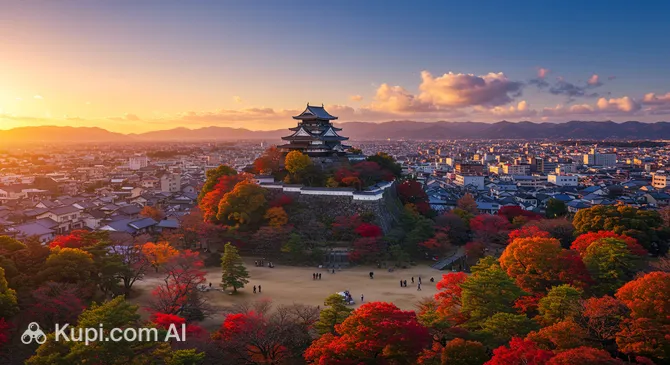
Tsuyama. Illustration.
Source: Kupi.com AI

With a population of approximately 99,410, Tsuyama maintains the atmosphere of a welcoming provincial town where modern amenities are harmoniously interwoven with centuries-old traditions. Historically, Tsuyama was an important administrative and cultural hub for Mimasaka Province, and this rich past is felt at every turn, from the narrow streets to the ancient buildings.

The city attracts visitors with its tranquil atmosphere and the opportunity to immerse themselves in authentic Japanese culture. Among its main attractions are the majestic ruins of Tsuyama Castle, which are particularly beautiful during the cherry blossom season when the surrounding park turns into a sea of pink petals. It is also worth strolling through the historical Joto district, where traditional samurai houses have been preserved, and visiting the peaceful Shurakuen Garden, a stunning example of Japanese landscape art.

Tsuyama is the perfect destination for those seeking to experience the real, off-the-beaten-path Japan, its traditions, and its hospitality. Discover this amazing corner of the country, where everyone will find something special and take home unforgettable memories from a journey into the heart of the Japanese countryside.

You can find more interesting facts on the Tsuyama city history page.
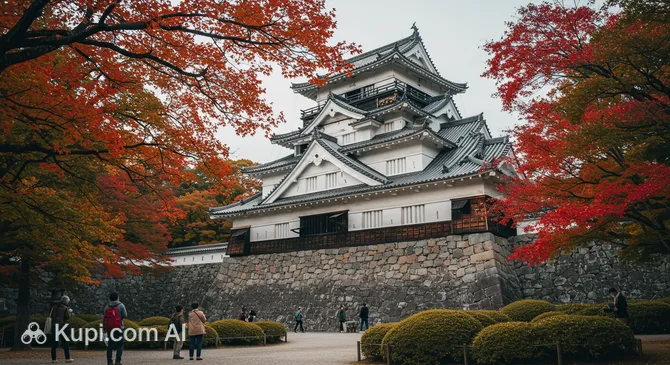
Weather Overview

The weather in Tsuyama has a distinct seasonal character. Summer, spanning the months from June to August, is warm and quite humid. Average temperatures in July and August hover around 25-26°C, with maximums reaching 28-29°C. July is also the month with the highest rainfall (about 11 mm) and the greatest number of rainy days (averaging 21 days). Winters in Tsuyama are cool: in January, the average temperature is about 2.3°C, with minimum temperatures potentially dropping to -1.0°C. Winter months are characterized by less precipitation (about 3 mm), but fairly frequent rainy or snowy days (from 14 to 18 days).

Spring (March–May) and autumn (September–November) offer transitional weather conditions. In spring, the temperature gradually rises from 7.6°C in March to 16.6°C in May. In autumn, there is a smooth decrease in temperature from 22.2°C in September to 10.2°C in November. Overall, expect a warm summer with occasional rain and cool winters with frequent but not very heavy precipitation. For more detailed monthly weather information, you can explore the Tsuyama climate.

Average monthly temperature

Average monthly precipitation

Interesting Facts

In addition to its famous landmarks, Tsuyama hides many amazing stories and facts that reveal this charming city in Okayama Prefecture in a new way.

Tsuyama Castle. Illustration.
Source: Kupi.com AI

Traveler photos:

  • The ruins of Tsuyama Castle, built in 1604, are not only on the list of "Japan's Top 100 Castles" but are also considered some of the most picturesque in the country. In spring, the surrounding Kakuzan Park turns into a sea of blooming cherry blossoms thanks to more than a thousand trees.

  • Tsuyama is home to one of Japan's first Western-style educational centers—the Tsuyama Archives, founded in the mid-19th century. This institution played an important role in spreading Western knowledge in the region.

  • Speed enthusiasts might be surprised to learn that a racing track is located near Tsuyama, which in the past hosted Formula 1 championship stages. This is a rather rare feature for Japanese cities of this size.

  • Tsuyama is the birthplace of Hōnen, the founder of the influential Jōdo-shū school of Buddhism. Tanjō-ji Temple, built at his birthplace, is revered as a national treasure of Japan.

How to Get There

Planning your route is an important part of any trip. Tsuyama is located in a scenic area of Okayama Prefecture, and although there is no airport or Shinkansen station in the city itself, getting here is quite simple thanks to Japan's developed transport network. You can find more details on how to get to Tsuyama to choose the option that suits you best.

For travelers who prefer air travel, the most convenient option is Okayama Airport (OKJ). It is located in the neighboring city of Okayama, about 37 km from the center of Tsuyama. This is an important regional transport hub, receiving flights from Tokyo, Sapporo, and some international destinations. The journey from the airport to Tsuyama by taxi or car takes approximately 1 hour and 15 minutes. There are also transfer options with a change at Okayama Railway Station.

An alternative is Tottori Airport (TTJ), located in Tottori city at a distance of about 53 km. This small but cozy airport, also known as "Conan Airport," primarily serves domestic flights. The road from here to Tsuyama by car takes about 1 hour and 40 minutes.

If you are looking for international connections or a greater number of flights, consider Takamatsu Airport (TAK) in the city of Takamatsu. Although it is further away, about 95 km from Tsuyama (approximately 2 hours and 40 minutes drive), it is a major airport with high passenger traffic offering a wide choice of routes.

For clarity, here is summary information on the main airports:

AirportPassenger trafficDistance
Okayama Airport1.4 mln37 km
Tottori Airport401 79653 km
Miho Airport463 25284 km
Tajima57 19487 km
Takamatsu Airport2.5 mln95 km

In addition to air travel, the railway is a popular way to reach the city. The city's main gateway is Tsuyama Station. Trains on the JR Tsuyama line arrive here from Okayama Station, which is a major hub served by the Shinkansen high-speed trains. A trip on a local or express train from Okayama allows you to enjoy views of mountains and rivers along the way. Furthermore, Tsuyama is connected by a network of intercity buses to major cities in the Kansai region, such as Osaka and Kyoto, making the bus a budget-friendly and convenient alternative to the train.

Main Attractions

Tsuyama, a city with a rich history in Okayama Prefecture, offers tourists several interesting attractions that allow them to touch the past and enjoy the beauty of the region.

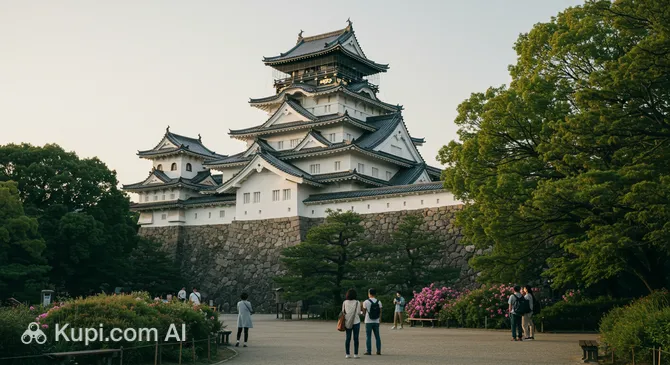
One of the city's main gems is Tsuyama Castle. Although only the impressive stone walls and foundations remain of the original 17th-century castle—once one of the largest in Japan—the site literally breathes history. The castle grounds attract visitors with the opportunity to walk through historical ruins and enjoy panoramic views of the city. The castle is particularly picturesque in spring during the cherry blossom season, when it becomes a popular spot for hanami (flower viewing).

Tsuyama Castle. Illustration.
Source: Kupi.com AI

Traveler photos:

An integral part of the castle heritage is Tsuyama Castle (Kakuzan Park). This extensive park, spread across the former castle grounds, is considered one of the best places in Japan for admiring cherry blossoms. Thousands of cherry trees transform the park into a fairy-tale pink cloud every spring, attracting many tourists and locals. The well-kept paths of Kakuzan Park offer wonderful routes for walking and relaxation at any time of year, allowing visitors to enjoy nature and the historical atmosphere.

Tsuyama Castle (Kakuzan Park). Illustration.
Source: Kupi.com AI

Traveler photos:

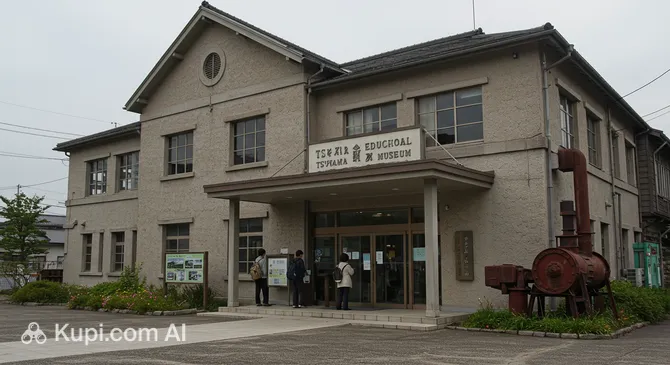
For those interested in technology and transport history, a visit to the Tsuyama Railroad Educational Museum is a must. The museum is located in a historical fan-shaped locomotive depot, which is an interesting architectural object in its own right. Inside, there is an impressive collection of steam locomotives, diesel locomotives, and other railway equipment. The exhibition provides a detailed look at the development of railways in the Chūgoku region and Japan as a whole, making the museum visit educational and exciting for visitors of all ages, especially families with children.

Tsuyama Railroad Educational Museum. Illustration.
Source: Kupi.com AI

Traveler photos:

Local Cuisine

The gastronomy of Tsuyama is an exciting journey where centuries-old Japanese culinary traditions are harmoniously intertwined with unique local features. The city is rightfully proud of its products, and a special place in the hearts of gourmets is held by local beef, known for its high quality and tender taste.

The main gastronomic star of Tsuyama, without a doubt, is the local beef. Cattle are raised with care on surrounding farms, resulting in marbled meat that is incredibly tender and flavorful. Be sure to try dishes like sukiyaki—thinly sliced beef simmered with vegetables in a sweet soy sauce, or yakiniku—pieces of meat that you grill yourself right at the table. These delicacies are served in many restaurants across the city, offering true culinary delight.

In addition to beef, Tsuyama's cuisine is rich in seasonal vegetables and fruits grown on the fertile lands of Okayama Prefecture. Local peaches and Muscat grapes are particularly famous. You can enjoy them fresh, savoring their juiciness and aroma, or as delicious jams, desserts, and refreshing drinks. Don't miss the chance to visit local farmers' markets, which always abound with fresh produce and homemade treats.

The food culture in Tsuyama is diverse and offers options for every taste. Traditional restaurants specialize in beef dishes and other local products. For a more authentic experience, you can stay at an onsen-ryokan (traditional hot spring inn), where you will be offered an exquisite kaiseki meal—a set of many small, skillfully prepared dishes featuring fish, vegetables, and seafood. Street food is also popular: stalls often sell appetizing charcoal-grilled meat and fish snacks, perfect for a quick bite during a walk.

Meals in Tsuyama are accompanied by a variety of drinks. As in all of Japan, you can try traditional sake of various ages and flavors, as well as shochu. Among non-alcoholic drinks, fresh-pressed juices from local fruits, various types of green tea, and, of course, the purest water from mountain springs are popular. These drinks perfectly complement the rich flavors of the local cuisine.

To fully immerse yourself in Tsuyama's gastronomic world, try to attend one of the local food festivals held throughout the year. This is a great opportunity to sample seasonal dishes made from the freshest gifts of nature, participate in culinary masterclasses, and learn the secrets of local chefs. Such events turn the city into a true celebration of taste, attracting gourmets from all over the country.

Travel Tips

Planning a trip to Tsuyama? Wonderful! This charming city in Okayama Prefecture will give you unforgettable impressions, and our practical tips will help make your journey as comfortable and interesting as possible.

  1. Clothing and Essentials: The climate in Tsuyama is temperate with four distinct seasons. In summer (June–August), it can be hot and humid, so bring light, breathable clothing. In winter (December–February), it's cool with occasional light frosts, so warm clothes, a jacket, hat, and gloves will come in handy. Spring and autumn are the most comfortable times with mild weather, ideal for layered clothing. Be sure to bring comfortable shoes, as you will be walking a lot. Don't forget an adapter for electrical appliances (Japan uses type A and B sockets, voltage 100V). When visiting temples or shrines, dress modestly; in some places, you may be required to remove your shoes before entering.
  2. Getting Around Town: Tsuyama is a relatively small city, and its central part is convenient to explore on foot or by bicycle. The main form of public transport is local buses. For trips around Okayama Prefecture and to other cities, you can use JR trains (Tsuyama Line and Kishin Line stations). Taxis are available, especially at the station, but can be expensive. Car rental can be useful if you plan to explore the surroundings, but it's not always necessary for getting around the city itself; remember that Japan has left-hand traffic and requires an international driving permit.
  3. Finances: The official currency is the Japanese Yen (JPY, ¥). It is recommended to have cash with you, as not all small shops, restaurants, and some attractions accept credit cards. You can exchange currency at the airport upon arrival or at banks in large cities; in Tsuyama, exchange options may be limited. ATMs accepting international cards are most commonly found in post offices (Japan Post Bank) and convenience stores (e.g., 7-Eleven). Notify your bank of your trip in advance. Tipping in Japan is not practiced and can be perceived as an insult.
  4. Health and Safety: Japan is one of the safest countries in the world, and Tsuyama is no exception. The crime rate is very low. Nevertheless, always follow basic safety precautions. Pharmacies (marked with the sign "薬" - kusuri) are available, but many medicines may require a prescription, and staff do not always speak English. It's recommended to have a basic first-aid kit with you. Medical care for tourists is available but can be expensive, so be sure to take out travel insurance.
  5. Communication: The official language is Japanese. The level of English proficiency among the local population may not be high, especially outside tourist areas. Learn a few basic phrases in Japanese: "konnichiwa" (hello), "arigato" (thank you), "sumimasen" (excuse me/sorry). For constant internet access, it's recommended to buy a tourist SIM card or rent a pocket Wi-Fi router at the airport. Free Wi-Fi is available in some hotels, cafes, and public places. Map apps (Google Maps) and translators will be useful.
  6. Local Etiquette: Japanese people are very polite and value respect for their culture. Greetings are usually accompanied by a bow; for tourists, a slight nod is sufficient. In public places, especially on transport, try to speak quietly and avoid eating while walking. Remove your shoes before entering homes, some temples, and traditional restaurants (there's usually a special shelf for this). Don't point at people or objects with your finger—use an open palm.
  7. What to Avoid: Do not stick your chopsticks vertically into your rice—this is associated with funeral rituals. Also, avoid blowing your nose loudly in public; it's better to step aside or use a restroom. Don't leave trash anywhere; Japan has very strict waste sorting rules.
  8. Additional Tip: Tsuyama is famous for its castle and Kakuzan Park, which is particularly beautiful during the cherry blossom season (usually in early April). If your visit coincides with this period, be sure to visit the park. Also, take a walk through the Joto Historical District (Joto Street) with its preserved old houses. Learn about local festivals—for example, the Tsuyama Matsuri in autumn—to dive deeper into the local culture.

We hope these tips help you better prepare for your trip and enjoy every moment in Tsuyama. This city with its rich history and beautiful nature is waiting for you! Have a pleasant journey!

Entertainment & Nightlife

Evening and nighttime Tsuyama offers guests a calmer and more authentic atmosphere compared to Japan's megacities. Here, you won't find noisy districts with neon signs at every step, but you can enjoy socializing with locals in cozy establishments and immerse yourself in the city's daily life.

The main concentration of evening entertainment is usually found around the central Tsuyama railway station and the adjacent commercial streets. Here you can find traditional Japanese pubs—izakaya—serving drinks and snacks, small local bars, and, of course, karaoke bars, which are popular in Japan. The atmosphere in such places is generally very friendly and laid-back. There is usually no dress code; a simple and comfortable clothing style is welcome. Most establishments stay open until midnight or slightly later, especially on weekends.

If you are planning an evening out, it is best to start your search for entertainment after 7:00 PM or 8:00 PM, especially on Fridays and Saturdays when locals also head out to relax. Prices in Tsuyama's bars and restaurants are generally moderate. You can get around the city center at night on foot. For longer trips, taxis are available and can be called by phone or found at designated stands, particularly at the station. Public transport runs less frequently at night or stops altogether.

Tsuyama is considered a fairly safe city; however, standard precautions, especially at night, are always a good idea. Try to stay on well-lit streets and avoid deserted places if you are alone. While the data doesn't provide specific names of bars or nightclubs, you will easily find a suitable spot for evening relaxation by walking through the central areas and looking for signs and the number of patrons.

During the day, Tsuyama offers other interesting activities. The city is rich in history, and there is plenty to see. You can visit museums, walk through parks, and enjoy the cultural heritage. For instance, a landmark location is Tsuyama Castle, known for its stone walls and beautiful views, especially during the cherry blossom season in spring. The castle grounds also include the scenic Kakuzan Park, a great place for walks.

Another interesting place for daytime leisure is the Tsuyama Railroad Educational Museum. It will be of interest not only to train enthusiasts but also to anyone wanting to learn more about the development of railway transport in the region. It is an excellent place to visit with family.

Thus, Tsuyama offers diverse opportunities for both evening and daytime recreation, allowing tourists to create a rich itinerary for their stay.

Parks & Museums

Tsuyama invites travelers to enjoy both the peaceful beauty of its green zones and the rich cultural heritage presented in its museums and historical sites. The city offers diverse opportunities for relaxation and learning, from blooming parks to fascinating exhibitions.

The main green gem of the city is undoubtedly Kakuzan Park, spread around the ruins of Tsuyama Castle (Kakuzan Park). This place is especially famous during the cherry blossom season, when thousands of trees turn the park into a fairy-tale pink cloud. Its high points offer magnificent views of the city. The park is ideal for leisurely walks, picnics, and getting to know Tsuyama's historical past, as one of Japan's most impressive castles once stood here.

Tsuyama Castle (Kakuzan Park). Illustration.
Source: Kupi.com AI

Traveler photos:

Another beautiful spot for relaxing in nature is Shurakuen Garden. This traditional Japanese garden, created in the 17th century by order of a local daimyo (feudal lord), offers visitors a tranquil atmosphere with picturesque ponds, elegant bridges, and carefully selected plants. A stroll along its winding paths allows you to escape the city bustle and enjoy the harmony of nature characteristic of Japanese garden art.

For those interested in history and technology, a visit to the Tsuyama Railroad Educational Museum is mandatory. It features an impressive collection of real locomotives, carriages, and other railway artifacts that tell the story of the development of railways in the Chūgoku region. Interactive exhibits and detailed recreated scenes make the museum visit exciting for both adults and children interested in trains and machinery.

Tsuyama Railroad Educational Museum. Illustration.
Source: Kupi.com AI

Traveler photos:

The heart of Tsuyama's historical heritage is Tsuyama Castle itself. Although only the massive stone walls, foundations, and the restored Bitchu-Yagura turret remain of the original grand 17th-century structures, its greatness is still felt. Climbing up to the castle grounds, you can not only touch history but also enjoy panoramic views of the city and the surrounding mountains. This site is an important historical monument and a popular viewing platform.

Tsuyama Castle. Illustration.
Source: Kupi.com AI

Traveler photos:

To dive deeper into the city's cultural and scientific past, it is worth visiting the Tsuyama Archives of Western Learning. It is dedicated to Tsuyama's unique role as one of the centers for studying and spreading Western knowledge (yogaku) in Japan during the Edo period. The exhibition tells the stories of prominent scholars from this area and their significant contributions to medicine, astronomy, and other sciences, making the museum an important cultural site for understanding Japan's modernization.

For authentic impressions and immersion in the atmosphere of old Japan, take a walk through the Joto Historical District (Joto Street). Old merchant houses with characteristic lattice facades have been preserved here, creating a sense of time travel. And if you want to see something less known to the general public, look into the small local temples and shrines scattered around the city, each keeping its unique story and offering a moment of peace.

Getting Around

Public transport in Tsuyama is primarily represented by buses and railway services. Bus routes cover most of the city and its surroundings, providing a convenient way to get around for both tourists and locals. JR West railway lines, including the Tsuyama Line, connect the city with other locations in Okayama Prefecture and larger cities in the region.

Payment on buses is usually made in cash upon exiting (you often need to take a numbered ticket from a machine when entering to determine the fare) or with rechargeable IC transport cards, such as ICOCA, which are widely used in the region. These cards can be purchased and topped up at railway stations. The fare depends on the distance, but typically a single bus or local train trip within the city costs a few hundred yen. Sometimes daily passes for specific bus routes are available, which can be beneficial for active tourists.

Train tickets are purchased at ticket offices or vending machines at railway stations. IC cards can also be used to pay for JR train fares in most cases. Buses generally start running early in the morning and finish in the evening; intervals can be significant, especially on less popular routes, so it's recommended to check the schedule in advance. Schedules are posted at many stops, and information can also be found online or at stations. For planning routes and checking schedules, tourists can use popular Japanese transport apps like Japan Transit Planner or Navitime, which provide up-to-date information and often support English. Specialized apps for paying fares directly in Tsuyama, other than using IC cards via mobile wallets (if the phone supports this function with Japanese cards), generally do not exist—payment is made in cash or by card on the spot.

As an alternative to public transport, taxis are available in Tsuyama. Taxi stands are usually located at the railway station and major sites. A taxi ride will be significantly more expensive but convenient for groups or those with luggage. Bicycle rentals can also be a good option for exploring the city center and nearby parks, especially in good weather. Information about bike rental points can be obtained at tourist information centers.

Accommodation

When planning a trip to Tsuyama, you will find a variety of accommodation options to suit different preferences and budgets. The city offers both traditional Japanese ryokans, where you can immerse yourself in the local culture, and hotels more familiar to Western tourists.

In Tsuyama, you can find accommodation for every taste: from budget guesthouses and hostels, ideal for economical travelers, to comfortable mid-range hotels and more luxurious options. Apartments and short-term rental houses are also available, which can be convenient for families or long stays.

For tourists, the most convenient areas are those located near main attractions, such as Tsuyama Castle, or near Tsuyama Railway Station, which provides easy access to transport for exploring the surroundings. Staying in the central part of the city will put you within walking distance of many restaurants and shops.

While specific famous hotels are not mentioned, both chain and local hotels are represented in Tsuyama. The price range varies: you can find affordable options as well as rooms in higher-class hotels. It is recommended to book accommodation in advance, especially if your trip coincides with peak tourist season or local festivals. To find and book, it is convenient to use popular online platforms or contact the chosen hotel directly.

Nearby Cities

For those looking to explore the surrounding area, Tsuyama serves as an excellent starting point for day trips to several interesting nearby locations.

Okayama, located about 46 km from Tsuyama, is a major regional center. Its main attractions are the magnificent Koraku-en garden, one of the three great gardens of Japan, and the impressive Okayama Castle, nicknamed "Crow Castle" for its black color. It is a great place to immerse yourself in the history and culture of the region.

Maniwa, situated just 23 km away, offers a completely different experience. This town and its surroundings are famous for natural beauties, such as the picturesque Kanba Falls and the Hiruzen plateau. The latter is a popular destination for outdoor activities, known for its dairy farms, hiking opportunities, and cycling routes.

In addition to these options, the region offers other interesting destinations. Below is a table with some nearby cities, their populations, and distances from Tsuyama:

CityPopulationDistance
Kagamino11 8827 km
Shoo10 93311 km
Mimasaka25 49715 km
Maniwa42 25923 km
Sayo15 50833 km

These nearby destinations allow you to gain a fuller understanding of the diverse culture, history, and natural landscapes of Okayama Prefecture and neighboring regions.

Shopping & Souvenirs

Shopping in Tsuyama offers travelers a chance to discover local goods and the Japanese style of trade in the calm atmosphere of a small town. While Tsuyama is not a major center for fashion or electronics, you can find authentic souvenirs, crafts from local artisans, and high-quality Japanese everyday goods. The city isn't famous for any specific types of shops but offers a pleasant experience for those seeking something special and wishing to feel the local flavor.

The main shopping spots are usually concentrated around Tsuyama Station and its surrounding streets. Here you can find small department stores, specialty shops, and traditional Japanese stalls. It's also worth paying attention to covered shopping arcades (shotengai), if any, which often house family businesses offering a variety of goods—from clothing and shoes to food and household items.

Large modern shopping malls comparable to those in Japan's megacities might be few in Tsuyama. However, supermarkets from chains like AEON or Izumiya may be found in the city or its outskirts, where besides groceries, you can find departments with clothing, household goods, and small souvenir sections. It's recommended to check for such centers locally or at tourist information points.

As for markets, Japanese cities often feature morning markets (asa-ichi) where local farmers sell fresh vegetables, fruits, and other products. While information on large permanent markets in Tsuyama is limited, it is worth asking locals or the tourist center about the possibility of visiting such places, especially if you want to buy fresh seasonal produce or local delicacies.

Tsuyama Castle. Illustration.
Source: Kupi.com AI

Traveler photos:

As souvenirs from Tsuyama, you can bring home items made by local craftsmen. Okayama Prefecture, where the city is located, is known for Bizen-yaki pottery, so there's a chance to find examples of it or other types of local ceramics. Traditional Japanese sweets (wagashi), local sake, and textile items with Japanese patterns are also popular. Don't forget to check out the souvenir shops near attractions like Tsuyama Castle or the Tsuyama Railroad Educational Museum, where themed souvenirs might be sold. A visit to Tsuyama Castle (Kakuzan Park) may also provide opportunities to buy mementos.

Most shops in Tsuyama, as in the rest of Japan, open around 10:00–11:00 and work until 19:00–20:00. Small private shops may have individual schedules and a closing day (often Wednesday or Thursday). Large stores and department stores may stay open longer. Regarding payment, cash (Japanese Yen) is still widely used, especially in small shops and at markets. Credit cards (Visa, Mastercard, JCB, American Express) are accepted in most medium and large retail outlets. Electronic payments using IC cards (e.g., ICOCA, Suica) are also becoming more common.

For foreign tourists in Japan, there is a value-added tax refund system (Tax Free). Look for shops with the "Tax-Free Shop" logo. Usually, to process a refund, you need to make a purchase of a certain amount (most often over 5000 yen) and present your passport. The refund is processed directly in the store at the time of purchase or at a special counter.

Reached the end of the page?

That means the route is fully explored