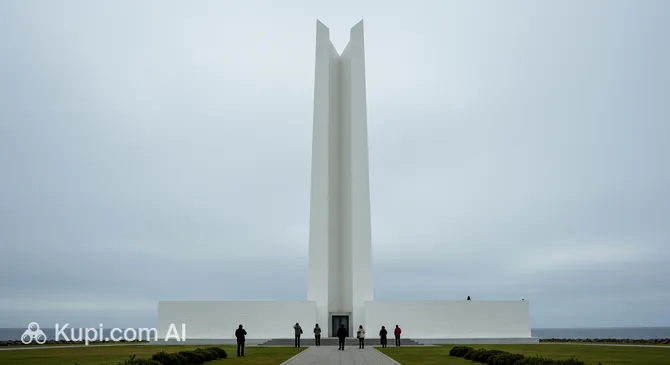
On the northernmost edge of Hokkaido, in the city of Wakkanai, lies one of the country's most poignant memorials — the "Gate of Ice and Snow." This majestic monument, officially known as Hyosetsu-no-mon, serves as an eternal reminder of the Japanese citizens whose fates were forever tied to Sakhalin. Erected in 1963 by the prominent sculptor Shin Hongo, the monument has become a true symbol of resilience and longing for a lost homeland.
Traveler photos:
The architectural ensemble consists of three key elements: eight-meter-tall gates reaching toward the sky, a two-meter bronze statue of a woman, and a sacred stone. Every detail here is full of meaning, reflecting the harsh climate of northern Japan and the unyielding will of the people who endured difficult years.
Today, this site attracts travelers not only for its historical significance but also for its aesthetics. In 2018, the park where the monument is located was added to the "Japan Night View Heritage" list for its impressive illumination. At night, the "Gate" looks particularly solemn, creating a unique atmosphere against the backdrop of the port's flickering lights.