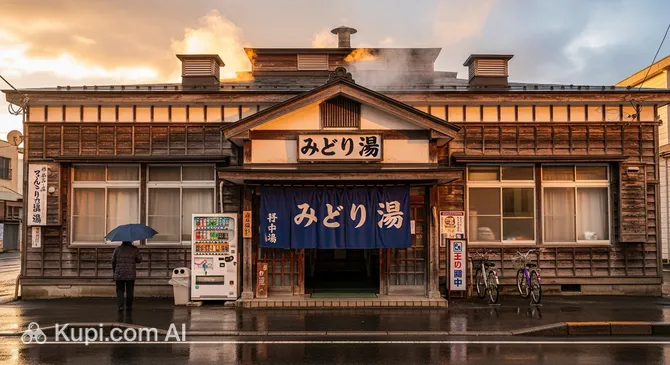
In Japan's northernmost city, Wakkanai, lies a fascinating place that allows you to experience the country's everyday culture. Midori-yu is a traditional Japanese public bath, or sento, which has served as a cozy sanctuary for locals and curious travelers for many years.
Midori-yu. Illustration.
Source: Kupi.com AI
Traveler photos:
The name translates to "Green Bath," likely referring to its location in the Midori district or its proximity to the picturesque hills surrounding the city. Unlike luxury spa resorts, this place offers a truly authentic experience: here you can feel the atmosphere of a retro era and see how ordinary Japanese people spend their leisure time.
For tourists, Midori-yu is a unique chance to get acquainted with bathing rituals in their original form. It is a classic example of a public space where hospitality and tradition are valued above all, making it a must-visit for those seeking off-the-beaten-path experiences on the island of Hokkaido.
Contacts
If you decide to visit Midori-yu, we recommend saving the contact information in advance. The bathhouse is located in a quiet residential area and is easy to find by its characteristic traditional sento building.
The main reason to visit Midori-yu is the deep relaxation found in the hot yu baths. After a long walk in the piercing northern wind, sinking into the hot water feels like pure bliss. You can also take advantage of the sauna to warm up thoroughly and relieve accumulated muscle fatigue.
Interacting with this space requires following traditional etiquette: before entering the communal pool, you must wash thoroughly while sitting on a small stool by the tap. Inside the bathhouse, you can often see characteristic decorative elements, such as wall murals, which create the unique aesthetic of old Japan. Don't forget to take in the local interior—it is steeped in the spirit of everyday life and homey comfort.
Complete your bathing ritual the Japanese way—by buying a bottle of cold milk from a vending machine. This simple gesture makes you feel like part of the local community and allows for final relaxation. Midori-yu is the perfect place for cultural integration and quiet, contemplative rest for both body and soul.
Getting There
Getting to Midori-yu is quite simple. The bathhouse is located just a few kilometers from Wakkanai Station. The fastest way is by taxi, which takes about 5–10 minutes. If you prefer public transport, take a local bus heading toward the Midori district; up-to-date schedules are always available at the tourist information center at the station.
For those who enjoy walking, the journey from central Wakkanai takes about 30–40 minutes. It is a great opportunity to see the city from the inside and enjoy the fresh sea air. Navigation coordinates: 45.394114, 141.685665.
If you are arriving from Sapporo on the Limited Express Sarobetsu or flying into Wakkanai Airport, you first need to reach the central station and head to the bathhouse from there. The location of the bathhouse makes it easy to combine a visit with a walk along the city's northern routes.
Nearest city: Wakkanai
History & Facts
While Midori-yu might not often appear in major historical chronicles, its existence is inextricably linked to the development of Wakkanai as an important port center in northern Hokkaido. In the 20th century, public baths like this were vital for fishermen and port workers returning from the cold sea, as well as for residents of nearby homes.
The sento culture itself dates back to the Edo period. It emerged as an affordable way to maintain hygiene for those without home baths and quickly evolved into an important social institution. Midori-yu continues these traditions, preserving a soulful atmosphere and retro interiors that recall the Japan of past decades.
The name of the Midori district, where the bathhouse is located, translates to "Green." This is a reference to the picturesque hills of Wakkanai, which are covered in lush vegetation during the summer, creating a striking contrast with the region's harsh winter landscapes. The bathhouse serves as a sanctuary of warmth and comfort in this northern land.
Time Needed
For a complete visit to Midori-yu, it is recommended to set aside about 1–2 hours. This is enough time to unhurriedly go through the bathing ritual, spend 20–30 minutes in the hot bath, and relax for a bit in the changing area afterward.
If you plan to use the sauna or simply want to enjoy the atmosphere of tranquility away from the tourist bustle for longer, allow for a bit more time. A visit to a sento is not just about hygiene; it is an opportunity to slow down and restore your energy the Japanese way.
Working Hours
The exact schedule of Midori-yu may vary, so it is recommended to check the establishment's official blog or ask at your hotel reception before visiting. Typically, traditional sento in Japan open their doors in the afternoon, around 3:00 PM or 4:00 PM, and stay open until late evening.
Keep in mind that bathhouses may have scheduled cleaning days or maintenance breaks. To ensure your visit goes smoothly, you can call ahead to confirm the current schedule. Visiting on weekdays will allow you to enjoy the atmosphere in a quieter setting.
Nearby
Exploring the surroundings of Midori-yu will help you get a better feel for the unique character of Japan's northernmost city. After a relaxing bath, it’s pleasant to walk to historical monuments or view the unusual architectural sites nearby.
This area features many monuments dedicated to northern explorers and the history of relations with Sakhalin, as well as cozy spots to spend the evening.