Support

Ukunda

About

Ukunda is a vibrant coastal town situated in Kwale County, acting as the primary commercial hub and gateway to the celebrated southern coast of Kenya. While it is often viewed as a transit point for travelers heading to nearby resorts, Ukunda possesses its own energetic atmosphere and serves as a vital lifeline for the region's tourism industry. The town offers a fascinating glimpse into local life, contrasting with the laid-back luxury of the adjacent beach destinations.
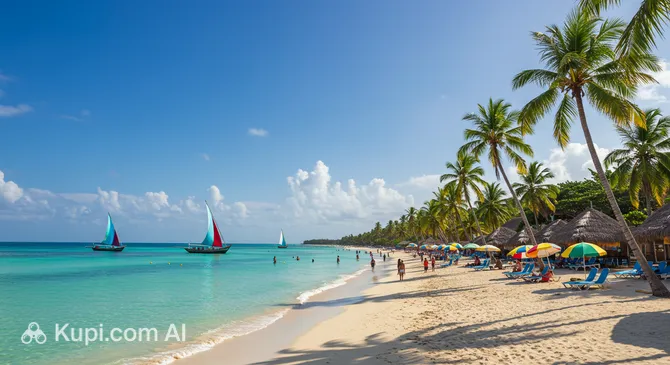
Ukunda. Source: Kupi.Binoculars

Geographically, the town is located just inland from the Indian Ocean, enjoying a warm, tropical climate that makes it a year-round destination. With a population of approximately 24,600 residents, it is large enough to offer essential services and bustling markets, yet small enough to retain a welcoming community feel. The history of Ukunda reflects its evolution from a modest settlement into a crucial economic center that supports the thriving tourism sector of the South Coast.

Most visitors know Ukunda because of its proximity to Diani Beach, often voted one of the best beaches in Africa, which is just a short drive away. The town is also home to the Ukunda Airstrip, a convenient entry point that connects tourists directly to Nairobi and other major hubs, bypassing the need for a ferry crossing from Mombasa. For those looking to explore beyond the white sands, the local markets in Ukunda provide an authentic experience where one can buy fresh tropical fruits and handcrafted souvenirs.

Whether you are landing at the local airstrip or passing through on your way to the pristine shores of the Indian Ocean, Ukunda offers a warm introduction to the coastal charm of the region. It is the perfect starting point for an unforgettable tropical adventure.
Weather Overview

Ukunda experiences a tropical climate characterized by consistent warmth and varying levels of humidity throughout the year. For travelers planning their activities, checking the detailed weather in Ukunda is recommended to choose the best time for a visit. Generally, the town remains hot and suitable for beach activities, though distinct wet and dry seasons influence the travel experience.

The temperatures are highest at the beginning of the year, with February often being the hottest month, featuring average highs of 32.5°C. The weather cools down slightly during the middle of the year; July and August are typically the coolest months, with average temperatures hovering around 24.4°C and lows dipping to approximately 21.8°C.

Rainfall patterns vary significantly, with precipitation frequency peaking in April, which sees about 28 wet days. In contrast, February is usually the driest month in terms of rain frequency, recording only about 4 wet days. Expect consistently warm temperatures year-round with frequent showers during the rainy season and drier, sunny spells in the early months of the year.

Interesting Facts

Beyond the main attractions, Ukunda holds many fascinating secrets that reveal its unique ecological and cultural depth. From ancient geological formations to distinctive wildlife conservation efforts, there is much to discover in this bustling coastal hub.
Diani Beach. Source: Kupi.Binoculars
  • The region is a sanctuary for the rare Angolan black-and-white colobus monkeys, which are frequently spotted in the trees. Uniquely, the area features designated "colobridges"—ladder-like structures suspended over the roads—that allow these primates to cross safely, showcasing a heartwarming coexistence between urban development and nature.

  • The very ground beneath Ukunda is composed largely of fossilized coral rock, a testament to the area's geological history under the ocean. This formation has created a network of natural caves along the coast, some of which are used by locals as shrines or have been creatively adapted into stunning restaurant settings.

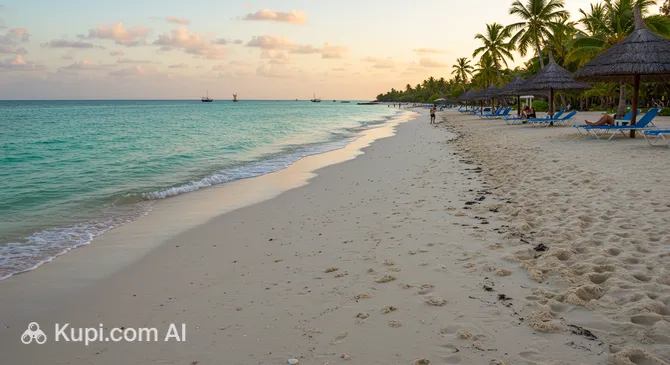
  • While the town is the commercial heartbeat of the area, it merges almost seamlessly with the pristine white sands of Diani Beach. This creates a striking visual contrast where the vibrant red earth of Ukunda's roads meets the lush green palm fringe and turquoise waters within just a few minutes of travel.

  • Ukunda is historically situated within the homeland of the Digo people, a subgroup of the Mijikenda community. The surrounding region is dotted with sacred forests known as "Kayas," which are revered as spiritual homes for ancestors and play a crucial role in preserving the local biodiversity and traditional medicinal plants.

How to Get There

Reaching this coastal destination is relatively straightforward, with options to suit different travel styles and budgets. Whether you prefer a direct flight to the coast or a scenic drive from a neighboring city, you can find more about how to get to Ukunda and plan your journey accordingly.

The most convenient entry point is Ukunda Airport (IATA: UKA), which is located directly in the town, just 0.9 km from the center. This small but busy airstrip mainly serves domestic flights from Nairobi and other local hubs, allowing travelers to bypass the busy ferry crossing in Mombasa. Upon arrival, the transfer to the town center or nearby beach resorts is very quick, taking approximately 20 minutes by taxi.

For those arriving on international flights, the city of Ukunda does not have its own major international hub, but you can fly into Moi International Airport (IATA: MBA) in the city of Mombasa, which is about 28 km from Ukunda. This is the primary gateway for the Kenyan coast, handling a large volume of passenger traffic annually. A taxi or shuttle bus from Mombasa to Ukunda takes around 65 minutes, though travelers should be aware that the journey involves crossing the Likoni Ferry, which can sometimes add to the travel time.

For clarity, here is a summary of the main airports:

Airport Name City Passenger Traffic Km from City
Moi International Airport Mombasa Large 28.2
Malindi Airport Malindi Medium 130.9
Ukunda Airport Ukunda Medium 0.9
Wawi Airport Pemba Medium 110.6
Tanga Airport Tanga Small 104.5

Main Attractions

Ukunda serves as the gateway to some of the most spectacular coastal experiences in Kenya. The town and its immediate surroundings offer a perfect blend of natural beauty, luxurious relaxation, and culinary delights, making it a diverse destination for travelers.

Undoubtedly the most famous attraction in the area is Diani Beach. Stretching along the Indian Ocean, this world-renowned beach is celebrated for its blindingly white sands and turquoise waters. It is a paradise for water sports enthusiasts, offering world-class conditions for kitesurfing, snorkeling, and scuba diving among vibrant coral reefs. For those who prefer relaxation, the palm-fringed shoreline provides an idyllic setting to soak up the tropical sun.

Diani Beach. Source: Kupi.Binoculars

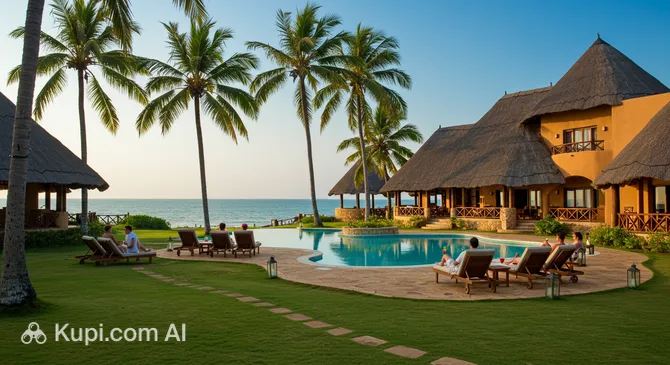
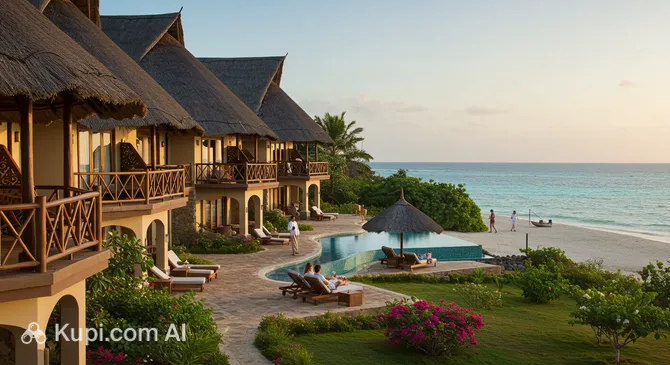
For travelers seeking a blend of architectural beauty and luxury, the Swahili Beach Resort is a must-see destination in itself. This resort is famous for its stunning design, which harmoniously fuses Swahili, Arab, and Indian influences. Visitors are often captivated by its cascading seven-layer swimming pool that winds down towards the ocean, creating a visually striking landscape that is perfect for photography and leisure.

Swahili Beach Resort. Source: Kupi.Binoculars

Sports enthusiasts and those looking for active recreation will find Leisure Beach & Golf Resort to be a unique attraction. Apart from its prime beachfront location, it is home to one of the few 18-hole championship golf courses in the region. This makes it an excellent spot for tourists who wish to combine a classic beach holiday with a round of golf amidst lush, tropical vegetation.

Leisure Beach & Golf Resort. Source: Kupi.Binoculars

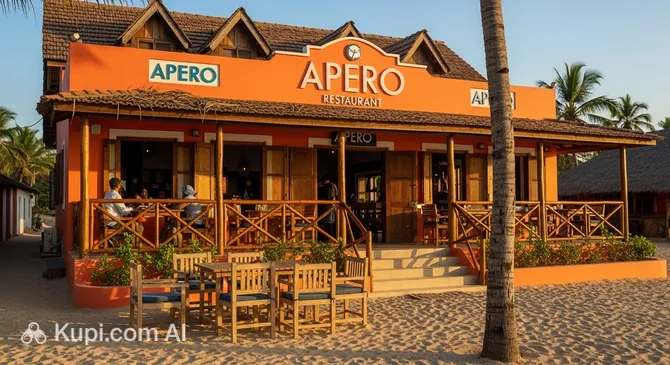
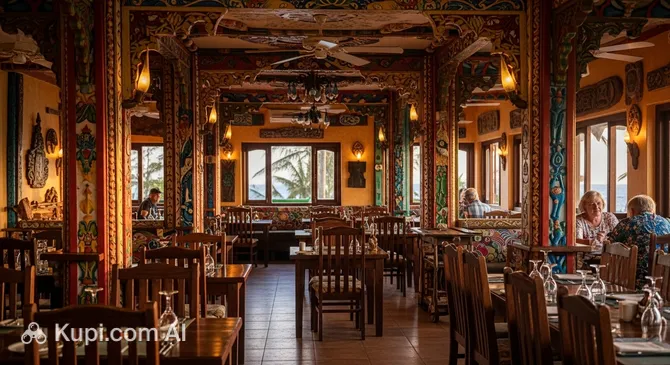
The culinary scene in Ukunda also offers gems like Apero, a restaurant that has gained popularity among locals and tourists alike. Known for its welcoming atmosphere and delicious menu, it provides a wonderful opportunity to dine out and experience the hospitality of the coast. Whether you are looking for a casual meal or a special evening out, it adds a flavorful touch to the Ukunda experience.

Apero. Source: Kupi.Binoculars

Local Cuisine

The culinary landscape of Ukunda is a tantalizing reflection of the wider Swahili culture, blending African, Arabian, and Indian influences into dishes bursting with flavor. Being a coastal town, the food scene is heavily dominated by fresh seafood and the abundant use of coconut and aromatic spices like cloves, cardamom, and cinnamon. Visitors can expect a gastronomic journey that ranges from humble street food stalls to sophisticated dining establishments near the beach.

A must-try dish in this region is Samaki wa Kupaka, a flavorful delicacy consisting of charcoal-grilled fish coated in a rich, spicy coconut tamarind sauce. It is often served with Wali wa Nazi (coconut rice) or Chapati, creating a comforting and authentic meal. Another local favorite is Pilau, a spiced rice dish often cooked with beef or chicken, which is a staple at celebrations and gatherings but readily available in many local eateries.

For those who prefer land-based protein, the Kenyan staple Nyama Choma (grilled meat) is widely available and deeply loved. It is traditionally eaten with Kachumbari, a fresh tomato and onion salad, and Ugali. If you are looking for a hearty steak or a lively atmosphere to enjoy a meal, Sizzlers Steak House and Pub is a popular spot. It offers a mix of international and local meat dishes, making it a great place to unwind after a day of exploring.

Sizzlers Steak House and Pub. Source: Kupi.Binoculars

The streets of Ukunda offer their own delicious treasures. In the mornings and evenings, you will find vendors selling Mahamri, sweet, hollow doughnuts often paired with pigeon peas cooked in coconut milk (Mbaazi). For a quick savory snack, try Viazi Karai, which are battered and deep-fried potatoes usually served with a tangy tamarind chutney. These affordable bites provide a genuine taste of the local lifestyle.

The town's dining scene is diverse, catering to various palates. While many tourists stick to the beach resorts, venturing into the town or visiting standalone restaurants can be very rewarding. For instance, Shashin-ka is another notable establishment where visitors can enjoy well-prepared meals in a pleasant setting. The variety of restaurants ensures that whether you crave traditional Swahili curries or international cuisine, you will find something to satisfy your appetite.

Shashin-ka. Source: Kupi.Binoculars

To beat the coastal heat, nothing compares to Madafu, fresh coconut water drunk straight from the shell, which is sold by vendors on nearly every corner. For an evening drink, the famous Kenyan cocktail known as Dawa—made with vodka, lime, honey, and crushed ice—is a refreshing choice. Beer lovers should not leave without trying a cold Tusker, the iconic local lager that pairs perfectly with the humid tropical evenings.

Travel Tips

Visiting Ukunda offers a wonderful opportunity to experience the authentic rhythm of the Kenyan coast before hitting the pristine sands of Diani. To ensure your trip is as smooth and enjoyable as possible, here is a collection of practical advice to help you navigate the local culture, climate, and daily life with ease.

  1. Clothing and Gear: The climate in Ukunda is hot and humid year-round, so pack lightweight, breathable fabrics like cotton and linen. While swimwear is perfect for the beach, remember that the town itself has a significant Muslim population and is socially conservative. When walking around Ukunda town, visiting markets, or using public transport, it is respectful to dress modestly by covering your shoulders and knees. A hat, high-SPF sunscreen, and sunglasses are essential protection against the strong equatorial sun.
  2. Transportation: Getting around is an adventure in itself. Tuk-tuks (three-wheeled auto-rickshaws) are the most popular and convenient way to travel short distances; always agree on the fare before hopping in. For a faster solo trip, Boda-bodas (motorcycle taxis) are available, but ensure the rider provides a helmet. For longer distances or trips to Mombasa, Matatus (minibuses) are a cheap local experience, though they can be crowded. Taxis and ride-hailing apps are also available for a more comfortable journey, especially at night.
  3. Finances: The local currency is the Kenyan Shilling (KES). While major hotels and supermarkets accept credit cards (Visa and Mastercard are most common), cash is king in local markets and smaller eateries. ATMs are readily available at shopping centers in Ukunda. Mobile money, specifically M-Pesa, is widely used for everything from paying bills to buying snacks, so consider setting it up if you stay for a while. Tipping is appreciated; around 10% is standard in restaurants if a service charge isn't included.
  4. Health and Safety: Ukunda is in a malaria zone, so sleeping under a treated mosquito net and using strong insect repellent, especially in the evenings, is crucial. Stick to drinking bottled water and avoid tap water or ice cubes of unknown origin. Pharmacies are well-stocked in town, and reputable medical facilities like Diani Beach Hospital are nearby for emergencies. Generally, the area is safe, but avoid walking in unlit areas or on the beach alone at night.
  5. Communication: English is widely spoken and is the official language, making communication easy for most tourists. However, learning a few words of Swahili goes a long way in building rapport with locals. A friendly "Jambo" (Hello) or "Asante" (Thank you) is always received with a smile. Buying a local SIM card (Safaricom or Airtel) is cheap and easy at registered shops with your passport, providing excellent 4G coverage.
  6. Local Etiquette: The coastal culture is warm and polite. Greetings are very important; take a moment to ask "Habari?" (How are you?) before starting a transaction or asking a question. Public displays of affection should be kept modest to respect local norms. Always ask for permission before taking photographs of people, as many locals value their privacy.
  7. What to Avoid: Do not engage in topless sunbathing or walk through the town center in just your swimwear; this is considered offensive in the local culture. Additionally, be firm but polite when dealing with "beach boys" or street vendors selling souvenirs—if you are not interested, a firm "No, thank you" is usually respected, but getting angry or aggressive is counterproductive.
  8. Watch Out for Wildlife: A unique aspect of staying in and around Ukunda is the presence of monkeys, particularly the Sykes' and Vervet monkeys, as well as baboons. They can be mischievous and are known to snatch food. Keep your windows and balcony doors closed when you leave your room, and avoid feeding them, as they can become aggressive if they associate humans with food.

By keeping these tips in mind, you will be well-prepared to embrace the laid-back coastal lifestyle of Ukunda. Whether you are bargaining in the markets or catching a tuk-tuk to the beach, a little local knowledge ensures your adventure is safe, respectful, and truly memorable.

Entertainment & Nightlife

The nightlife in Ukunda and its neighboring beach areas offers a relaxed yet spirited mix of open-air bars, beachside lounges, and lively pubs. Unlike the high-intensity club scenes found in major capitals, the entertainment here is defined by the warm tropical breeze and a friendly, multicultural atmosphere. The action typically centers along the main Diani Beach Road, where tourists and locals mingle to enjoy music ranging from Reggae and Afro-beats to international pop hits.

For those looking to start their evening with a casual vibe, Sizzlers Steak House and Pub is a popular local fixture. It serves as a great meeting point where you can watch live sports, enjoy cold drinks, and experience a bustling atmosphere that often extends late into the night. It is unpretentious and welcomes a diverse crowd, making it an excellent spot to chat with residents and get a feel for the town's social pulse.

Travelers seeking a slightly more sophisticated setting for evening cocktails and dining might prefer Apero. This venue is well-regarded for its ambiance and quality service, offering a perfect backdrop for a laid-back night out. Additionally, for a unique evening that combines fine dining with a serene environment, Shashin-ka provides a tranquil escape where the focus is on excellent food and conversation, suitable for those who prefer a quieter end to their day.

The dress code throughout most of Ukunda's nightlife venues is "coastal casual." Light fabrics, shorts, and sandals are generally acceptable, though some upscale resort bars may require smart-casual attire. The party usually starts late, with most bars filling up around 10:00 PM. Prices are generally reasonable, with local beers and cocktails costing significantly less than in Western countries, though prices can be higher in exclusive beach resorts.

Safety is an important consideration when enjoying the nightlife. While the main tourist strip is generally safe, it is strictly advised not to walk on the beach at night, as it is unlit and can be risky. Always take a taxi or a trusted tuk-tuk to move between venues, even if the distance seems short. Tuk-tuks are widely available and affordable, but for late-night returns, arranging a taxi beforehand or using a hotel recommendation is the safest option.

During the daylight hours, entertainment in Ukunda shifts towards nature and outdoor activities rather than traditional amusement parks or theaters. Visitors can explore local conservation centers like the Colobus Conservation to learn about primates or take boat trips to nearby marine parks for snorkeling. The town serves as a hub for these excursions, offering plenty of ways to stay entertained before the sun goes down.

Parks & Museums

Ukunda is a destination defined more by its stunning natural landscapes and living heritage than by traditional indoor museums or manicured city parks. The "green spaces" here are wild, tropical, and teeming with life, while the cultural history is etched into ancient coral structures and sacred forests rather than displayed in glass cabinets. Visitors will find that the outdoors serves as the primary gallery for exploring the region's beauty and history.

The most significant natural area is undoubtedly Diani Beach. While technically a beach, it functions as a vast recreational park where the line between land and ocean blurs. The area is backed by a lush coastal forest that is vital for local biodiversity. It serves as a playground for both humans and wildlife, offering a pristine environment for walking, swimming, and observing the monkeys that frequent the tree line. It is the heart of the region's natural appeal and a must-visit for every traveler.

Just a short distance from the town center lies the Colobus Conservation, a unique nature center dedicated to the preservation of the Angolan black-and-white colobus monkey. While not a traditional park, it offers guided nature walks through the forest, providing an intimate look at the indigenous flora and the conservation efforts in place. It is an educational experience that allows visitors to see these rare primates up close and understand the ecological balance of the South Coast.

For those interested in history and culture, the Kongo Mosque stands as a remarkable open-air museum of sorts. Located at the mouth of the Tiwi River, this 14th-century structure is the oldest mosque in East Africa still in use. It is built from coral stone and offers a poignant glimpse into the region's ancient Swahili and Islamic heritage. Surrounded by ancient baobab trees and the ocean, it provides a serene atmosphere where history feels tangibly present.

Another profound cultural site is the Kaya Kinondo Sacred Forest. This is one of the few sacred forests of the Mijikenda people that is open to the public. Visiting here is like stepping into a living museum where nature and spirituality intertwine. Guides from the local community lead visitors through the dense vegetation, explaining the traditional uses of medicinal plants and the spiritual significance of the forest, offering a deeply authentic cultural encounter.

While Ukunda lacks conventional art galleries, the local craftsmanship is an art form in itself. Local Craft Markets along the main road function as vibrant, informal galleries where artisans display intricate wood carvings, Maasai beadwork, and colorful fabrics. Stopping by these stalls offers a chance to engage with local creators and appreciate the artistic traditions that thrive in this coastal community.

Getting Around

Public transport in Ukunda is informal, vibrant, and decentralized, relying heavily on a network of privately owned vehicles rather than a scheduled government-run system like a metro or tram. For visitors, navigating this system is an essential part of the coastal experience. The options are plentiful, affordable, and offer a unique way to interact with the local community while moving between the town center, the airstrip, and the beach areas.

The most common form of transport for longer distances along the main roads is the Matatu. These are minibuses, often flamboyantly decorated with colorful graffiti and playing loud music, that ply the main highway connecting Ukunda to the Likoni Ferry in the north and the Tanzanian border to the south. Matatus do not have strict timetables; they depart when full and stop at designated stages or whenever a passenger signals. They are the most economical way to travel, but they can be crowded and drive quite fast.

For shorter trips within the town and to the hotels along the coast, Tuk-tuks (three-wheeled auto-rickshaws) are the most popular choice. They are everywhere, easy to flag down, and can carry up to three passengers. They offer a breezy, open-air ride that is perfect for the tropical climate. Another option for solo travelers looking for speed is the Boda-boda (motorcycle taxi). These are agile and can weave through traffic, but passengers should always insist on a helmet and exercise caution, as safety standards vary.

The payment system across all these modes is almost exclusively cash. There are no travel cards, passes, or ticket machines. You pay the conductor (in matatus) or the driver (in tuk-tuks and boda-bodas) directly. It is highly advisable to carry small denominations of the local currency, as drivers often struggle to find change for large banknotes. While mobile money, specifically M-Pesa, is widely accepted by many drivers, cash remains the quickest and most preferred method for small fares.

For tourists, the golden rule of using tuk-tuks and boda-bodas is to negotiate the fare before getting in. Prices are generally not metered. Ask a local or your hotel reception for the standard rate to your destination so you have a baseline for bargaining. Matatus, on the other hand, usually have fixed standard fares for specific distances, so you simply pay what the conductor asks, which is typically very low.

Transport operates from early morning until late at night, but availability decreases significantly after dark. Matatus and tuk-tuks are plentiful during daylight hours. If you are traveling late at night, it is safer and more reliable to arrange a private taxi or use a trusted contact rather than flagging down a random vehicle on the street.

For those seeking more comfort or fixed pricing, ride-hailing apps like Uber and Bolt are operational in the area. Interestingly, in Ukunda, you can often use these apps to hail a tuk-tuk as well as a standard car, providing a balance between convenience and local flair. Standard private taxis are also available, usually parked near major supermarkets, banks, and hotel entrances; they are more expensive but offer air-conditioned comfort and privacy.

Accommodation

Where to Stay:

Accommodation in Ukunda caters to a diverse spectrum of travelers, ranging from backpackers seeking authentic local experiences to luxury seekers looking for world-class amenities. The options are generally divided geographically: the town center offers affordable, functional guesthouses and budget lodgings, while the coastal strip along Diani Beach Road is lined with high-end resorts, boutique hotels, and private villas.

For visitors who prioritize convenience to the ocean and a resort-style experience, the area along the beach is the most popular place to stay. Here, you will find extensive properties that offer all-inclusive packages, swimming pools, and direct beach access. A prime example of this luxurious style is the Swahili Beach Resort, which is renowned for its architectural grandeur and cascading pools, making it a favorite for honeymooners and travelers seeking indulgence.

If you are interested in combining your stay with active recreation, the Leisure Beach & Golf Resort is a notable option. Situated atop a coral cliff with commanding views of the ocean, it provides a unique setting that features an 18-hole golf course, catering to sports enthusiasts who want to stay active during their holiday.

Travelers on a tighter budget will find excellent value within Ukunda town itself. While further from the sand, these establishments often provide a friendly, community-oriented atmosphere and easy access to local markets and transport hubs like the airstrip. It is also becoming increasingly popular to rent private apartments or cottages, which offer a "home away from home" feeling and are perfect for families or long-term stays.

Booking Tip: Ukunda and the surrounding coast are premier holiday destinations, especially during the peak season from December to January and around Easter. It is highly recommended to book your accommodation several months in advance for these periods to secure your preferred spot and avoid inflated prices.

The price range varies drastically, from very economical budget rooms in the town center to premium rates at the beachfront five-star hotels. Most resorts and mid-range hotels can be easily booked via major online platforms or travel agents. However, for smaller guesthouses in the town, contacting them directly or paying in cash upon arrival (if availability permits) is often the norm.

Nearby Cities

For those looking to explore the surroundings, Ukunda serves as an excellent base for day trips to several interesting nearby locations:

Just a short drive away lies the vibrant city of Mombasa. As the second-largest city in Kenya, it is a cultural melting pot known for its historical significance. Visitors can explore the UNESCO World Heritage Site of Fort Jesus, wander through the narrow streets of the Old Town, or enjoy the lively atmosphere of its markets. It is an essential stop for anyone wanting to understand the coastal history of the region.

Heading further north, travelers can visit Bamburi, which is famous for its nature and leisure activities. A key attraction here is Haller Park, a reclaimed quarry that has been transformed into a thriving ecosystem with giraffes, hippos, and tortoises. It offers a peaceful retreat and a chance to see wildlife close to the city.

Another fascinating destination is Kilifi, located along a stunning creek. Known for its laid-back atmosphere, it is home to the ancient Mnarani Ruins, which date back to the 14th century. The town offers a mix of history and scenic beauty, making it a perfect spot for a relaxing day trip away from the busier tourist hubs.

City Population Distance (km)
Mombasa 1208333 29
Kilifi 122899 94
Malindi 119859 133
Machakos 114109 399
Bamburi 80000 36

These nearby destinations offer a glimpse into the diverse culture and landscapes of the region.

Shopping & Souvenirs

Shopping in Ukunda offers a delightful mix of authentic local commerce and tourist-oriented retail. While the town is not known for massive luxury malls or high-end fashion districts, it serves as the commercial lifeline for the South Coast. Visitors can expect a vibrant atmosphere where modern supermarkets coexist with bustling open-air stalls. The experience ranges from bargaining for fresh tropical fruits under the sun to browsing boutique shops for high-quality African crafts in air-conditioned comfort.

The primary commercial activity is concentrated along the Mombasa-Lunga Lunga Highway and the junction leading towards Diani Beach. This area acts as the town's main artery, lined with hardware stores, banks, pharmacies, and general supply shops. As you move from the town center down Diani Beach Road, the shopping landscape shifts to cater more to travelers, featuring curio shops, art galleries, and plazas that stock imported goods and beach essentials.

For a more conventional shopping experience, there are a few key centers that serve both locals and tourists. The Diani Beach Shopping Centre is a well-known hub where you can find a variety of boutiques, a well-stocked supermarket, and souvenir stores all in one place. Another notable spot is the Baharini Shopping Centre, which offers a relaxed environment to shop for groceries, books, and safari wear. These malls are excellent stops for restocking supplies, withdrawing cash, or picking up high-quality gifts without the hustle of the street markets.

To truly understand the local rhythm, a visit to the open-air Ukunda Market is essential. This is where the town comes alive with color and noise. Here, vendors display mounds of fresh mangoes, pineapples, and avocados, alongside fresh fish caught that morning. It is also a great place to find "Mitumba" (second-hand clothes), which can sometimes yield surprising vintage treasures. For souvenirs, look out for the roadside Maasai Markets, where artisans sell handmade jewelry, sandals, and wood carvings directly to passersby.

When it comes to souvenirs, Ukunda and its surroundings are a treasure trove of Kenyan craftsmanship. The most popular items to bring back include Kangas and Kikoys—colorful, versatile fabrics that are a staple of Swahili culture. Soapstone carvings, intricate Maasai beadwork, and hand-woven Kiondo baskets are also top choices. For a taste of the coast, packets of local spices or a bottle of pure coconut oil make for excellent, practical gifts.

Most shops in Ukunda operate from around 8:00 AM to 6:00 PM, though supermarkets and shopping centers along the beach road often stay open until 8:00 PM or later. While larger stores, hotels, and established curios shops accept credit cards (Visa and Mastercard), cash is the preferred method of payment in local markets and smaller kiosks. The mobile money service M-Pesa is ubiquitous and accepted almost everywhere, from buying a banana on the street to paying for groceries at the supermarket.

Tax-free shopping is generally not a standard feature for varied retail purchases in smaller towns like Ukunda. Visitors should not expect a VAT refund system for everyday goods or souvenirs. Prices in supermarkets are fixed, but bargaining is expected and encouraged in open-air markets and curio stalls, where the final price often depends on your negotiation skills and a friendly smile.

Reached the end of the page?

That means the route is fully explored