Support

Khong

About

Khong is a charming and peaceful corner located in the heart of the picturesque Si Phan Don archipelago, also known as the "4,000 Islands." This small town, the administrative center of the district of the same name, attracts travelers with its relaxed atmosphere and authentic way of life.
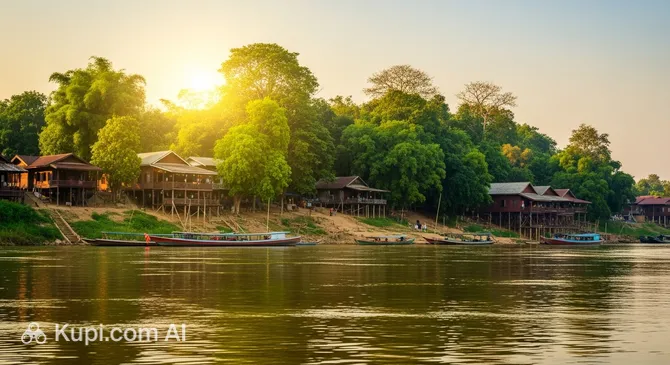
Khong. Illustration.
Source: Kupi.com AI

Located in the south of Laos, in Champasak Province, Khong serves as an excellent starting point for exploring the region. The town is situated on the largest island of the archipelago—Don Khong, washed by the waters of the mighty Mekong River. The population here is small, around 10,000 people, which only enhances the sense of coziness and seclusion away from noisy metropolises.

Strolling through the streets, you can notice traces of the past: buildings of French colonial architecture have been preserved here, harmoniously neighboring traditional wooden houses on stilts. The rich history of Khong is closely intertwined with the river and the region's trade routes, which has left its mark on the culture and traditions of the local residents.

Among the main attractions, the Buddhist temple Wat Phou Khao Kaeo stands out, known for its beautiful stupa and peaceful setting. The island is ideal for leisurely cycling: travelers can enjoy views of emerald rice fields and palm groves. Additionally, Khong is often chosen as a base for trips to the region's famous waterfalls and for spotting the rare Irrawaddy dolphins.

If you are looking for a place where time seems to slow down, Khong is the perfect choice. It is a wonderful opportunity to experience genuine Lao hospitality and enjoy unforgettable sunsets over the Mekong.

Weather Overview

The climate in Khong has its own unique features that should be taken into account when planning a trip. Generally, expect warm summers with frequent rainfall and fairly cool, dry winters. The weather here promotes a relaxed vacation but requires the right choice of wardrobe depending on the season.

The coolest period lasts from December to February. In January, the average temperature is about 15.1°C, and at night the thermometer can drop to 10-11°C, so warm clothes for evening walks will be essential. This time of year is characterized by a relatively small amount of precipitation, although cloudy days are still possible.

With the arrival of spring, the air begins to warm up. By April, the average temperature rises to 23.3°C, and maximum values reach 28°C. The summer season and the beginning of autumn (from May to September) bring the rainy season. During this period, especially in August, the highest number of rainy days is observed—up to 29 per month. To choose the perfect time for a visit, we recommend checking in advance what weather in Khong is expected during your travel dates. Despite the high humidity in summer, the temperature remains stable and comfortable, staying around 24°C.

Average monthly temperature

Average monthly precipitation

Interesting Facts

Khong holds many interesting details that only attentive travelers discover. This town, located on the largest island of the archipelago, has unique features that set it apart from the rest of the region.
  • Birthplace of a President. The town of Khong (and the island of Don Khong) is known as the birthplace of Khamtai Siphandon, one of the country's former presidents. This fact played a key role in the development of local infrastructure: high-quality paved roads have been laid here, and a stable electricity supply is provided, which favorably distinguishes this area from many others for which Laos is famous.

  • A Bridge to the Mainland. Unlike the neighboring islands of Don Det and Don Khon, which tourists reach exclusively by boat, Khong is connected to the mainland by a road bridge. This makes it the only part of the "4,000 Islands" archipelago that can be entered directly by bus or car, significantly simplifying travel logistics.

  • Sugar Palms. The surrounding landscape is adorned with tall Borassus palms. Local residents traditionally collect their sap to produce palm sugar and special treats. These delicacies, often wrapped in banana leaves, can be bought at small roadside stalls directly from the producers.

  • Colonial-style Museum. The town is home to the Regional Museum of Siphandon. It is located in a two-story mansion built in the French colonial style. The exhibition includes traditional musical instruments, photographs, and household items that tell the story of the province's past.

How to Get There

When planning your route, it is important to study the logistics in advance and find out how to get to Khong to make your journey as comfortable as possible. Since the location itself lacks its own airport, tourists will have to take a combined route: a flight to one of the nearest transport hubs followed by a transfer to ground transportation.

Geographically, one of the closest options is Dien Bien Phu Airport (DIN), located in Vietnam. The distance to the town is only about 132 km. However, keep in mind that choosing this air hub will require crossing a state border, so it is necessary to take care of visa issues in advance. The drive from the airport will take several hours and will allow you to enjoy views of mountain landscapes.

An alternative is Wenshan Puzhehei Airport (WNH) in China, located about 150 km away. For those who prefer to travel within the country and want to avoid international land crossings, Luang Namtha Airport (LXG) is suitable. Although it is nearly 267 km away, this route is convenient for travelers already in Laos.

Below is detailed information about the airports that can be used as transit points, including passenger traffic data to help estimate the hub's busy periods:

AirportPassenger trafficDistance
Dien Bien Airport210 000132 km
Wenshan Puzhehei Airport230 945150 km
Pu'er Simao Airport642 350247 km
Sam Neua65 000247 km
Oudomxay Airport15 000249 km

There is no direct rail connection to the town, so the final stage of the journey is traditionally completed by road. Travelers can use inter-provincial buses or book a private transfer for greater comfort. Driving along the local roads is a pleasure in itself, allowing you to see the authentic life of the region from the car window.

Main Attractions

Despite its modest size, Khong offers travelers several amazing spots that provide a deeper understanding of the culture and history of this riverside region. There are no noisy entertainment centers here, but there are monuments that preserve the spirit of past centuries and natural corners where you can experience the traditional way of life.

One of the city's main architectural gems is Wat Chom Thong. It is the oldest temple on the island, located in the northern part of the Muang Khong settlement. Built during the Chao Anou period (early 19th century), it stands out for its unique cross-shaped layout, which is rare in Lao temple architecture. Particular attention should be paid to the exquisite wood carvings decorating the shutters and doors, as well as the triple gates leading into the main hall. This place breathes history and tranquility, making it ideal for a leisurely visit.

History buffs will find it interesting to visit the Don Khong History Museum, also known as the Sithandone Museum. The exhibition is housed in a two-story colonial-era mansion built in 1935 for the local governor. The building itself is a landmark, reminiscent of the era of French presence. Inside, there is a small but curious collection: traditional musical instruments, old photographs, household items, and even artifacts related to the region's historic railway. If the doors are closed, it is often enough just to ask the caretakers living next door to open them for you.

To get acquainted with local crafts, head to the nearby village of Ban Hin Siew. This place is famous for its sugar palms, which are an important part of the island's economy. Here, tourists can see the process of making palm sugar with their own eyes—from collecting the sap, for which locals skillfully climb tall trees using bamboo ladders, to boiling it down in huge vats. This is a great opportunity to try fresh sweets and buy authentic souvenirs directly from the producers.

Local Cuisine

Khong's culinary scene is inextricably linked to the great Mekong River, which washes the island's shores. The basis of local cuisine is fresh river fish, which is prepared here with special skill. Unlike major tourist centers, the food here is home-style simple but incredibly fragrant and authentic. Travelers can expect an abundance of greens, spices, and, of course, traditional sticky rice, which serves as a substitute for bread for the locals.

The main culinary hit of the region is rightfully considered fish laap (or larb). This is the national dish of Laos, which is a salad made of finely chopped fish fillets, generously seasoned with lime juice, chili, mint, cilantro, and roasted rice powder. Another must-try dish is mok pa. This is tender fish fillet marinated with lemongrass and herbs, wrapped in banana leaves and steamed. This method preserves the juiciness and gives the food a delicate herbal aroma.

Among drinks, the famous Beerlao remains the undisputed favorite and is considered a national pride. A glass of this cold lager perfectly complements spicy dishes and brightens the experience of watching the sunset over the river. For those who want to try something stronger, there is lao-lao—a local rice whiskey that is often infused with herbs. On a hot afternoon, the best choices are non-alcoholic drinks: fresh coconut milk straight from the nut, sugarcane juice, or thick fruit shakes made from mango and papaya.

The dining culture in Khong is characterized by relaxation and leisure. Most restaurants and cafes are located along the waterfront, offering visitors tables with a picturesque view of the water. It's not customary to rush here, so service can be slow, which fits perfectly with the overall "island time" atmosphere. For a quick snack or to experience street food, it's worth checking out the morning market, where they sell hot noodle soup, fried bananas, and sweet desserts in palm leaves.

Travel Tips

Traveling to Khong is an immersion into a relaxed rhythm of life, but even in such a peaceful place, it's worth knowing a few practical nuances. We have prepared a list of useful recommendations that will help you avoid minor inconveniences and feel confident in this picturesque corner of the "4,000 Islands."

  1. Clothing and Gear. The climate here is hot and humid, so prioritize light clothing made of natural fabrics (cotton, linen). Be sure to bring comfortable shoes, as you will likely want to explore the island on foot or by bicycle. Remember the dress code: for visiting temples, clothing covering the shoulders and knees is required. Don't forget sunglasses and a hat.

  2. Transport. There is no public transport like buses or taxi apps in the town. The best way to get around is bicycle rental or scooter rental; rental points can be found at guesthouses. The town is compact, and most places are easily accessible on foot. Motorboats are used for trips to neighboring islands; it's better to agree on the price with the boatman in advance.

  3. Money and Payment. The currency of Laos is the Kip (LAK). In Khong, cash is a necessity, as cards are only accepted in a few hotels. Although there are ATMs in town, they may not work or may run out of bills. We strongly recommend withdrawing a sufficient amount in advance or carrying US Dollars or Thai Baht, which are also often accepted for payment.

  4. Health and Safety. Khong is a peaceful and safe place, but the streets are poorly lit in the evenings, so a pocket flashlight will come in handy. The main threat to health is mosquitoes: be sure to use repellents, especially at sunset. Pharmacies offer only a basic set of medicines, so it's better to bring specific medications with you. Drink only bottled water.

  5. Communication. The official language is Lao. Guesthouse owners and cafe workers understand English, but you'll have to communicate with ordinary residents using gestures or a translator on your phone. Wi-Fi is available almost everywhere, but the speed can be low. For reliable connection, it's better to buy a local SIM card (Unitel or Lao Telecom) upon arrival in the country.

  6. Local Etiquette. Greet locals with the traditional "nop" gesture (palms folded like a boat at the chest) and the word "Sabaidee." Always remove your shoes when entering homes and temples. The head is considered a sacred part of the body, so never touch a Lao person's head, even a child's.

  7. What to Avoid. Never raise your voice or show aggression in public—in the local culture, this is considered a loss of face and rudeness. Also avoid walking around town in swimsuits or shirtless; beachwear is only appropriate directly by the water or waterfalls.

  8. Insider Tip. Life on the island starts very early. Try to get up at dawn at least once and visit the morning market. It's the best place to see authentic daily life, buy the freshest fruit, and try khao tom—sweet rice in banana leaves, which locals prepare masterfully.

We hope these simple tips make your stay in Khong as comfortable and carefree as possible. Leave the bustle of big cities behind and enjoy the unique atmosphere and hospitality of the Mekong shores!

Entertainment & Nightlife

The nightlife in Khong is strikingly different from the noisy parties of Vang Vieng or the capital, Vientiane. You won't find neon signs for nightclubs or loud discos operating until dawn here. Evening leisure on the island of Don Khong is a hymn to tranquility, contemplation, and leisurely conversation. Most activity is concentrated in the administrative center—the village of Muang Khong—where, as the sun sets, life gently flows onto the terraces of riverside establishments.

The main "artery" of evening life is the Mekong riverfront. This is where the main guesthouses and restaurants are located, becoming centers of attraction for tourists after sunset. The atmosphere in these places is exceptionally relaxed: travelers gather to discuss the day, exchange tips, and enjoy the coolness coming from the water. A dress code doesn't exist as a concept here—comfortable clothes and flip-flops are appropriate in any establishment.

Among the popular places to spend an evening, the restaurant at the Pon Arena hotel is worth mentioning. It is one of the city's most famous venues, located right by the water. It offers an excellent view of the river and a wide selection of drinks, including cocktails, which are a rarity on the island. Another well-known location is the terrace of the Souksan hotel. This place is famous for its wooden deck overhanging the Mekong and is an ideal spot for watching the famous Lao sunsets with a bottle of cold beer.

If you're looking for something more authentic, look for the small family cafes along the main road. They often don't have English names, but this is where you can find locals singing karaoke—perhaps the only form of loud entertainment available in Khong. Karaoke in Laos is not just singing, but an important part of social culture, and foreigners are often warmly invited to join the fun.

When planning your evening, keep in mind that the town goes to bed early. Most kitchens close by 9:00 PM or 10:00 PM, and bars rarely stay open past 11:00 PM. Prices for food and drinks here are very reasonable; a dinner with drinks will be inexpensive. Getting back to your hotel at night is usually done on foot or by rented bicycle, as tuk-tuks rarely operate late at night.

In terms of safety, Khong is a very peaceful place. However, street lighting is scarce or non-existent. The main tip for night walks: be sure to take a flashlight (or a charged phone) so as not to stumble on uneven roads and to avoid encounters with local dogs, which become more active after dark.

During the day, the town offers a completely different rhythm: visiting museums, exploring colonial architecture, or cycling through rice fields. But it is the evenings by the river, accompanied by the sounds of nature and the quiet splash of water, that create the unique magic of Khong that attracts travelers tired of the hustle and bustle.

Parks & Museums

Khong is a city where the boundaries between the urban environment and the wild nature are practically blurred. Here you will not find the fenced city parks with straight alleys typical for a European, as the entire island of Don Khong is essentially one large nature reserve. Cultural life here also flows at a measured pace, centering around historical buildings and temple complexes that serve as guardians of the region's spiritual heritage.

The main green artery and place for walking is the Mekong waterfront. This is a natural park area stretching along the river, where huge shade trees save from the midday heat. Tourists and locals come here to enjoy the coolness and views of the water. It is an ideal spot for a morning jog or evening contemplation, when nature is painted in the golden tones of sunset.

For a deeper immersion in the natural environment, it is worth heading into the heart of the island, where picturesque rice fields and palm groves are spread out. These agricultural landscapes function as open natural areas accessible for walking and cycling. The slender sugar palms give the area a special charm, creating a unique, recognizable silhouette on the horizon. A walk here allows you to see the rural idyll of Laos in its original form.

The central element of the cultural program is the Sithandone Regional Museum. It is located in a beautifully preserved colonial-era building, which is an exhibit in itself. The museum offers visitors a compact but informative collection telling about local history, French influence, and the traditional way of life on the islands. Here you can see old musical instruments, household items, and rare photographs illustrating the past of Champasak Province.

Another important cultural site serving as a spiritual gallery is the grounds of the Wat Phou Khao Kaeo temple. Unlike other sanctuaries, this place is famous for its peaceful garden area and unique stupa. Visitors come here not only for religious rituals but also to see the elegant architecture and feel the atmosphere of absolute tranquility reigning under the crowns of sacred trees.

Lovers of authentic experiences should pay attention to the small, informal artisan galleries in the surrounding villages. Often local masters display their works—woven bamboo products or textiles—right on the porches of their homes. These are not official museums, but this is where you can see the process of creating traditional art pieces live and talk to their creators.

Getting Around

The public transport system in Khong is arranged very simply and differs significantly from the usual urban infrastructure of megapolises. Here you won't find a metro, trams, or regular city buses with route numbers. The town and island live at a relaxed pace where movement logistics are intuitively understandable and don't require studying complex maps.

The main motorized means of transport for passengers are tuk-tuks (often a motorcycle with a sidecar, called a "skylab") and songthaews—pickup trucks with two benches in the back. They do not run on a strict schedule or route network but rather operate in a taxi mode or as collective transport on demand. Finding a free vehicle is easiest in the center of the Muang Khong settlement, near the market or by the bridge. To catch transport on the road, just wave your hand.

The most popular and convenient alternative to public transport is private rental. In almost every guesthouse, hotel, or specialized shop, you can rent a bicycle or a scooter. This is an ideal choice for exploring the island, as the terrain is predominantly flat, the roads are paved, and traffic is minimal. A bicycle will allow you to slowly enjoy the views of rice fields, while a motorbike will give you the freedom to move around the entire perimeter of the island.

Given the region's specifics, boats remain an important part of the transport system. Longtail motorboats are used not only for tours but also as functional transport for crossing to neighboring islands like Don Det or Don Khon. Boat stations are located along the Mekong River waterfront. Arranging a crossing often needs to be done individually, although groups of fellow travelers may gather on popular routes to share the cost.

The payment system in Khong is based exclusively on cash transactions. Transport cards, passes, or mobile taxi apps like Uber or Grab do not work here. Payment is made directly to the driver or boatman in the local currency. It is highly recommended to have small bills on you, as finding change for large banknotes from a tuk-tuk driver can be problematic.

The main tip for tourists is to always agree on the cost of the trip in advance, before you get into the vehicle. There are no fixed meters here, and the price often depends on your bargaining skills and the driver's mood. Also, keep in mind that after sunset, public transport practically ceases to function, so for evening travel, it's better to rely on your own feet or a rented vehicle.

Accommodation

The hotel infrastructure in Khong perfectly reflects the general character of this peaceful place: there are no massive chain hotels or luxury five-star resorts here. Instead, travelers are offered cozy family guesthouses, small boutique hotels, and traditional bungalows. Most accommodation options are oriented toward allowing guests to enjoy nature and silence, so the main value of local housing is the view of the Mekong River.

The main concentration of hotels is in the administrative center of the island—the settlement of Muang Khong. It is here, along the waterfront, that the most popular establishments are located. Choosing accommodation on the east bank is particularly good for those who want to watch magnificent sunrises over the water. On the west side of the island, in the Muang Saen area, there are fewer options, and they will suit those looking for maximum privacy away from the tourist center.

For budget travelers visiting Laos, Khong offers many inexpensive guesthouses. These are usually simple rooms with a fan and a basic set of furniture. Often, these guesthouses are built of wood in a traditional style, which adds authenticity but requires a readiness for a modest lifestyle. Bathrooms in such places may be shared or private, but usually with cool water.

If you prefer a higher level of comfort, it is worth looking at mid-range hotels. There are several establishments in Khong offering rooms with air conditioning, hot water, a refrigerator, and even a swimming pool, which is a big plus in the hot climate. Such hotels generally have their own restaurants with terraces overhanging the river, where breakfasts are served with a view of passing boats.

When booking, several important nuances should be considered:

  • Seasonality. During the high season (November to February), the best rooms with river views are quickly taken, so it is recommended to book accommodation in advance. In the low season, you can easily find options on the spot and even count on discounts.
  • Payment. Many small guesthouses do not accept bank cards. It is strongly recommended to carry a sufficient supply of cash in Kip, Dollars, or Baht to pay for your stay.
  • Internet. Wi-Fi is available almost everywhere, but the connection speed can be unstable, especially in the evening hours when everyone returns from their walks.

Overall, accommodation in Khong is characterized by reasonable prices and a soulful atmosphere. Here you will be met with genuine Lao hospitality, and even in the simplest bungalow, you will feel like a welcome guest.

Nearby Cities

For those who want to explore the surroundings and continue their journey, Khong serves as an excellent starting point. When planning a route through Laos, travelers often combine a visit to the "4,000 Islands" with a trip to other administrative and cultural centers. Popular destinations for further travel offer a variety of experiences: from bustling markets to mountain landscapes and historical monuments.

One of the key cities often included in the route is Pakse. It is a major transport hub and commercial center, attracting tourists with its temples, such as Wat Luang, and the opportunity to head to the famous Bolaven Plateau. The city offers developed infrastructure and many options for gastronomic tourism, creating a contrast with the quiet life on the islands.

Fans of authentic culture and nature will be interested in Sekong. This city is known for its proximity to unique ethnic villages and picturesque waterfalls. A trip in this direction allows you to see the less touristy side of the country, enjoy views of mountain rivers, and get acquainted with the traditional life of local tribes.

Below is information about cities you can visit as you continue your journey through the country:

CityPopulationDistance
Lai Chau42 97322 km
Jinping101 29728 km
Sa Pa9 41257 km
Muong Lay20 45058 km
Hekou37 07461 km

These destinations help form a more complete picture of the culture and geography of the region, complementing a peaceful holiday in Khong with new vivid discoveries and impressions.

Shopping & Souvenirs

General Overview: Shopping in Khong is not about chasing brands or visiting glossy boutiques, but rather an immersion into the authentic atmosphere of the Lao province. Trade here is exclusively local: shops are primarily oriented toward the needs of residents, offering food, household goods, and basic clothing. For a tourist, this is an opportunity to purchase unique handicrafts and try local delicacies without the tourist markups typical of large cities.

Main Shopping Areas: All commercial life is concentrated in the island's main settlement—Muang Khong. There are no specialized shopping streets in the traditional sense. Small family shops and stores line the main road running parallel to the Mekong waterfront. Strolling here, you can find everything you need: from sunscreen and drinks to simple souvenirs and beachwear.

Shopping Centers: Travelers should know that there are no shopping centers, department stores, or large supermarkets in Khong. It is a quiet corner dominated by small businesses. The nearest major shopping complexes are in the city of Pakse, located a few hours' drive away on the mainland.

Markets: The heart of local trade is the Muang Khong Morning Market. Life here starts buzzing even before dawn, around 5-6 AM, and dies down by noon. It is a colorful place where they sell fresh fish from the Mekong, exotic fruits, vegetables, and ready-made food. Although the market is focused on food, you can find stalls with local textiles and utensils. Visiting the market is the best way to see the real life of the islanders.

Souvenirs: The region's trademark is sweets made from palm sugar. Locals collect sap from the sugar palms growing on the island and boil it into natural sugar, often wrapping it in palm leaves. This is an excellent and inexpensive gift. It is also worth paying attention to woven bamboo products (baskets, hats) and traditional Lao "sinh" skirts, which can be bought in small shops or directly from masters in the villages.

Opening Hours and Payment: Shops in Khong live by the "solar" schedule. Most stores open early, around 7:00 AM, and close by 8:00 PM or 9:00 PM. Siestas are not common, but activity decreases during the hot midday hours. Payment is accepted almost exclusively in cash Kip (LAK). In some tourist spots, they may accept Thai Baht or US Dollars, but the exchange rate will be unfavorable. Bank cards are practically useless outside of expensive hotels.

Tax Free: The Tax Free refund system does not operate in Khong. Processing such services is only available at major international airports or specialized shops in the capital, so you should not count on a VAT refund for purchases here.

Reached the end of the page?

That means the route is fully explored