Support

Wambai gate

About

If you are planning a trip to the northern regions of a country like Nigeria, your attention will surely be drawn to the city of Bauchi. Here lies a unique historical monument — the Wambai Gate, a majestic fortress arch that was once part of a powerful system of city fortifications.
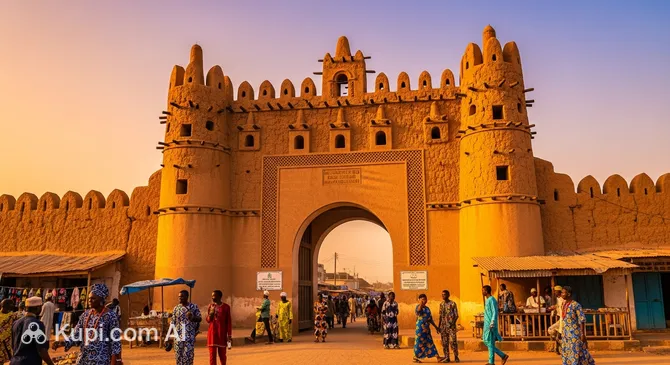
Wambai Gate
Wambai Gate. Иллюстрация. Источник: Kupi.com AI

Erected at the beginning of the 19th century, these walls, stretching over 10 kilometers, served as protection for the capital of the emirate. Named after the Wambai district, the gate is an outstanding example of the region's traditional architecture. It demonstrates a remarkable combination of defensive functionality and the aesthetics characteristic of West Africa's cultural heritage.

Today, the Wambai Gate is recognized as one of the key attractions of the city's historical center. This site draws tourists with its authentic atmosphere and the opportunity to touch the history of the ancient caliphate, while remaining an important landmark in the modern life of Bauchi.

Contacts

Finding this historical site in Bauchi is easy, as it is located on one of the city's busy thoroughfares. Below is the current information for planning your route.

How to contactContact
AddressA345, Bauchi 740102, Bauchi, Нигерия

What to Do

The main activity at the Wambai Gate is, of course, exploring the preserved fragments of the fortress walls. History and architecture enthusiasts can spend hours examining the masonry and details of the arch, imagining how caravans once passed through this passage. This location is perfect for an atmospheric photo shoot, where ancient stones contrast with the daily hustle and bustle of the modern city.

A visit to the gate should be combined with a walk through the surrounding neighborhoods, where traditional crafts still flourish. You can see the work of blacksmiths, observe the process of weaving or dyeing fabrics. This is an excellent opportunity to purchase authentic souvenirs, such as leather goods or vibrant local textiles, directly from the makers.

Additionally, its proximity to trade routes makes this site ideal for observing the rhythm of life in Nigeria. Nearby markets often sell peanuts and grains. A stroll here will make you feel like part of a history that hasn't frozen in a museum but continues to live in the sounds, smells, and colors of an Eastern bazaar.

Getting There

Getting to the Wambai Gate is quite simple, as it is located in the heart of Bauchi on the A345 highway. The city is the state capital, and major roads from neighboring regions, such as Jos or Kano, lead here. For precise navigation to the site, it is convenient to use modern map services.

The most popular way to get around the city is by taxi or local motorized rickshaws, known as okada. They will take you to the historical center quickly and for a moderate fee from any point. If you arrive in the city by intercity bus, the ride from the central bus station to the gate will take only 10–15 minutes.

For independent travelers in rented cars or participants in organized tours, it is important to consider seasonality. During the rainy season (from June to October), roads can be dusty or difficult to pass. For safety and a comfortable viewing of the architecture, it is best to plan your visit during daylight hours.

Ближайший город: Bauchi

History & Facts

The history of this place is inextricably linked to the era of the region's formation. Wambai Gate is part of the massive fortress walls erected in 1809 by order of Yakubu ibn Dadi. A talented military leader and a devoted student of Sheikh Usman dan Fodio, he founded Bauchi as an important center within the Sokoto Caliphate, and the 10.5 km long walls became the city's reliable defense.

Legend has it that the name of the city itself came from the name of a local hunter, Baushe. It was he who advised Yakubu to choose this spot for the settlement. Thanks to its favorable location on the northern edge of the Jos Plateau, the city quickly grew into a key trade hub connecting the northern territories with other parts of modern Nigeria.

In the 19th century, the area behind the gate developed as a center of Islamic culture and education. The city's economy flourished thanks to the trade in cotton, peanuts, and millet, as well as well-developed livestock farming. The arrival of the railway in 1961 only solidified the city's status as a major transport hub, while preserving the grandeur of its ancient architectural monuments.

Time Needed

To take a leisurely look at Wambai Gate, study its architectural features, and take quality photos, 1 to 2 hours are usually required. This is enough time to feel the scale of the ancient fortifications and appreciate the skill of the 19th-century builders.

If you want to combine viewing the gate with a walk through the adjacent quarters and a visit to local markets, it is recommended to set aside about 3 hours for the visit. Such immersion will allow you not only to see a historical monument but also to get acquainted with the living culture and crafts of the modern residents of Bauchi.

Working Hours

The Wambai Gate historical monument is available for visiting around the clock. You can view the arch and the surviving walls on any day of the week — from Monday to Sunday — as the site is integrated into the urban environment and has no enclosed indoor spaces.

Since official schedules may change depending on local holidays or restoration work, visitors are advised to check information in advance on the city's official tourism websites or with local guides.

Круглосуточно

Nearby

Exploring the surroundings of Wambai Gate will allow you to dive deeper into the atmosphere of Bauchi State. In close proximity to this historical arch are other iconic sites that tell of the region's past and present—from the mausoleums of statesmen to ancient mosques and parks.

A walk through the city center provides access to many cultural sites. Below is a list of attractions worth visiting to make your trip as rich as possible.

NameDistance
Tomb of Sir Abubakar Tafawa Balewa1 km

Reached the end of the page?

That means the route is fully explored