Support

Stavanger City Museum

About

If you want to truly understand the soul and character of a place like Stavanger, the city's main museum is the perfect starting point. Founded back in 1877, the Stavanger Museum is now one of the largest and most multifaceted cultural centers that Norway takes pride in.

It's not just a single building, but a constellation of specialized departments. Under the museum's umbrella, you'll find halls of natural and cultural history, the Children's Museum, the Printing Museum, and even the famous Canning Museum. Each of these branches reveals a unique facet of the region's life, making it an ideal spot for a family visit and a thoughtful exploration of Norwegian identity.
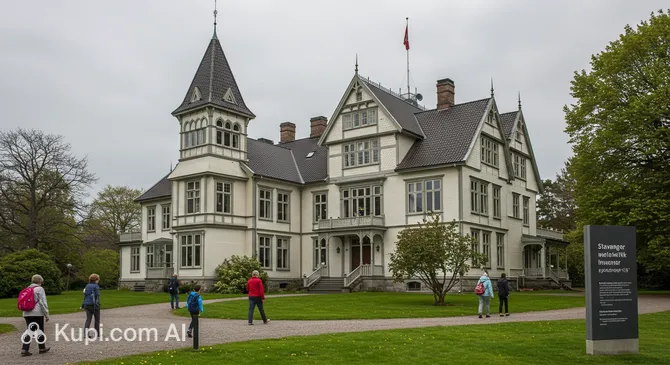
Stavanger City Museum
Stavanger City Museum. Иллюстрация. Источник: Kupi.com AI

Housed in an architecturally striking building, the museum tells the remarkable story of Stavanger's transformation from a humble fishing town into the modern oil capital. Rich collections of artifacts and contemporary exhibitions allow you to trace the city's journey through the centuries, making its history tangible and incredibly engaging.

Contacts

For the latest information on special exhibitions or group tours, you can use the following contact details:

How to contactContact
AddressMuségata 16, 4010 Stavanger, Норвегия
Phone+47 51 84 27 00
Websitewww.stavangermuseum.no

What to Do

The immersion into history begins right at the entrance: here, you can trace the region's path from its medieval roots to the present day. Be sure to head up to the upper floors to see the unique dioramas. They recreate scenes from the lives of townspeople in past centuries with striking accuracy, allowing you to literally peek through the windows of old Stavanger.

For those who prefer active participation, there are plenty of interactive exhibits. The museum features a cinema room showing old newsreels that captured the city across different decades — from the heyday of the canning factories to the start of the oil boom. It's a great opportunity to see how fashion, streets, and the daily life of Norwegians have changed.

Don't forget to take advantage of the ticket system: visiting one department entitles you to a discount at other branches of the museum complex. This is a perfect excuse to stop by the Children's Museum or explore maritime traditions in the port area, making your cultural itinerary as rich as possible.

Getting There

Finding the Stavanger Museum is easy, as it is conveniently located at Muségata 16, right in the heart of the city. Thanks to its central location, it is within easy walking distance of most popular tourist areas.

If you prefer public transport, local buses run regularly through the center. The nearest train station is also within walking distance, making the museum accessible for those arriving from other regions. If you value comfort or are in a hurry, a taxi from the city center will take you to the museum's doors in just a few minutes.

Ближайший город: Stavanger

History & Facts

The history of this place began in 1877, when the Stavanger Museum was officially established. Originally conceived as an institution for studying cultural and natural history, it became an important guardian of the Rogaland region's memory. The city itself has developed as a major religious and fishing center since the 12th century, and the museum has carefully gathered evidence of those distant times.

In the 19th century, Stavanger went through challenging times: the depletion of fish stocks led to an industrial decline and mass emigration to America. These dramatic pages of the city's history are also reflected in the museum's collections. However, the real turning point was the discovery of oil fields in the North Sea, which transformed Stavanger into the "oil capital" and gave a powerful boost to museum development.

Today, the museum is a unique blend of eras. It documents the city's transformation from a modest fishing settlement to a modern industrial hub, allowing visitors to see how the look and character of life in this rugged yet beautiful land have changed.

Time Needed

To explore the main building's key exhibitions and get acquainted with the natural and cultural history collections at a relaxed pace, most visitors need 2 to 3 hours. This is enough time to study the dioramas and interactive zones.

If you plan to visit several specialized branches, such as the Canning Museum or the Maritime Museum, we recommend dedicating a full day to exploring Stavanger's heritage. Remember that the single-ticket system allows you to visit different departments at a discount, so planning a longer visit can be very worthwhile.

Working Hours

The museum maintains a convenient schedule, but please note that it is closed on Mondays. Regular opening hours are: Tuesday, Wednesday, and Friday from 11:00 to 15:00. On Thursdays, the museum stays open longer — until 19:00, which is convenient for evening visits. On Saturdays and Sundays, visitors are welcome from 11:00 to 16:00.

We recommend checking the official website before your visit, as the schedule may change on public holidays or during exhibition transitions.

DayWorking hours
понедельникЗакрыто
вторник11:00–15:00
среда11:00–15:00
четверг11:00–19:00
пятница11:00–15:00
суббота11:00–16:00
воскресенье11:00–16:00

Nearby

A walk around the neighborhood after visiting the museum will allow you to soak in the atmosphere of this Norwegian port city even further. The nearby streets hide many interesting locations, from panoramic viewpoints to historic quarters with snow-white wooden houses.

NameDistance
Museum of Archaeology, University of Stavanger0.2 km
Stavanger Cathedral0.6 km
Lervig Local0.7 km
Cardinal Pub0.7 km
Matsaya Bobas & BBQ0.7 km
Stavanger Maritime Museum0.7 km
Døgnvill Burger0.7 km

Reached the end of the page?

That means the route is fully explored