Support

Chilas

About

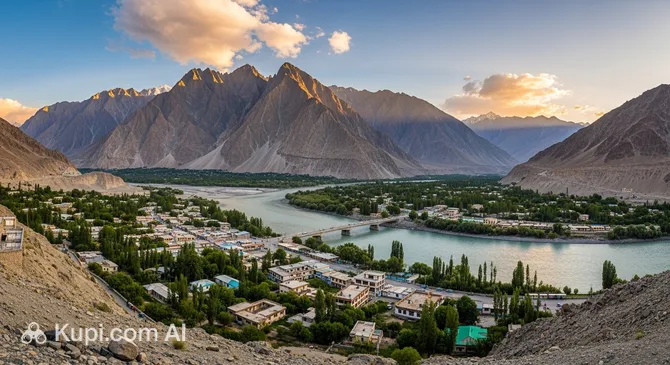
Chilas is a picturesque city located in the northern part of the Gilgit-Baltistan region, on the banks of the majestic Indus River. Situated at an altitude of approximately 1,280 meters above sea level, it occupies a strategic position on the famous Karakoram Highway, which connects Pakistan with China and is considered one of the most beautiful high-altitude roads in the world.

Chilas. Illustration.
Source: Kupi.com AI

With a population of around 214,000, Chilas serves as the administrative center of the Diamer District and an important logistics hub. The city is steeped in a spirit of adventure, as it is from here that many travelers begin their journey to the peaks of the Karakoram and the Himalayas. The unique history of Chilas, closely linked to the transit routes of antiquity, gives the place a special character and significance.

Among the top reasons to visit this corner of the world are the stunning views of the surrounding mountain ranges, including the legendary eight-thousander Nanga Parbat. Tourists often stop here to enjoy the river panorama and pristine nature, or use the city as a base for organizing trekking. Chilas offers a wonderful opportunity to experience the authentic culture and hospitality of the northern territories.

Weather Overview

When planning a journey along the scenic Karakoram Highway, it is important to consider the climatic features of this high-altitude area. The climate here is quite harsh in winter but offers comfortable conditions for trekking and excursions during the summer period.

Winter in the region is cold: in January, the average temperature is around -8.2°C, and at night the thermometer can drop to -12°C. With the arrival of spring, the air gradually warms up, and by May, average temperatures reach positive marks around 9°C. Summer is the most favorable time to visit: in July and August, daytime highs are a comfortable 24°C. However, be prepared for changeable weather: the summer months are characterized by a high number of days with precipitation (up to 23 days in August), although the total volume remains insignificant.

To properly plan your travel dates and pack the necessary gear, we recommend checking in advance what the expected weather in Chilas will be during your visit. Expect moderately warm summers with frequent but short-lived precipitation, and cold, predominantly dry winters with steady frosts.

Average monthly temperature

Average monthly precipitation

Interesting Facts

In addition to its role as an important transport hub, Chilas holds many fascinating features that reveal themselves only to the most curious travelers. This city and its surroundings are a place where stereotypes are broken and a true immersion into the majesty of nature begins.

  • Staging ground for summit seekers. Chilas plays a key role in world mountaineering, serving as an important acclimatization spot for those challenging the eight-thousanders. Complex expeditions to the base camps of the "King of Mountains"—K2—and the majestic Nanga Parbat often begin from here.

  • Gateway to Fairy Meadows. The district serves as the starting point for one of the most picturesque places on the planet—the Fairy Meadows plateau. This unique location offers the best view of the "Naked Mountain" (as the name Nanga Parbat translates), and many tourists come to Chilas specifically for this breathtaking route.

  • Contrast between expectation and reality. Contrary to common myths about the wildness of high-altitude regions, northern Pakistan in the Chilas area surprises travelers with its high level of civilization. Tourists often note the unexpectedly high-quality road infrastructure and the exceptional hospitality of local residents, making the journey comfortable and safe.

  • Adventure of a lifetime. Traveling through Chilas is often called the "adventure of a lifetime," and not just for the sake of a catchphrase. This region offers a rare combination of activities: from extreme rafting on turbulent rivers to meditative contemplation of the rugged Himalayan landscapes that cannot be found anywhere else in the world.

How to Get There

Chilas is located in a high-altitude region, and the journey here often marks the start of a great adventure along the Karakoram Highway. Since the city is situated in mountainous terrain, there are no direct flights, and logistics usually involve flying to the nearest major cities followed by a car journey. You can find all the ways to get to the city on our dedicated page.

There is no airport in Chilas itself, so tourists most often choose to fly into Islamabad International Airport (ISB), located in the country's capital. This is a major international aviation hub receiving flights from all over the world. The distance to Chilas is about 238 km; however, due to the nature of mountain roads, a trip by taxi or private transfer will take a significant amount of time.

A closer option is to fly into Gilgit Airport (GIL), located in the city of Gilgit, just 59 km from Chilas. This is a small regional airport handling domestic flights. The journey from there to your destination by car takes about 2 hours. You can also consider Skardu Airport (KDU) in the city of Skardu (about 131 km away), from where the drive is also very scenic.

For convenience, here is a summary of the main airports:

AirportPassenger trafficDistance
Gilgit Airport35 55059 km
Skardu Airport146 449131 km
Srinagar International Airport4.4 mln171 km
Chitral8 500214 km
Islamabad International Airport6 mln238 km

Railway connections in this mountainous region are limited. There is no railway station in Chilas itself, but you can travel to the Rawalpindi Railway Station (RWP), located in the city of Rawalpindi. The station is approximately 223 km from Chilas. This is a major transport hub with high passenger traffic. From the station, you will need to reach Chilas by bus or taxi.

Below is information about the nearest railway station:

StationPassenger trafficDistance
Rawalpindi Railway Station5.5 mln223 km

Main Attractions

While Chilas is often perceived by travelers as a transit point, the city's surroundings hide true treasures of history and nature. Here, you can touch antiquity and witness some of the most impressive mountain panoramas in the world.

One of the most significant historical attractions is the Chilas Petroglyphs. These ancient rock carvings and inscriptions, scattered along the banks of the Indus River, date from prehistoric times to the Middle Ages. Left by traders, pilgrims, and warriors following the Great Silk Road, they depict Buddhist stupas, hunting scenes, and mythical animals, turning the roadside rocks into a unique open-air museum.

For nature lovers, the region serves as the gateway to the legendary Fairy Meadows. Although the plateau itself is some distance away, the Chilas area and the Raikot Bridge are key starting points for the journey to this site. Fairy Meadows offers perhaps the best view of the northern face of the eight-thousander Nanga Parbat and is considered one of the most scenic locations in the Himalayas, attracting photographers and trekkers from all over the world.

Equally impressive is the journey to the Babusar Pass, which connects Chilas with the picturesque Kaghan Valley. This is the highest point in the area reachable by car (over 4,100 meters). The road to the pass offers breathtaking views of mountain ranges and green valleys, providing a sharp contrast to the harsh and arid landscape of Chilas itself. During the summer months, it is a popular spot to enjoy the cool air and panoramic views.

Local Cuisine

The cuisine of Chilas is a gastronomic reflection of the rugged yet beautiful highlands. Here, at the crossroads of cultures and ancient trade routes, unique culinary traditions have formed, harmoniously combining Pakistani, Kashmiri, and Tibetan influences. Local food is hearty and simple, which is ideal for restoring strength in a mountain climate.

The region's gastronomic hallmark is chapshuro—a type of meat pie that travelers often compare to pizza. Inside the crispy dough is a juicy filling of minced beef, mutton, or yak meat, generously seasoned with onions, tomatoes, and local spices. It is also worth trying harsha—dense cornbread made from maize flour—and shomo—a thick, warming soup with dumplings. Thanks to the proximity of mountain rivers, the freshest trout is considered a real delicacy here, usually fried to a golden crust or grilled.

Dairy products play an important role in the diet, especially cheeses and thick yogurts made from the milk of mountain goats and yaks. The main drink symbolizing local hospitality is namkin chai (salted milk tea). Its unusual taste may be surprising at first, but it warms you up perfectly and helps the body adapt to the altitude. Alcohol is not served in traditional establishments, with preference given to tea and pure mountain water.

The food culture in Chilas is closely tied to the road and hospitality. Numerous small restaurants and cafes are located along the Karakoram Highway, where you can eat affordably and delicious. There are no pretentious fine-dining establishments here, but there is an authentic atmosphere: food is often cooked over an open fire using fresh local products. A special gastronomic experience awaits those going on a trek: local guides often prepare traditional dishes for tourists over a campfire using old family recipes.

Travel Tips

Preparing for a stop in Chilas? This city has its own unique features that distinguish it from other corners of the Gilgit-Baltistan region, so a little preparation will make your stay here comfortable and safe. Here is a list of practical tips to help you feel confident in this important transit hub.

  1. Clothing and Dress Code. Chilas is one of the most conservative cities on the route. It is extremely important to observe modesty: both men and women should wear clothing that fully covers legs and shoulders. Shorts and tank tops are unacceptable here. Given that summer temperatures can rise above +40°C, choose loose-fitting clothing made from light natural fabrics (cotton, linen) in light colors.

  2. Transport and Movement. There are no familiar taxi services like Uber in the city. To move between attractions or for mountain trips, it is best to rent a private jeep with a local driver who knows the specifics of mountain roads. Public transport consists of minibuses that are often overcrowded, so individual transfers are recommended for a comfortable journey along the Karakoram Highway.

  3. Finances and Cash. Bank cards are practically not accepted anywhere in Chilas; terminals are only available in a couple of major hotels. ATMs work intermittently and may not service international cards. Be sure to have a sufficient supply of cash in local currency (Pakistani Rupee), exchanged beforehand in Islamabad or Gilgit.

  4. Connectivity and Internet. An important nuance of the region: regular SIM cards that work in the center of the country may not have reception here. For stable communication and mobile internet in Gilgit-Baltistan, it is recommended to purchase a SIM card from the SCOM operator. Wi-Fi is available in most guesthouses, but speeds can be slow.

  5. Health and Water. Due to the intense heat and dry air, the risk of dehydration and heatstroke is higher here than in other mountain areas. Always wear a hat and drink only bottled water (check the seal on the cap). There are pharmacies in the city, but the selection is limited, so it is better to bring specific medications with you.

  6. Local Etiquette. Residents of Chilas are hospitable but strictly honor traditions. The greeting "As-salamu alaykum" (Peace be upon you) always puts a person at ease. Behave with restraint and respect during interactions. If you are invited for tea, a refusal may be seen as impolite; it is better to drink at least a little.

  7. What to Categorically Avoid. The strictest rule: never photograph local women and do not try to speak to them without the presence of their male relatives. This is a serious violation of local norms that can lead to conflict. Also, refrain from public displays of affection (kissing or hugging).

  8. Planning Tip. Chilas is often called the "oven" of the region due to its climate. If you plan to see the ancient petroglyphs, try to do so early in the morning (before 10:00 AM) or closer to sunset to avoid the exhausting midday sun.

By following these simple rules and showing respect for local customs, you can discover Chilas as a hospitable city with a rich history. May your journey along the legendary Silk Road leave only warm memories!

Entertainment & Nightlife

Nightlife in Chilas is radically different from what residents of megacities are used to. Due to the strict conservative traditions and religious norms of the Gilgit-Baltistan region, there are no nightclubs, discos, or bars serving alcohol. The concept of "nightlife" in this transit city is limited to quiet relaxation after a long journey, a hearty dinner, and endless tea sessions under the starlit sky.

The centers of evening activity are the restaurants at major hotels and roadside cafes (dhabas), which stay open late serving travelers and truck drivers. The atmosphere here is slow-paced and authentic: visitors engage in leisurely conversations, enjoying the cool air after the day's heat. The crowd is predominantly male, so female tourists are advised to visit establishments accompanied by companions or choose the family halls in hotel restaurants.

For a comfortable and safe evening, it is best to choose one of the established hotel venues. For example, the restaurant at the Shangrila Chilas hotel is an oasis where you can dine in a cozy setting overlooking the Indus River. Another popular spot is the restaurant at the Panorama Hotel, known for its local cuisine and the chance to meet travelers from around the world to swap road stories. No specific dress code is required in these places, but clothing should be modest and conservative.

Safety is a key aspect of staying in Chilas at night. Tourists are strongly discouraged from taking solo walks through unlit city streets or the outskirts after sunset. The most sensible option is to spend your evening within the secured territory of your hotel or guesthouse. If you need to travel anywhere at night, use only a pre-booked transfer or a car with a driver, as hailing a taxi on the street at night is practically impossible.

Daytime entertainment in Chilas is also contemplative in nature. There are no theaters or shopping malls here; instead, nature and history itself are the main "attractions." Daylight hours are best spent viewing the famous rock carvings along the Karakoram Highway or walking along the banks of the Indus, while remaining cautious and respectful toward local residents.

Parks & Museums

Chilas is not the kind of city where you will find classic manicured parks with fountains or traditional museum halls with display cases. However, for the curious tourist, this entire region reveals itself as a grand historical reserve and an open-air gallery, where the exhibits are the rocks and the green zones are the rugged yet majestic banks of the Indus River.

Natural Areas and Landscapes

Although there is little vegetation in the city itself due to the arid climate, the banks of the Indus River serve as the main attraction for nature lovers. A walk along the stony shore allows you to feel the power of one of Asia's longest rivers. Here, you can find secluded spots where the sound of the water drowns out the noise of the highway, and the views of the mountain ranges create ideal conditions for meditative relaxation and landscape photography.

In close proximity to the city is the famous Raikot Bridge and its surrounding area. This spot is considered a natural boundary from which the ascent to the legendary Fairy Meadows begins. Even if you don't plan on a long trek, a stop here allows you to enjoy a panorama where the desert rocks of Chilas begin to give way to coniferous forests and the snowy peaks of the Nanga Parbat massif.

Cultural Heritage and Open-Air "Museums"

The region's main cultural treasure is the Chilas Petroglyphs. This is a unique "gallery" stretching for tens of kilometers along the Karakoram Highway. Carved into thousands of rocks are images left by travelers, traders, and pilgrims over thousands of years. You can see hunting scenes, Buddhist stupas, and ancient inscriptions that tell the story of the Great Silk Road better than any textbook. This site rightfully serves as the city's local history museum.

Another significant site is the Chilas Fort. While it does not function as a modern museum with guides and audio tours, this British-era architectural structure serves as an important reminder of the city's strategic importance. The fort's walls hold memories of the "Great Game" era, and its location allows one to appreciate how trade routes were controlled in the past. Viewing the fort from the outside provides insight into the military architecture of the region from the late 19th century.

Insider Tip: The best time to view the rock carvings is early morning or the hours before sunset, when the slanting rays of the sun create shadows that make the ancient engravings more contrasting and visible to the eye and camera. If you have time, ask a local to show you the "stone with the giant Buddha"—one of the most impressive exhibits in this stone library.

Getting Around

The transport system in Chilas differs significantly from the typical urban infrastructure of megacities. You won't find subways, trams, trolleybuses, or large municipal buses with fixed schedules here. Since the city is a transit point and administrative center in a mountainous area, public transport is primarily provided by the private sector and is focused on the practical needs of locals and movement between settlements in the region.

The main form of "public" transport within the city and for trips to nearby villages consists of minibuses and minivans (often Toyota Hiace or Suzuki models). They circulate along the main streets and the Karakoram Highway. These minibuses do not have fixed stops: boarding and disembarking are done at the passenger's request at any convenient spot. This is the most budget-friendly way to get around, used by the local population, though comfort is minimal and the vehicles are often overcrowded.

For tourists, the most relevant forms of transport are private jeeps and taxis. Standard sedan taxis are rare here; their role is filled by SUVs adapted to the difficult mountain roads. Ride-hailing apps (like Uber or Careem) do not operate in Chilas. Cars can be found at the central bazaar, near bus stations, or, most reliably, booked through your hotel's administration. Renting a jeep with a driver is practically the only way to reach natural attractions in the surrounding area.

The fare payment system in Chilas is exclusively cash-based. Transport cards, season tickets, or contactless phone payments do not work here. In minibuses, the fare is handed to the driver or conductor upon entry or exit. Prices are fixed for locals, but tourists should clarify the cost before boarding. When hiring private transport or a taxi, the price is always negotiable: haggling is a must, and it should be done before the journey begins to avoid misunderstandings at the end.

An important part of the city's transport life is the transit buses. Major carriers (such as NATCO) pass through Chilas on routes from Islamabad to Gilgit or Skardu. Although this is intercity transport, it can be used to travel to neighboring towns along the highway. It is best to purchase tickets for these buses in advance at station ticket offices, as seats are not always available.

Alternative forms of transport, such as car-sharing or city bike rentals, are completely absent. Renting a car without a driver is difficult and not recommended due to the specifics of local driving and dangerous mountain serpentines. Walking is possible within the central street and market area, but distances between sites can be significant, and sidewalks are often non-existent, so be careful when walking along the roadside.

Practical tip for travelers: transport in Chilas, like the city's life in general, shuts down quite early. Finding a car or minibus late in the evening can be problematic. Plan all movements during daylight hours and always carry small bills for fares, as drivers often do not have change for large banknotes.

Accommodation

As a key transit hub on the Karakoram Highway, Chilas offers travelers a choice of accommodation primarily focused on short rest stops during a journey. It is difficult to find luxury world-class hotel chains or designer boutique hotels here. The main accommodation stock consists of budget guesthouses, roadside motels, and a few mid-range hotels that offer the basic comfort necessary for weary travelers.

In terms of geography, the most convenient and popular lodging options are concentrated directly along the main artery—the Karakoram Highway—as well as at the city exits. This location allows tourists to avoid wasting time driving into residential neighborhoods and to quickly resume their journey in the morning. Some hotels are located closer to the banks of the Indus River, offering more scenic views, though it is worth remembering that the sound of the river and the highway are constant companions here.

Among the most well-known places often chosen by organized tour groups and independent travelers is Shangrila Chilas. This hotel, part of a well-known resort chain in Pakistan, is considered one of the most comfortable in the city and offers green grounds, which is a rarity for the arid climate of Chilas. Another popular option is the Panorama Hotel, valued for its convenient location and acceptable level of service for a transit overnight stay.

When planning a stop, keep an important booking tip in mind: Chilas is known for its extremely hot summer climate. When choosing a room, be sure to check for a working air conditioner and a backup electricity generator, as power outages occur frequently in the region. During the peak tourist season (July–August), demand for high-quality rooms with amenities rises sharply, so it is worth booking accommodation several weeks before your trip.

The price range varies from budget to mid-range. Booking methods here have their own specifics: international online aggregators may offer a limited selection or outdated information. The most reliable way to book a room is by contacting the hotel directly by phone or through messaging apps. Be prepared for the fact that payments are primarily accepted in cash, as card terminals are often absent or do not work due to connectivity issues.

Nearby Cities

For those looking to explore the surroundings, Chilas serves as an excellent starting point for trips to several interesting nearby locations:

One attractive destination is Abbottabad, located approximately 160 km away. This city is famous for its pleasant moderate climate, green parks, and colonial architecture. Tourists often call it the "City of Pines" for its picturesque forested landscapes, which provide a stark contrast to the arid mountains surrounding Chilas.

Another interesting option is Mingora, the largest city in the famous Swat Valley. It is a bustling commercial center where you can immerse yourself in Pashtun culture, visit colorful bazaars, and see ancient Buddhist monuments. Mingora also serves as a gateway to popular mountain resorts like Malam Jabba, offering a blend of history and natural beauty.

Also worth mentioning is Saidu Sharif, the administrative center of the Swat region, located in close proximity to Mingora. It is home to the famous Swat Museum, which houses a unique collection of Gandhara art, making the city a must-visit for history and archaeology enthusiasts.

CityPopulationDistance
Bunji10 00055 km
Gilgit8 85159 km
Gakuch10 14288 km
Kalaruch34 28096 km
Gulgam11 556106 km

These nearby destinations provide insight into the diverse culture and landscapes of the region, offering travelers a change of scenery and new experiences after staying in high-altitude Chilas.

Shopping & Souvenirs

Shopping in Chilas has its own unique character, shaped by the city's status as a transit hub on the Karakoram Highway. You won't find the brand boutiques, outlets, or glossy storefronts typical of megacities here. Trade in Chilas is strictly utilitarian and traditional, catering to the needs of local residents and travelers making a stop along the way. This is a place where you can buy essentials, restock food supplies, and purchase authentic products from the Gilgit-Baltistan region at very affordable prices.

The city's main shopping area is the Main Bazaar, which stretches directly along the Karakoram Highway and branches out into the adjacent streets. It is a noisy, dusty, and colorful place where life buzzes from early morning until late evening. Hundreds of small shops are concentrated here, offering everything from food and car parts to clothing and household goods. A walk through the bazaar is a chance to immerse yourself in the atmosphere of a real oriental market, where trade is conducted just as it was hundreds of years ago.

There are no large modern shopping centers or malls in the European sense in Chilas. All trade is concentrated in small private shops ("dukans") or on the ground floors of low-rise buildings along the highway. Tourists should not expect to find supermarkets with a wide range of imported goods; the assortment is limited to basic local and Chinese-made items.

The markets of Chilas are primarily about food stalls. Special attention should be paid to the fruit stands, which in season (summer and early autumn) abound with fresh natural gifts. Here you can find delicious apricots, apples, grapes, and pomegranates grown in the surrounding valleys. Informal markets along the road often offer travelers fresh pastries and hot food, making them an important part of the local gastronomic culture.

When it comes to souvenirs, you should bring back from Chilas what the entire Gilgit-Baltistan region is famous for—dried fruits and nuts. Local dried apricots, mulberries, walnuts, and almonds are of the highest quality and eco-friendly. Traditional woolen products also make great gifts: shawls, vests, and the famous pakol hats ("pushtunkas"), which will keep you warm in cold weather. In some shops, you may find semi-precious stones and simple jewelry, but these should be chosen with caution unless you are an expert.

Shops in Chilas usually open early, around 8:00–9:00 AM, and stay open until sunset or until 8:00–9:00 PM. Roadside shops and pharmacies may stay open longer to serve nighttime traffic. The primary and practically only method of payment is cash (Pakistani rupees). Bank cards are not accepted even in larger shops, so make sure you have a sufficient supply of small bills for purchases. Bargaining is appropriate and even encouraged, especially when buying souvenirs or fruit.

The Tax-Free system does not operate in Chilas. This is a traditional trading zone where receipts are rarely issued, and formal VAT refund procedures for tourists are not provided.
Reached the end of the page?

That means the route is fully explored