Support

Philippine Arena

About

The Philippine Arena is a truly grand structure that rightfully holds the title of the world's largest indoor multipurpose stadium. Although often associated with the capital, the arena is physically located not in Manila itself, but in the town of Santa Maria, Bulacan province, about 30 kilometers north of the Philippines' main city. The arena is a key feature of the large Ciudad de Victoria tourism zone and serves as an impressive example of modern architecture and engineering.
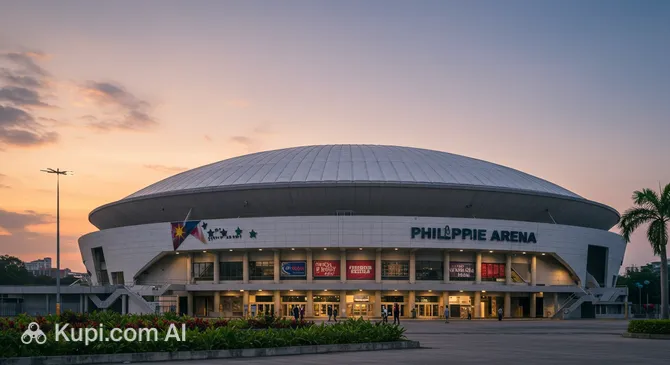
Philippine Arena. Illustration.
Source: Kupi.com AI

Traveler photos:

The main pride of the Philippine Arena is its incredible capacity — it can accommodate up to 55,000 spectators at once. This figure makes it the absolute world leader among all indoor stadiums. A key design feature is its fixed roof, unlike many other large sports complexes equipped with retractable structures. This ensures comfort and the ability to hold events regardless of the weather.

Legally, the Philippine Arena is owned by New Era University, which is an educational institution of the influential local church Iglesia ni Cristo (Church of Christ). This landmark structure has gained global recognition: on July 27, 2014, it was officially entered into the Guinness World Records as the world's largest indoor multipurpose theater. This highlights not only its size but also its versatility.

The construction of the arena was one of the central and most ambitious projects timed for the centennial celebration of the Iglesia ni Cristo church. Today, the Philippine Arena is not just a venue for sporting events and concerts by world stars, but also an important cultural and tourist site, attracting visitors with its monumentality, modern design, and unique status.

Contacts

To find the latest information on upcoming events, ticket purchase conditions, and how to contact the Philippine Arena administration, we recommend first visiting the arena's official website. Current information can also often be found on general Philippines tourism portals and through local information services.

How to contactContact
AddressPhilippine Arena, Bocaue Road, Bocaue, Bulacan, Philippines

What to Do

A visit to the Philippine Arena is an opportunity to witness a wide variety of events. Thanks to its versatile design and vast capacity, it hosts world-class sporting events, official ceremonies, grand concerts by popular artists, and large-scale religious services of the Iglesia ni Cristo church. Regardless of the type of event, visitors are invariably impressed by the scale of the proceedings and the atmosphere of this colossal structure.

Even if you don't plan to attend a specific event, the Philippine Arena itself deserves attention as an outstanding architectural landmark. Designed by the renowned international firm Populous, it impresses with its modern design and thoughtful layout. Of particular note is the impressive entrance group, which is one of the arena's architectural highlights. Visitors can appreciate both the aesthetics and the engineering of this giant complex. Interestingly, if necessary, the arena's capacity can be nearly doubled, reaching 100,000 spectators through the use of additional seating and temporary structures, making it not just the largest indoor stadium, but one of the most capacious stadiums in the world overall.

Getting There

The Philippine Arena is not located in Manila itself, but in the town of Santa Maria, Bulacan province, which is about 30 kilometers north of the capital of the Philippines. It is part of the large Ciudad de Victoria tourism zone, making it relatively accessible for visitors arriving from Manila and nearby areas.

There are several ways to get to the Philippine Arena from Manila. One option is to use public transport. Although specific routes may change, there are usually bus or other transport lines connecting the capital with Bulacan province and specifically with the area where the arena is located. It is recommended to check the current routes and schedules at local transport hubs or information services before your trip.

A more comfortable, though more expensive, way is taking a taxi or using ride-sharing apps directly from Manila. The trip will take about an hour or more, depending on traffic conditions. Be sure to agree on the fare in advance if using a regular taxi, or check the estimated cost in the app.

Given the arena's location within the Ciudad de Victoria tourism zone, special shuttles may be organized or transport links improved during major events. Therefore, if you plan to attend an event at the Philippine Arena, it is worth checking the official event or arena website for information on special transport options for visitors.

Nearest city: Manila

History & Facts

The history of the Philippine Arena began relatively recently, but it has already become significant. Construction of this grand structure started in 2011. The project was initiated and commissioned by the influential Filipino church Iglesia ni Cristo (Church of Christ). The architectural design was entrusted to the world-renowned company Populous, and after a tender process, the construction management contract was awarded to the South Korean firm Hanwha Engineering and Construction, which surpassed the local bidder EEI Corporation.

Construction work on the arena progressed rapidly. On May 30, 2014, Hanwha announced the completion of this unique indoor stadium. The official opening of the Philippine Arena took place almost two months later, on July 21, 2014. This event coincided with the grand opening of the entire Ciudad de Victoria tourism zone, of which the arena is a part. The ceremony was attended by then-President of the Philippines Benigno Aquino III and the executive minister of Iglesia ni Cristo, Eduardo Manalo, who together unveiled the commemorative plaque for Ciudad de Victoria.

The Philippine Arena holds special significance for Iglesia ni Cristo. It was one of the central and most ambitious projects realized for the church's centennial anniversary, celebrated on July 27, 2014. This fact underscores not only the scale of the structure but also its symbolic importance for one of the country's largest religious organizations. The arena was conceived not just as a sports or concert venue, but as a landmark capable of accommodating a vast number of worshippers for large-scale events.

Time Needed

The time needed to visit the Philippine Arena largely depends on the purpose of your visit. If you just want to see this grand structure from the outside, appreciate its architecture and scale, and perhaps peek into public areas (if any are accessible on the day of your visit without an event), then 1-2 hours might be enough. This will be sufficient to take photos, walk around the arena, and feel its monumentality.

It is a completely different story if you plan to attend an event at the Philippine Arena — whether it's a concert, a sports competition, or a religious service. In this case, you should budget significantly more time. Besides the duration of the event itself (which can range from a few hours to a whole day), consider the travel time to the arena (which is not in Manila itself), passing through security control, finding your seat, and exiting afterward. In this scenario, your visit could easily take half a day or even more.

Additionally, the Philippine Arena is part of the larger Ciudad de Victoria complex, where there may be other interesting sites or areas for walking. If you want to explore the surroundings as well, your total visit time will naturally increase. Therefore, when planning your trip, clearly define what exactly you want to see and do to properly calculate the necessary time.

Working Hours

The Philippine Arena primarily functions as a venue for various events, so its operating hours depend directly on the schedule of concerts, sports competitions, religious services, and other events. The arena does not have standard daily visiting hours like a museum or park. To find out the exact start time of the event you are interested in and the doors' opening time for visitors, it is highly recommended to check the official Philippine Arena website or the pages of specific event organizers. Information on accessibility and visiting rules is also usually published there.

Tickets for events at the Philippine Arena usually need to be purchased in advance, especially for popular concerts or important matches. This can be done online through official ticketing platforms or authorized distributors. The arena itself is a year-round facility, but its public accessibility is determined solely by the schedule of events being held. On days when there are no events, access to the arena grounds may be restricted or unavailable to the general public, unless special tours are offered, which should also be found out on official resources.

Nearby

A visit to the Philippine Arena will certainly be a highlight of your trip. However, to make your journey even more enriching and complete, it's worth checking out other interesting places nearby. Exploring the surroundings will allow you to get better acquainted with the multifaceted culture of Manila and its environs, as well as discover something new beyond the grand stadium.

Even a short trip to neighboring attractions can offer unexpected discoveries and pleasant memories. Below is a list of some places located relatively close to the Philippine Arena that can complement your itinerary in this region of the Philippines.

NameDistance
City Fairview13 km
Circle of Fun18.6 km
Tales of Illumina19 km
Jones Bridge22.1 km
Pinaglabanan Memorial Shrine22.6 km
Intramuros22.7 km
Casa Manila22.8 km

Have you reached the end of the page?

So the route has been studied inside and out